What’s All the Fuss About Catnip Toys?
Nepetalactone is the volatile oil behind the madness, triggering a euphoric reaction in about 70% of cats via their olfactory system. You’ve probably watched your furball bunny-kick a stuffed mouse into oblivion and wondered if that level of intensity is actually safe. It is, but the sheer volume of products on the shelf can be totally overwhelming. We need to cut through the marketing fluff and look at the biology because understanding how it works changes how you shop. You aren’t just buying a toy – you’re buying a chemical reaction.
Why Are Catnip Toys Everywhere?
Manufacturers know that adding catnip increases sales by a massive margin simply because it guarantees an immediate, often hilarious reaction from most pets. It is an easy way to turn a boring plushie into an irresistible target. But here’s the catch – a lot of that “catnip infused” labeling is just marketing speak for low-grade dust that loses potency in weeks. You are seeing it everywhere because it works on the shelf, even if the quality inside isn’t always top-tier.
Big Questions Every Cat Owner Has
Safety is usually the number one worry, followed closely by the fear of desensitization. You might be asking if daily exposure ruins the fun or if olfactory fatigue is a permanent issue. The short answer is that while catnip is non-toxic and generally safe, overexposure is a real thing that can leave your cat bored and unresponsive. We need to tackle the frequency myth right now because more isn’t always better.
Olfactory fatigue takes about 10 to 15 minutes to kick in, after which your cat becomes temporarily immune to the effects for an hour or two. If you leave potent toys out 24/7, your cat effectively becomes “nose blind” to them. This isn’t permanent damage, but it does mean you are wasting money on expensive herbs your cat can’t even smell anymore. To prevent this habituation, you have to treat catnip like a special occasion rather than a permanent fixture in the living room rug.
My Journey with Catnip: A Personal Experience
My own realization came after buying a premium, refillable banana toy that my tabby, Barnaby, ignored after three days of non-stop drooling. I thought the product was defective. It wasn’t – I had just flooded his receptors by leaving it on the floor. Once I started sealing the toys in a bag between play sessions, the magic came back instantly.
Storing these toys in an airtight container – sometimes even in the freezer – preserves the vital oils that degrade when exposed to air and light. I started “marinating” my old, scentless toys in a jar with fresh dried leaves, and it completely revived them. You don’t always need to buy new stuff; you just need to manage the potency and rotation schedule to keep your cat’s interest peaking.
What Catnip Really Does to Our Feline Friends
You’ve seen it happen before – one minute your cat is dead asleep on the radiator, and the next they’re bunny-kicking a stuffed mouse like it owes them money. It’s not magic, though it sure feels like it when you need five minutes of peace. Catnip triggers a euphoric response that mimics feline pheromones, turning even the laziest house cat into a temporary hunter. But don’t worry about them needing an intervention, because it’s completely non-addictive. It’s basically a short-term happy hour that lets your pet blow off steam safely before they inevitably go back to napping.
The Science Behind Catnip’s Effects
Ever wonder why that specific crinkle toy gets destroyed while others collect dust? It’s all about the oil. The secret sauce is nepetalactone, a volatile oil found in the plant’s leaves and stems. When your cat sniffs it, the oil binds to receptors in their nose, sending signals to the brain that say “hey, feel amazing right now.” It creates a reaction weirdly similar to how LSD affects humans, but without the hallucinations or bad trips – just pure, unadulterated rolling around on the carpet.
Why Some Cats Don’t Seem to Care
Maybe you bought the most expensive, organic, triple-strength catnip banana on the market, and your cat just stared at you like you’re an idiot. It’s not a bad batch. Actually, sensitivity to catnip is entirely hereditary. If your cat’s parents didn’t have the “catnip gene,” your fluffy friend won’t either. About 30% to 50% of cats lack the receptor to enjoy the buzz, meaning for them, it’s just another boring plant smell like oregano or mint.
It can be a total bummer when you want to treat them and they walk away.
But don’t toss that toy bin just yet. Many “non-responders” actually react to silvervine or valerian root instead. It’s worth trying those sticks because silvervine contains actinidine, which stimulates cats that ignore nepetalactone. So if the standard stuff fails, mix it up. Just don’t force the catnip issue – if they don’t like it, they don’t like it, and forcing exposure won’t change their genetics.
The Age Connection: Kittens vs. Adults
You might be tempted to sprinkle some green dust on a kitten’s scratching post to encourage them, but save your money. Young kittens are totally immune. The sensitivity doesn’t usually kick in until they reach sexual maturity, typically around 6 months old. Before that, their nasal receptors simply aren’t developed enough to process the nepetalactone, so they’ll likely just sneeze and walk away.
On the flip side, really old cats often lose interest too.
As their sense of smell fades, the reaction gets weaker. Also, age isn’t the only factor in sensitivity. Even a prime-age adult can become “nose blind” if you leave the toys out 24/7. It’s called olfactory fatigue. Basically, their nose gets used to the smell and stops sending those happy signals to the brain.
To keep the magic alive, you need to rotate toys weekly and store the catnip ones in airtight containers when not in use.

Are Catnip Toys Safe for Daily Playtime?
While you won’t hurt your cat by leaving a nip-filled mouse out 24/7, you might unintentionally ruin the magic. Catnip is completely non-toxic and non-addictive, so there’s no risk of an actual overdose. However, daily exposure often leads to olfactory fatigue, where your cat simply stops reacting to the nepetalactone because their nose gets desensitized. To keep the zoomies alive, treat these toys as special occasion items rather than permanent fixtures on the living room rug.
The Good Stuff: Pros of Using Catnip Toys
We all know the main perk – watching your dignified hunter flop around like a fish is hilarious. But beyond the entertainment value, these toys are powerful tools for encouraging physical exercise in sedentary indoor cats. They also serve as fantastic stress relievers during travel or vet visits. If you have a cat that destroys furniture, redirecting that energy toward a potent catnip kicker can actually save your sofa from shredding.
The Rare Risks: What You Should Know
Most side effects are mild, but you should watch out for gastrointestinal upset if your cat manages to tear a toy open and ingest the dried herb. Too much plant matter in the tummy can lead to vomiting or diarrhea. Also, be aware that for a small percentage of cats – usually males – the stimulation can flip from playful to aggressive, leading to unexpected swats or bites during a high.
It’s not just the plant matter that poses a threat – the construction of the toy itself is often the bigger worry. Cheaply made toys frequently contain polyester fill, plastic eyes, or bells that become instant choking hazards once the fabric rips. If you notice your cat is a “ripper” who obsesses over tearing seams to get to the source of the smell, you need to switch to refillable rubber toys or heavy-duty canvas kickers immediately. And if you have a multi-cat household, monitor the group dynamic closely. Sometimes the “high” can cause a dominant cat to bully a shy one, turning a fun afternoon into a turf war.
Keeping an Eye on Your Cat: Supervision Tips
You don’t need to hover over them with a clipboard, but passive observation prevents accidents. Check the structural integrity of the toy before every session to ensure seams are tight.
- Inspect for loose threads or detached parts.
- Watch for signs of overstimulation like growling.
- Remove the toy if heavy panting occurs.
After the play session ends, put the toy in a sealed container to preserve freshness.
Leaving these potent toys out while you’re at work is generally a bad idea, mostly because a bored cat is a destructive cat. You want to control the environment to ensure play remains safe and the nepetalactone remains effective.
- Limit sessions to 15 minutes max.
- Store toys in the freezer to keep oils potent.
- Discard toys with exposed stuffing immediately.
After you establish this routine, you’ll notice your cat responds with way more enthusiasm every time you bring the toys back out.
How Often Should You Share Catnip Toys?
Treat this stuff like a fine wine rather than tap water because more isn’t always better. Leaving those potent mice out 24/7 is actually the quickest way to ruin the fun since cats develop olfactory fatigue – basically nose blindness – incredibly fast. You should really limit exposure to just once or twice a week for roughly 15 minutes to keep their receptors sensitive and ensure that the reaction remains explosive every time you bring the toy out.
Daily vs. Occasional Use: What’s Best?
While it is super tempting to trigger that hilarious zoomie mode every evening after work, daily exposure actually dulls the response significantly. It takes roughly two hours for a cat’s “happy receptors” to reset after a session, but long-term sensitivity fades if you overdo it. Stick to occasional sessions to ensure the nepetalactone – the active oil – hits hard every single time, otherwise, that expensive infused toy just becomes another boring plushie collecting dust under the sofa.
Signs Your Cat’s Had Enough for Today
Most cats naturally tap out after about 10 to 15 minutes, but some really don’t know when to quit. If you see your kitty panting, becoming overly aggressive with claws fully extended, or suddenly grooming excessively, that is your cue to intervene. It’s not toxic, but overstimulation can lead to behavioral issues or just a really grumpy cat that might lash out at your ankles.
You might notice the play shifting from fun bunny-kicking to something that looks a bit too real and intense. When the ears go flat against the head or the tail starts thrashing hard rather than just twitching, the high has likely turned into agitation. Some cats get “mean drunk” on catnip. If you try to take the toy and get a serious hiss or a swat that draws blood, back off immediately and let them calm down before retrieving the toy – safety first, right?
Timing is Everything: Choosing the Right Moment
Giving a stimulant right before you want to sleep is a total rookie mistake unless your cat is one of the rare ones who gets sedated by it. The best time is usually before mealtime to simulate the natural hunt-eat-sleep cycle that cats crave. Use these toys to kickstart activity in lazy house cats during the day, not when the house needs to be quiet and you’re trying to catch some Zs.
Think about using the potent stuff strategically for high-stress events too. Tossing a fresh catnip banana into the carrier about 20 minutes before a vet visit can take the edge off for anxious travelers by creating a positive association with the crate. But – and this is a big but – avoid it during tense introductions with new pets since that heightened state of arousal can easily flip into aggression toward the intruder.
How Long Can Cats Enjoy a Session with Catnip Toys?
I once watched my tabby, Barnaby, go absolutely bonkers on a fresh kicker for twenty minutes straight, only to pass out like he worked a double shift at the biscuit factory. Most cats aren’t marathon runners with this stuff, though. The chemical reaction to nepetalactone – that’s the active oil in catnip – actually has a natural expiration timer in the brain. You’ll usually see the effects kick in within seconds and last about 10 to 15 minutes. After that, your cat becomes temporarily immune to the scent for a while, usually requiring a “reset period” before they can enjoy the buzz again.
The Ideal Playtime Duration
Ever notice how a cat goes from 100 to 0 real quick? That’s by design. While many owners ask “are catnip toys good for cats” for long periods, the sweet spot is short. Aim for sessions lasting around 15 minutes. Leaving the toy out 24/7 is actually counterproductive because of olfactory fatigue. Basically, if they smell it constantly, they stop smelling it entirely. So, to prevent insensitivity, treat the toy like a special event rather than part of the furniture.
Understanding Your Cat’s Limits
My friend’s Siamese gets aggressive if she has too much exposure, swatting at ankles instead of the toy. Every cat handles the stimulation differently. While catnip is non-toxic and you can’t really overdose on it in a fatal sense, overstimulation is a real risk. If you see your cat panting heavily or becoming weirdly defensive, that’s your cue. The “zoomies” are fun until someone gets scratched, so knowing when the fun has turned into stress is key for a happy household.
It’s kind of like kids with too much sugar – eventually, the crash happens or the mood turns sour. Since about 30% of cats don’t react to catnip at all, you might be tempted to buy stronger products, “catnip infused toys explained” on the label as ultra-potent, thinking more is better. But for the responders, sensory overload can lead to behavioral issues. Watch for the “reset” window.
Once the initial 15-minute high wears off, your cat physically cannot respond to the nepetalactone again for roughly two hours. Trying to force play during this refractory period is useless and just frustrates the cat. Give them space to nap it off.
Monitoring Your Cat’s Behavior
You know that specific low growl that says “back off”? Listen for it. While most cats just roll around drooling, some get hyper-aggressive. It’s rare, but it happens. Always supervise the first few sessions with a new toy, especially if it’s fresh and potent. If you notice vomiting or diarrhea, take the toy away immediately – while the herb is safe to smell, eating a ton of the dried stuffing can upset their stomach. It’s not toxic, just messy for your carpet.
You’ve got to play detective sometimes. I had a client whose cat started peeing outside the box, and we traced it back to anxiety caused by a strong catnip kicker toy left in his sleeping spot. He couldn’t escape the smell.
If your cat seems on edge, has dilated pupils that won’t shrink, or is hiding more than usual, the toy might be too intense. Rotation is your best friend here. Put the toys in a sealed container when playtime is over. This not only keeps the scent fresh but keeps your cat safe from ingesting loose strings or fillers when you aren’t watching.
When & How to Rotate Catnip Toys So They Stay Exciting
The Importance of Variety: Why Cats Get Bored
Finding that expensive plush mouse gathering dust bunnies under the sofa is frustrating, but it’s actually olfactory fatigue kicking in. Just like you’d get sick of smelling the same perfume 24/7, your cat’s nose stops registering the nepetalactone – the active compound in catnip – if it’s always around. Leaving toys out permanently is the fastest way to kill the buzz, making even the most potent herbs feel completely useless to their senses. You have to remove the stimulus to reset their receptors.
Creative Ways to Rotate Catnip Options
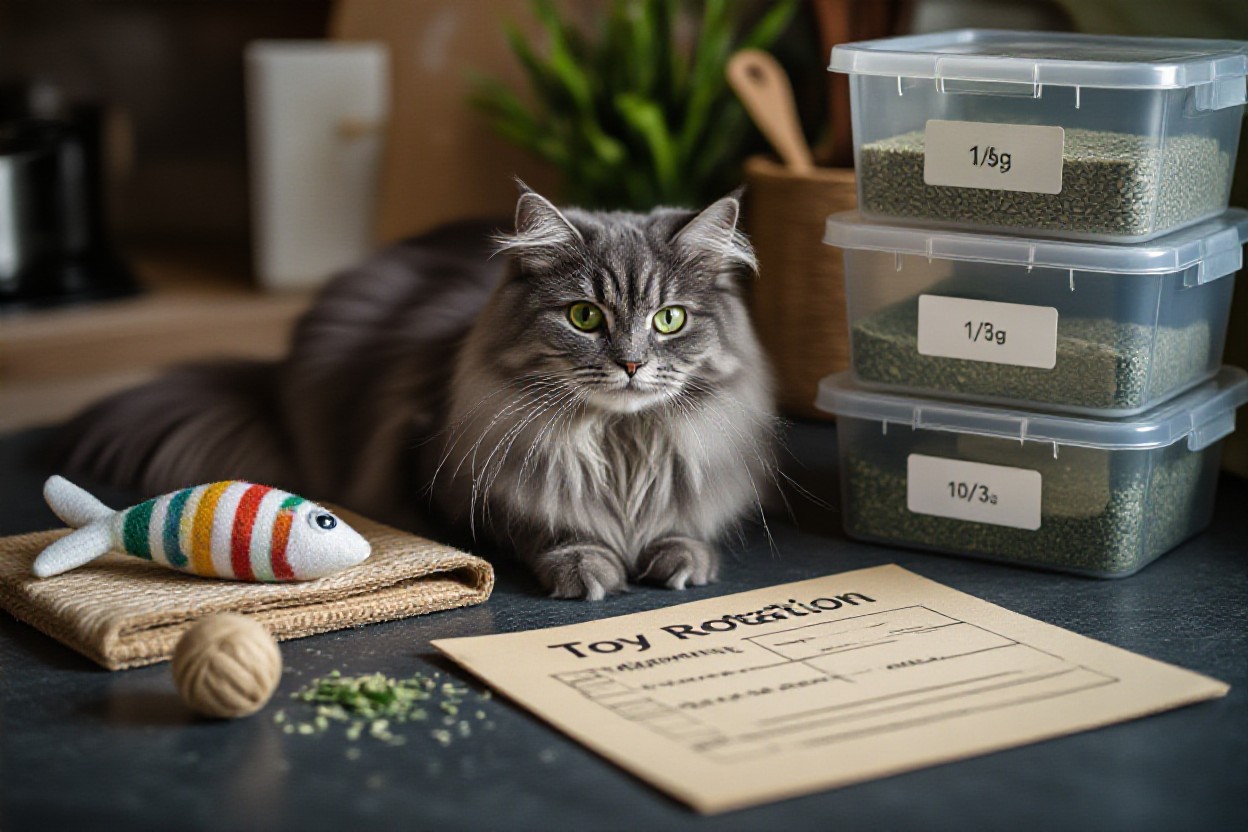
You’ve got to treat these toys like fine wine rather than permanent furniture fixtures. Get a sealable container – glass jars work wonders – and create a “marinating station” where toys rest with fresh dried herb when they aren’t in play. Swapping textures matters too, so don’t just trade a plush mouse for a plush fish; switch from a soft kicker to a crinkly infused ball to keep their tactical senses guessing along with their nose.
So here’s a trick that totally changes the game. Take those slobbery, scent-dead toys and toss them into a Ziploc bag with a sprinkle of loose, organic catnip or even silvervine powder for a different kick. Seal it tight and stash it in a dark cupboard for a few days so the fabric absorbs those fresh oils, necessaryly recharging the toy. By the time you bring it back out, it smells brand new to your kitty. You can even keep a rotation of three or four bags going at once, ensuring there’s always a fully charged toy ready for a chaotic zoomie session while the others are “cooking.”
Timing Your Rotations for Maximum Fun
Since the chemical reaction in a cat’s brain only lasts about 10 to 15 minutes before they hit a refractory period, you can’t just wave the toy in their face again immediately. They physically cannot respond to it for at least an hour or two. But for toy rotation? You should be swapping the actual physical items every 3 to 5 days to prevent that long-term boredom we talked about earlier.
The biggest mistake people make is leaving catnip-infused gear out 24/7 because it turns a stimulant into background noise. Instead, bring the “marinated” toys out for short, supervised play sessions – maybe right before dinner or when you need to distract them from scratching the couch. Once the drooling and kicking stops, usually after fifteen minutes, pick it up immediately. Put it away while they still want more. This scarcity creates value, making the toy’s reappearance a few days later a genuine event rather than just another thing tripping you up in the hallway.

The Different Types of Catnip Toys
Most people assume anything stuffed with green flakes is going to work the same magic, but that’s a quick way to end up with a bored cat and a lighter wallet. Not all delivery systems are created equal. You have options ranging from refillable pouches that let you control the potency yourself to solid compressed balls that minimize the mess on your carpet, plus the ever-popular catnip sprays for rejuvenating gear that’s lost its zing. It really comes down to whether your feline prefers hunting a plush mouse or batting around a crinkle kicker that makes noise. Thou shalt check the mechanism before buying to ensure it fits your cat’s play style.
| Toy Type | Best Use Case & Features |
| Refillable Plush/Pouches | Allows you to replace stale herbs with fresh organic catnip; usually machine washable once emptied. |
| Compressed Catnip Balls | 100% solid herb with no fillers; great for dental health and cats who like to lick rather than scratch. |
| Catnip Infused Silicone/Rubber | Durable and chew-resistant; the scent is embedded in the material but tends to be less potent than dried leaves. |
| Spray & Oil Rejuvenators | Liquid concentrate applied to existing toys; perfect for reviving interest in old scratchers or bedding. |
| Silvervine/Catnip Blends | Alternative mix for cats who are genetically unresponsive to standard nepetalactone. |
Pillow vs. Plush: What’s the Difference?
It isn’t just about shape – it’s mostly about the intended physical reaction. Kicker pillows are designed large and long specifically for back-leg kicking and aggressive “bunny paddling,” simulating a wrestle with larger prey. Standard plush toys, on the other hand, are usually smaller and lighter, meant for batting across the floor or being carried around in your cat’s mouth like a trophy. If you notice your cat trying to gut their smaller toys or shredding them rapidly, switching to a sturdy, heavy-duty pillow might save you from constant sewing repairs.
Interactive Toys: Keeping Cats Mentally Stimulated
Staring at a stationary mouse gets boring fast. Interactive catnip toys combine the scent lure with movement or puzzles to trigger that predatory instinct effectively. These aren’t just for fun – they prevent boredom-induced behavioral issues by forcing your cat to work for the reward. Whether it’s a track ball system with a scented center or a wand toy dipped in oil, the movement makes the catnip scent trails more erratic and exciting.
Don’t leave these out 24/7. Since interactive gear is highly stimulating, leaving it out constantly can lead to olfactory fatigue – basically, your cat goes nose-blind to the fun stuff. You want to bring these out for 10-15 minute active sessions. It keeps the toy special and ensures the catnip remains a high-value reward rather than background noise. Plus, removing strings or wands when you aren’t supervising prevents dangerous ingestion or tangling accidents.
DIY Catnip Toys: Are They Worth It?
You don’t actually need to be a crafting wizard to make these work. Making your own toys is often safer and cheaper because you control exactly what goes inside – no mystery fillers or low-grade stalks. An old baby sock tied in a knot with a spoon of organic dried leaf is often more appealing to cats than a ten-dollar store-bought gadget because the scent permeates the fabric better. It’s an easy win for your wallet.
The biggest advantage here is freshness. Store-bought toys might have been sitting in a warehouse for months, losing potency by the day, but a DIY approach lets you use freshly dried herbs or even silvervine blends if your cat is genetically immune to nip. Just be careful with loose parts – avoid gluing on buttons or feathers that could be choked on. If you rotate these homemade gadgets weekly, you’ll stop your cat from getting bored and ensure the important oils stay pungent enough to trigger that euphoric response every single time.
Tips to Maximize Your Cat’s Enjoyment of Catnip Toys
We’ve noticed a shift lately where owners aren’t just buying toys but curating experiences to prevent insensitivity to the herb. It’s not enough to just toss a toy on the floor and walk away; you need a bit of strategy to keep those nepetalactone receptors firing effectively. To get the best reaction without burning your cat out, try these simple tweaks to your routine:
- Store toys in airtight containers like glass jars to keep the oils volatile
- Refresh old toys by marinating them with fresh dried leaves overnight
- Limit play sessions to about 15 minutes to prevent habituation
After playtime is over, put the toys completely out of sight and smell range to build anticipation for next time.
Setting the Scene: Creating the Perfect Play Area
You might not realize it, but the environment plays a huge role in how your cat reacts to the active compounds in the herb. Clear a designated space on a rug or carpet where your cat can roll around safely without hitting furniture, ensuring there are no sharp edges or breakables nearby since the effects can make them a bit clumsy. A quiet room away from loud noises allows them to fully focus on the sensory experience without getting spooked.
Combining Catnip with Other Stimuli
Why stop at just scent when you can engage all the senses? Pairing the olfactory stimulation of catnip with movement triggers their natural hunting instincts much more effectively than scent alone. Try tossing a catnip mouse while dragging a feather wand nearby to simulate live prey behavior, which encourages active pouncing rather than just lazy rolling. This multi-sensory approach keeps their brain engaged and burns off way more energy.
And it’s really about mimicking the wild. In nature, prey doesn’t just smell interesting – it moves and makes noise. By integrating crinkle sounds or bells alongside the nip, you are tapping into that primal predatory sequence of stalk, chase, and kill. This is especially effective for older, sedentary cats who might need that extra push to get moving. Just be careful not to overstimulate them; if you see dilated pupils and aggressive tail swishing, it might be time to tone it down a notch so play doesn’t turn into aggression.
Experimenting with Different Textures and Shapes
Every cat has a preference, so don’t assume one style fits all. Some cats love soft plushies they can bunny-kick, while others prefer harder objects they can bat across the floor like a hockey puck. Introduce a variety of texture types – like canvas, wool, or sisal – to see what feels best on their paws and claws. A refillable kicker toy is often a big hit because it allows for full-body wrestling matches.
But there is also a dental aspect to consider here. Toys with mesh or netting can actually help clean teeth while they chew, acting like a gentle floss during their catnip high. If you notice your cat ignoring the standard mouse shape, switch it up to a ball or a long snake-like shape that triggers a different kind of grapple response. It’s fascinating to watch how a simple change in the toy’s geometry can reignite interest in a cat that seemed totally bored with their collection a week ago.

Pros and Cons of Catnip Toys in General
There’s been a huge uptick recently in “super-potent” silvervine and catnip blends hitting the shelves, mostly because owners are worried their cats are getting bored with the standard stuff. It’s easy to get caught up in the marketing hype that claims these toys are a cure-all for boredom. But before you fill your Amazon cart, it helps to look at the actual trade-offs involved with introducing these stimulants into your cat’s routine – because it isn’t always just harmless fun and drool.
| Pros | Cons |
|---|---|
| Encourages vigorous exercise in lazy cats | Can trigger aggression in some personalities |
| Provides mental enrichment and boredom relief | Risk of overstimulation and biting |
| Acts as a powerful training reward | Causes digestive upset if filling is ingested |
| Helps distract from stressful situations | Effect wears off quickly (10-15 mins) |
| Safe and non-addictive for most pets | Frequent exposure leads to temporary immunity |
| Relatively inexpensive entertainment | Messy when dried leaves spill out |
| Promotes dental health if chewed | Does not affect 30% of the cat population |
| Reduces anxiety in some nervous cats | Hard to clean without removing the scent |
The Upsides: Why Cats Love Them
It’s basically a cheat code for exercise. When the nepetalactone oil hits their nasal receptors, it triggers a euphoric response that can turn even the most sedentary, couch-potato senior cat into a kitten again. This burst of energy is vital for indoor cats who don’t get to hunt. If you’re struggling to get your cat to engage with wand toys or balls, the scent acts as an immediate icebreaker that cuts through their indifference and gets those paws moving.
Potential Drawbacks: Being Aware of Sensitivities
Not every reaction is a cute one – some cats get mean. You might see what we call “play aggression,” where the sensory overload causes your cat to lash out, hiss, or bite your hand instead of the toy. Overstimulation is a genuine risk. Also, if you have a cat that likes to rip things open, eating a large amount of the dried plant filler can cause vomiting or diarrhea, which is definitely not the fun aftermath you’re looking for.
Another thing that people often miss is the issue of “nose blindness” or olfactory fatigue. If you leave these toys out on the floor 24/7, your cat’s nose actually stops registering the scent after a while. They aren’t ignoring it to be rude – they literally can’t smell it anymore because they’ve been desensitized. This leads to owners thinking the toy is broken or the brand is bad, when really constant exposure has just dulled the cat’s senses. You have to be the gatekeeper of the fun or the magic fades pretty fast.
My Take on Balancing Usage: How to Find the Right Fit
I’ve found the best approach is treating these toys like a rare vintage wine rather than everyday furniture. Keep them sealed in a ziplock bag or an airtight container when playtime is over to preserve that potency. Only bring them out 2-3 times a week. This rotation strategy prevents that dreaded insensitivity and ensures that when the toy does come out, the reaction is intense and satisfying for your cat.
You also need to read the room if you have a multi-cat household. I’ve seen plenty of situations where one cat becomes a “bogart” with the catnip toy, getting possessive and bullying the others, which ruins the vibe for everyone. If you notice tension, separate them into different rooms for their high. It’s about managing the environment so that the stimulant remains a positive tool for enrichment rather than a source of conflict or a cheap thrill that loses its kick by Tuesday.
What Do You Need to Know About Catnip Potency?
You’ve probably bought a toy that your cat completely ignored, right? It’s frustrating. The secret ingredient here is an necessary oil called nepetalactone, and its strength varies wildly depending on the plant’s origin. Interestingly, about 30% to 50% of cats lack the gene to respond to it at all, so if your kitty walks away, it’s not the toy’s fault – it’s genetics. Potency isn’t just about freshness; it’s about the concentration of that oil in the leaves and stems inside the fabric.
Fresh vs. Dried: Which Is Better for Toys?
While fresh catnip straight from the garden packs a serious punch, it creates a moldy mess inside plush toys. That’s why high-quality toys use dried leaves and blossoms. Dried catnip is actually more concentrated because the water is removed, making the nepetalactone stronger by weight. But watch out for cheap “filler” stalks – you want the leafy bits. If you’re using sprays on old toys, know that they dissipate in minutes, whereas dried herb stuffed inside can trigger reactions for hours.
How Long Does Catnip Last?
Essential oils are volatile, meaning they evaporate over time just like an open bottle of perfume. Generally, the potency in a high-quality toy lasts about six months before it starts to fade significantly. However, your cat’s reaction time is much shorter. After about 10 to 15 minutes of play, olfactory fatigue sets in, and they become temporarily immune to the effects. They aren’t bored; their nose just needs a reset.
This temporary immunity – or “nose blindness” – usually takes about two hours to wear off. If you leave the toys out on the floor 24/7, your cat becomes desensitized to the smell entirely, rendering even the most potent toy useless. It’s like living next to a bakery; eventually, you stop smelling the bread. So, to keep them interested, pick the toys up after playtime ends.
Keeping Catnip Toys Fresh and Fragrant
Don’t just toss them in the toy bin when playtime is over. To extend the life of that expensive kicker toy, store it in an airtight container or a sealable bag. This traps the volatile oils inside rather than letting them dissipate into your living room air. Many owners swear by “marinating” their toys – putting them in a jar with loose, fresh dried catnip to recharge them between sessions.
You can actually stick that airtight bag in the freezer for even better results. Cold temperatures slow down the degradation of the necessary oils, keeping the potency locked in for much longer – think of it like storing coffee beans. Just make sure you thaw the toy for a few minutes before tossing it to your cat, or the frozen fabric might feel weird on their tongue. Doing this simple rotation keeps the toy feeling “new” every single time you bring it out.
The Real Deal About Catnip Overload
Nepetalactone, the active oil in the plant, affects about 60% of felines, but rest easy knowing that catnip is completely non-toxic and non-addictive. You won’t find your cat going through withdrawal or needing an intervention. Most cats actually have a biological “off switch” that kicks in after about 10 to 15 minutes of exposure. Once olfactory fatigue hits, they literally can’t smell the chemical anymore until their system resets hours later. So, while it looks intense, they aren’t frying their brains.
Can Cats Get Too Much Catnip?
Technically, a fatal overdose is virtually impossible, but eating a massive amount of dried herb can definitely cause digestive trouble. If your cat rips open a fresh toy and devours the filling, you’re looking at vomiting or diarrhea rather than a medical emergency. It’s self-limiting behavior – usually, they’ll just zone out or fall asleep before they consume enough to get truly sick. But if you’re using loose catnip or potent sprays, moderation is your best friend to avoid cleaning up a mess later.
Symptoms of Overindulgence to Watch For
You’ll know your kitty has had a bit too much if the playful batting turns into full-blown aggression or if they become unexpectedly cranky. Some cats get over-stimulated, leading to hissing, swatting, or even biting if you try to touch them during their “trip.” Others might just experience mild tummy issues if they actually ingested the plant matter. Basically, if the fun stops and they seem stressed or physically sick, the session went too long.
It’s weird how the same herb makes one cat drool happily and another turn into a tiny gremlin. If you notice your cat’s pupils are fully dilated and they’re growling at invisible enemies, they’ve crossed the line from fun to sensory overload. This isn’t permanent damage, just a temporary state where their wiring is a bit fried. Watch out for rapid tail twitching or flattened ears – those are your cues to back off and let them ride it out solo. You don’t want to be the target of that misplaced energy.
How to Handle a Catnip High
The best thing you can do when the zoomies get too intense is simply remove the toy and give them space. Don’t try to pet them down or calm them physically because you might get scratched. Just take the toy away, put it in a sealed container to preserve freshness, and let the effects wear off naturally, which usually takes about 30 minutes to two hours. Let them sleep it off.
To keep the magic alive and prevent that dreaded “catnip immunity,” you really shouldn’t leave these toys out 24/7. Your cat will get bored or nose-blind to the scent if it’s always available. Instead, treat it like a special event – bring the toys out for a 15-minute session maybe two or three times a week. This rotation keeps the nepetalactone receptors fresh and ensures the reaction stays strong every single time you open that toy bin. It makes the toys last longer too.

How Environment Affects Your Cat’s Catnip Experience
Stress kills the buzz, plain and simple. If your home is chaotic or loud, even the most potent catnip-infused toy might get ignored because cats need to feel secure to let their guard down. It’s not just about the herb itself – it’s about the setting. A relaxed cat in a sunny spot will react far more strongly than one looking over their shoulder, so the surroundings actually dictate the intensity of the trip. If they don’t feel safe, their survival instincts override the play drive.
Indoor vs. Outdoor Cats: Any Differences?
Indoor kitties usually get the most out of these toys because they crave that extra sensory spike. Since they don’t have birds to stalk or grass to sniff, catnip acts as a necessary boredom buster replacing wild stimuli. Outdoor cats might still enjoy it, but their senses are already flooded with natural scents, making the reaction a bit less explosive compared to their indoor cousins who treat a fresh catnip mouse like a major event.
The Role of Comfort and Safety
Think about what happens when the nepetalactone kicks in – your cat is rolling around, zoning out, and totally distracted. That state of euphoria makes them vulnerable. They won’t fully engage if they feel exposed or threatened by other pets. You’ll notice they often drag the toy to a specific “safe zone” like a cat tree or under a bed before really going to town on it, ensuring they can bliss out without watching their back.
In multi-cat households, this dynamic gets tricky. If you have a dominant cat that tends to bully the others, tossing a single catnip toy into the middle of the room is a recipe for tension, not fun. The submissive cat won’t relax enough to enjoy the effects because anxiety overrides the chemical reaction to catnip. You might need to separate them into different rooms. It ensures the shy one gets to experience that happy “zoomies” phase without looking over their shoulder every two seconds.
Creating a Catnip-Friendly Oasis
You don’t need a full renovation, just a dedicated quiet corner away from vacuum cleaners or loud foot traffic. Soft surfaces are key here. Since the reaction often involves frantic cheek-rubbing and body rolling, hardwood floors can actually be uncomfortable or slippery during a high. Throwing down a textured rug or using a carpeted room gives them something to grip and rub against, maximizing the tactile experience that comes with the olfactory one.
Ventilation matters too, but not for the reason you might think. If you leave potent toys out 24/7 in a small, closed-off room, the air gets saturated with the scent and your cat becomes desensitized way faster. Olfactory fatigue is the enemy of playtime. By keeping the area fresh and only bringing the toys out for 15-minute sessions in that specific “oasis,” you preserve the novelty. It keeps the environment neutral so that when the catnip does appear, it hits their nose like a ton of bricks.
FAQ Section: Answering Your Burning Questions
Do Catnip Toys Lose Smell Over Time?
Ever pick up an old plush mouse and wonder why your cat ignores it? It’s because the volatile oils – specifically nepetalactone – eventually evaporate, leaving you with just a boring piece of fabric. Most catnip toys lose their potency after a few weeks of exposure to air. You can try squeezing the toy to crush dried leaves inside and release remaining oils, but eventually, refilling or replacing is completely necessary. To make them last, store toys in airtight containers when playtime is over.
Can You Mix Catnip with Other Cat Enrichments?
Why limit your cat to just one flavor of fun? You can absolutely mix catnip with other natural attractants. In fact, combining it with silvervine or valerian root is a brilliant way to re-engage a bored kitty or stimulate one that’s genetically unresponsive to standard nip. It creates a novel sensory experience that keeps them guessing – just don’t overdo it all at once or they might get overstimulated.
Think about it – would you want to eat the same meal every single day? Probably not. Silvervine is actually more potent than catnip because it contains two cat attractants instead of one, making it a powerhouse for cats that usually turn their noses up at toys. By rotating between valerian – which smells like stinky cheese but cats love it – and catnip, you actively prevent olfactory fatigue and insensitivity. Try dusting their cardboard scratcher with a blend or tossing a silvervine stick into the mix during a play session. This variety mimics the changing scents of the wild, keeping their hunting instincts sharp and their boredom low.
Is Catnip Safe for All Cats? (Including Seniors and Pregnant Cats)
Is it really okay for the vulnerable ones in your clowder? Generally, yes – catnip is completely non-toxic and safe for cats of all life stages, so you don’t need to panic if they eat a bit of the dried leaf. However, because it acts as a stimulant, it can cause over-excitement or aggression. For pregnant queens, the main risk isn’t the herb itself, but the potential for rough play that could bump the belly.
But here’s the thing about kittens – most of them won’t even react to the stuff until they are about six months old because their sensitivity hasn’t developed yet. So don’t waste your money buying infused toys for a tiny baby. On the other end of the spectrum, seniors often benefit from the burst of energy since it encourages movement for stiff joints, acting like a temporary fountain of youth. Just be careful if your older cat has a heart condition or is prone to seizures; the sudden adrenaline spike from a strong reaction could theoretically trigger an episode. And if you have a multi-cat household, watch out – redirected aggression is real. If one cat gets mean when high, separate them during playtime to keep the peace.
Personal Stories: My Cat’s Love-Hate Relationship with Catnip
Fun Times: Memorable Experiences with Catnip
You might assume every cat reacts the same way, but watching a usually stoic senior cat transform into a kitten is pure magic. I once bought a banana-shaped kicker for my oldest, thinking he’d ignore it like everything else in the house. Within seconds, he was bunny-kicking it across the hardwood floor, completely blissed out and drooling slightly. It’s exactly why manufacturers infuse so many toys with the stuff – it triggers that dormant prey drive instantly. Seeing your lazy furball zoom around for ten minutes straight is usually the best outcome you can hope for with these products.
The Not-So-Great Times: When Catnip Didn’t Go As Planned
But it’s not always sunshine and zoomies. You’ve probably heard that catnip makes cats happy, but for some, it triggers serious aggression. I learned this the hard way when I tried to pet my tabby right after giving him a fresh potency-filled mouse. Instead of a purr, I got a deep growl and a swat. It turns out that for a minority of cats, the nepetalactone in catnip doesn’t just stimulate play – it simulates a territorial fight response, turning a fun afternoon into a stressful event for everyone involved.
Misinterpreting your cat’s body language during a “nip trip” is a classic mistake almost everyone makes once. When their pupils are dilated to the size of dinner plates and their tail is twitching, that isn’t an invitation for belly rubs or cuddles. I’ve seen owners get bitten because they didn’t realize overstimulation is a very real side effect of high-potency toys. If you notice your cat panting or becoming possessive over the toy, it’s time to step back and let them cool down naturally. This adverse reaction explains why you shouldn’t leave fresh, high-grade catnip toys out unsupervised with multi-cat households, as it can spark fights between otherwise friendly housemates who suddenly feel too wired to be nice.
Lessons Learned from Feline Reactions
The biggest takeaway here is that less is actually more with these things. If you leave these toys out 24/7, you’re going to ruin the magic fast. My cats eventually stopped reacting entirely because I didn’t know about olfactory fatigue. Basically, their noses went blind to the scent because it was always there. Now, I treat these toys like high-value rewards, bringing them out only once or twice a week. This rotation keeps the reaction strong and prevents that dreaded “catnip immunity” where they just sniff the toy and walk away bored.
Getting the timing right is the only way to maintain that euphoric response long-term. You can’t just toss a toy on the floor and expect it to last forever; the important oils dissipate, and your cat’s receptors get overloaded quickly. I found that storing the toys in airtight containers in the freezer when not in use actually preserves the potency significantly better than a ziplock bag in a drawer. By controlling access, you ensure that every play session is impactful rather than just adding more clutter to your living room floor that your cat ignores.