Most homemade treats can be both nutritious and appealing if you use plain, cooked chicken or fish, remove all bones, and avoid seasonings that are toxic to cats. You should never use raw fish or ingredients like onion, garlic, or excessive salt, since these are dangerous to feline health. With simple baking or dehydration you can create cost-effective, protein-rich snacks tailored to your cat’s needs.
Benefits of Homemade Cat Treats
Nutritional Advantages
Using chicken or fish lets you tailor macronutrients: 100 g cooked chicken breast contains ~31 g protein, while 100 g salmon has ~20 g protein plus EPA/DHA omega‑3s that support skin and coat. You can turn 250 g of meat into ~30-40 small treats, each delivering about 2-4 g protein. By choosing cuts and cooking methods you control fat and sodium and eliminate preservatives; do not feed raw fish because raw fish can contain thiaminase and cause thiamine deficiency.
Cost-Effectiveness
Making treats at home reduces per-treat cost: a $6 commercial bag of 60 treats is about $0.10 each, while 1 lb (450 g) chicken costing $3-$5 can yield ~60-80 bite-sized treats at roughly $0.04-$0.08 each. You also avoid hidden fillers and excess salt, so you get better ingredient quality for less. Lower per-treat cost and ingredient control are the main financial and health benefits.
Buy meat in bulk or repurpose cooked leftovers to cut costs further; a 1 kg pack often drops unit price dramatically. You can batch-prep in 1-2 hours, dehydrate or bake, then freeze portions for up to 6 months to smooth out time investment. A dehydrator costs $40-$100 up front, but bulk buying, freezing, and batch prep typically recoup that within months. Be careful: insufficient drying or poor storage can lead to bacterial growth.
Essential Ingredients for Treats
For reliable homemade treats you’ll rely on lean proteins, gentle binders, and simple fillers: use cooked, boneless chicken or fish as the protein base, combine with 1 egg per 2 cups shredded protein or 1/2 cup mashed pumpkin as a binder, and add 1-2 cups oat flour or rice flour for texture. You should avoid onion, garlic, chives and any sweeteners like xylitol, and keep added salt minimal to protect your cat’s health.
Chicken as a Primary Ingredient
You’ll get the most consistent results with skinless, boneless chicken breast-cooked and shredded-since cooked breast delivers about 31 g protein per 100 gbones before cooking to prevent choking.
Fish Selection and Benefits
You can use salmon, sardines, or whitefish for omega-3s and flavor-sardines (canned in water) are nutrient-dense and often safe for cats, while salmon offers EPA/DHA for skin and coat; yet avoid frequent use of large predatory fish like tuna or swordfish because of mercury accumulation. Choose low-sodium, boneless options and remove visible bones before preparing treats.
When you pick fish, measure portions: a 3-ounce (85 g) serving of salmon provides roughly 1-2 g combined EPA/DHA, so including small amounts (1-2 tablespoons per batch) boosts omega-3s without overdoing it. Prefer canned fish labeled “no salt added,” rinse to remove excess sodium, and substitute fish 1-2 times weekly rather than daily to limit metal exposure while maximizing benefits like improved coat sheen and reduced inflammation.
Simple Chicken Treat Recipes
You can turn basic cooked chicken into quick treats that add protein and variety to your cat’s day; for instance, small baked bites or rice-and-chicken balls require just a few ingredients, take under 30 minutes, and fit into the guideline that treats should be no more than 10% of your cat’s daily calories. When you prepare them, target an internal temperature of 165°F (74°C) and avoid seasonings that are harmful to cats.
Baked Chicken Bites
Start with 8 oz boneless, skinless chicken breast, pulse in a food processor, mix with 1 beaten egg and 1/2 cup oat or chickpea flour, form pea-sized pieces, and bake at 350°F (175°C) for about 12-15 minutes until the center reaches 165°F (74°C). You should skip onions, garlic, salt, and any sauces; also never give cooked bones. Store cooled bites in the fridge up to 3 days or freeze for longer.
Chicken and Rice Balls
Combine 1 cup shredded, cooked chicken with 1/2 cup plain cooked rice, a beaten egg as binder, and a tablespoon grated carrot if desired; form into small balls about 1/2 inch across, then steam or bake until firm, roughly 10-12 minutes. These are high-protein snacks that you can portion-size easily, and you must omit salt, onions, garlic, and any seasonings that are toxic to cats.
For texture and storage, press the mixture firmly so the balls hold (use an extra egg or 1-2 tbsp canned pumpkin as alternatives), cool completely, then refrigerate up to 3 days or freeze on a tray and transfer to a bag for up to 3 months. Make balls ~0.5 inch for adults and smaller for kittens, and if your cat has diabetes or weight issues, limit rice or consult your vet before adding carbs.
Easy Fish Treat Recipes
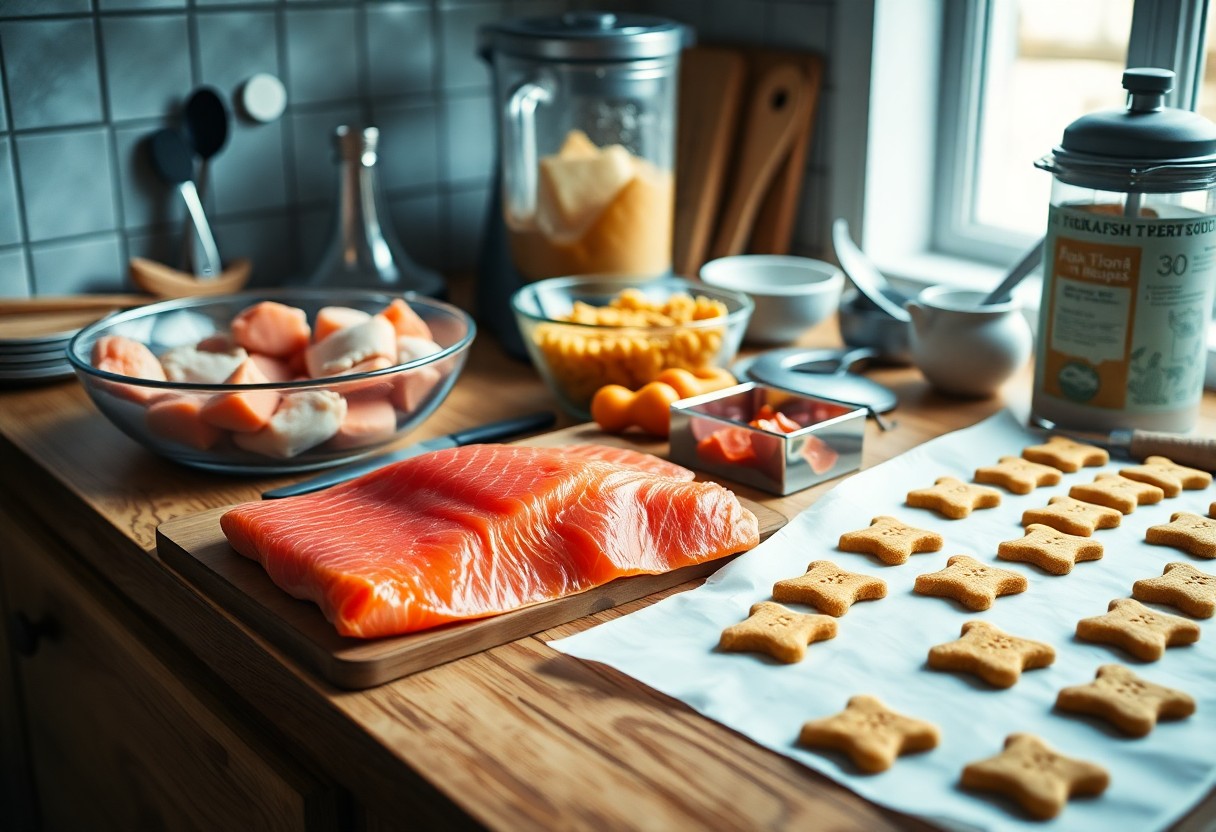
Dive into quick fish-based bites that you can make in under 30 minutes using simple pantry staples and precise ratios. Try a baked tuna fudge (1 can tuna, 1 egg, ½ cup oat flour) or salmon snacks (1 cup cooked salmon, 1 egg, ½ cup chickpea flour), bake at 325-350°F (160-177°C)10% of daily calories and avoid added salt, bones, and raw fish.
Tuna Fudge
Use one 5-6 oz (drained) low-sodium canned tuna, 1 large egg, and ½ cup oat flour; blend, press into a greased mini-muffin tin and bake at 325°F (163°C) for 12-15 minutes. You’ll get about 20-30 bite-sized treats; feed no more than once or twice weekly because canned tuna can contain higher mercury levels. Skip salt, oil-packed tuna, and any seasonings that contain onion or garlic.
Salmon Snacks
Flake 1 cup cooked, deboned salmon, mix with 1 egg and ½ cup chickpea or oat flour, then drop teaspoonfuls on a sheet and bake at 350°F (177°C) for 10-12 minutes until firm. These yield roughly 18-22 small bites rich in EPA/DHA omega-3s for skin and coat benefits. Always use cooked salmon because raw salmon can contain thiaminase, an enzyme that destroys vitamin B1.
For a reliable ratio, combine 1 cup flaked cooked salmon, 1 large egg, and ½ cup flour; this makes ~20 small treats (~8-12 kcal each). Keep treats to under 10% of a 200-250 kcal daily intake, so give 2-3 treats per day max. Store refrigerated for 3-5 days or frozen up to 3 months. Avoid any seasoning with onion, garlic, added salt, or bones that can harm your cat.
Tips for Storing and Serving Treats
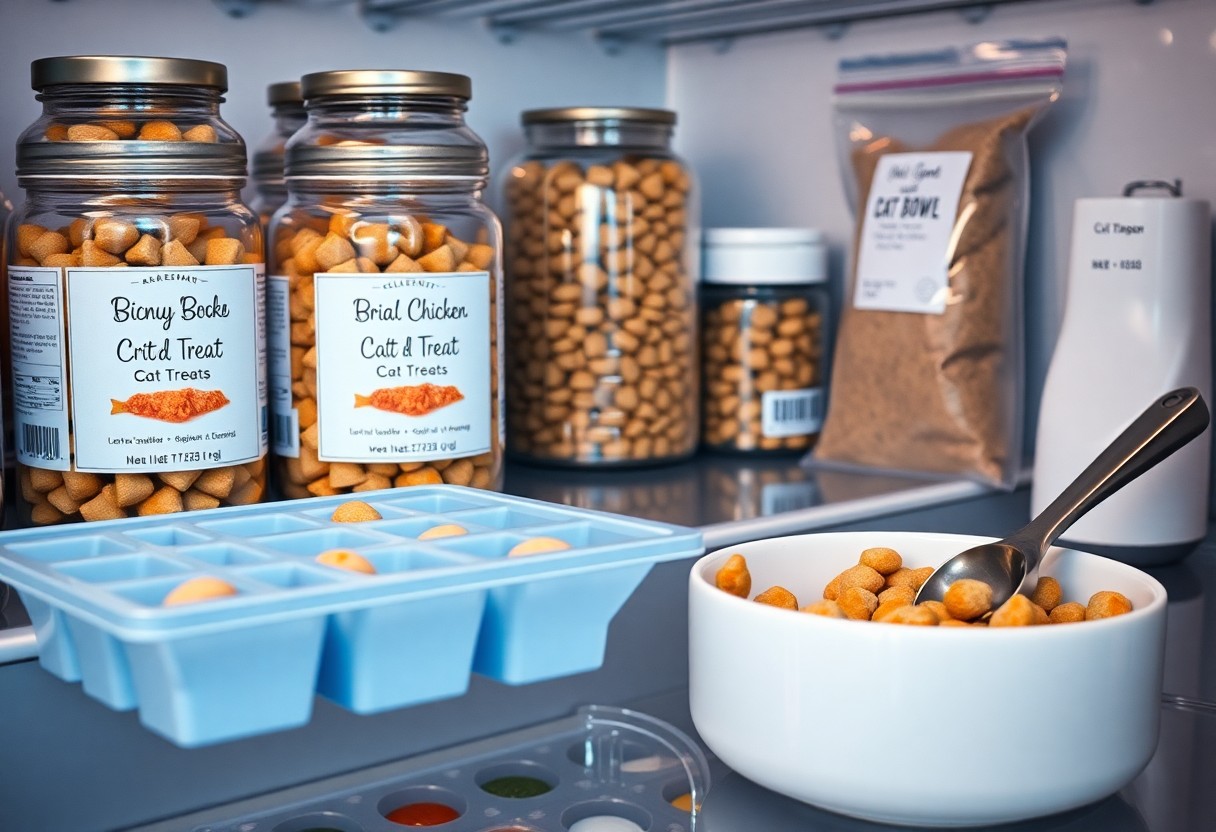
Keep freshly made treats cool and labeled: cooked chicken is safe 3-4 days in the fridge (≤4°C / 40°F), cooked fish 1-2 days, and frozen portions at −18°C (0°F) last 2-3 months; avoid leaving treats out more than 2 hours and never give your cat small bones or untreated raw fish. Perceiving how quick rotation and proper temps prevent spoilage helps you avoid feeding harmful treats.
- Chicken – fridge 3-4 days, freeze 2-3 months
- Fish – fridge 1-2 days, freeze 1-2 months
- Storage – airtight, labeled, portioned
- Serving – portion control; treat calories count
Storage Solutions
You should portion treats into single-serve sizes and store them in airtight containers or vacuum bags; vacuum sealing can extend frozen life to 6-12 months, while labeled zipper bags work for 2-3 months. Use clear dates, keep the fridge ≤4°C, and never thaw at room temperature – thaw in the fridge overnight or under cold running water to limit bacterial growth, and discard any treat with off-odors or sliminess.
Serving Suggestions
Give treats as small bites: aim for 1-3 grams per treat or roughly 10-30 kcal so they stay within the 10% daily calorie guideline (an average 4-5 kg cat needs ~200-300 kcal/day). Use treats for training, enrichment, or to top meals, and warm frozen pieces for 5-7 seconds in the microwave then test to avoid hot spots; avoid overfeeding to prevent weight gain.
You can increase engagement by hiding treats in puzzle feeders, sprinkling crumbled pieces onto wet food, or using them for clicker training-limit to 3-6 treats per session and total daily treats under 10% of intake. For example, a 4.5 kg cat needing ~220 kcal/day should get no more than ~22 kcal from treats; introduce new proteins over 7-10 days to monitor for allergies, and never serve bones or raw items containing thiaminase without proper processing.
Conclusion
Drawing together, you can confidently prepare simple, nutritious chicken- and fish-based cat treats by using plain cooked lean meat, minimal safe seasonings, and vet-approved supplements; control portion sizes, avoid bones and toxic ingredients, store treats properly, and consult your veterinarian to ensure they fit your cat’s dietary needs.
FAQ
Q: Are chicken and fish safe ingredients for homemade cat treats?
A: Yes-both are excellent protein sources when prepared safely. Use boneless, skinless chicken and deboned fish to avoid choking and splintering hazards. Do not add salt, onion, garlic, chives, leeks, or other Allium family ingredients, and avoid spices, sauces, and sweeteners. Cook chicken to an internal temperature of 165°F (74°C) to eliminate bacterial risk; for fish, cook until opaque and flaky. If you choose raw feeding, be aware of bacterial and parasite risks: source high-quality meat, use strict hygiene, and consult your veterinarian before offering raw treats.
Q: What are simple, tested DIY recipes using chicken and fish (with amounts and steps)?
A: Three easy recipes-adjust yields to your cat’s size and appetite. 1) Chicken Jerky: Slice 8 oz boneless chicken breast into 1/8-1/4″ strips, preheat oven to 200°F (93°C). Arrange strips on a lined baking sheet, bake 2-3 hours until fully dry and center reaches 165°F (74°C). Cool, break into bite-size pieces. 2) Tuna & Oat Bites: Drain one 5 oz can tuna in water; mix with 1 egg and 3 tbsp oat flour (or ground oats) to form a thick paste. Drop teaspoon-sized mounds onto a parchment-lined sheet. Bake at 350°F (175°C) for 10-12 minutes until set. Cool before serving. 3) Chicken-Salmon Mini Meatballs: Shred 6 oz cooked chicken and mix with 2 oz cooked, flaked salmon, 1 egg, and 2 tbsp oat flour. Form very small balls (pea-sized to ½” max), place on a sheet, and bake at 350°F (175°C) for 10-12 minutes. No salt or seasonings. Let cool completely. For all recipes, portion to pea- or fingertip-sized pieces for safety and to limit calories.
Q: How should I store these homemade treats, and how often can I give them?
A: Storage: Refrigerate moist/baked treats in an airtight container for up to 4-7 days; freeze portions up to 3 months and thaw in the refrigerator before use. Fully dried jerky can be kept in the refrigerator for 1-2 weeks or frozen for longer. Feeding frequency: treats should be occasional and make up no more than about 10% of your cat’s daily calorie intake-typically a couple of small pieces per day for most cats. Watch for food sensitivities: chicken and fish are common allergens. Introduce a new recipe slowly (small amount daily for 3-5 days) and stop if you see vomiting, diarrhea, itching, or ear issues. Consult your veterinarian if your cat has dietary restrictions, weight concerns, or chronic health issues.