Just transition slowly over 7-10 days, mixing increasing amounts of the new food so you give your cat time to adjust; stop and consult your vet if you notice severe vomiting or diarrhea. Monitor appetite, weight, and stool daily, keep your feeding schedule consistent to reduce stress, and phase in full portions once your cat tolerates the mix-this reduces upset and can lead to better digestion and a shinier coat.
Understanding Your Cat’s Nutritional Needs
Importance of Balanced Nutrition
Because your cat is an obligate carnivore, animal-based protein and specific nutrients like taurine, arachidonic acid, and preformed vitamin A are nonnegotiable. AAFCO lists minimums for adult maintenance at about 26% protein and 9% fat on a dry-matter basis, so check labels and target diets where protein is the largest component. Wet food also helps with hydration and can improve urinary health for many cats.
Recognizing Dietary Restrictions
If your cat has chronic vomiting, diarrhea, or itchy skin, dietary intolerance or allergy may be the cause; common offenders are animal proteins like beef, chicken or fish, and dairy often causes lactose intolerance. Start an elimination trial of 8-12 weeks with a novel or hydrolyzed protein to test for food allergy. Also avoid feeding onions and garlic, which cause hemolytic anemia, and never give chocolate or caffeine.
When you suspect a medical diet is needed, work with your veterinarian to choose therapeutic options: renal diets for kidney disease, low-carbohydrate or weight-control plans for diabetes, and novel or hydrolyzed proteins for confirmed food allergy. Diagnostic steps often include fecal testing, bloodwork (CBC, chemistry, T4), and monitoring response over weeks, so document symptoms, portions, and treats to speed accurate diagnosis.

Choosing the Right New Food
Types of Cat Food Available
You can choose between wet food (canned/pouched, ~75-80% water), dry kibble (low moisture, convenient), raw/frozen (higher protein but higher bacterial risk), dehydrated (reconstituted before feeding), and prescription diets for medical issues; each varies in moisture, calorie density and handling. This helps you weigh hydration, energy density and safety when matching a formula to your cat’s needs.
- Wet food
- Dry kibble
- Raw/frozen
- Dehydrated
- Prescription diets
| Wet (canned) | High moisture, 6-12 kcal/oz, good for urinary/renal support |
| Dry kibble | Low moisture, 3.5-4 kcal/g, convenient, longer shelf life |
| Raw/frozen | High protein/fat, pathogen risk without proper handling |
| Dehydrated | Concentrated nutrition, needs rehydration, less processed than kibble |
| Prescription | Targeted nutrients for conditions like CKD, obesity, or urinary disease |
Factors to Consider When Selecting Food
Assess your cat’s life stage (kitten, adult, senior), medical conditions (renal, urinary, allergies), body condition score and activity; look for AAFCO-complete labels and check protein/fat on a dry-matter basis-aim for higher protein for obligate carnivores (roughly 30-45% DM for many adults). The final selection should address health goals, palatability and your feeding routine.
- Life stage
- Medical conditions
- AAFCO-complete
- Protein (dry-matter)
- Palatability
If your cat has chronic kidney disease, choose lower phosphorus and controlled protein with vet guidance; for urinary-tract disease, opt for diets that promote dilute urine and appropriate minerals. For weight loss, target a 10-20% calorie reduction and higher protein to preserve lean mass; kittens need ~2-3× adult calorie density. The best plan integrates lab results, feeding trials and gradual transition to minimize GI upset.
- Phosphorus
- Urinary minerals
- Calorie density
- Lean mass preservation
- Feeding trials
Gradual Transition Process
You should shift your cat over days to avoid digestive upset, usually over 7-14 days for healthy adults and up to 3-4 weeks for seniors or cats with sensitive stomachs. Start with small proportions of the new food, monitor appetite and stool daily, and pause or slow the schedule if you see diarrhea, repeated vomiting, or refusal to eat. Adjust speed based on how your cat responds.
Importance of Slow Transitioning
When you change diets slowly the gut microbiome can adapt, lowering risk of GI upset. Many cats tolerate a 10-day plan; cats with inflammatory bowel disease or recent antibiotics often need longer. In practice, you’ll see stool quality and energy return within a week if the pace is right, and slowing the swap by a few days often prevents setbacks that might otherwise require a vet visit.
Step-by-Step Guide to Mixing Foods
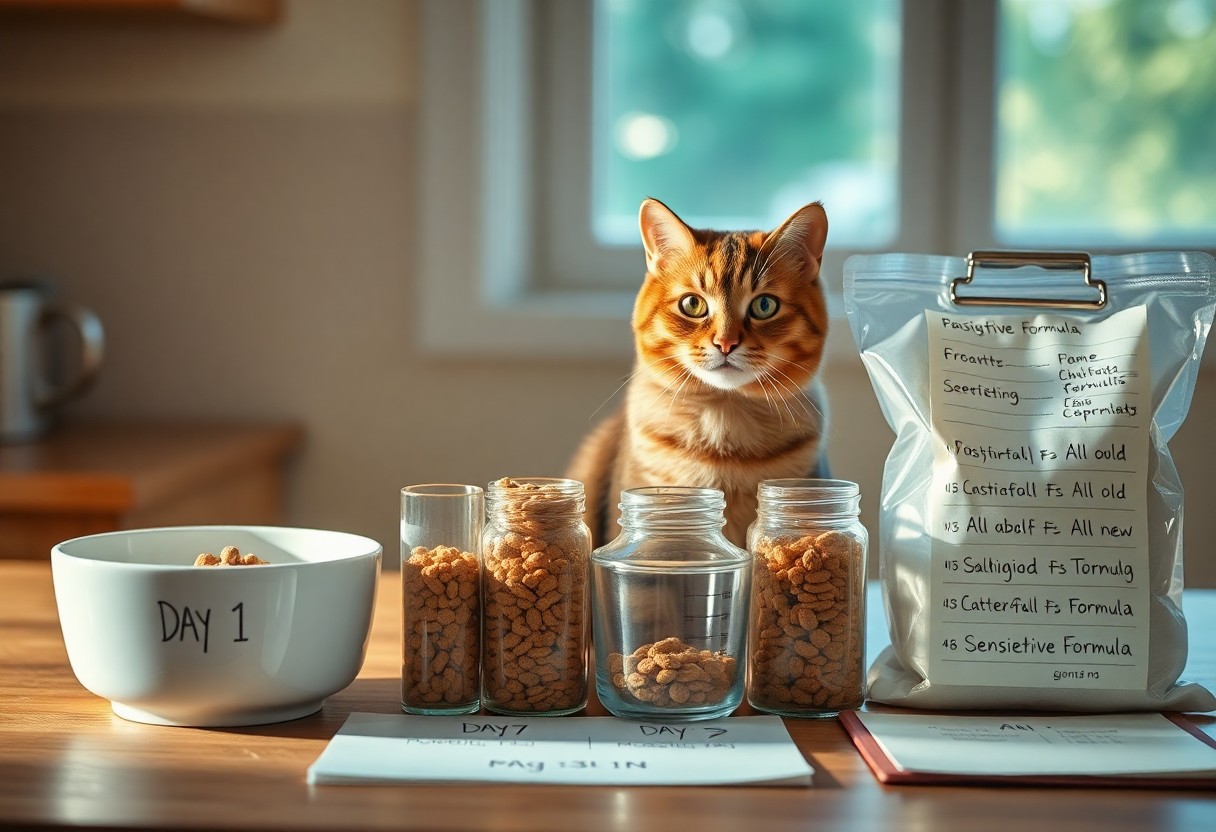
Begin by mixing by volume or weight and keep portions consistent: days 1-3 use 25% new / 75% old, days 4-6 use 50/50, days 7-9 use 75% new / 25% old, and by day 10 offer 100% new; extend each phase to 5-7 days for sensitive cats. Weighing portions (grams) improves accuracy and helps you track tolerance objectively.
For more precision, weigh meals and log stool quality, appetite, and any vomiting. If your cat shows mild soft stool, hold the current ratio for an extra 2-3 days; with persistent vomiting or bloody stool you must stop the transition and contact your veterinarian. Using identical feeding times and bowls also reduces stress that can mask dietary reactions.
Mixing Schedule Overview
| Days | Mix Ratio & Notes |
|---|---|
| 1-3 | 25% new / 75% old – introduce small amounts, weigh portions, watch appetite |
| 4-6 | 50% new / 50% old – expect minor stool changes; extend phase if needed |
| 7-9 | 75% new / 25% old – increase monitoring; pause if vomiting or looser stool appears |
| 10+ | 100% new – maintain for 1-2 weeks and reassess weight, coat, and stool quality |
Monitoring Your Cat’s Response
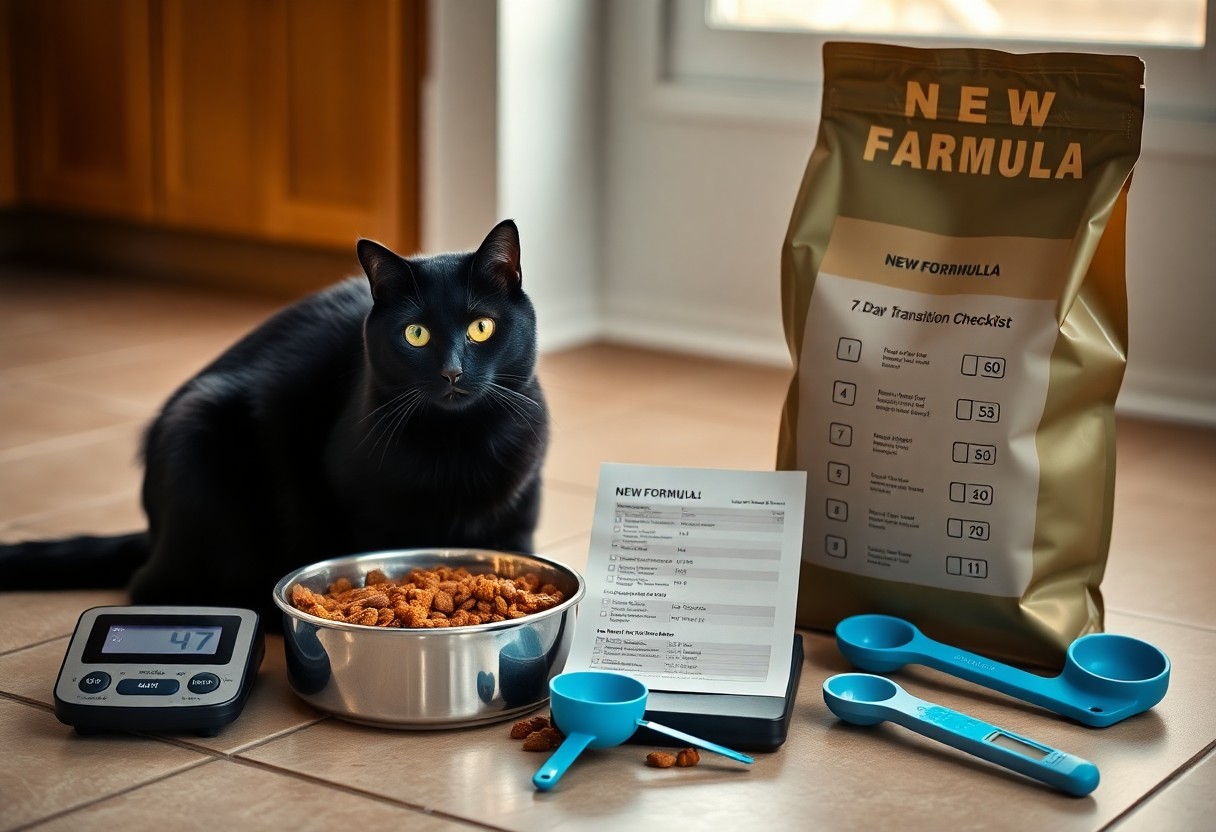
Within the first 7-14 days you should track stool quality, appetite, activity and weight daily; many cats show mild changes for 2-3 days before settling. Use a simple log or app to note meals, vomit episodes, stool consistency and energy levels. If you see steady improvement – more regular stools and normal play – that’s a positive sign. Flag any persistent vomiting, bloody stool or >5% weight loss for veterinary evaluation immediately.
Signs of Digestive Distress
Diarrhea more than three loose stools per day, vomiting more than twice in 24 hours, blood or black tarry stool, marked lethargy or signs of dehydration (sunken eyes, tacky gums) indicate a problem. Mild soft stools for 24-48 hours can occur during a transition, but if symptoms persist beyond 48 hours or escalate, contact your veterinarian and stop introducing new food until assessed.
Behavioral Changes to Watch For
Watch for decreased grooming, hiding, reduced play or avoidance of the litter box – these often signal discomfort or nausea. Increased vocalization, sudden aggression around feeding time, or eating markedly less (below 50% of usual intake) are important to note. Positive signs include steady appetite and normal play within a week, showing successful adjustment.
Keep quantitative notes: record food intake by grams, weigh your cat weekly and flag >5% loss, and time hiding episodes; if playtime drops by >30% or litter-box avoidance occurs for two consecutive days, seek veterinary advice. Video clips and a two-week food diary help your vet diagnose intolerance versus behavioral causes, and can speed a safe plan-such as a slower transition or an elimination trial.
Adjusting the Diet as Necessary
Monitor your cat for at least 7-14 days after the transition, tracking appetite, stool quality, vomiting, and weight. If your cat is thriving-steady weight, regular stools-you can gradually increase the proportion of new food. Make smaller adjustments (10-20% every 2-3 days) for seniors, kittens, or cats with sensitive digestion. If negative signs appear, pause the change, reduce new-food percentage, or revert briefly to the previous diet while you evaluate.
When to Make Further Changes
If your cat has vomiting more than twice in 24 hours, diarrhea lasting over 48-72 hours, or shows signs of dehydration (tacky gums, decreased skin elasticity), act quickly. Also consider changes when you see >5% weight loss in a month or appetite reduced by half for >48 hours. For mild loose stools or picky behavior, try smaller transitions, novel protein trials, or limited-ingredient formulas before switching again.
Consulting with a Veterinarian
Contact your vet if problems persist beyond 7-10 days or any severe signs appear immediately. Bring the new and old food labels, a short feeding log, recent weight records, and a stool sample. Your vet may recommend diagnostics, an 8-12 week elimination diet, or a prescription hydrolyzed diet to pinpoint allergies or intolerances and to guide safe, evidence-based changes.
Veterinary evaluation often includes a physical exam plus tests like CBC, chemistry panel, total T4 for older cats, pancreatic lipase (fPL) and fecal analysis to rule out parasites or inflammation. Imaging or referral to a veterinary nutritionist may follow for chronic cases. During an elimination trial, give only the prescribed food-no treats, flavored medications, or table scraps-and document weight and stool daily to assess response objectively.
Tips for a Successful Transition
Phase the transition over 7-14 days using 25-33% increments: days 1-3 mix 25% new food, 75% old; days 4-6 50/50; days 7-9 75/25, adjusting to how your cat tolerates it. Feed 3-4 small meals, warm wet food to 38-40°C to boost aroma, and log weight and stool daily. Sudden changes can cause vomiting, diarrhea, or hepatic lipidosis. Thou monitor appetite, stool consistency, and weight, and call your vet if issues continue.
- Mix in new food gradually-use kitchen scales or measuring cups for consistency.
- Warm canned food slightly to enhance smell and acceptance.
- Offer 3-4 small meals rather than one large meal to reduce stress.
- Keep feeding times and locations consistent to support routine for your cat.
Creating a Positive Feeding Environment
Place bowls in a quiet, low-traffic spot at least 1-2 m from the litter box and elevated if your cat prefers height; many cats eat better when they feel safe. Use shallow dishes for whisker-sensitive cats, remove uneaten food after 20-30 minutes, and limit distractions during meals. If you have multiple cats, separate feeding stations to prevent guarding. Consistent routine and low stress can improve intake within 3-5 days.
Encouraging Your Cat to Try New Foods
Start by mixing a teaspoon of the new food into a favorite wet meal, or add a low-sodium broth topper; limit treats to ≤10% of daily calories to avoid preference skew. Try hand-feeding small pieces, offering the new food on a spoon, or warming it slightly to intensify aroma. Rotate textures (pate vs. chunks) and be patient-many cats need 3-7 exposures before accepting a change.
For more success, track responses: offer the warmed new food for three consecutive meals, then increase the new:old ratio if appetite and stool remain stable. In practice, owners report 60-80% acceptance when combining warming, small warm toppers (1-2 teaspoons), and consistent mealtimes; if your cat shows reduced eating for >48 hours, contact your vet to rule out medical causes. Slow, steady exposure and monitoring yield the best results.
Final Words
Now follow a gradual, monitored plan to switch your cat’s food-mix increasing amounts of the new food over 7-10 days, observe appetite, stool, and mood, maintain consistent feeding times, and contact your veterinarian if vomiting, diarrhea, or loss of appetite occurs; by proceeding patiently and watching your cat closely you ensure a smooth, safe transition.
FAQ
Q: What is a safe step-by-step schedule to transition my cat to a new food?
A: Follow a gradual mixing schedule over 7-14 days depending on your cat’s sensitivity: Days 1-2: 75% old food + 25% new; Days 3-4: 50%/50%; Days 5-6: 25% old + 75% new; Day 7: 100% new. For cats with sensitive stomachs, extend each phase to 3-4 days or use smaller increments (90/10 → 75/25 → 50/50 → 25/75 → 0/100). Keep portion sizes and feeding times consistent, offer fresh water, warm wet food slightly to enhance aroma, limit treats and human food during the transition, and weigh or measure portions to avoid overfeeding. Monitor appetite, stool quality, and energy daily and slow the process if any digestive changes appear.
Q: My cat has soft stools, vomiting, or reduced appetite during the switch-what should I do?
A: If mild loose stool or slight reduced appetite appears, pause progression and stay at the previous ratio for 3-5 days until symptoms stabilize, then resume more slowly. For repeated vomiting, watery diarrhea, blood in stool, lethargy, or if the cat stops eating for more than 24 hours, contact your veterinarian. Offer small, frequent meals and prioritize hydration; do not attempt prolonged fasting because cats risk metabolic complications if not eating. Consider a probiotic formulated for cats or a veterinary gastrointestinal diet under vet guidance for persistent GI upset.
Q: How do I handle special situations-picky eaters, multi-cat households, kittens, seniors, or cats on medical diets?
A: Picky eaters: warm wet food, add a small spoon of the old food or a safe topper, try different textures/flavors, hand-feed or schedule shorter fasting intervals before meals to increase interest. Multi-cat homes: feed in separate rooms or use microchip-activated feeders to prevent cross-eating and keep track of who is eating which food. Kittens and seniors: transition slower (10-14+ days) because their digestive systems are more fragile; monitor weight closely. Cats on prescription or therapeutic diets: consult the prescribing veterinarian before switching; do not mix therapeutic diets with non-prescription foods unless vet approves. In all special cases, slow the transition and seek veterinary advice if any concerning signs develop.