Just use simple, single-protein recipes and gentle ingredients so you can soothe your cat’s digestion; avoid toxic foods like onions, garlic, and chocolate and limit fat to prevent pancreatitis, while choosing cooked chicken, pumpkin, or fish for easier digestion and reduced vomiting or diarrhea. Test small amounts and monitor reactions, and consult your veterinarian before long-term feeding to ensure safe, balanced treats for your sensitive pet.
Understanding Sensitive Stomachs in Cats
When your cat shows intermittent vomiting, loose stools, or reduced appetite, you’re likely dealing with a sensitive stomach rather than a one-off upset; veterinarians flag vomiting more than twice per month or unexplained weight loss of 5% or more as signs to act. If dehydration, persistent diarrhea >48 hours, or blood in stool appears, seek immediate care. An elimination diet typically runs 8-12 weeks and often reveals food-trigger patterns within 2-4 weeks of consistent feeding.
Common Symptoms
If your cat has a sensitive gut you may notice frequent vomiting, loose or mucousy stools, fluctuating appetite, excessive grooming, or bad breath; vomiting more than twice monthly or diarrhea lasting over 48 hours should be treated as abnormal. Younger cats often show parasite-related signs while older cats commonly present chronic weight loss and intermittent diarrhea. Watch for signs of dehydration-sunken eyes, tacky gums-and pale gums indicating anemia; those are danger signals requiring prompt veterinary evaluation.
Causes of Digestive Issues
Food-related problems (intolerances or allergies to proteins like chicken, fish, or beef and to additives/grains), parasites (Giardia, roundworms), bacterial overgrowth, inflammatory bowel disease (IBD), pancreatitis, and metabolic diseases such as hyperthyroidism or renal disease are common culprits. Cats older than 8 years are more prone to IBD and hyperthyroidism, while kittens often suffer parasite- or dietary-transition issues. Some drugs and sudden diet changes can also trigger chronic GI signs.
Diagnosing causes usually combines fecal testing (flotation, Giardia antigen, PCR), CBC/chemistry and T4 for older cats, abdominal ultrasound, and sometimes endoscopic or full-thickness biopsy. You should expect rule-out steps: treat parasites first, then try an 8-12 week novel-protein or hydrolyzed elimination diet; improvement within 2-4 weeks supports a food-related cause. Acute red flags like persistent vomiting, severe diarrhea, or evidence of systemic illness warrant immediate diagnostics and fluid therapy.
Benefits of Grain-Free Diets
Switching to grain-free homemade treats shifts calories toward animal-based ingredients, which often raise protein content to about 30-45% and reduce carbs to under 15-20%, aligning better with feline metabolism. You gain tighter control over ingredient quality and avoid common fillers, but you must balance micronutrients-especially taurine-to prevent heart and eye disease. Many owners report improved coat condition and energy within weeks when recipes are properly formulated and supplemented.
Nutritional Advantages
By emphasizing meat, fish, and organ sources you increase bioavailable amino acids and vital fatty acids (EPA/DHA from fish oil), improving protein-to-carbohydrate ratios compared with grain-heavy treats. Typical grain-free formulas deliver higher digestible protein and more omega-3s, supporting skin and immune health. If you make treats at home, include a tested feline multinutrient or specific taurine supplementation, because improper homemade diets can lead to serious nutrient gaps.
Impact on Digestive Health
For cats with sensitive stomachs, grain-free recipes can reduce bulk intestinal irritation from poorly digested starches; many caregivers see stool quality improve within 1-2 weeks. Food allergies affect a small percentage of cats (roughly 1-3%), and elimination trials lasting 8-12 weeks often identify triggers. Note that some grain-free mixes are higher in fat, which can provoke pancreatitis in susceptible cats, so monitor fat content closely.
When you switch treats, transition slowly over 7-10 days to limit GI upset and track stool frequency (ideally 1-2 daily) and consistency. Use firm, well-formed stools as a success marker; persistent vomiting, diarrhea, or weight loss beyond 48-72 hours requires veterinary evaluation. Adjust protein source, fiber (pumpkin/sweet potato), and added probiotics based on your cat’s response to fine-tune tolerance.
Key Ingredients for Homemade Treats
When choosing ingredients for grain-free treats, prioritize single-ingredient sources that support digestion and nutrient needs for your cat. You should aim for formulations that reflect obligate carnivore requirements: AAFCO recommends a minimum of 26% crude protein for adult maintenance and 30% for growth/gestation. Use fresh meats, limited novel proteins, and minimal additives to reduce reactions and keep your cat’s stomach calm.
High-Quality Proteins
Choose boneless, cooked single-source proteins like chicken breast, turkey, salmon, rabbit, or venison; you can use canned low-sodium fish occasionally but watch mercury exposure. Avoid raw meats and cooked bones-both can be dangerous due to pathogens or choking/perforation. Single-protein treats make elimination trials easier and often reduce GI upset, so prioritize transparency in ingredient sourcing and simple recipes.
Healthy Fats and Additives
Include moderate amounts of digestible fats for energy and mucosal health; if you add oils, choose fish oil for EPA/DHA because cats convert plant ALA poorly, making marine sources preferred. Steer clear of added salt, garlic, onion, and artificial sweeteners-these are dangerous. Too much fat can trigger pancreatitis, so balance fat content carefully in recipes you prepare for your cat.
When incorporating fats, start low-e.g., 1/8 teaspoon of fish oil daily for a 4-5 kg cat-and titrate while observing stools. You can fold mashed canned sardines or diluted salmon oil into treats; limit tuna due to mercury. Because cats poorly convert ALA, prioritize marine EPA/DHA which reduce inflammation and improve coat quality. Avoid preservatives, excessive salt, and any xylitol-containing ingredients when you formulate or store homemade treats.
Easy Grain-Free Cat Treat Recipes
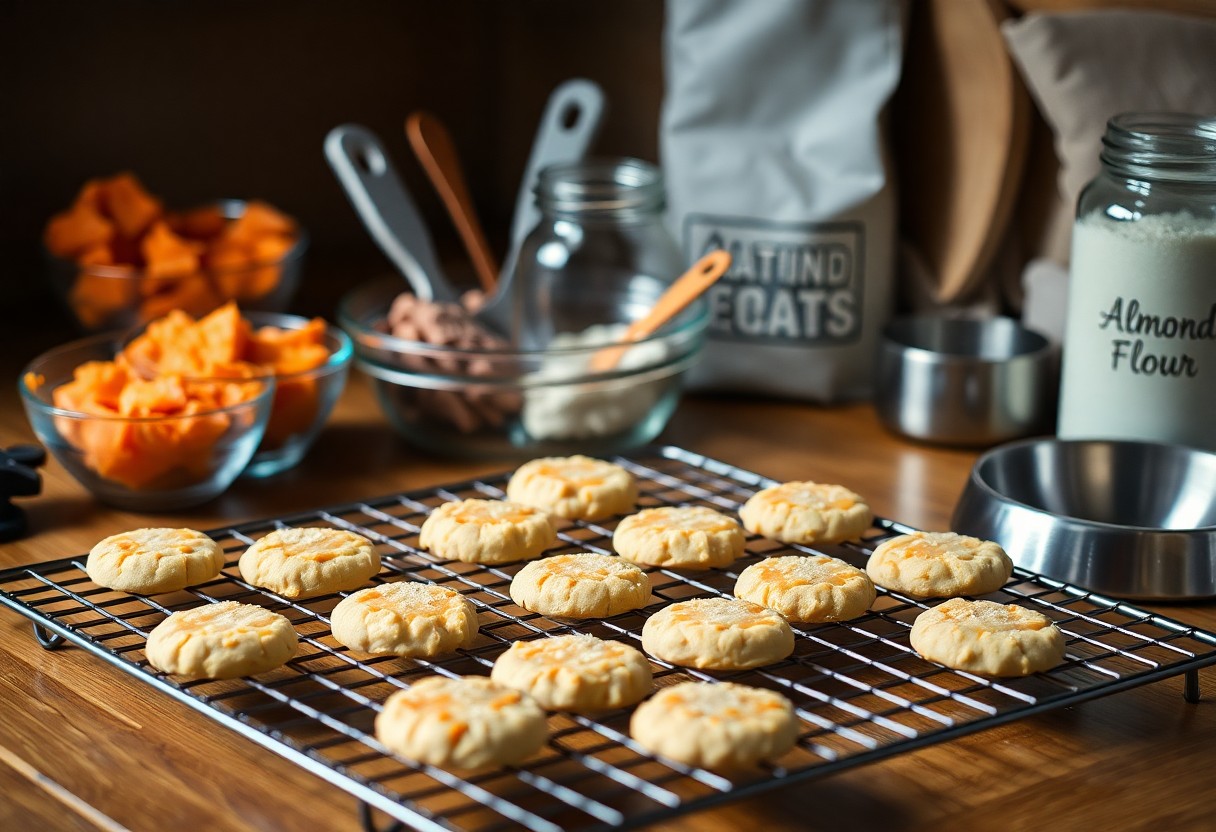
Try two straightforward, low-ingredient recipes that take under 30 minutes active time and yield about 30-40 small treats. You can tailor textures and portion sizes to your cat’s tolerance, introducing each recipe gradually over 3-5 days. Both are grain-free, avoid fillers, and use single-animal proteins plus fiber-rich pumpkin or nutrient-dense liver to support sensitive stomachs while keeping treats minimal in volume and calories.
Chicken and Pumpkin Bites
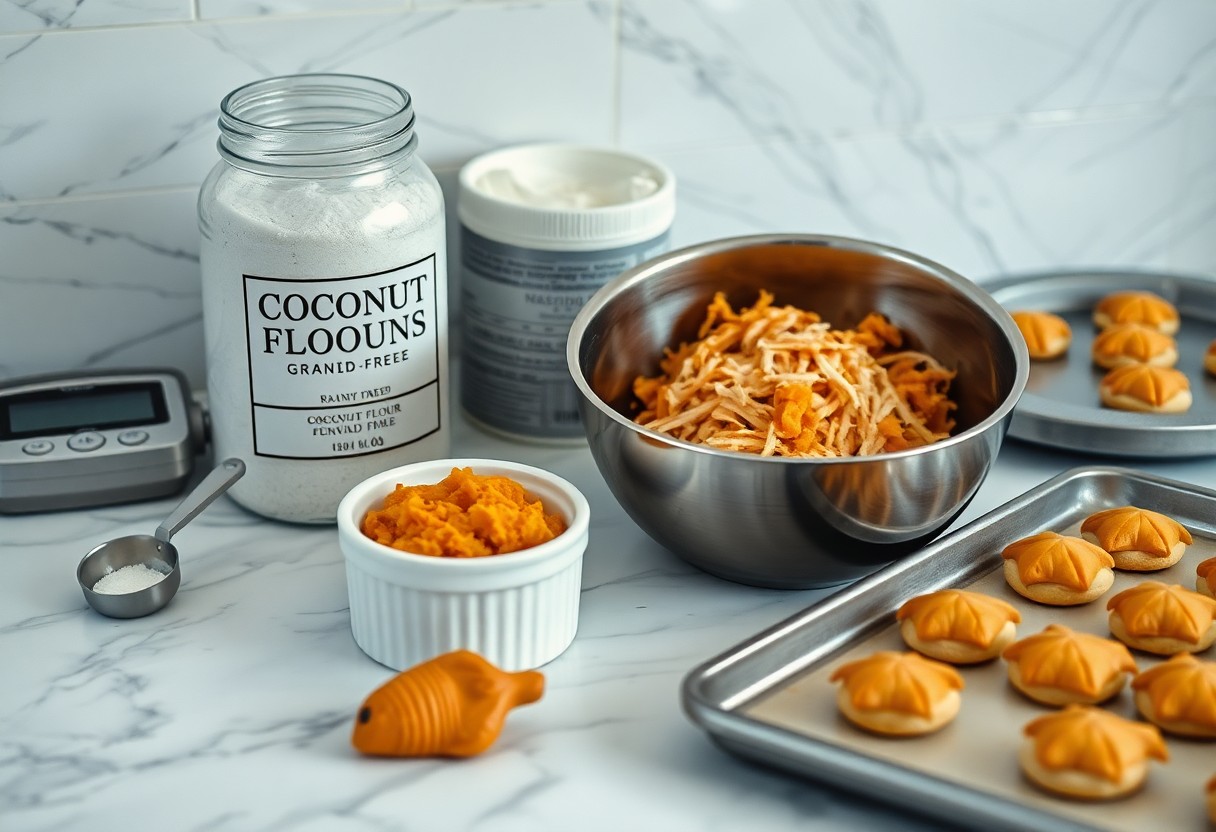
Combine 1 cup shredded cooked chicken, 1/2 cup pure canned pumpkin (no spices), 1 egg, and 2 tablespoons coconut flour; form teaspoon-sized bites and bake at 350°F for 12-15 minutes until set. You’ll get roughly ~30 bite-sized treats; pumpkin supplies soluble fiber to help firm stools while chicken provides lean protein. Avoid canned pumpkin with additives and any onion/garlic-containing mixes to prevent toxicity.
Beef Liver Crunchies
Pulse 8 oz trimmed beef liver with 1 egg and 1/4 cup almond or coconut flour until smooth, spread thin, then bake at 300°F for 25-30 minutes or dehydrate at 140°F for ~6 hours to make crunchy pieces; expect about 40 treats. Liver is high in vitamin A and iron, so limit portions and do not feed raw to avoid pathogen risk.
When preparing liver treats you should portion carefully: limit to about 1-2 small pieces per day for an average cat to avoid vitamin A excess. You can refrigerate for up to 4 days or freeze portions for ~3 months. Grinding liver very smooth improves texture and reduces choking risk, and trimming excess fat helps lower spoilage and rancidity during storage.
Tips for Introducing New Treats
Phase in new grain-free homemade cat treats slowly: give a single tiny treat (about 1-2 g) every other day for 5-7 days while mixing with familiar snacks to protect a sensitive stomach. Watch for vomiting, diarrhea, lethargy, or skin itching, and avoid toxic ingredients like onion, garlic, and chocolate. The gradual approach and careful observation reduce risk of feeding-related problems.
- Start small: 1-2 g treats, every other day.
- Mixing: blend 10-20% new treat into routine snacks first.
- Observe for 24-72 hours after each introduction.
- Avoid known toxins: onion, garlic, chocolate.
Gradual Introduction
You should begin with a micro-dose: one 1-2 g treat every other day for 7 days, then move to daily small portions for another 7 days before offering a full portion. Try mixing a single broken treat into play or atop wet food to assess acceptance without overloading the gut. If your cat stays consistent in appetite and stool quality, increase slowly to normal treat frequency.
Monitoring Reactions
Pay attention to both immediate and delayed signs: immediate reactions can appear within minutes to hours, while GI changes often show within 24-72 hours. Log episodes of vomiting, loose stools, reduced appetite, excessive salivation, or new skin scratching; if you see bloody stool or labored breathing, stop treats and contact your vet right away.
Keep a simple diary noting date, treat type, amount, and observed symptoms; include photos of stool or rashes and weigh your cat weekly to spot subtle changes. If mild GI upset occurs, pause treats for 48-72 hours and re-challenge once; persistent problems warrant an elimination trial of 8-12 weeks or diagnostic tests (fecal, bloodwork) under veterinary guidance to identify food allergy or intolerance.
Store-Bought Alternatives
You can save time by choosing store-bought options that match your homemade goals: seek limited-ingredient wet treats, single-protein air-dried bites, or veterinary digestive formulas. Aim for products with fewer than 10 ingredients, clear protein sources, and no artificial colors or flavors. For example, many cat owners switch to canned single-protein treats or air-dried snacks when sensitive stomach signs appear, keeping treats to under 10% of daily calories.
Quality Brands to Consider
You might try brands known for limited-ingredient or digestive-focused lines: Ziwi Peak (air-dried, single-protein options), Natural Balance L.I.D. (limited-ingredient treats), Tiki Cat (high-moisture canned proteins), Purina Pro Plan Sensitive Skin & Stomach (prebiotic fiber), and Hill’s Prescription Diet i/d for vet-guided care. Those choices emphasize identifiable proteins, minimal fillers, and digestive support that often reduces GI upset.
What to Avoid
You should avoid treats with unnamed “meat by-products,” high levels of corn, wheat, or soy, artificial preservatives like BHA/BHT, and sweeteners such as xylitol. Also steer clear of onion/garlic ingredients since they can harm cats, and treats listing plant starches among the first three ingredients, which often increase digestive load and inflammation.
When vetting labels, note that ingredients are listed by weight, so the first three items make up most of the formula; if you see vague terms like “meat meal,” “animal digest,” or multiple grain fillers up front, the product likely won’t suit a sensitive stomach. Limit treats to about no more than 10% of daily caloric intake, and if GI issues persist, pursue a hydrolyzed or prescription protein under veterinary guidance.
Summing up
With this in mind, you can make grain-free treats using limited, single-protein ingredients and gentle preparation to reduce digestive upset; introduce them slowly, offer small portions, and monitor your cat’s stool and behavior for adverse reactions. Prioritize quality proteins, avoid seasoning and fillers, store treats properly, and consult your veterinarian if your cat has ongoing sensitivity or allergies to ensure your homemade snacks support their health.
FAQ
Q: What ingredients are safest to use when making grain-free homemade cat treats for a cat with a sensitive stomach?
A: Use a single, lean protein as the base (cooked chicken breast, turkey, or white fish) and simple, easily digested binders such as plain canned pumpkin (not spiced), cooked sweet potato or potato, tapioca starch or arrowroot, and a small amount of coconut flour or gelatin if needed for texture. Add plain low‑sodium bone broth for flavor but avoid any broth containing onion or garlic. Avoid common irritants and toxins: onions, garlic, chives, salt, sugar, dairy, chocolate, grapes/raisins, nuts, and artificial sweeteners (xylitol). Keep recipes single‑protein and limited‑ingredient so you can identify triggers if a reaction occurs; use lean cuts with skin and bones removed and do not include bones in the finished treats.
Q: How should I prepare and introduce grain-free treats to minimize gastrointestinal upset?
A: Make small test batches with one new ingredient at a time. Puree or finely shred the cooked protein and combine with a binder such as 1-4 tablespoons plain pumpkin or 1-2 tablespoons tapioca/arrowroot to form a moldable dough; add one beaten egg or 1-2 teaspoons powdered gelatin to bind if needed. Shape into very small bites and either bake at about 325°F (160°C) until firm (15-25 minutes, depending on size) or dehydrate at a low temperature until crisp. Introduce one or two treats and wait 48 hours while monitoring stool, vomiting, appetite, energy, and skin condition. If no adverse signs appear, gradually increase quantity. If vomiting, diarrhea, hives, or excessive scratching occur, stop the new treat and consult your veterinarian for guidance or for an elimination trial under medical supervision.
Q: How should I store grain-free homemade treats and how many can I safely give a cat with a sensitive stomach?
A: Store soft or moist treats refrigerated for up to 5-7 days, or freeze portions for up to 3 months; fully dehydrated treats can be kept in an airtight container at room temperature for about 1-2 weeks or longer if very dry. Discard any treats that show mold, off odors, or a change in texture. Treats should make up no more than about 10% of daily caloric intake; for most adult cats this typically means 1-3 small treats per day, depending on size and calorie content. Adjust frequency for kittens, overweight, or medically managed cats and consult your veterinarian before making treats a regular part of the diet, especially if your cat has chronic gastrointestinal issues or suspected food allergies.