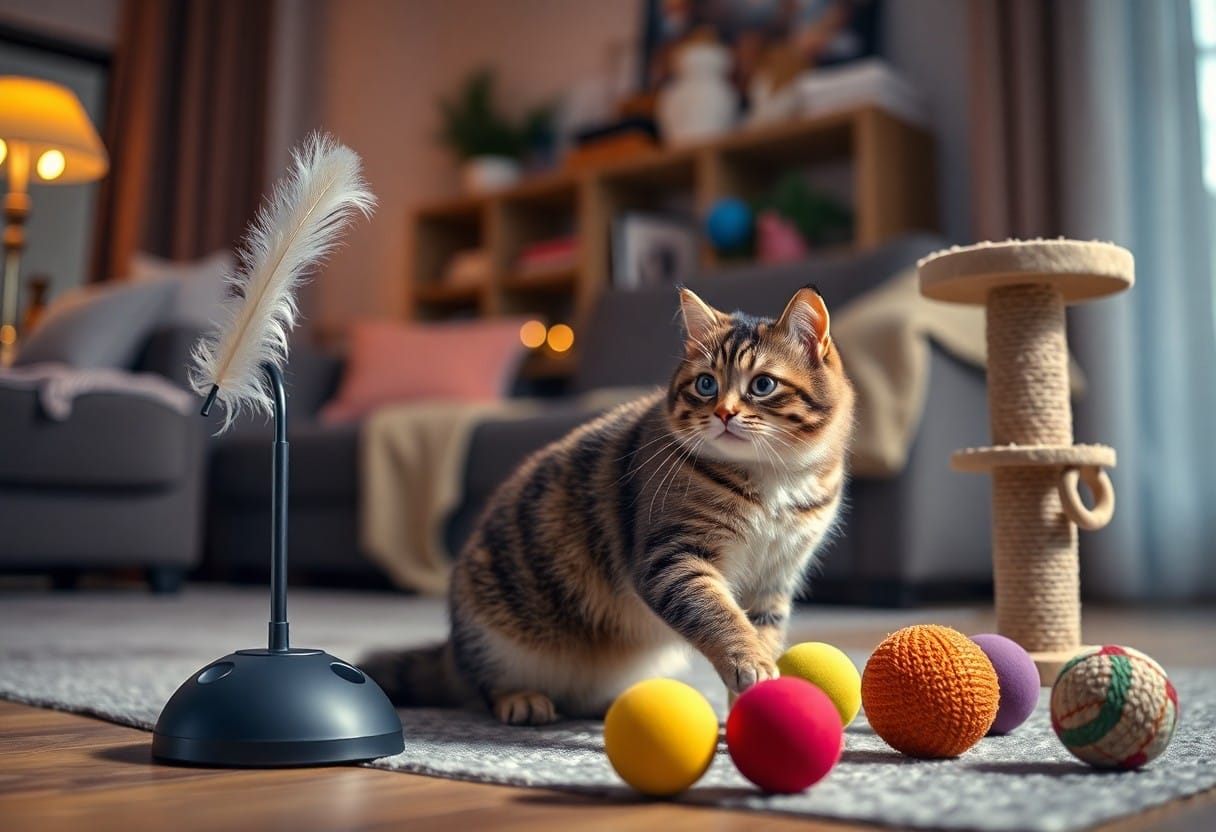
Apartment living doesn’t mean your cat must be sedentary; you can use vertical shelves, interactive toys and short daily sessions to keep them fit and engaged. Use safe climbing spots and rotate toys to provide mental stimulation, schedule multiple short play sessions to prevent boredom, and monitor food to reduce obesity risk. Avoid hazards by securing windows and hiding cords-open balconies and loose wires are dangerous. With consistent effort you can maintain your cat’s health and happiness in even the smallest space.
Understanding Your Cat’s Exercise Needs
Your indoor cat’s activity requirements depend on age, weight, and personality. Aim for 20-30 minutes of active play daily for adults, while kittens often need short bursts totaling 45-60 minutes. You should split sessions into multiple 3-10 minute bouts, provide vertical space and puzzle feeders, and monitor body condition score (ideal ~4-5/9). Lack of activity raises the risk of obesity, diabetes, and joint problems.
Importance of Physical Activity
Physical activity preserves lean muscle, supports metabolic health, and reduces stress-related behaviors like overgrooming; studies show up to 60% of indoor cats are overweight or obese. You should use timed play, food puzzles, and vertical climbing to burn calories and slow feeding. Short daily routines-wand play, interactive toys, 10-15 minutes twice a day-often produce measurable weight and behavior improvements within 4-8 weeks.
Understanding Cat Behavior
Cats follow a predatory sequence-stalk, chase, pounce, and bite-so you should structure play to mimic that flow and finish with a catch. Many cats prefer multiple short sessions; aim for 3-6 quick interactions per day with varying intensity. Neutered or senior cats may need more enticing toys or food rewards, while high-energy breeds like Bengals often demand longer, more frequent play.
Watch body language to gauge engagement: dilated pupils, tail twitching, and crouched posture signal hunting mode, whereas flattened ears or frantic biting indicate overstimulation and you should stop. Rotate toys every 1-2 weeks, introduce vertical perches, and pair play with puzzle feeders so you finish sessions with food rewards. A simple routine-5 minutes morning, three 5-7 minute sessions during the day, and 10 minutes evening-keeps momentum without exhausting your cat.
Creating an Engaging Environment
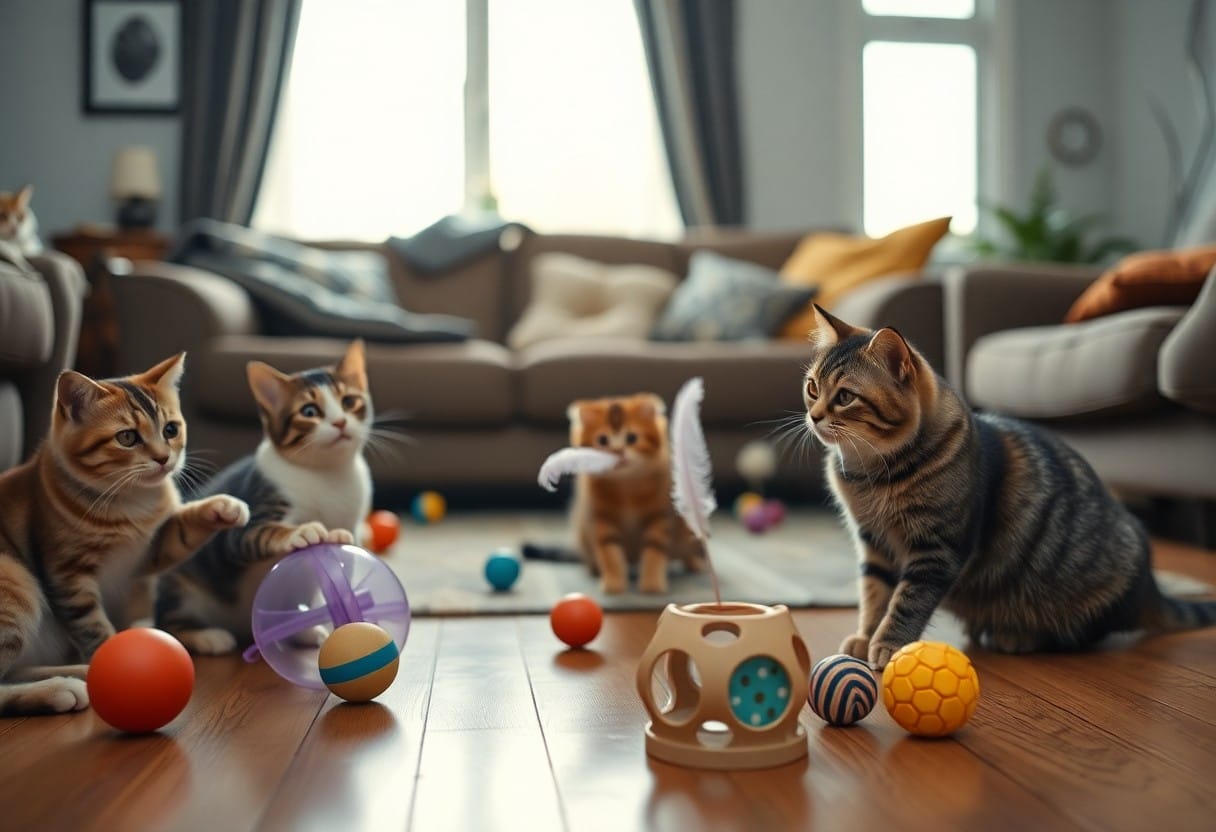
Design three distinct activity zones-perch, chase corridor, and quiet retreat-and rotate 3-4 toys every 2-3 days to keep stimulation high. You should provide 10-15 minutes of interactive play twice daily and use puzzle feeders to mimic hunting; placing lightweight obstacles and hiding boxes encourages short sprints and ambush behavior. Toy rotation and varied terrain reliably boost activity in compact apartments.
Utilizing Vertical Space
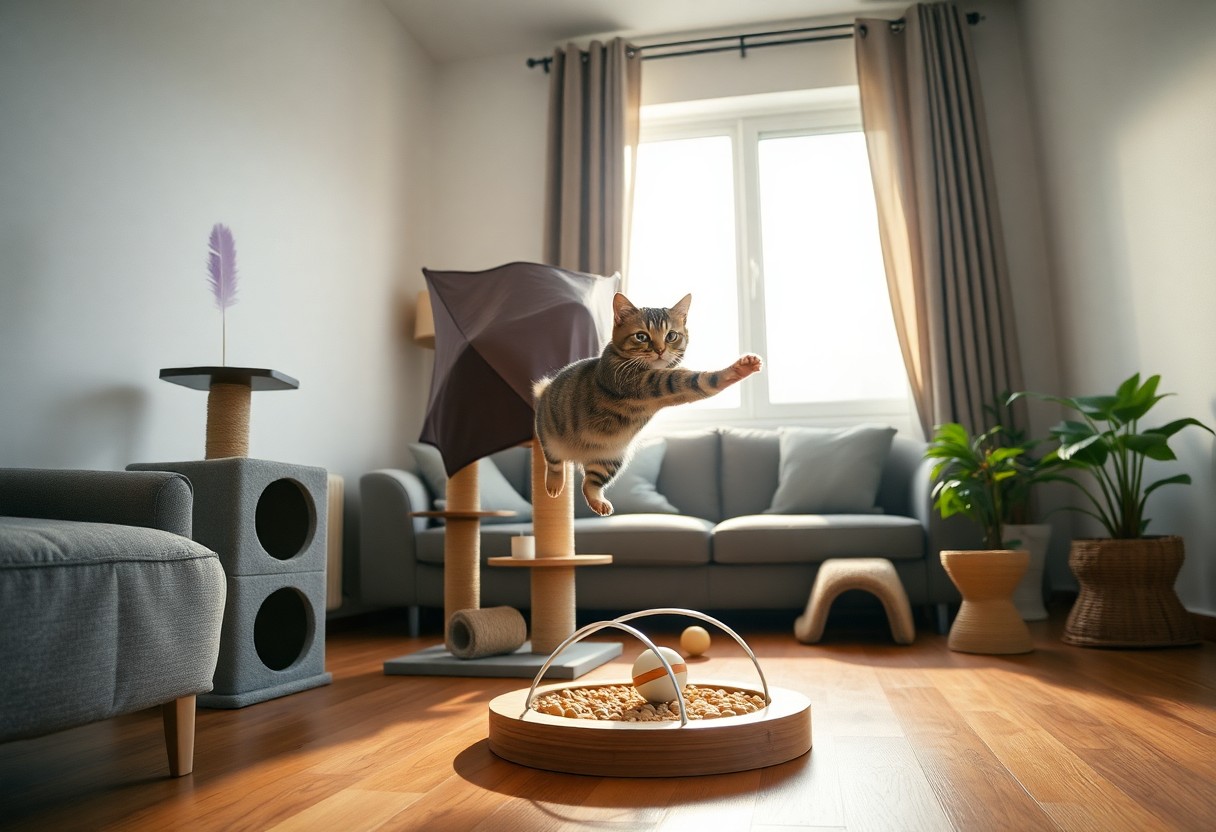
Install 3-4 staggered wall shelves 12-16 inches deep and spaced 18-24 inches apart so your cat can climb using short hops-cats can jump up to six times their body length. Anchor each shelf with screws into studs and add non-slip surfaces; secure to studs to prevent dangerous falls. Wall-mounted perches and window beds give your cat territory without sacrificing floor area.
Pick a cat tree with a wide, heavy base and at least three levels so your cat can climb, scratch, and rest; prefer sisal-wrapped posts and platforms about 28-32 inches tall for full-stretch scratching. Place a condo near a sunny window to combine vertical access and view. Stable base and sisal posts promote safe, long-lasting use.
Apply the “N+1” rule for multi-cat homes-one more vertical station than cats-so two cats get three towers or ledges. Anchor tall units to the wall, check perch weight ratings (aim for 20-30 lb where needed), and replace worn posts every 1-2 years. Adding a hammock or heated window bed increases daytime engagement; anchoring prevents tipping and extra stations reduce territorial conflicts.
Interactive Playtime Ideas
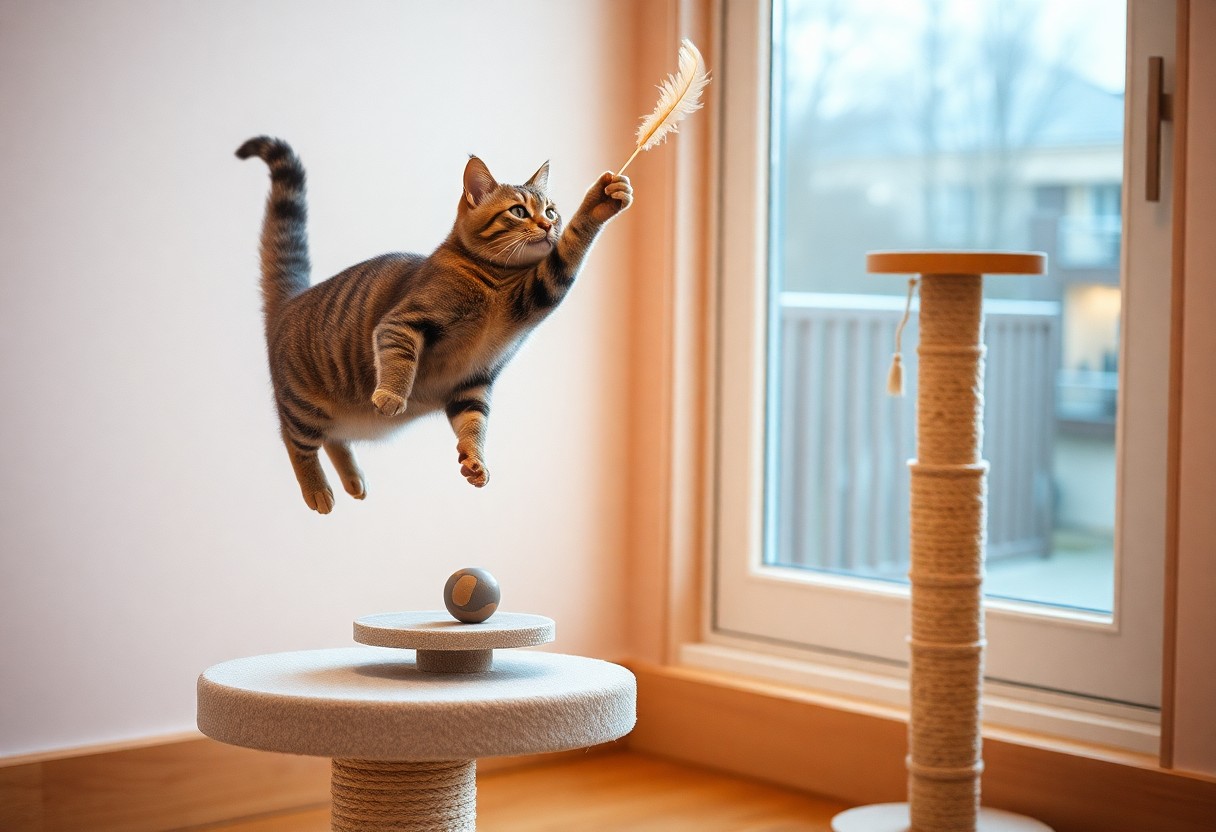
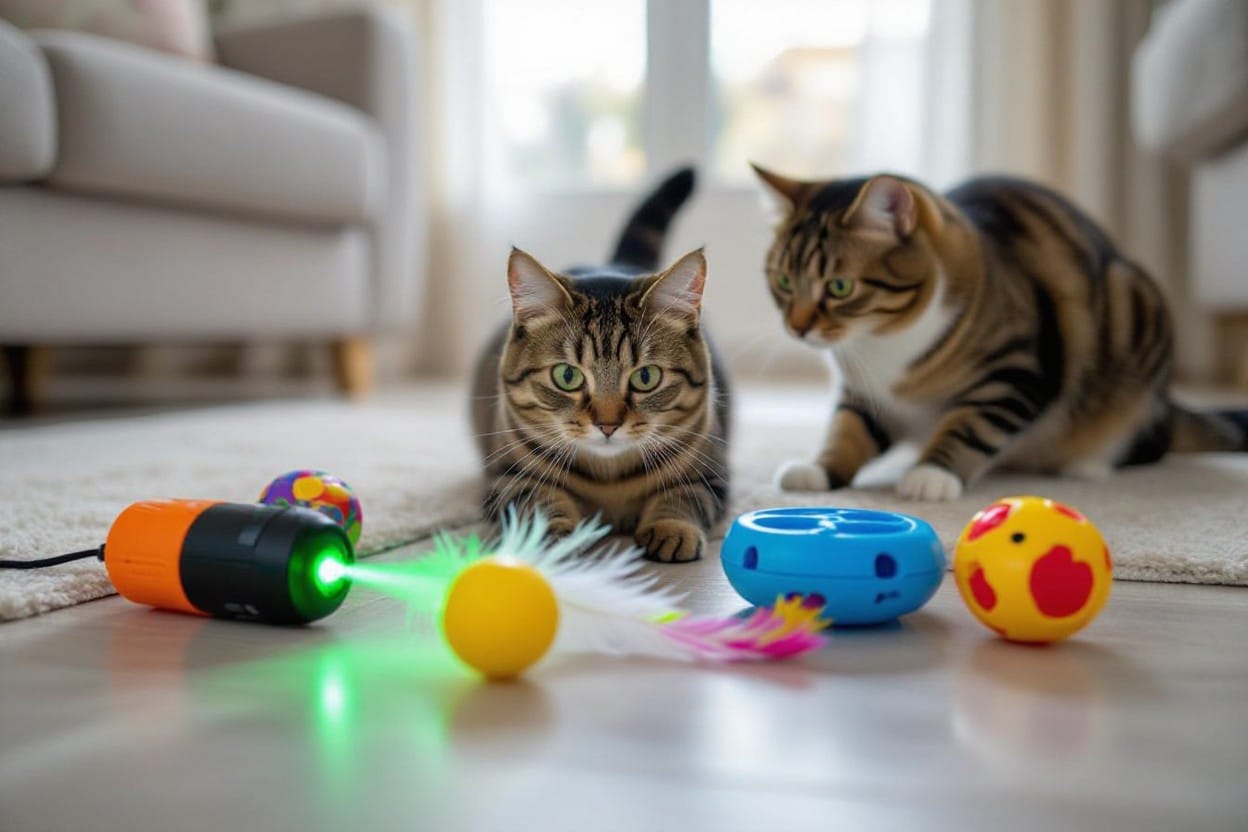
You can design short, focused sessions mixing high-energy chases and slow hunting games; aim for 10-15 minutes, 2-3 times daily. Use a mix of wand toys, laser sessions, and puzzle feeders. Wand play engages stalking and pouncing, while lasers should end with a tangible toy to avoid frustration. Rotate toys every 1-2 weeks to prevent boredom, and adjust intensity for kittens or seniors to keep your cat safe and active.
Using Toys and Gadgets
Automated toys, like motorized mice and rotating wands, give bursts of activity when you’re busy; set sessions to 5-10 minutes and supervise at first. Treat-dispensing puzzles can slow down fast eaters and provide 10-20 minutes of mental work. Check batteries and inspect for loose parts-small pieces and swallowed batteries are dangerous. Rotate gadgets every 7-14 days to sustain interest and track which ones trigger the most enthusiastic chases.
DIY Playtime Solutions
Cardboard boxes, paper bags, and homemade feather wands deliver big engagement for little cost; construct a wand from a 60 cm dowel, elastic, and a feather tied securely. Muffin-tin treat puzzles or a toilet-paper-roll dispenser occupy cats for 5-15 minutes. Avoid staples or loose strings-string ingestion and staples can cause severe harm. Make 3-5 simple toys and rotate them weekly to keep novelty high.
To make a muffin-tin puzzle, place treats in 6 cups, cover 4 with tennis balls so your cat must lift them; offers 5-15 minutes of problem-solving. For a toilet-paper-roll dispenser, fold one end, add treats, fold the other and poke holes; your cat bats it until treats fall out. Supervise initial use and remove any parts showing wear; discard torn cardboard or loose pieces immediately.
Incorporating Technology
Integrate tech tools into short play sessions to expand options in a small space: schedule 10-15 minute bursts, swap devices between sessions, and combine with physical toys to avoid passive screen time. You can use timed routines (1-2 sessions daily) to boost activity without overstimulation. Prioritize supervised use and check devices for heat or loose parts after each session to keep your cat safe.
Apps and Videos for Cats
Apps like “Game for Cats” and “Cat Fishing” or YouTube channels such as “KittenChannel” offer stimuli that target hunting instincts; you should run videos for about 10 minutes and observe engagement. Try interactive apps that respond to touch so your cat practices pouncing, and avoid leaving charging devices where your cat can chew cables. Stop sessions if your cat seems frustrated or fixated.
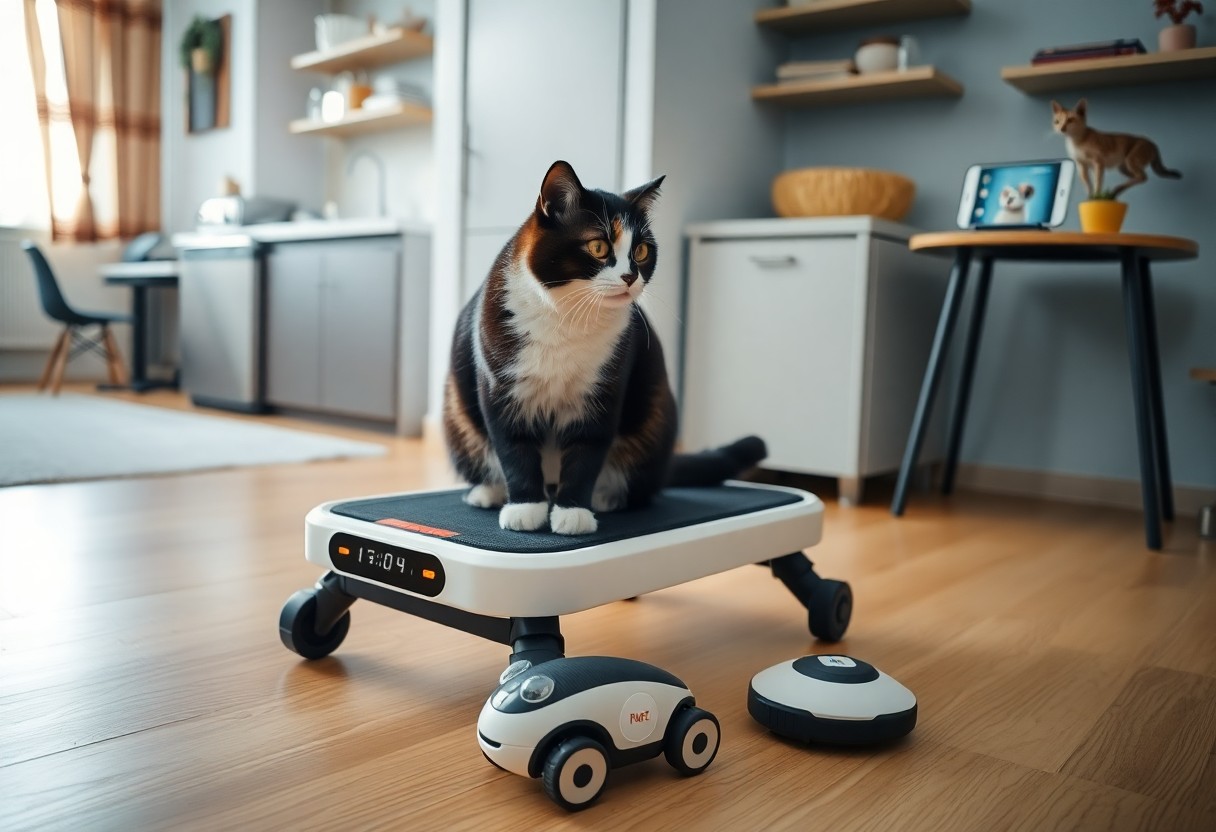
Motorized balls (Cheerble), pet robots (VARRAM), and automated laser projectors (PetSafe, Petcube Play) create unpredictable movement patterns that encourage chasing in limited space; set toys to short, varied sessions (5-15 minutes) to mimic natural hunts. You should rotate toys and monitor noise levels, since some cats react negatively to constant motion or sound.
When choosing gadgets, inspect for small detachable parts and opt for models with chew-resistant casings and reliable customer reviews. Many devices offer timer modes and run cycles-commonly under 2 hours total active time per charge-so plan multiple short activations rather than continuous use. Combine automated play with treat rewards to reinforce engagement, and discontinue any toy that causes stress, overexcitement, or repeated pouncing at unreachable lights.
Training and Agility Exercises
You can build a focused routine with short, frequent sessions-aim for 5-10 minutes twice daily-to boost coordination and burn energy. Use progressive challenges like target touching, low jumps, and timed runs, increasing difficulty by 10-20% every week. Trainers report 60-80% faster skill acquisition with clicker pairing and food rewards; keep treats tiny (pea-sized) to avoid weight gain and track progress with simple video clips.
Teaching Tricks
You’ll get reliable results using clicker or marker training paired with high-value treats: start with 2-3 repetitions for “sit” or “paw,” then mix in 3-5 short practice bursts for new behaviors like high-five or spin. Vary rewards-play, praise, or 1-2 mini treats-to prevent satiety. Maintain sessions under 10 minutes and end on a successful attempt to strengthen learning and motivation.
Setting Up Indoor Obstacles
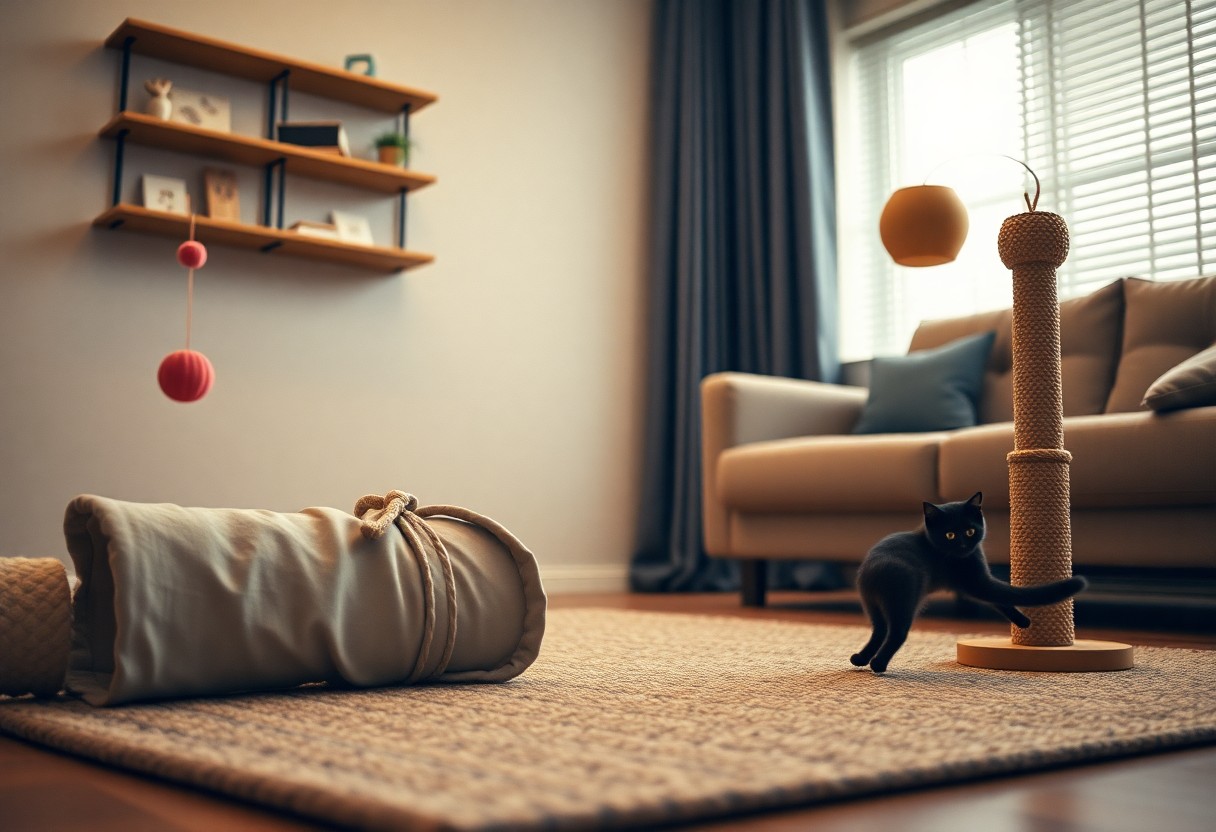
You can turn small spaces into safe courses using household items: cardboard tunnels, a low broomstick set at 20-30 cm for jumps, and three chairs as weave poles. Anchor everything to prevent tipping and clear the area of loose cords and small objects; loose cords and unstable furniture are dangerous. Use rugs for traction and supervise every run to keep your cat safe and confident.
For more structure, lay out a simple circuit: tunnel entry, 20-30 cm jump, weave between 3 poles spaced 30-40 cm apart, and a finishing target spot. Repeat the course 3-5 times with 30-60 seconds rest, gradually shortening rest to build endurance. You should rotate obstacle types every 1-2 weeks to prevent boredom and track improvements with short videos or a checklist.
Mental Stimulation Techniques
Rotate 4-6 toys weekly and give your cat two interactive sessions of 10-15 minutes daily (about 20-30 minutes total); include puzzle feeders, scent trails, short training cues, and vertical perches to prevent boredom and reduce unwanted scratching. Try swapping toy mechanics-wand, puzzle, ball-every few days to keep novelty high, and track behavior changes like increased play or calmer nights. Watch your cat’s body language and stop if overstimulation appears.
Puzzle Feeders and Toys
Use a Kong Wobbler, snuffle mat, treat ball, or DIY puzzles from toilet-paper rolls stuffed with 5-10 kibbles to start; gradually tighten openings or add compartments to increase challenge. These tools slow eating, engage hunting instincts, and support weight management, but inspect toys weekly and discard any with loose small parts to prevent choking.
Hide small amounts of catnip, silver vine, or favorite kibble in 3-5 spots per room, alternating visible and concealed locations to build success before increasing difficulty; this taps your cat’s olfactory hunt and boosts confidence. Use different scent types each week to maintain interest and do not use vital oils or toxic human foods in scent play.
Create a scent trail by dragging a treat across the floor in 5-8 short strokes ending at a box or towel, beginning with visible rewards and progressively hiding them deeper; keep sessions to 5-10 minutes and repeat 2-3 times daily. Watch for tail-thumping, flattened ears, or avoidance as signs to pause, set separate trails in multi-cat homes to avoid guarding, and vary textures (paper, fabric, cardboard) to increase novelty.
To wrap up
The compact space of a small apartment doesn’t limit your cat’s fitness; you can schedule short play sessions, rotate interactive toys, set up vertical perches, and use puzzle feeders to stimulate hunting instincts while conserving space, ensuring your cat stays mentally and physically active with minimal equipment and consistent routines.
FAQ
Q: How can I create an effective, space-saving play routine for my cat in a small apartment?
A: Break play into short high-intensity sessions 2-4 times daily using wand toys, laser pointers (finish each session with a tangible toy or treat to avoid frustration), or motorized toys. Aim for 10-15 minutes per session to mimic short hunting bursts. Rotate toys every few days to maintain interest, and end sessions with calm petting or a treat to reinforce positive behavior. Remove small parts and supervise laser play to prevent overexertion or eye issues.
Q: What are good ways to add vertical space and enrichment when floor area is limited?
A: Install wall-mounted shelves, window perches, or a tall narrow cat tree to create climbing routes without taking much floor space. Position perches near windows for bird- or street-watching and add hanging toys or dangling feathers to encourage pouncing. Use staggered ledges and wall scratchers so your cat can hop between levels and stretch; use soft landing spots like cushions or rugs to reduce injury risk.
Q: How do food puzzles, training, and leash walks help a sedentary indoor cat, and how do I start?
A: Food puzzles and slow feeders turn mealtime into exercise by encouraging foraging and problem-solving; start with simple puzzles and increase difficulty as your cat succeeds. Short daily training sessions (5-10 minutes) using clicker or treat rewards teach tricks that combine mental stimulation with movement. For leash walks, fit a well-designed harness, let your cat wear it indoors to adjust, then practice short indoor walks before trying a quiet balcony or hallway. Supervise outdoor outings and avoid busy or noisy areas.