With thoughtful design, you can create an outdoor play area that keeps your cat safe, stimulated, and happy; prioritize a secure enclosure or cat-proof fence, provide climbing structures, hiding spots, and interactive enrichment, eliminate toxic plants, busy roads, and predator access, supply fresh water and shaded rest, and plan supervised time to monitor behavior and health.
Understanding Your Cat’s Needs
You should provide a mix of active and restful options: aim for 20-30 minutes of active play daily plus multiple quiet hideaways, perches at varied heights, and sheltered sleeping spots to regulate temperature. Include at least three elevated platforms spaced 1-2 feet apart and a cool, shaded area with fresh water available at all times; you’ll see reduced stress and fewer escape attempts when physical and mental needs are met.
Space Requirements
For one cat, plan a minimum of 36 sq ft (6×6 ft) of usable floor area; two cats benefit from ~100 sq ft (10×10 ft). Vertical clearance matters too-design walls at 6-8 ft high with shelves and ramps every 1-2 feet so your cat can climb and survey. A common practical layout is a 6×10 catio (60 sq ft) with three staggered perch levels to maximize enrichment.
Safe Elements for Exploration
Install secure, escape-proof mesh such as 1/2-inch galvanized hardware cloth, fastened to a frame with tamper-proof screws and latches, and bury the perimeter mesh 6-12 inches to prevent digging; add an outward overhang of 12-18 inches to deter predators. Include non-slip ramps, shaded retreats, and avoid pesticides or loose mulch that can hide hazards-these choices reduce injury and stress while letting your cat explore safely.
Choose cat-safe plantings like catnip, cat grass, and valerian in raised beds, and eliminate highly toxic species such as lilies and sago palm; azaleas and oleander are also dangerous. Provide a shallow water source changed daily, insulated hide boxes for cold, and consider motion-activated lights or predator-deterrent sensors for added protection-these practical steps cut risks and keep your outdoor area inviting.
Choosing the Right Location
Place your play area on level ground near the house but not adjacent to hazards; you want visibility from living spaces for easy monitoring, a sheltered wall to anchor structures, and a location at least 30 m (100 ft) from busy roads. Avoid standing water, steep drop-offs, and dense thorny shrubs that can hide predators or cause injuries.
Sunlight and Shade
Aim for a mix of sun and shade so your cat can sunbathe and cool off: provide 1-2 sunny patches for naps and roughly 50% shaded area using trees, shade sails, or a pergola. Expect peak sun between 11am-3pm on southern exposures and add extra shelter then; avoid heat-trapping surfaces like black tar or exposed metal that raise overheating risk.
Proximity to Home
Position the run within 10-30 ft (3-9 m) of an entry so your cat has quick access indoors and you keep clear line of sight from windows or a patio. This reduces stress, speeds your response to threats, and makes training easier; keep gates and access points visible to spot approaching dogs or wildlife.
Connect the area to a mudroom or dedicated vestibule with a cat door to create a secure transition and consider a short double-door entry (airlock) to greatly lower escape risk. Install self-closing gates, secure latches, and use hardware cloth near openings; avoid siting the entrance toward unfenced neighbor yards or busy alleys that attract roaming dogs.
Essential Features for Play
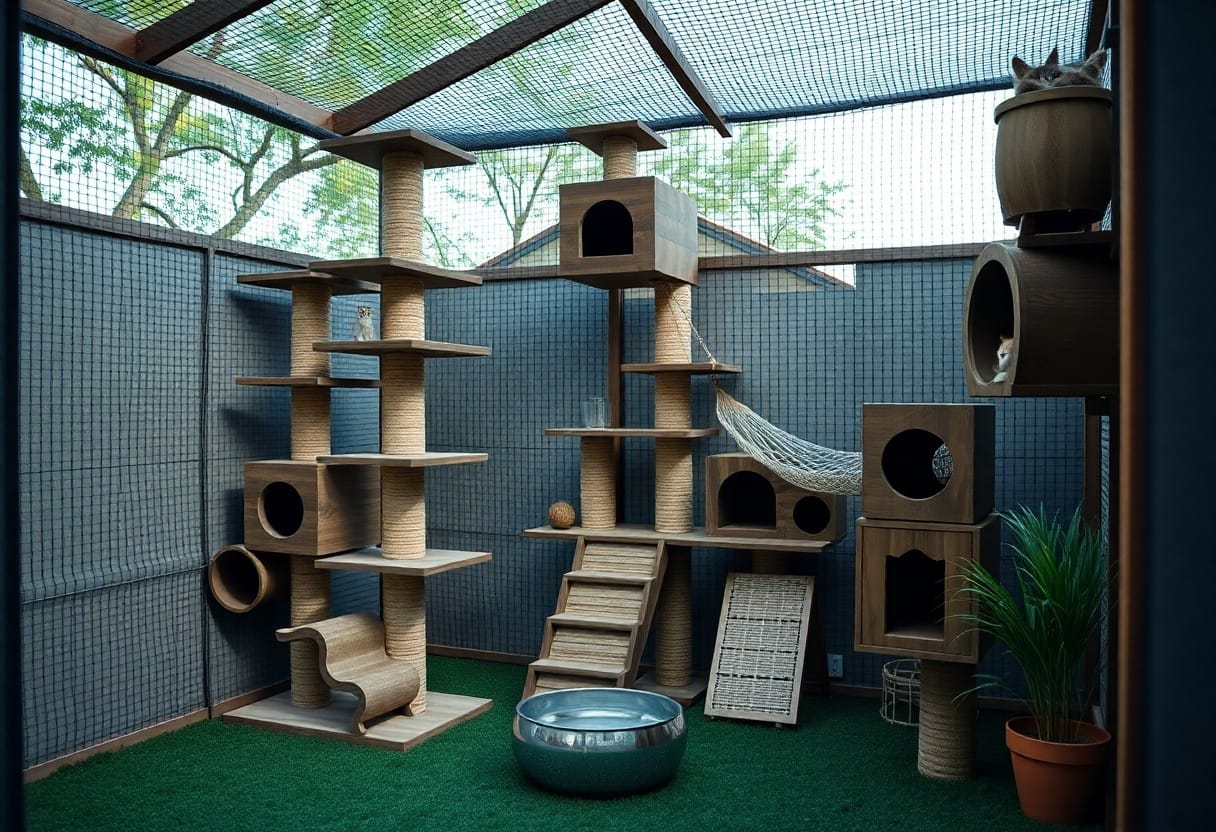
Balance vertical and horizontal elements: provide 2-3 perches at varying heights, 1-2 sturdy scratching posts, and a mix of ramps and open runways across your yard. Include a shallow water source and shaded spots; cats prefer elevated vantage points 0.5-1.8 m high and may jump up to six times their body length. Use secure latches and mesh with gaps smaller than 25 mm to prevent escapes, and position toys, tunnels, and soft landing zones within 1-2 meters of climbing routes.
Climbing Structures
Install anchored shelves, a weatherproof cat tree, and staggered platforms 30-45 cm apart so your cat can ascend without overreaching; spacing under 50 cm suits most ages. Choose rot-resistant wood or UV-stable plastic and add non-slip surfaces like outdoor carpet or rubber pads. Secure tall elements to a wall or post to avoid tipping, since an unsecured tower is a major safety risk, and provide mulch or artificial turf beneath for soft landings.
Hiding Spots
Scatter 2-4 sheltered retreats per 5 m²: low ground dens, elevated boxes under platforms, and PVC-tunnel segments that connect to runways. Prioritize weatherproof, insulated materials and place shelters near exits so your cat can escape perceived threats. Integrate scent items from home to increase use, and avoid porous materials that trap moisture or mold. Mark potential hazards like exposed nails or sharp edges with inspection checks.
For size and maintenance, aim for entrances 15-20 cm wide and interiors 45-60 cm deep so an adult cat can turn easily; elevated boxes at 30-60 cm offer security without full ground exposure. Line shelters with washable padding and swap bedding weekly; clean interiors with mild detergent monthly and inspect for pests. Steer clear of aromatic cedar shavings and toxic paints, since these are harmful, and ensure drainage prevents pooling water inside a hide.
Enrichment Opportunities
Offer a rotating mix of hunting toys, vertical perches, scratching posts, and foraging puzzles. Aim for at least two 10‑minute active sessions daily and swap toys every 3-7 days to keep novelty high. Add hiding boxes and elevated platforms 0.5-2 m high so your cat can survey territory and practice jumping. This variety reduces stress and helps prevent obesity while letting you manage stimulation and safety in the outdoor space.
Interactive Toys
Use wand toys, feather teasers, motion‑activated mice, and puzzle feeders to mimic hunting sequences and hone your cat’s stalking skills. Structure play as two 10‑minute stalking-chase-capture cycles per day; finish sessions with a treat or kibble reward to simulate a successful hunt. Rotate 4-6 toys weekly and discard items with loose parts. Avoid letting your cat access unattended strings or elastic bands since ingestion or entanglement can be life‑threatening.
Natural Elements
Introduce grasses, shrubs, logs, and shallow soil patches for digging; plant a 30×30 cm tray of wheatgrass and a clump of catnip for foraging. Provide shaded hiding spots and low shrub cover to create microhabitats for your cat. Keep all plants pesticide‑free and avoid toxic species near access points. Small water features with moving water encourage drinking and curiosity, while untreated wood or logs supply safe scratching and scent‑marking surfaces.
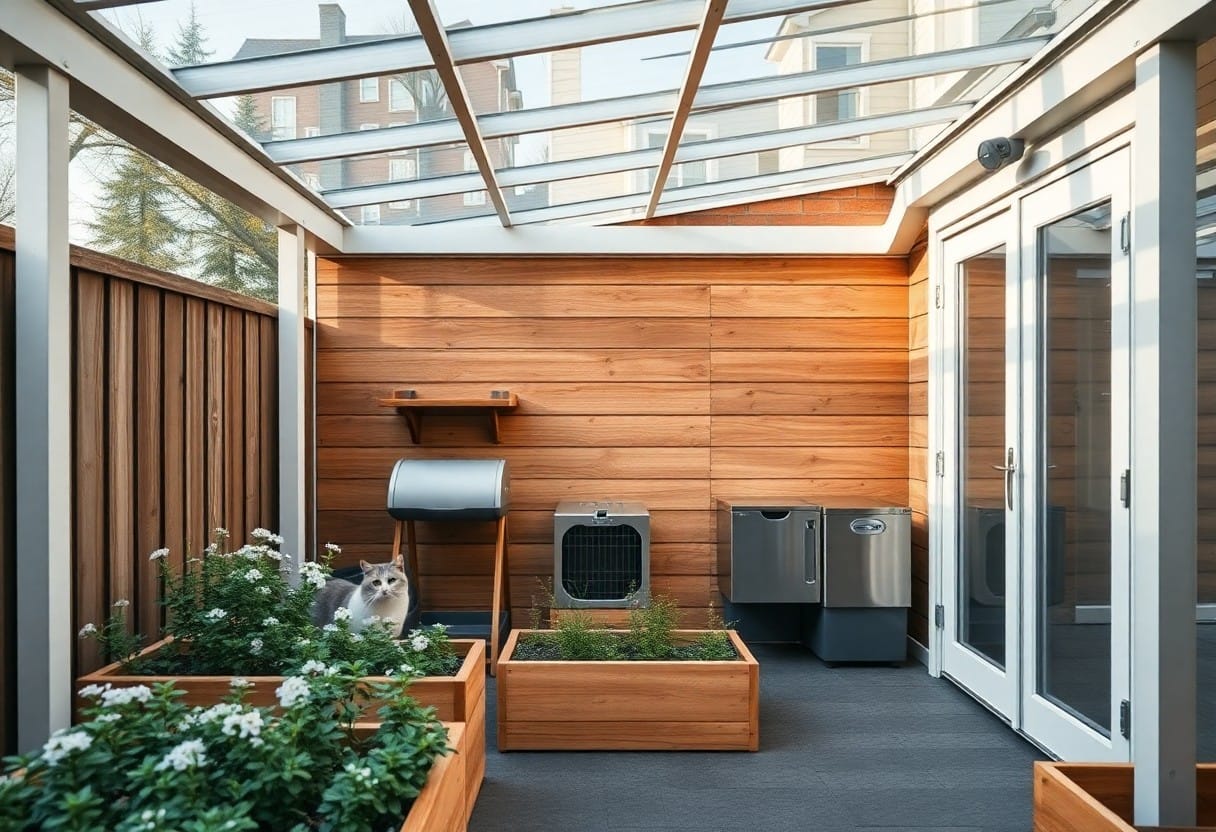
When identifying vegetation, exclude lilies (Lilium spp.) and sago palm-lilies can cause fatal kidney failure and sago palm seeds cause severe liver damage. Favor cat grass, catmint, valerian, and rosemary. Use raised planters (~30×30×20 cm) with chemical‑free soil, avoid cocoa mulch and treated bark, and check labels against ASPCA toxic lists or your vet. Keep play areas free of pesticides and rodent baits since chemical exposure is a common outdoor hazard.
Safety Considerations
Maintain up-to-date ID and medical protections: microchip plus a breakaway collar with tag, current vaccinations, and monthly flea/tick/heartworm preventives. Supervise outdoor time or use a secure catio where local hazards-cars, coyotes, hawks-exist. Provide shaded shelter and fresh water, and keep emergency contacts handy (your vet and the ASPCA Animal Poison Control at 888-426-4435). If your cat escapes, search nearby hiding spots within 100-200 meters and notify neighbors and shelters immediately.
Fencing and Barriers
Aim for a 6-8 ft barrier with a 45° outward overhang or installed cat-proof rollers to prevent climbing; fully enclosed, roofed catios remove climbing risk entirely. Use hardware cloth or welded wire with <1″ mesh and a 12-inch buried apron to stop digging. Fit self-closing, lockable gates and smooth surfaces to deny footholds; consider modular cat fencing systems or coyote rollers if neighborhood predators or large dogs are common.
Hazardous Plants
Identify and remove high-risk species: true lilies (Lilium spp.) can cause acute kidney failure from tiny exposures, and the sago palm seed may be fatal. Also avoid oleander, azaleas, tulip and hyacinth bulbs, which trigger severe cardiac or GI reactions. Keep suspect plants out of reach, label all garden species, and contact your vet or the ASPCA Animal Poison Control immediately if ingestion occurs.
Choose non-toxic species for planters-catnip, cat grass (wheatgrass), valerian, spider plant, Boston fern, and areca palm-and place pots on shelves or hangers at least 1 m off the ground. Replace cocoa mulch and chemical slug baits with pea gravel or pet-safe bark, and avoid lawn pesticides where your cat roams. When unsure, photograph the plant and consult the ASPCA database or your vet before planting.
Maintenance and Care
Keep your outdoor play area in top condition by scheduling inspections and cleaning: check structures weekly for holes, loose screws, or frayed netting, replace worn materials promptly, and wash bedding monthly at 60°C to kill fleas and eggs. Rotate toys every 4-6 weeks to limit buildup of saliva-borne bacteria, maintain parasite prevention year-round, and remove any toxic plants or standing water that can attract pests.
Regular Cleaning
Sweep and remove feces daily, wash food and water bowls every day, and sanitize hard surfaces with a pet-safe disinfectant weekly; deep-clean cushions and fabric at least once a month at 60°C. Vacuum or hose down artificial turf every 2 weeks to remove hair and dander, and immediately eliminate puddles to prevent mold and mosquito breeding.
Seasonal Adjustments
Adapt your setup by season: in winter add insulated shelters and use heated bowls or change water frequently to prevent freezing, while in summer provide shade covering at least 50% of the area and check water 2× daily to avoid overheating when temperatures exceed 27-30°C. Secure loose panels before storms and avoid antifreeze and de-icing salts on pathways.
Use removable windbreaks or clear plexiglass panels for cold months and swap in breathable shade sails for heat; add 2-3 cm closed-cell foam under bedding for insulation and store cushions indoors during wet seasons. Treat for ticks and fleas every 2-4 weeks in spring/fall, anchor structures to withstand winds above 40 mph, and choose pet-safe ice-melt like calcium-magnesium acetate to protect paws and wildlife.
Conclusion
Following this approach, you can design a safe, stimulating outdoor play area that meets your cat’s physical and mental needs; prioritize secure fencing, supervised exploration, varied climbing and hiding spots, weather protection, and enrichment with toys and scent trails so your cat thrives while you maintain control and peace of mind.
FAQ
Q: How do I make an outdoor play space secure so my cat can explore safely?
A: Begin with perimeter containment: tall fencing with inward-facing overhangs, welded-wire panels, or commercial cat netting to prevent jumps and escapes. Seal gaps at the base to stop digging out and install self-closing gates or latches that cats can’t push open. Provide visual barriers and sheltered retreat spots so your cat feels safe, and always ensure identification (microchip and a breakaway collar with a tag). Supervise initial outings until you’re confident in the enclosure’s reliability and your cat’s comfort level.
Q: What kinds of structures and toys should I include to keep my cat mentally and physically engaged?
A: Create vertical and horizontal variety: shelves, platforms, ramps, sturdy climbing trees, and low hiding boxes to encourage jumping, stalking, and resting at height. Add scratching posts, interactive toys (wand toys, puzzle feeders), tunnels, and rotating or scented items to sustain interest. Use durable, weather-resistant materials and firmly anchor structures to prevent tipping. Incorporate natural elements like logs or low shrubs for stalking practice, and change toys or their locations periodically to prevent boredom.
Q: Which plants, surfaces, and maintenance steps promote health and comfort in the outdoor area?
A: Choose non-toxic plants (cat grass, catnip, rosemary, thyme, and most grasses) and avoid toxic species such as lilies, sago palm, and oleander. Use safe ground coverings like sand, pea gravel, or pet-safe artificial turf; avoid sharp bark mulch and cocoa mulch. Provide shaded spots and waterproof shelters, fresh water, and regular cleaning of toileting areas to reduce parasites. Maintain a vet-approved parasite-prevention routine (flea/tick and deworming) and limit pesticide or chemical use; inspect the area regularly for hazards, wildlife tracks, or escape routes.