There’s a simple way to turn your cat’s bowl into a daily workout that boosts mental stimulation and encourages slower eating, helping with weight control and boredom; as you introduce puzzle feeders, choose sturdy designs and monitor for choking or ingestion of loose parts to avoid hazards, gradually adjusting difficulty so you control portions while enriching your cat’s routine.
Understanding Puzzle Feeders
Understanding how different designs target predatory behavior helps you choose the right feeder: treat-dispensers, maze-style puzzles, foraging mats and rotating toys each test different skills. Many manufacturers rate difficulty on a 1-4 scale, so you can progress your cat without overwhelming them. Consider your cat’s age, dental health and activity level when selecting complexity, and swap formats to keep sessions novel so your cat stays engaged and benefits from both mental and physical stimulation.
What are Puzzle Feeders?
Puzzle feeders are interactive bowls and toys that require pawing, nudging or solving to release food, turning meals into mini-hunts. Popular examples include the KONG Wobbler, Nina Ottosson puzzles and Catit foraging mats; you can use kibble, treats or portions of wet food. They stimulate hunting instincts, slow down rapid eaters and fit easily into feeding plans for kittens, adults and seniors when you adjust difficulty.
Benefits of Using Puzzle Feeders
Using puzzle feeders can slow intake, increase mental stimulation and help with weight management by turning a single gulp into a series of tasks; you can extend mealtime from seconds to several minutes or even up to half an hour depending on difficulty. They also reduce boredom-driven behaviors like excessive meowing or scratching, and in multi-cat homes can decrease resource-guarding by creating multiple activity stations rather than one contested bowl.
For practical use, distribute your cat’s daily kibble across multiple puzzle sessions-start with 2-4 short sessions per day and progress to longer challenges as skills improve. Many owners feed 50-80% of dry rations through puzzles to increase foraging time; supervise new toys, avoid feeders with small detachable parts that could be swallowed, and clean devices regularly to prevent bacterial buildup.
Types of Puzzle Feeders
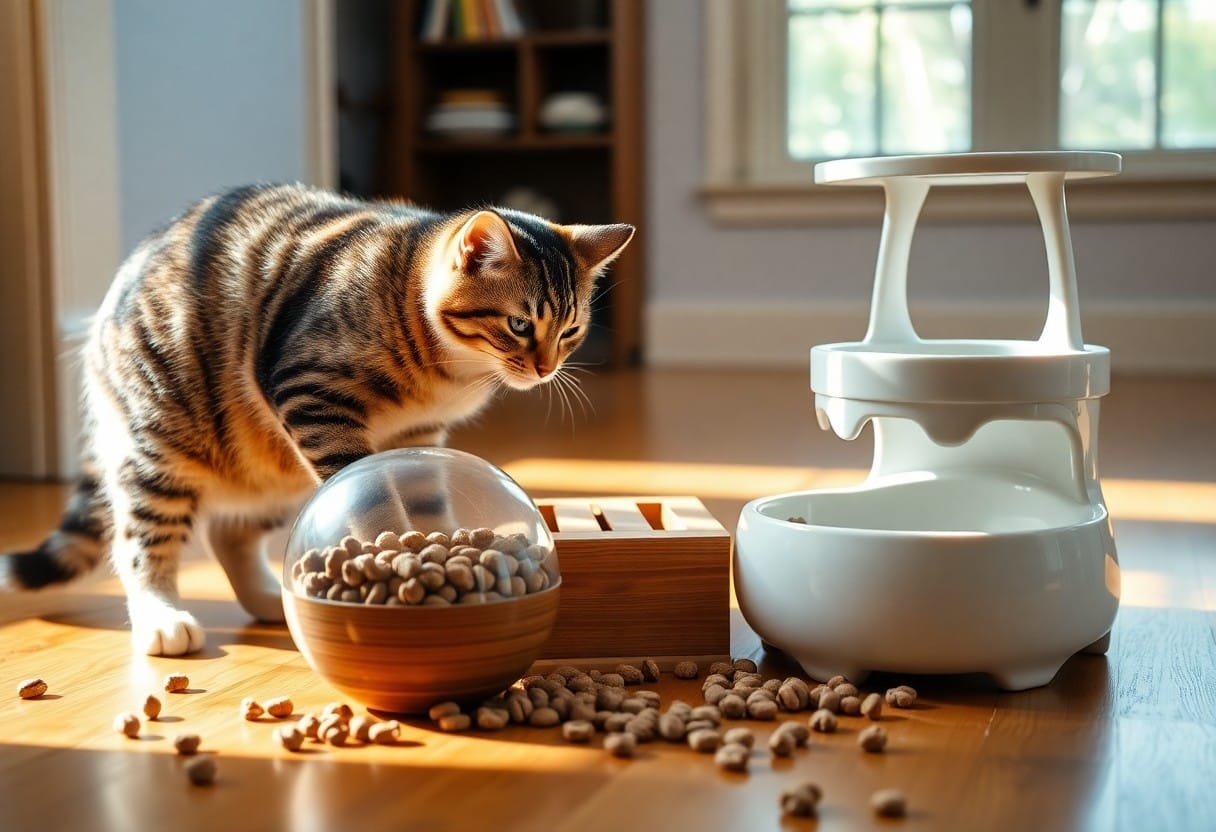
You can choose from many designs-simple treat balls, mechanical puzzle boxes, maze-style food mazes, shallow slow feeders, or hands-on interactive toys. Each varies by complexity, material, and goal: enrichment, weight control, or slowing speed. Concrete examples include rotating dispensers, slide-panel boxes, and 6-12-well slow bowls; consider your cat’s skill level, dental health, and whether you need a dishwasher-safe option. Perceiving which style fits your cat’s energy and eating habits will guide a better choice.
- Treat balls
- Puzzle boxes
- Food mazes
- Slow feeders
- Interactive toys
| Treat balls | Rolling dispensers that release kibble; good for active cats, monitor for small-part wear. |
| Puzzle boxes | Sliding panels and compartments; ideal for problem-solvers, adjust difficulty by blocking passages. |
| Food mazes | Layered tracks forcing multiple paw maneuvers; can extend meal time by several minutes. |
| Slow feeders | Open wells or raised obstacles that slow intake; choose 4-12-well designs for portion control. |
| Interactive toys | Wands, motorized prey, and treat-dispensing mice; best used in supervised sessions to avoid battery or cord hazards. |
Interactive Toys
You’ll find wand toys, motorized mice, and treat-launchers that combine chasing and hunting-typical sessions of 5-15 minutes burn mental energy and 10-30 kcal depending on activity. Start with short, supervised play so your cat learns the mechanics; check for button batteries and loose parts that can be a choking hazard. Rotate toys weekly to maintain novelty and measure engagement: if your cat plays three times a day for 5-10 minutes, you’ll likely see calmer meal behavior.
Slow Feeders
You can pick between shallow wells, spiral bowls, or raised-obstacle mats that force slower licking and pawing; many slow-feeder designs have 4-12 compartments and often increase mealtime from a few minutes to 10-20 minutes. Use models with a non-slip base and smooth edges, and clean frequently-food buildup encourages bacteria, so dishwasher-safe is a plus. Supervise initial sessions to ensure your cat adapts without frustration.
For more depth on slow feeders: choose material based on chewing and allergies-ceramic or stainless steel resists odours and is usually dishwasher-safe, while silicone is lightweight. Progress difficulty gradually: begin with open-well bowls, then move to labyrinth lids or covered puzzles once your cat consistently finishes meals. Many cats learn to manipulate simple rollers within days to a week; if your cat shows aggressive guarding at the feeder, separate feeding stations and consult your vet. Avoid feeders with tiny detachable pieces that present a choking hazard and inspect toys weekly for wear.
Choosing the Right Puzzle Feeder for Your Cat
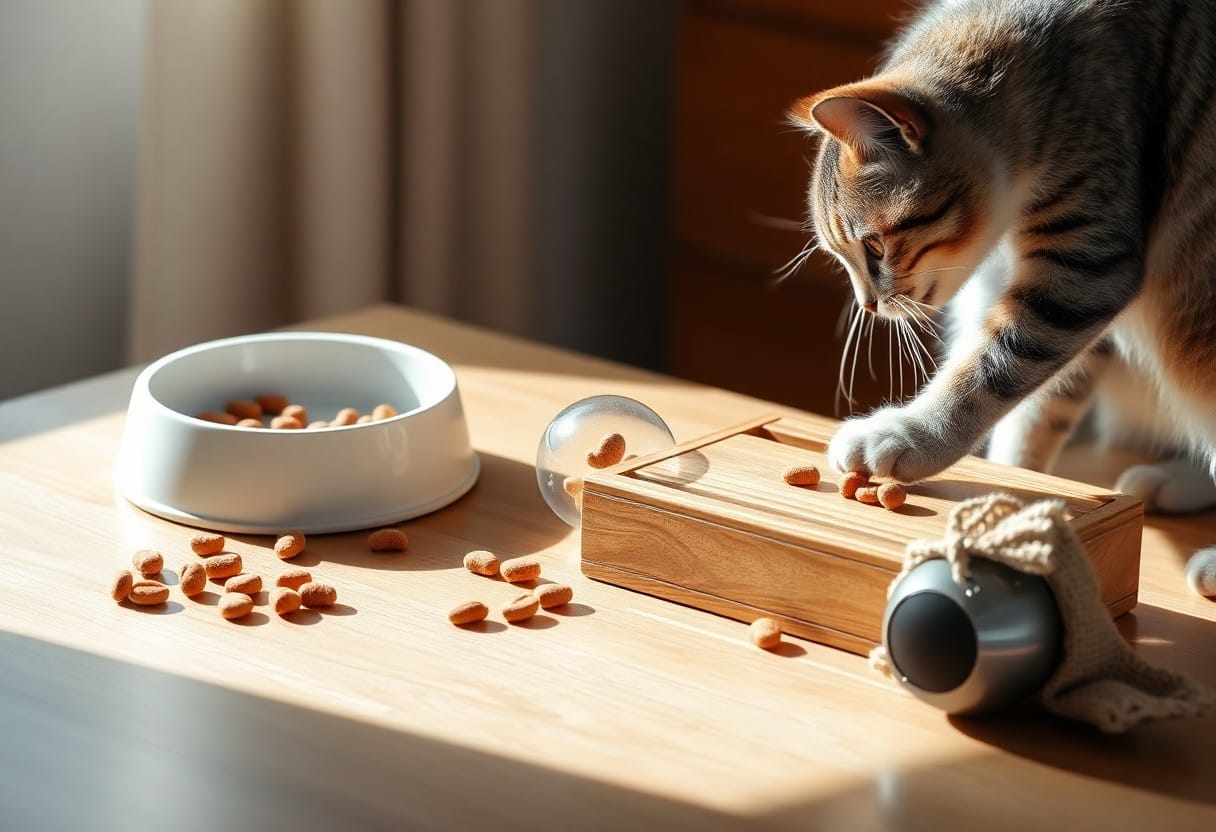
Match feeder style to your cat’s eating habits, dental health, and activity level: kittens often need shallow trays, seniors prefer low-profile or soft-edge puzzles, and highly motivated hunters thrive with moving or treat-dispensing toys. Prefer feeders sized for your kibble (typically 4-8 mm pieces) and made from BPA-free, non-porous materials. Watch for small detachable parts and ensure the device is dishwasher-safe to avoid bacterial buildup.
Consider Your Cat’s Personality
If your cat is food-driven, choose high-challenge puzzles (levels 3-5) to extend a 50-75 kcal meal into 10-20 minutes of foraging; if your cat is shy or anxious, start with level 1 or 2 and place it near familiar resting spots. Bold, playful cats usually master complex feeders in 3-7 days, while seniors may need soft-sided or mat-type feeders to avoid frustration.
Size and Complexity of the Feeder
Assess size by your kibble and paw reach: choose openings that let your kibble pass but don’t allow full paw retrieval-use 6-10 mm slots for standard dry food. Complexity can be ranked 1-5: level 1 = passive slow-feed bowls, level 3 = sliding lids or hidden compartments, level 5 = multi-step puzzles combining batting, nose-poking, and pull-tabs.
Introduce challenges gradually-move up one level after 5-7 successful meals and measure eating time; if meals drop below 5 minutes, increase complexity. Check for sharp edges, flimsy clips, or choke-sized pieces before each use and clean weekly; many cats show measurable weight loss (1-3% body weight) when you switch to daily puzzle feeding paired with portion control.
Tips for Introducing Puzzle Feeders
You should begin by matching the feeder to your cat’s skill and feeding style-wider openings for brachycephalic breeds, narrower for fast eaters. Start sessions in a quiet spot and supervise the first 5-10 minutes to prevent choking hazards or disassembly. Offer familiar kibble or high-value treats to build confidence, limit play-meal sessions to 10-20 minutes, and track progress with photos or short timing notes. After one to two weeks gradually increase challenge by rotating puzzles or adding mild resistance.
- puzzle feeders
- cats
- mealtime
- playtime
- gradual introduction
- encouraging engagement
Gradual Introduction
Begin by placing kibble visibly on top of the feeder so your cat discovers the scent, then move food slightly inside so they must paw or nudge; many cats adapt within 2-5 short sessions. Offer 2-3 daily sessions of 5-10 minutes, use high-value treats for hesitant cats, and reduce puzzle complexity if your cat becomes frustrated to preserve positive associations.
Encouraging Engagement
Rotate puzzle types every 1-2 weeks-rolling, slot, and hide-and-seek variants-to maintain novelty, and pair the feeder with gentle praise or one extra kibble for persistence; this often boosts use without extra calories. Use interactive demonstrations so your cat sees food emerge, and monitor portions closely to avoid accidental overfeeding.
You can boost interest by creating a scent trail from the bowl to the puzzle using a single kibble every 30-60 seconds, or lightly rubbing a treat on moving parts to transfer aroma; owners report meal durations increasing from under 5 minutes to 10-20 minutes with these tactics. Try demoing the mechanism so your cat sees rewards drop, pair the feeder with a 3-5 minute play warm-up to prime hunting drive, and monitor behavior-stop any feeder that causes persistent anxiety or paw injuries.
Maintenance and Cleaning
Importance of Regular Cleaning
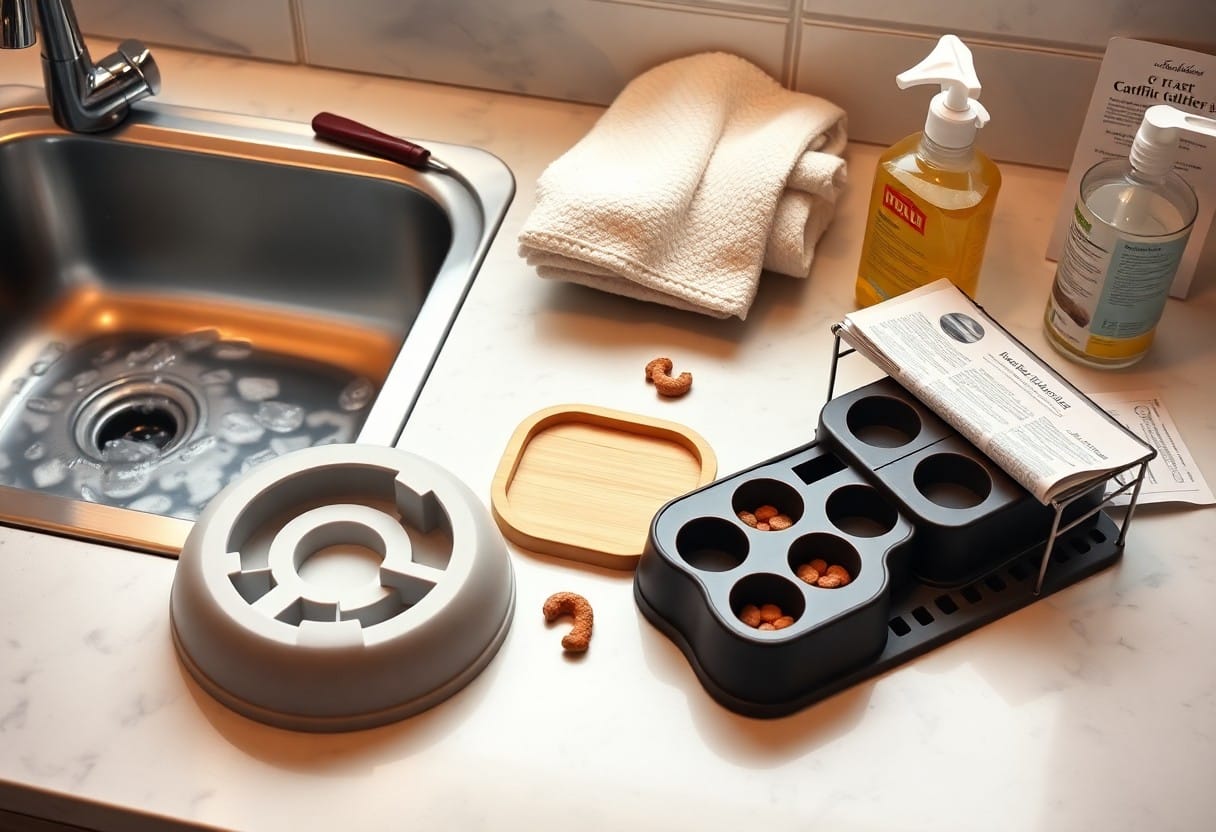
You should clean puzzle feeders frequently because wet food and saliva can harbor bacteria within hours. For wet or mixed meals, wash parts within 24 hours and for dry-food-only use, rinse and deep-clean at least once a week. Watch for mold, foul odors, or sticky residue-these indicate microbial growth and a health risk. Quick daily rinses plus weekly scrubs significantly lower contamination and extend product life.
How to Maintain Your Puzzle Feeder
Disassemble all removable pieces before washing; if items are labeled dishwasher-safe, run them on the top rack at 60°C (140°F), otherwise soak in hot, soapy water for 10-15 minutes and scrub with a bottle brush. Inspect seals, channels, and hinges after cleaning and replace any cracked or warped parts. Lubricate metal pivots with food-grade oil and store dry to prevent mold and rust.
For stubborn buildup, soak parts 10 minutes in a 1:3 white vinegar-to-water mix, then rinse thoroughly; when sanitizing after illness use a dishwasher cycle or a dilute bleach solution (1 tablespoon bleach per gallon of water), followed by thorough rinsing. Keep a spare feeder so you can sanitize one unit while the other is in use, rotate feeders every 6-12 months, and always let components air-dry completely before reassembly.
Final Words
So incorporating puzzle feeders transforms your cat’s meals into stimulating activity that supports mental and physical health. You control difficulty, portioning, and rotation to prevent boredom and overeating. Use a variety of puzzles, monitor progress, and adjust challenges to match your cat’s abilities for consistent engagement and well-being.
FAQ
Q: How do puzzle feeders benefit my cat?
A: Puzzle feeders provide mental stimulation by turning food into a challenge that mimics hunting behavior, which reduces boredom and associated behavior problems. They slow rapid eating, lowering the risk of regurgitation and digestive upset, and help with portion control and weight management by extending mealtime. Regular use can increase activity levels, offer sensory enrichment, and keep indoor cats more engaged throughout the day.
Q: How do I choose the right puzzle feeder for my cat?
A: Match the feeder to your cat’s age, mobility, and feeding style. For kittens or seniors choose low-profile, easy-access designs; for fast eaters use more complex mazes or slow-feed bowls. Consider the food you use-kibble works with most dispensers while wet food needs appropriate inserts or shallow compartments. Look for non-toxic, dishwasher-safe materials, a stable base to prevent tipping, and adjustable difficulty so you can progress as your cat improves. If you have multiple cats, pick designs that prevent food guarding or provide individual stations.
Q: How should I introduce and maintain a puzzle feeder in my cat’s routine?
A: Start slowly by placing a few pieces of kibble on or near the feeder so your cat associates it with food; then fill the feeder with part of a regular meal and supervise short sessions. Gradually increase difficulty and session length as your cat gains confidence. Measure portions to maintain caloric balance and monitor weight and eating behavior. Clean the feeder regularly to prevent bacterial buildup, inspect for wear or loose parts, and rotate different puzzles to sustain interest. If your cat shows stress or refuses the device, reduce challenge level or consult your veterinarian for alternatives tailored to health needs.