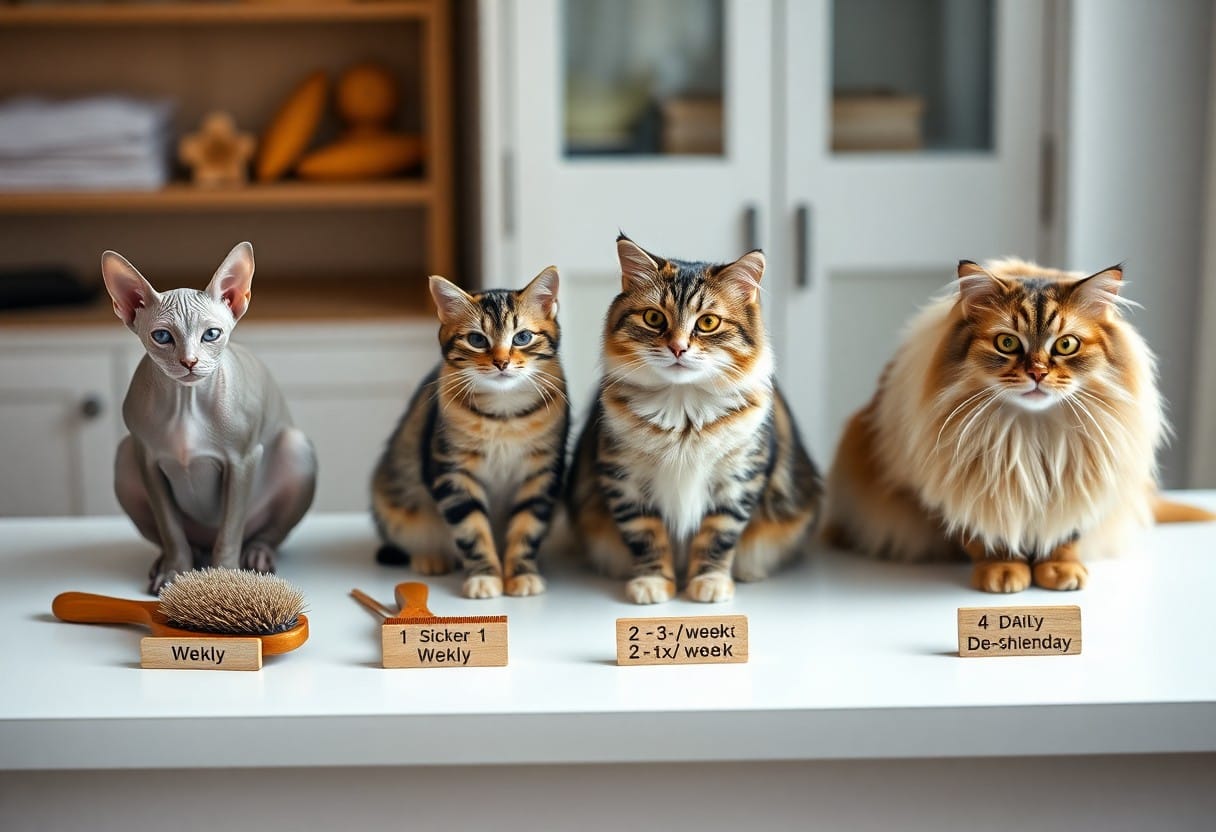
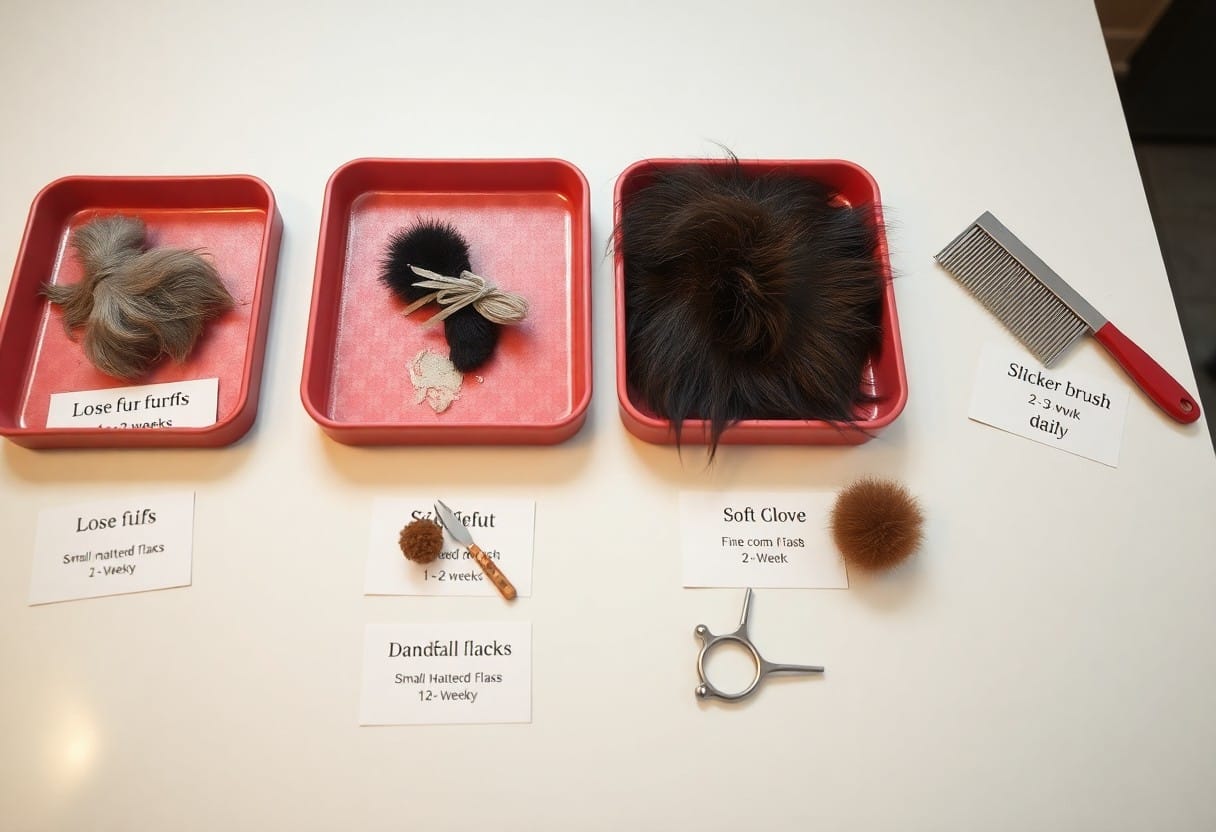
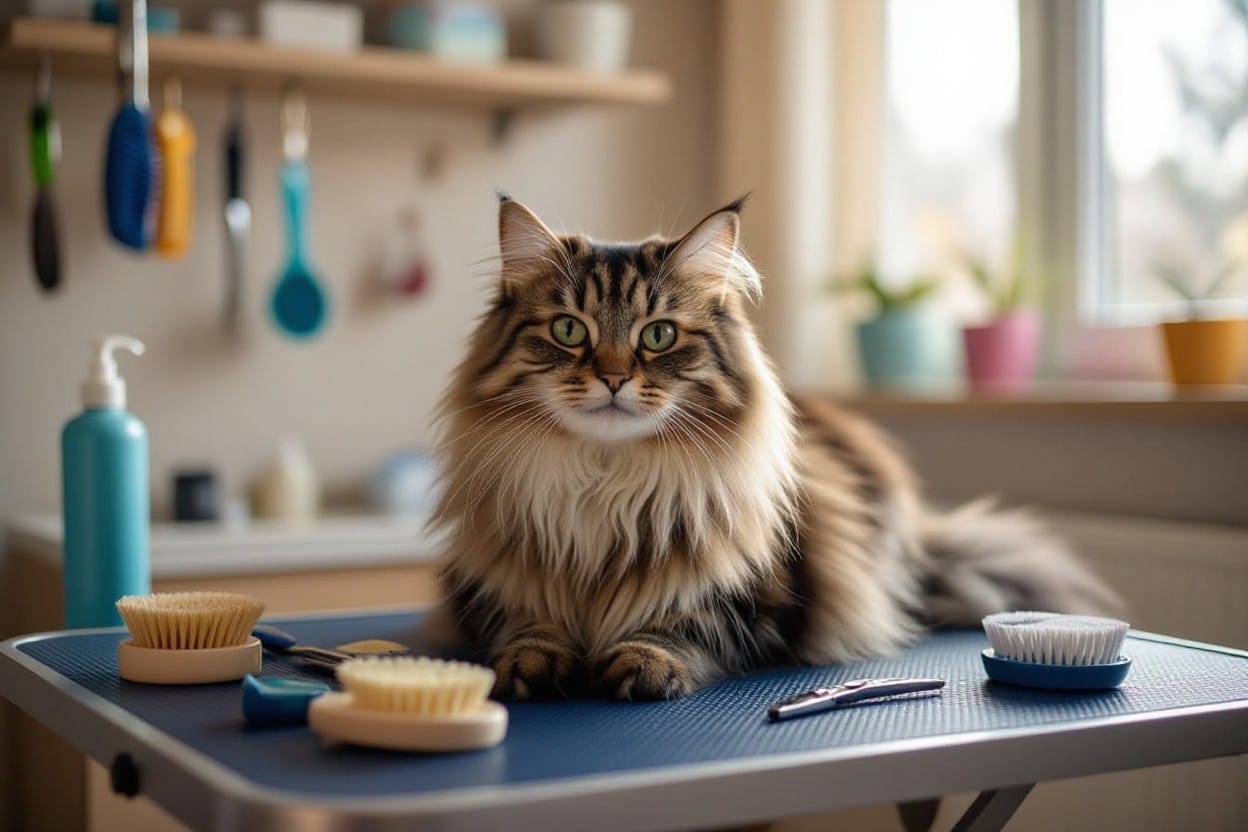
There’s no one-size-fits-all schedule for brushing; you should groom based on your cat’s coat: daily for long-haired breeds, several times weekly for medium coats, and weekly for short-haired cats. Pay attention to signs of matting or skin irritation because mats can trap moisture, cause pain and lead to infections. Regular brushing reduces hairballs, improves skin health and strengthens your bond when done gently, so adjust frequency seasonally and consult your vet if you notice changes in your cat’s coat or behavior.
Understanding Cat Coat Types
Coat variations dictate how often you groom: short-haired cats typically need brushing 1-2 times weekly, medium-haired 2-3 times, and long-haired often daily to prevent mats and reduce hairballs; for example, a Maine Coon benefits from 10-15 minutes daily combing. Seasonal shedding can double loose fur in spring and fall, so increase frequency then. Use a rubber brush for short coats and a slicker plus wide-tooth comb for longer coats. The result is fewer hairballs and healthier skin.
Short-haired
Medium-haired
Long-haired
Brushing frequency
Grooming tools
Short-haired
1-2×/week; 3× during heavy shedding
Medium-haired
2-3×/week; comb 10-15 minutes
Long-haired
Daily or every other day; detangle as needed
Shedding peaks
Increase to daily in spring and fall
Tools
Rubber brush, slicker, wide-tooth comb, dematter
Short-Haired Cats
You should brush short-haired cats about 1-2 times weekly with a rubber or bristle brush to remove loose fur and cut down hairballs; during seasonal shedding increase to 3 times weekly. Short coats are less likely to mat, so focus on removing dead hair and checking for fleas or skin lumps. Brief sessions of 5-10 minutes keep your cat comfortable and reduce vacuuming chores.
Medium-Haired Cats
You ought to groom medium-haired cats 2-3 times per week using a slicker brush and a wide-tooth comb to reach the undercoat; aim for 10-15 minutes per session and more often during seasonal blowouts. These cats balance undercoat density and length, so you must monitor common tangle zones like armpits and the belly, and use a detangling spray if needed.
For more depth, target the undercoat with a comb after deshedding with a slicker to prevent small mats from tightening; breeds such as Siberians and Norwegian Forest Cats can form tangles behind the ears and under the legs within a week if neglected, and neglected mats can lead to skin infection-use scissors only if you can keep the blade away from skin, otherwise seek professional grooming.
Long-Haired Cats
You need to brush long-haired cats daily or every other day with a slicker and a wide-tooth comb to prevent tangles and large mats; allocate 15-20 minutes per session and increase frequency during shedding peaks. Long coats are highly mat-prone, so prompt detangling reduces painful pulls and hairball formation.
When mats form close to the skin they can trap moisture and cause severe skin sores, so gently tease tangles apart with a dematting tool or consult a groomer; if mats are extensive, a professional shave is safer than DIY cutting because cutting can easily nick the skin and exacerbate infection risk.
Match brushing to coat length and seasonal shedding: for long-haired breeds you should brush daily (5-10 minutes), medium-haired cats need brushing about 2-3 times weekly for 10-15 minutes, and short-haired cats usually do well with a session every 1-2 weeks plus extra during heavy shedding. You should also adjust for age, medical issues, or recent matting, since mats can form within days in neglected areas like behind the ears and under the armpits.
Daily Care for Long-Haired Cats
If you own a Persian, Maine Coon or similar, brush your cat every day for 5-10 minutes using a slicker brush followed by a wide-tooth comb to detangle. Focus on the belly, behind the ears and the rear where mats often begin; apply a detangling spray for stubborn knots and gently work them out from the tips to the skin while you hold the base of the hair to prevent pulling.
Weekly Routine for Medium-Haired Cats
For Ragdolls, Norwegian Forest mixes or other medium coats, aim for 2-3 brushing sessions per week, about 10-15 minutes each, using a bristle brush plus a medium-toothed comb to remove loose undercoat and prevent light matting. Increase frequency to daily during spring and fall when shedding peaks so you can keep loose hairs under control and lower hairball frequency.
Begin sessions at the head and work toward the tail, checking common trouble spots like the chest and underlegs; hold the skin gently with one hand while brushing to avoid pulling, and use a de-shedding tool once every 2-4 weeks for heavy undercoat removal. Also inspect for fleas, lumps or skin irritation during these routines-finding issues early speeds treatment and recovery.
Occasional Maintenance for Short-Haired Cats
Short-haired breeds generally need brushing every 1-2 weeks for 5-10 minutes with a rubber brush or grooming glove to remove loose hair and stimulate skin oils, with sessions increased to several times weekly during shedding spikes. You’ll reduce hairballs and keep your home cleaner; when you see excessive shedding or skin flakiness, step up grooming frequency or consult your vet.
Use short, gentle strokes in the direction of hair growth and avoid pressing hard to prevent skin irritation; a monthly pass with a fine-toothed comb helps catch hidden loose hairs, while overbrushing can dry the skin and cause redness, so watch for signs of irritation and back off if your cat shows discomfort.
Tools and Techniques for Effective Brushing
You should match tools and timing to your cat’s coat: spend about 5-15 minutes per session-daily for longhair, 2-3 times weekly for most shorthaired cats-and stop if you hit a tight mat to avoid skin injury. Use slow, gentle strokes along hair growth to reduce shedding and hairballs; aggressive pulling can create wounds or stress. Watch for hotspots, swollen skin, or sudden reluctance to be handled as signs to pause and consult a vet.
brush
comb
Assume that grooming frequency influences shedding and comfort
Recommended Brushes and Combs
You’ll want a few specialized tools: a slicker brush for removing loose undercoat, a wide-tooth metal comb to detect mats, a soft bristle brush for finishing, a rake for dense coats, and a deshedding tool for heavy shedders; use the gentlest option that moves tangles without tugging. Choose stainless steel or high-quality nylon to avoid bent teeth that can scratch skin; replace worn tools every 12-18 months.
slicker brush
metal comb
deshedding tool
Assume that tool quality affects comfort and effectiveness
Polishes coat and distributes oils on short/medium fur
Rake
Effective on dense or long double coats to reach undercoat
Deshedding tool
Helps during heavy-shedding seasons, use carefully
Brushing Techniques for Different Coat Types
For short coats, use a soft rubber or bristle brush in the direction of hair growth for 5-10 minutes, 2-3× weekly; for medium coats, slicker plus comb every other day to prevent tangles; and for long coats, daily sessions of 10-15 minutes, starting at tips and working toward the skin while gently easing mats with a comb or rake. Keep sessions calm and reward your cat to avoid stress-related resistance.
Short coat
5-10 min, 2-3× weekly; rubber/bristle brush
Medium coat
8-12 min, every other day; slicker + comb
Long coat
10-15 min, daily; rake for undercoat, comb mats
Double coat
Increase during shed cycles: 10-20 min, 3-7× weekly
Sensitive skin
Short 2-5 min sessions, soft brush, avoid pressure
When dealing with stubborn mats, you should hold the base of the mat close to the skin to protect it while gently working a comb through the tangles; for example, a 4-5 cm mat on a Maine Coon often requires 10-20 minutes of careful detangling or professional help. Use short, calm sessions for anxious cats, and stop if you see broken skin, bleeding, or flinching-those are signs of injury or pain that need attention. Assume that professional grooming is sometimes the safest choice for severe matting.
mat prevention
gentle strokes
Assume that professional grooming reduces risk with severe tangles
Technique
When to use
Hold-at-base combing
Protects skin when removing tight mats
Short frequent sessions
Best for nervous or elderly cats
Rake then comb
Works well on dense undercoats in spring/fall
Deshed in shedding season
Reduces hairballs and loose fur significantly
Stop and seek help
If skin is raw, bleeding, or matting is severe
Signs Your Cat Needs More Frequent Brushing
Common indicators
If you notice increased shedding, frequent mats, or more hairballs, you should brush more often. Often cats groom 30-50% of their waking hours, so a sudden drop in self-grooming (thin flanks, greasy coat) signals need for help. In longhairs (Maine Coon, Persian) mats can form within 1-2 weeks without care; address mats larger than 1 inch immediately. Also, if your cat vomits hairballs more than once a week or shows skin irritation or sores, increase brushing to daily or every-other-day and consult your vet.
Additional Grooming Considerations
Bathing and Other Grooming Practices
If your cat gets into grease, fleas, or has a skin condition, bathing becomes necessary; otherwise most cats self-groom. For long-haired or show cats you might bathe every 4-8 weeks, while short-haired cats rarely need baths. Use a cat-formulated shampoo and lukewarm water (~35-38°C), rinse thoroughly, and dry with a towel then a high-velocity dryer if tolerated to avoid chills. You should also trim nails every 2-4 weeks, clean ears monthly, and brush teeth 2-3 times weekly.
Many groomers provide de-matting, sanitary trims, and flea treatments using dematting rakes and professional dryers; expect typical costs of $40-$150 per session and appointments of 30-90 minutes. You should verify cat-handling experience, vaccination policies, and emergency protocols before booking. Severe mats may require shaving or a vet-assessed sedation; those are higher-risk procedures that must be disclosed and consented to in advance.
When choosing a groomer, you should ask for references, before-and-after photos, and confirmation they use low-stress handling; some list credentials from the National Cat Groomers Institute. Regular visits every 6-12 weeks benefit long-haired cats, whereas short-haired cats need fewer appointments. Expect the groomer to recommend at-home routines and specific products, and if you spot excessive stress marks, bites, or cuts after a session, treat that as a warning sign to change providers immediately.
Summing up
From above, you should tailor brushing frequency to coat type: short-haired cats need weekly sessions, medium coats benefit from two-to-three times weekly, and long-haired breeds require daily or every-other-day brushing to prevent mats and reduce shedding; elderly, overweight, or shedding-prone cats may need more frequent attention. Consistent grooming supports skin health and bond-building, so establish a routine that fits your cat’s needs and your schedule.
FAQ
Q: How often should I brush a short-haired cat?
A: Brush most short-haired cats 1-2 times per week to remove loose hair and distribute skin oils. Increase frequency to several times per week or daily during seasonal shedding. Use a rubber brush or grooming glove for short sessions (5-10 minutes), paying attention to the back, base of the tail and under the chin. Regular brushing reduces hairballs and helps you spot skin issues early.
Q: How often should I brush a long-haired cat?
A: Long-haired cats benefit from daily brushing or at minimum every other day to prevent tangles and mats. Start with a wide-tooth comb to gently work out tangles, then use a slicker brush to smooth the coat; sessions typically run 10-15 minutes. Focus on the belly, armpits, behind the ears and around the tail where mats form first. For stubborn mats or severe tangling, seek professional grooming rather than pulling at the fur.
Q: What about double-coated breeds and hairless cats-how do their needs differ?
A: Double-coated breeds (e.g., Siberian, Maine Coon) need brushing 2-3 times per week to remove loose undercoat, and often daily during heavy seasonal shedding using an undercoat rake or deshedding tool. Avoid over-brushing the guard hairs; be gentle on the undercoat. Hairless or very short-skinned breeds (e.g., Sphynx) don’t need frequent brushing; a soft brush or cloth once a week helps remove dead skin cells and stimulate circulation, but regular bathing and skin care are more important for these cats.