Rescue cats often arrive anxious, so you should create a quiet safe zone with food, litter, hiding spots and a soft bed. Secure electrical cords and remove toxic plants to avoid danger, and plan slow introductions to build trust.
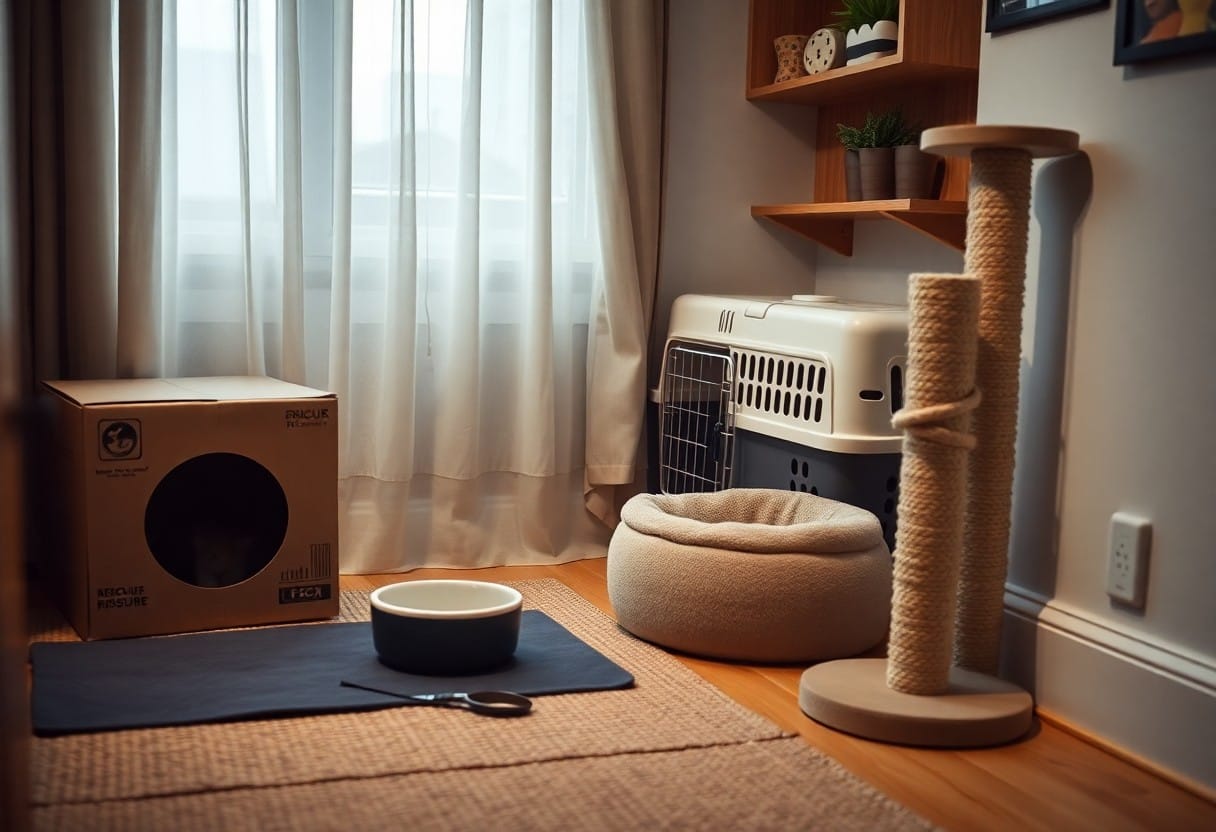
Selecting the Ideal Location: Key Factors for Success
Choose a low-traffic, well-ventilated room as your safe zone, away from busy doors and loud appliances.
- quiet
- secure
- comfortable
After you set up bedding and litter, limit access so your new cat can adjust.
Location Factors
| Factor | What to check |
|---|---|
| Foot traffic | Low-pass times and secluded spots |
| Noise | Avoid appliance areas and echoing halls |
| Ventilation | Steady airflow without direct drafts |
| Safety | Secure windows, cords, and toxic plants |
Evaluating foot traffic and noise levels
Observe corridors and nearby rooms at various times; consistent noise or constant passersby will stress a shy cat, while pockets of quiet encourage exploration and rest.
Ensuring proper ventilation and temperature control
Maintain steady temperatures between 65-75°F and avoid drafts; you should provide gentle airflow so your cat stays comfortable and avoids getting chilled or overheated.
Monitor room humidity and avoid placing the safe zone near heaters, open windows, or air conditioners; you can add a thermostat-controlled option to keep conditions stable.
Ventilation Tips
| Issue | Fix |
|---|---|
| Humidity | Keep around 30-50% |
| Temperature | Maintain 65-75°F |
| Drafts | Block direct airflow onto bedding |
| Equipment | Use thermostat and gentle fans safely |
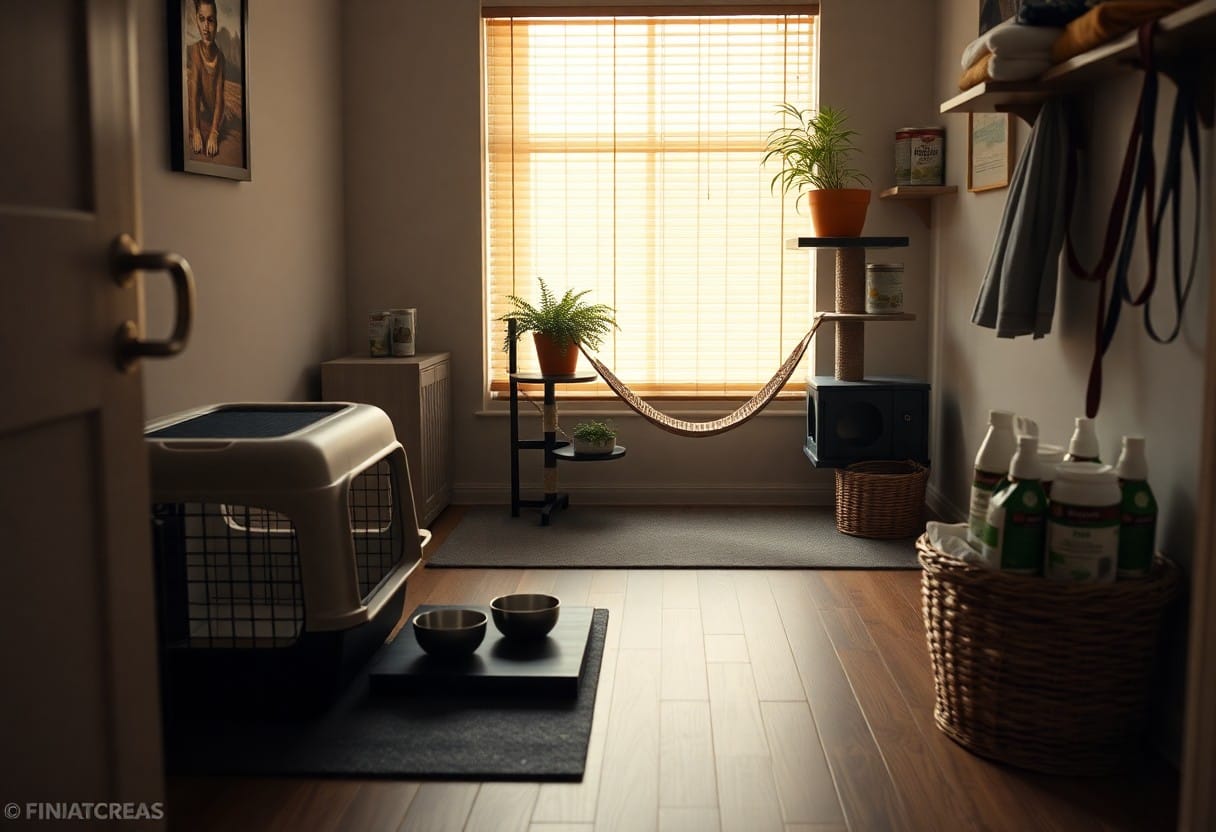
Essential Equipment: How to Furnish the Safe Zone
Prepare your safe zone with compact, quiet items: a low-sided carrier, food and water bowls, a covered litterbox, a perch and a hide. Keep things secure and free of hazards like cords or toxic plants. You should provide one small area where your cat can rest and watch without being disturbed.
Strategic placement of litter boxes and feeding stations
Place litter boxes on different levels and away from feeding stations; keep bowls quiet and stable. Provide at least one extra litterbox than you have cats to reduce stress. Avoid crowded or loud spots-this can make your cat avoid the box or skip meals.
Selecting appropriate bedding and scratching surfaces
Choose soft, washable bedding in a quiet corner and provide both vertical and horizontal scratchers. Pick materials that are easy to clean and scratchers that are securely anchored. Avoid loose loops or shreddable fluff that could be swallowed.
When you pick bedding, favor breathable fabrics and low-profile beds where your cat can hide and feel safe; machine-washable covers let you remove hair and allergens regularly. For scratching, combine sisal or rope posts with corrugated boards so your cat can stretch and sharpen claws; anchor tall posts to walls to prevent tipping and inspect for loose threads or small parts that pose a choking hazard.
Safety Protocols: Tips for Cat-Proofing the Area
Start by creating a safe zone with hiding spots, secured windows, and tucked cords to apply clear safety protocols and effective cat-proofing. After you finish, keep the space quiet and check it daily for hazards.
- Block escape routes and secure windows – cat-proofing
- Remove houseplants and chemicals that are toxic
- Conceal cords and small items to prevent access to loose wires and small swallowable objects
Identifying toxic plants and chemical hazards
Check houseplants for toxic species like lilies and philodendron, isolate or remove them, and lock cleaners and medications away to reduce exposure to chemical hazards. Scan new items against an updated toxic list.
Securing loose wires and small swallowable objects
Tuck loose wires into cord organizers and anchor power strips, and place coins, batteries, and small toys in sealed containers so you limit access to small swallowable objects that can choke or injure.
Bundle cords with cable sleeves and adhesive clips to remove dangling loops that invite chewing; cover plugs with outlet protectors and secure under-furniture cables with zip ties. You should store button batteries and small magnets in high cabinets or locked drawers because these items can cause severe internal harm if swallowed.
Creating Vertical and Enclosed Retreats
Vertical shelving and perches give your rescue cat control and safety; set tall cat trees and window seats so you can offer observation spots without exposure. Use stable platforms, secure to walls, and keep cords out of reach; falls or entanglement can be dangerous for timid newcomers.
Utilizing cat trees to provide a sense of security
Install a tall, sturdy cat tree so your rescue can climb, hide, and watch; you should anchor it to prevent tipping. Offer platforms at various heights and a covered cubby for retreat; an unstable or wobbling tree is dangerous.
The importance of cardboard boxes and covered beds
Provide sturdy cardboard boxes and covered beds around the house so your cat can hide, rest, and feel protected; check boxes for staples, tape, and holes because those can be hazardous, and replace damp or chewed bedding promptly to keep the space clean and safe.
Boxes and covered beds mimic dens, giving your cat control over visibility and scent. You should rotate clean boxes and wash removable bedding weekly. Inspect each box for torn tape or staples that pose a choking or laceration risk. Offer varied sizes with low entrances so older or injured rescues can enter easily, keeping the area comforting and secure.
Managing the Initial Interaction Period
Patience lets you give the cat safe space, controlled meetings, and clear signals; watch for hissing, flattened ears, or swatting as signs to pause, and encourage soft approaches, treats, and slow blinks to build trust.
Establishing a consistent routine and feeding schedule
Consistency in mealtimes and play helps you reduce anxiety, set expectations, and reinforce litter habits; offer small, regular meals and short play sessions to help the cat settle.
Monitoring body language for stress indicators
Observe ears, tail, pupils, and posture so you can spot hissing, growling, flattened ears, tucked tail (danger) or purring, slow blinks, relaxed posture (comfort), adjusting distance accordingly.
Watch subtle shifts: a slowly twitching tail, wide pupils, or sudden freezing can signal mounting stress; back off, give the cat a hiding spot, and avoid direct eye contact. Offer treats and short positive interactions when you see soft ears, kneading, or purring. If aggression persists, consult a vet or behaviorist to rule out pain.
Final Words
Upon reflecting, you should create a calm ‘safe zone’ with food, litter, hiding spots, toys, removed hazards, secured windows and cords, and a consistent routine so your rescue cat settles, feels secure, and bonds with you.
FAQ
Q: What is a “Safe Zone” and how do I set one up before bringing home my rescue cat?
A: Choose a small, quiet room that can be closed off from the rest of the house to serve as the cat’s initial Safe Zone. Place a comfortable bed, at least one hiding box or covered shelter, and elevated resting spots such as a cat tree or wall shelf to give the cat control over its space. Place a litter box in the room away from food and water; provide an extra box if you have multiple cats. Keep food and fresh water accessible and use shallow bowls for kittens or shy eaters. Remove toxic plants, secure loose wires, and make sure windows have secure screens. Offer a few familiar-smelling items such as a towel from the shelter and a small selection of toys, and consider a synthetic feline pheromone diffuser to reduce stress. Keep the area low-traffic and quiet for the first days to help the cat acclimate at its own pace.
Q: How should I introduce a new rescue cat to family members and other pets?
A: Start with a period of separation and scent exchange by swapping bedding or rubbing a towel on each animal so they can learn each other’s scent without face-to-face contact. Open the door a crack or use a baby gate for short visual introductions while supervising closely and offering treats to build positive association. Schedule several brief, supervised encounters that increase in length as both animals remain relaxed; stop the session at the first sign of stress. Keep dogs on leash and allow the resident cat or new cat easy access to vertical escape routes. Feed both animals on opposite sides of the barrier to link good things with each other’s presence. Continue gradual increases in interaction over days to weeks and maintain routine, multiple resources, and separate litter/feeding stations to reduce competition.
Q: What signs of stress or problems should I watch for, and when should I seek veterinary or behavioral help?
A: Watch for loss of appetite, hiding for prolonged periods, changes in litter box habits, excessive vocalization, overgrooming or bald patches, sudden aggression, and weight loss as indicators of stress or medical issues. Continue keeping the Safe Zone intact and maintain predictable feeding, play, and resting schedules to help the cat feel secure. Offer daily interactive play, puzzle feeders, and more vertical and hiding options to reduce anxiety. Use calming tools such as pheromone diffusers or consult your veterinarian before trying supplements or medications. Seek veterinary evaluation if the cat refuses food for more than 24-48 hours, shows signs of pain or illness, or if problematic behaviors escalate; ask about a certified feline behaviorist when problems persist despite environmental changes.