Behavior explains why your cat watches you: it’s a form of communication, can signal affection and bonding, or warn of illness or aggression-you should observe posture and context to respond appropriately.
The Evolutionary Basis of the Feline Gaze
Evolutionary pressures shaped your cat’s gaze: high visual acuity for low-light hunting and forward-facing eyes for depth perception, so your cat uses staring to assess movement and intent.
Predatory Instincts and Visual Tracking
Hunting instincts make your cat track tiny movements with unwavering focus; that stare functions as goal-directed attention rather than personal judgment, especially during play or when prey-like items move.
Transitioning from Wild Observation to Domestic Connection
Domestication converted solitary observation into social cues, so your cat may stare to gather information, solicit interaction, or check your mood, turning predatory focus into affiliative communication.
You can read that stare by combining context and body language: slow blinks and relaxed posture signal trust, while dilated pupils and flattened ears warn of stress or aggression. If your cat seeks attention, return a slow blink, speak softly, or offer a hand; avoid staring back if the cat shows defensive signs.
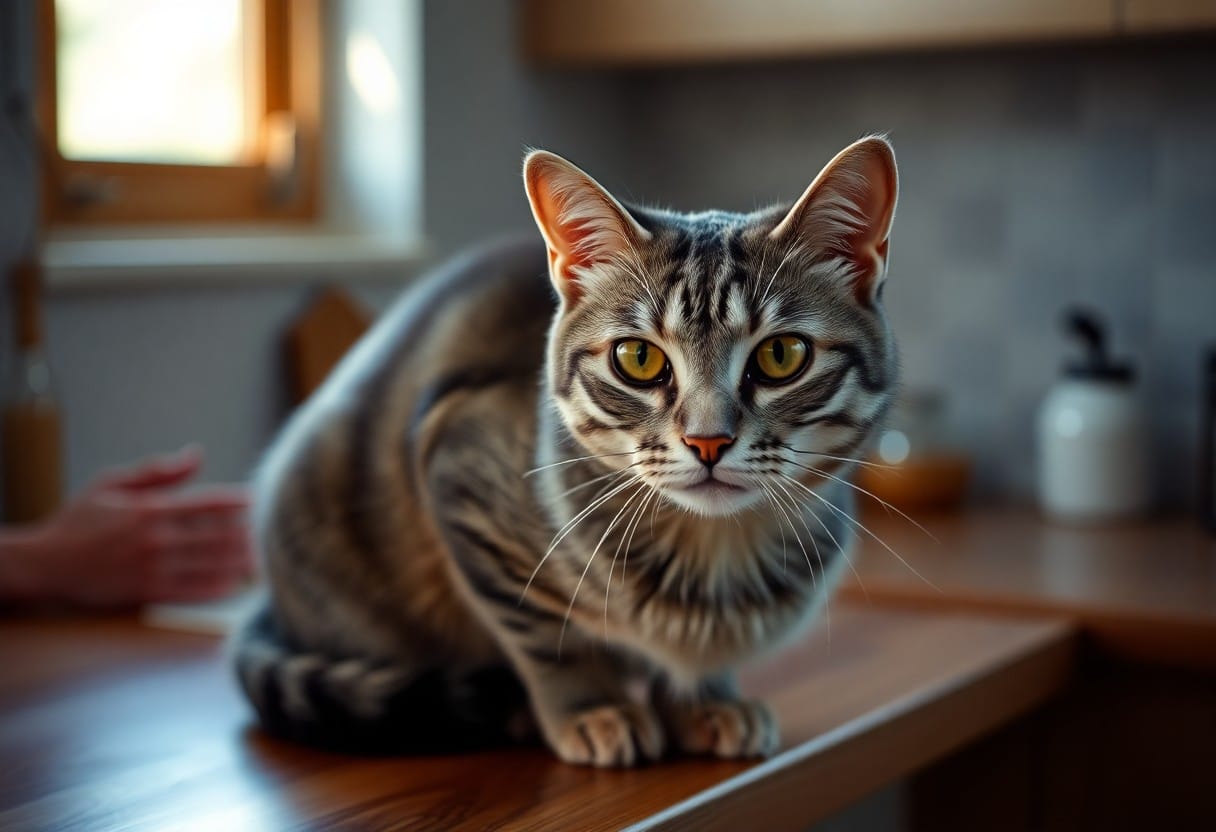
Deciphering the “Slow Blink” and Affectionate Staring
Slow blinks are your cat’s way of saying safe and relaxed; when they close and reopen their eyes slowly you can return the gesture to reinforce bonding. Watch eye contact combined with relaxed posture; a hard stare may mean stress while a soft blink signals affection.
The Science of the Oxytocin Response
Oxytocin release when you and your cat share calm eye contact strengthens bonding; studies show mutual gazing raises levels in both species, making you feel closer. If you return a slow blink you boost this hormonal link; enhanced bonding follows.
How Cats Use Eye Contact to Signal Trust
Direct eye contact can be ambiguous; soft, steady looks paired with relaxed ears mean your cat trusts you, so you should respond calmly. A hard stare with dilated pupils often signals stress or intent to act-interpret that as a warning and give space.
Observe your cat’s full body: relaxed tail and purring plus soft eyes show trust; if you see flattened ears or a tense body, their stare may predict aggression-back off. Returning a slow blink reinforces connection and encourages more gentle eye contact.
The Psychological Indicators of Pupil Dilation
Pupil dilation gives you a quick read on arousal: wide pupils often signal intense states like excitement or fear, while constricted pupils point to calm or low interest.
High-Arousal States: Fear and Aggression
When your cat’s pupils blow wide and the body tenses, you should see aggression or fear as possible causes; watch for hissing, flattened ears, and lunging as danger signs.
Cognitive Engagement and Curiosity
You notice interest when pupils dilate modestly and ears pivot, signaling focused attention; this positive engagement often leads to play, problem-solving, or closer bonding with you.
Observe subtle cues: when pupils show a slight dilation alongside slow blinks, forward whiskers, or a tilted head, you’re seeing focused curiosity rather than fear. You can encourage this with toys, puzzle feeders, and short training sessions to boost mental health and enrichment. If dilation accompanies flattened ears or hissing, treat it as danger and give space.
Environmental Influences on Visual Behavior
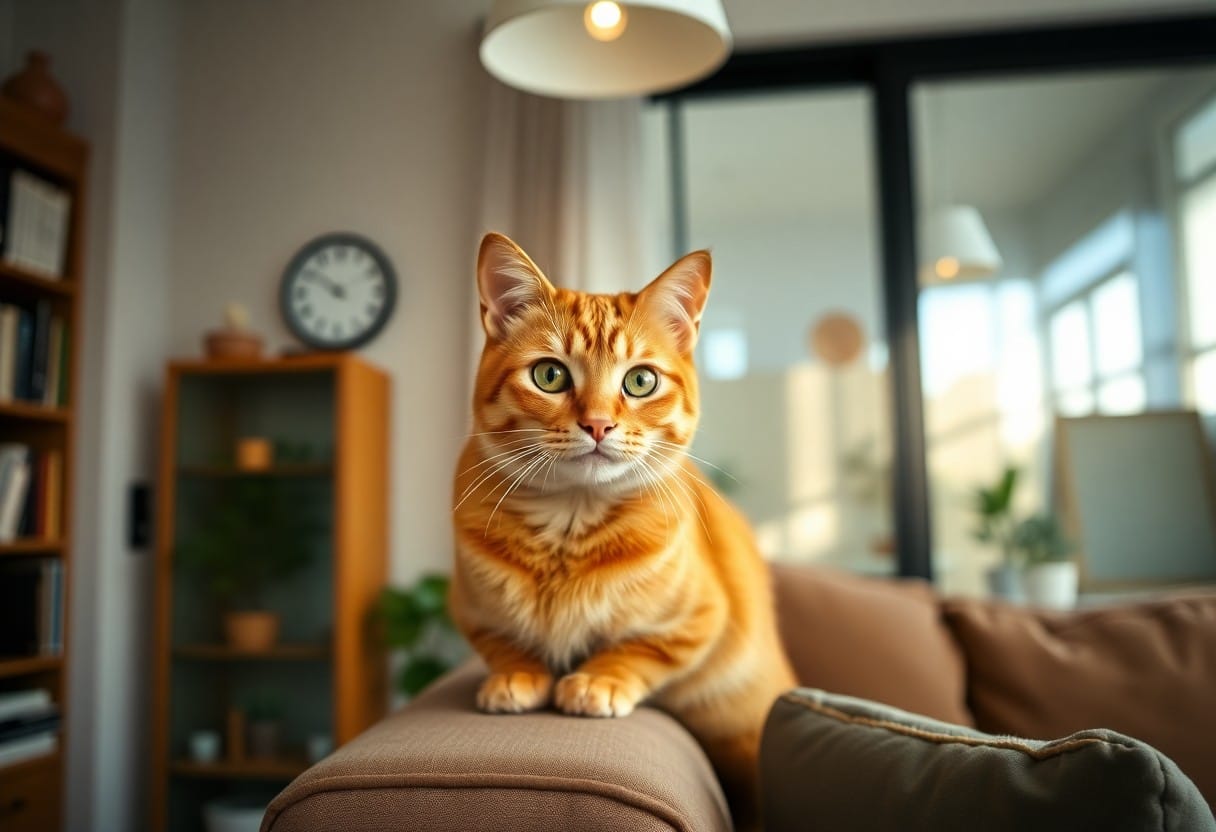
Environment cues like lighting, movement, and household routines shape how your cat uses eye contact, with dim light and sudden motion increasing focused staring as a way to assess threats or social opportunities.
Monitoring Human Movements for Safety and Security
Cats track your position and gestures to assess safety, often staring to detect hazards or to signal readiness to interact; you can use this gaze to anticipate and reduce risky situations.
The Impact of Sensory Stimulation in the Home
Home sensory inputs-noisy TVs, bustling kitchens, or quiet corners-alter your cat’s gaze patterns, with overstimulation causing stress and calm environments promoting bonding.
Sensory adjustments let you shape staring behavior: switch off loud appliances during naps, add vertical perches and quiet hideaways, and avoid sudden scents or flashing lights that provoke vigilance. When your cat repeatedly stares in tense settings, reduce stimuli, offer interactive play, or provide a safe retreat to promote relaxation and deeper owner-cat bonding.
Behavioral Responses and Strengthening the Bond
Cats respond to your gaze with behaviors that shape your relationship; when you mirror calm signals like slow blinks and gentle petting, you reinforce trust, while reactive acts such as sudden movements can trigger fear or aggression.
Appropriate Ways to Reciprocate Eye Contact
Use gentle cues: offer a slow blink, lower your body, and speak softly to signal safety; avoid fixed, prolonged stare that your cat may read as threatening.
Recognizing When to Give Your Cat Space
Watch for cues such as flattened ears, twitching tail, hissing, or dilated pupils; when you see these signals, step back and let your cat retreat to avoid escalation.
If your cat shows repeated signs like hissing, swiping, or hiding, give extended space, remove overstimulating stimuli, and offer safe retreat spots; avoid forcing interactions and, if aggressive behavior persists, consult your veterinarian or a certified behaviorist for assessment.
To wrap up
Taking this into account, you can interpret your cat’s stares as communication of needs, affection, or social cues and respond with soft eye contact, a calm voice, and consistent routines to build trust and reduce stress.
FAQ
Q: Why does my cat stare at me for long periods?
A: Cats stare for several reasons that range from social communication to simple curiosity. Some cats use steady eye contact to ask for food, attention, or play; they learn that staring often triggers a human response. Other cats watch your face and body to read cues about safety and routine, because cats are attuned to human behavior. A slow blink while maintaining soft eye contact is a pair-bonding signal that shows trust; returning a slow blink can strengthen your bond.
Q: Is direct eye contact bad or aggressive in cats?
A: Direct eye contact can be aggressive between cats, but context defines meaning in cat-human interactions. Look for body language: dilated pupils, flattened ears, a stiff tail, or growling indicate the stare is threatening. Relaxed posture, softly closed eyes, and slow blinking signal comfort and affection rather than hostility. If your cat seems uneasy, avert your gaze, speak calmly, and give space instead of staring back.
Q: How can I use eye contact to build trust with my cat?
A: Use eye contact intentionally to build trust by matching your cat’s comfort level and rewarding calm behavior. Practice slow blinking: sit quietly at the cat’s level, make gentle eye contact, then close and open your eyes slowly; repeat and offer a treat or soft praise when the cat responds positively. Avoid forcing prolonged stares and let the cat choose to engage, stepping back if you notice signs of stress. Pair a soft gaze with consistent routines like feeding and gentle petting to reinforce a sense of safety.