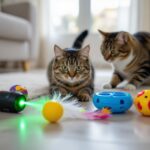
Many cats burst into wild sprints, flips, and chases in the middle of the night, leaving you puzzled. This behavior is completely normal and stems from your cat’s natural hunting instincts. Even well-fed indoor cats retain strong nocturnal tendencies. The nighttime energy release is usually harmless, but ensure your home is safe to prevent injury during high-speed runs.
The Midnight Specter
Your cat’s sudden sprints through the house at 2 a.m. aren’t random-they’re instinctual bursts of energy tied to their natural hunting rhythms. These frenzied episodes, often called the “zoomies,” are completely normal and usually harmless, though they can startle you mid-sleep. You might notice your cat crouching, tail twitching, then exploding into motion-this behavior mimics stalking prey in the wild. As long as your home is safe and your cat isn’t injuring itself, these nocturnal dashes are a healthy sign of mental and physical stimulation.
Ancestral Echoes
Your cat’s nighttime bursts of energy trace back to wild ancestors who hunted under moonlight. These instinctive patterns still live within your pet, driving them to stalk, pounce, and sprint when the house grows quiet. That sudden dash across the room? It’s not random-it’s survival behavior refined over thousands of years. Even well-fed indoor cats feel this pull, making the “zoomies” a natural, healthy expression of who they truly are.
Pent Up Energies
Your cat spends daylight hours lounging, but that stillness masks a build-up of energy. Indoor environments often lack stimulation, leaving your feline with excess drive to hunt and explore. When evening arrives, those suppressed instincts surge forward. You see this burst as wild sprints or sudden leaps. This release is completely natural-and even beneficial-for your cat’s physical and mental health.
Sensory Overload
Your cat’s heightened senses can turn a quiet evening into a sensory storm. Bright lights, distant sounds, or even a lingering scent may trigger an overwhelming burst of energy. When stimulation builds without release, the “zoomies” become a necessary outlet. You might notice erratic sprints after a loud noise or sudden movement-this is your cat processing excess input through action. Managing environmental triggers can reduce intensity and frequency.
The Call of the Moon
You may notice your cat becomes especially active when moonlight spills into the room. Natural instincts tied to low-light hunting surge during these moments, driving bursts of energy. The moon doesn’t control your pet, but its glow mimics ideal nocturnal conditions. This triggers primal behaviors, even in well-fed indoor cats. Your feline doesn’t need a wild habitat to respond-just the suggestion of one.
Methods of Quietude
Play Before Power Down
You can reduce nighttime bursts by engaging your cat in active play just before bedtime. A 10- to 15-minute session with a wand toy or laser pointer helps burn energy and mimics hunting. This routine signals that nighttime is for resting, not racing, aligning their rhythm with yours.
Strategic Feeding Schedule
Meal timing influences your cat’s activity peaks. Offering their largest meal at night encourages drowsiness afterward. Cats often sleep after eating, making this a powerful tool to quiet post-midnight sprints and promote uninterrupted sleep for both of you.
Safe Stimulation Zones
Designate a play area away from your bedroom to contain the chaos. Equip it with climbing shelves, crinkly toys, and puzzle feeders. Limiting high-energy play to one zone prevents disruption while still meeting your cat’s instinctual needs.
To wrap up
Considering all points, your cat’s nighttime bursts of energy are natural, rooted in instinctual hunting patterns and high sensitivity to low-light environments. You see this behavior because cats are biologically wired to be most active during dawn and dusk. Meeting their needs with play and stimulation during the day helps reduce after-dark sprints through your home.
FAQ
Q: Why does my cat suddenly sprint around the house at night?
A: Cats are naturally crepuscular, meaning they’re most active during dawn and dusk. In the wild, these times are ideal for hunting, so your cat’s burst of energy-often called the “zoomies”-is an instinctive behavior. Even well-fed indoor cats retain this pattern. After a day of resting, they’re primed to move, and nighttime offers a quiet environment with fewer distractions, making it the perfect time to release pent-up energy through quick dashes, leaps, and playful attacks on toys or furniture.
Q: Is it normal for my cat to act hyperactive right after I go to bed?
A: Yes, it’s completely normal. Many cats sync their activity cycles with their owners’ routines. If you settle down at night, your cat may interpret that as a signal to start their “night shift.” This behavior often includes running, pouncing, or meowing. It’s not a sign of discomfort or illness-it’s simply how cats naturally express energy. Some cats also seek attention during these hours, especially if they’ve been alone during the day.
Q: How can I reduce my cat’s nighttime activity without restricting their instincts?
A: You can influence your cat’s schedule by adjusting their routine. Engage them in vigorous play sessions in the evening before bedtime, using wand toys or puzzle feeders to mimic hunting. Feeding a larger meal at night may also encourage sleep afterward. Keep the environment calm at night-avoid reacting to their activity, as any attention can reinforce the behavior. Over time, many cats adapt to a quieter nighttime rhythm while still enjoying short bursts of movement.