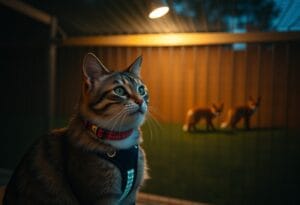
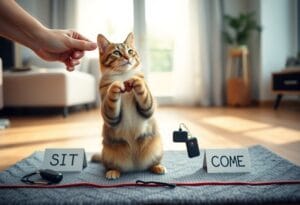
We’ve seen a massive uptick recently in owners realizing that a “chill” cat might actually be a depressed one, especially with more folks heading back to the office. It’s not just about them sleeping too much – boredom actually changes their brain chemistry. Without mental friction, stress hormones like cortisol can build up because that natural hunting instinct has nowhere to go. It turns a relaxed pet into a nervous wreck, and frankly, it happens faster than you’d think. When the environment is static, the cat’s mind creates its own – usually anxious – stimulation.
The Signs Your Cat’s Bored vs Anxious
Distinguishing between the two is tricky since the symptoms often overlap like a Venn diagram. While an anxious cat might hide or over-groom, boredom usually manifests as destructive curiosity. If you’re finding shredded toilet paper or knocked-over plants, that’s your cat screaming for stimulation, not necessarily acting out of fear. But here’s the kicker – if they’re pacing by the door or vocalizing constantly, they aren’t just looking for trouble. They’re trying to discharge energy that, if left unchecked, will curdle into anxiety.
How Negative Behavior Can Creep In
It starts so subtle you might miss it. Maybe they swat your ankle once at 3 AM or chew a wire they used to ignore. If you react – even just by yelling “stop” – you’ve accidentally reinforced the behavior because any attention is good attention to a bored cat. Before you know it, you’re dealing with “play aggression” where they treat your limbs like prey because they don’t have interactive toys to tackle. It’s a slippery slope from a playful nip to a full-blown behavioral issue.
This is exactly why we see so many people frantically searching for toys that can keep an indoor cat engaged all night. When the hunting instinct kicks in during the twilight hours and there’s no outlet, frustration builds up fast. Pent-up energy often morphs into anxiety, making the cat feel unsafe in their own territory. You end up with a cat that’s jumpy and reactive, not because they’re mean, but because their biological clock is ringing an alarm you haven’t answered with the right play outlet. That midnight ankle attack is really just a misdirected hunt.
Understanding Your Cat’s Unique Personality
Not every cat wants to chase a laser pointer until they pant. Some are “bush dwellers” who prefer stalking from behind a couch, while others are “tree dwellers” who need vertical space to feel confident. Forcing a nervous cat into high-energy play can actually backfire and increase their fear. You have to match the toy to their comfort zone – slow, treat-dispensing puzzles for the thinkers and fast, feathery wands for the hunters. It’s about finding their specific frequency.
Behavioral experts are moving away from one-size-fits-all advice and looking at the “prey sequence” your specific cat enjoys most. Some get a thrill from the stalk, others live for the kill bite. If you have a timid rescue, big loud motorized toys might be terrifying rather than fun. For these nervous kitties, interactive toys that allow distance – like extra-long wand toys – let them engage without feeling threatened by your proximity. It builds confidence. On the flip side, a confident, high-drive Bengal needs complex puzzles that fight back a little. Watching their body language is the only way to know if they’re having fun or just enduring the activity.
What Nervous Cats Really Need from Playtime
Behavioral experts are shifting focus from just “exercise” to “confidence building” for anxious pets. For a nervous kitty, playtime isn’t just about burning calories – it’s about establishing a sense of control over their environment. You need to provide opportunities where they can observe, stalk, and successfully “kill” their target without feeling threatened. This process releases dopamine, turning a frightened hider into a bold hunter who feels ownership over their territory.
Predictable Play: Why Consistency Matters
You’ve probably noticed your cat waiting by the bowl at 5:00 PM sharp, so apply that same logic to their toy schedule. Anxious cats thrive on routine because unpredictability is scary. By scheduling interactive sessions at the exact same time daily – maybe right before bed to stop those 3 AM zoomies – you create a safety anchor in their day. This transforms play from a startling event into a comforting ritual they actually look forward to.
Low-Noise Toys: Keeping Things Chill
While loud bells might excite a confident kitten, they can send a nervous adult cat straight under the sofa. You want to aim for “silent hunters” here. Felt mice, wool balls, or soft feathers on a wand allow your cat to focus on the movement rather than flinching at sudden crinkles or jingles. This makes the experience about the thrill of the chase instead of a fear response.
Soft, silent toys are actually fantastic for those late-night hunting urges when the rest of the house is asleep. Since cats can hear frequencies up to 64,000 Hz, the mechanical whir of a cheap robotic mouse can sound like a chainsaw to them. Instead, try offering wool-blend kicker toys or silvervine sticks. These quiet options let your cat engage in natural bunny-kicking behaviors without the sensory overload, effectively burning off nervous energy while keeping the household peace.
Prey-Like Toys: Mimicking Nature’s Best
Veterinary behaviorists are seeing huge success with “bio-appropriate” toys that actually look and feel like real prey. A nervous cat needs a powerful reason to break cover. Toys made with real fur or feathers trigger deep-seated predatory instincts that override hesitation. When you drag a realistic lure across the floor, you aren’t just waving a stick; you’re activating a dormant hunting sequence that boosts dopamine and lowers stress hormones.
But don’t just dangle it in their face – that’s aggressive behavior in cat language. You have to act like the mouse. Move the toy away from your cat and behind furniture to mimic escaping prey. This technique, often called “the boil and simmer,” encourages your cat to stalk from a distance before pouncing. It gives them the safety of distance while keeping them engaged, proving to your anxious friend that they are the predator, not the prey.
What’s the Best Toy Type for Shy or Anxious Cats?
Loud, flashing gadgets might work for the fearless feline, but they’ll often send a nervous kitty straight under the sofa. You need to look for low-intensity toys that allow your cat to observe from a distance before engaging. The goal here isn’t just exercise – it’s about giving them a sense of control over their environment. When they feel like the hunter rather than the hunted, their anxiety levels drop significantly.
Tunnel Toys: Safety Meets Excitement
Think of these as a mobile safe zone that just happens to be fun. Tunnels provide the perfect cover for a timid cat to stalk their “prey” without feeling exposed to the open room. The enclosed space lowers their cortisol levels because they know nothing can sneak up behind them. Plus, the crinkly sound inside many tunnels mimics the rustle of prey in bushes, triggering natural instincts even in the shyest cats.
Slow-Moving Wands: Gentle Action for Timid Souls
While high-flying bird toys can be overwhelming, a wand toy dragged slowly across the floor is irresistible. You’re mimicking a mouse or bug – prey that scurries rather than swoops. By keeping the toy on the ground and moving it away from your cat, you trigger their chase instinct without the intimidation factor of an object flying toward their face.
Try moving the lure like a snake slithering around a corner or under a chair leg – and then stop. That pause is actually where the magic happens. It gives your cat time to process the movement and build up the nerve to pounce. If you keep the movement constant and fast, a nervous cat will just watch, but if you let it sit still for a few seconds, curiosity usually wins out. Just make sure you let them actually catch the lure frequently to complete the hunt cycle and boost their ego.
Puzzle Feeders: Brain Games That Reward
Instead of free-feeding, making your cat work for their dinner engages the foraging part of their brain that usually goes dormant indoors. It’s a quieter form of play that shifts their focus from fear to problem-solving. Stationary puzzles are often less threatening than rolling treat balls because they don’t move unpredictably, making them a solid starting point for a fearful pet.
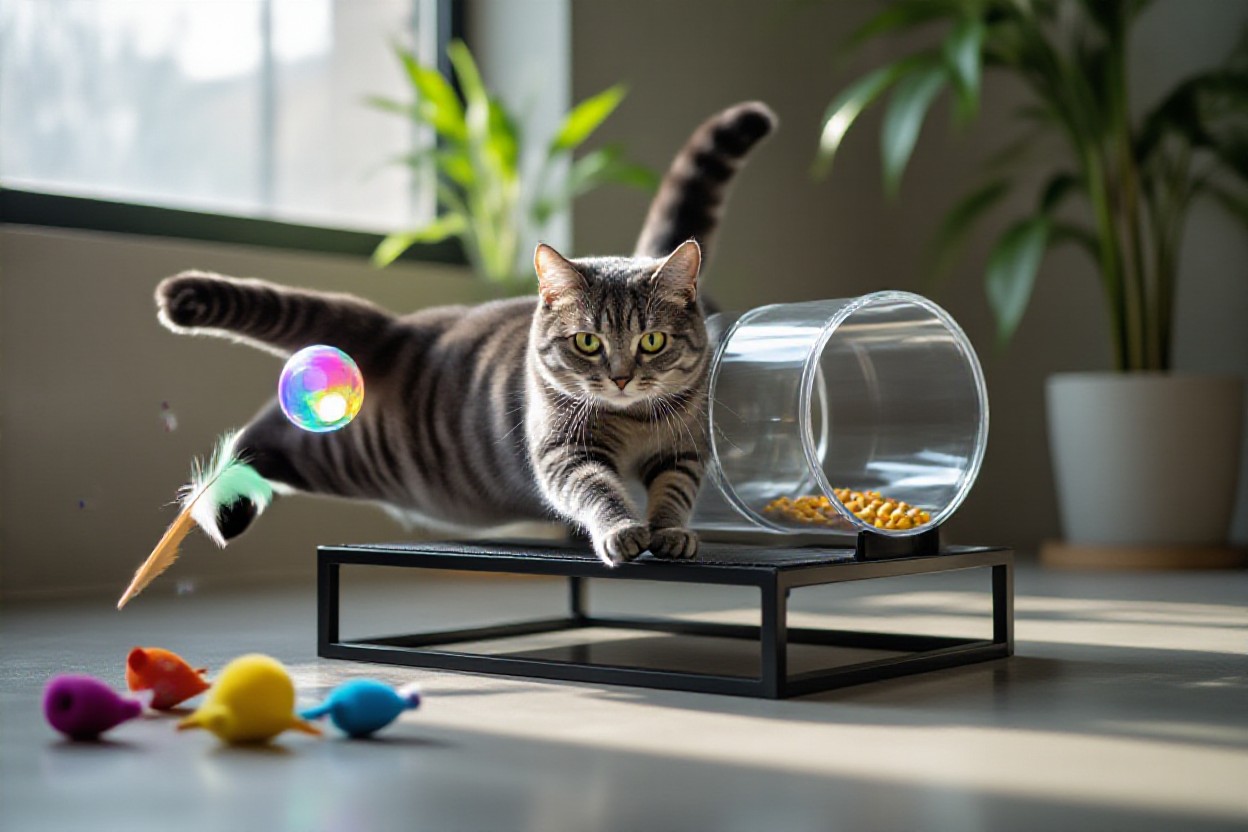
These are absolute lifesavers if you need toys that can keep your indoor cat engaged all night while you sleep. But don’t start with a complex Level 3 puzzle or your cat might just give up and walk away. Start with transparent feeders where they can clearly see the kibble or treats inside. Once they figure out that batting a paw equals a tasty reward, the dopamine hit from the “win” helps counter their general anxiety, turning a scary environment into a rewarding one.
Setting Up Safe Play Zones at Home
Throwing a toy into the middle of an open living room is basically asking your nervous kitty to feel exposed – not exactly a recipe for fun. You need to think like a prey animal here. By designating specific “safe zones,” you transform a terrifying open floor plan into a series of manageable, secure territories where they feel brave enough to engage. It’s less about the square footage and more about sightlines and escape routes, ensuring they know exactly where to run if that feather wand gets too intense.
Creating Cozy Corners for Exploration
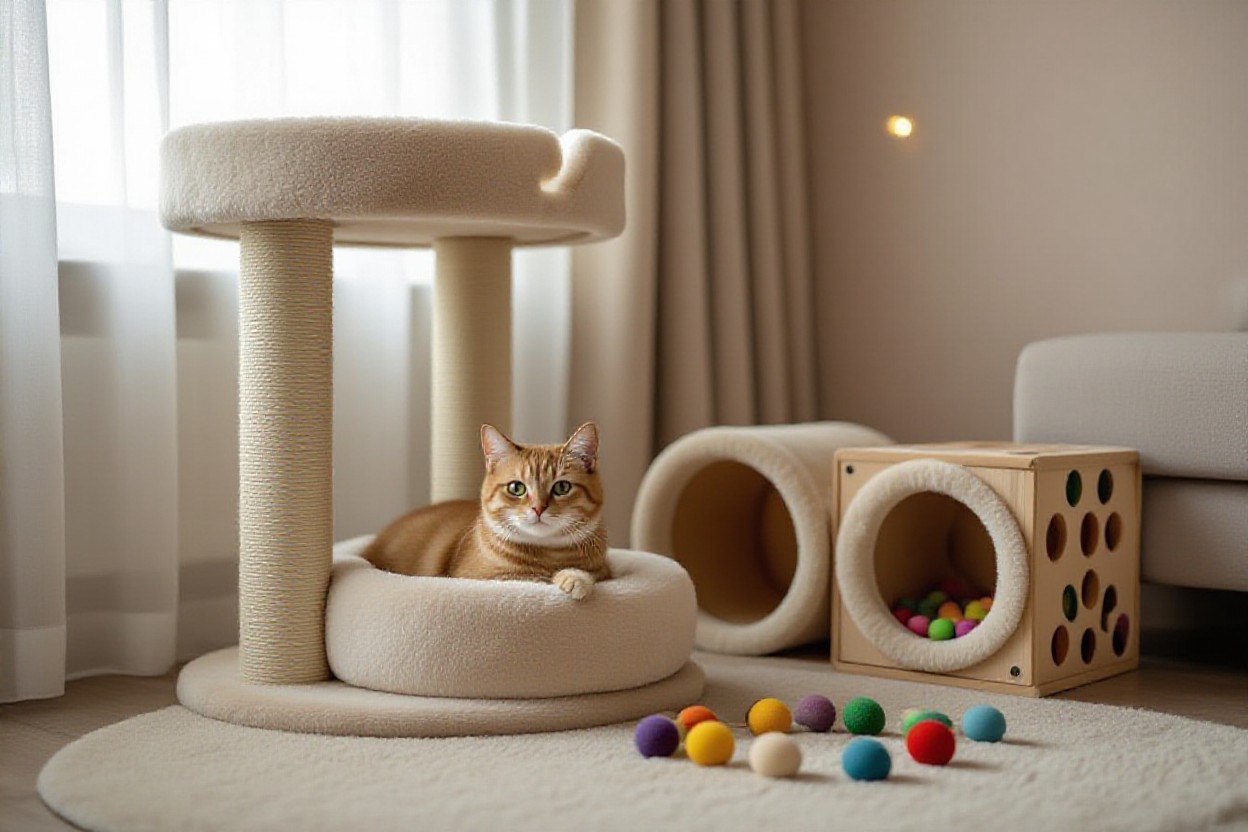
A corner isn’t just a dead end to a cat; it’s a fortress where nobody can sneak up from behind. Try positioning covered tunnels or cardboard boxes in these angles to create a semi-enclosed bunker for interactive play. This setup encourages them to bat at “indoor cat toy ideas for nervous cats” – like puzzle feeders or wands – without constantly checking their six. If they feel their back is covered, they’re ten times more likely to lash out and play.
Choosing the Right Space: Light & Quiet
Bright lights can actually trigger a freeze response in timid felines, so dimming the room mimics the twilight hours when their hunting instincts naturally kick in. Pick a room away from the washing machine or the street noise. You want a spot where the only sound is the crinkle of a toy or the slide of a paw. Low-traffic areas are non-negotiable because sudden footfalls will send them scurrying back under the bed before the game even starts.
Shadows are actually your best friend here. Since cats are crepuscular, playing in semi-darkness makes them feel invisible and powerful, turning a frightened hider into a stealthy hunter. This is the perfect environment for “toys that can keep your indoor cat engaged all night,” like subtle motion-activated lasers or quiet ball tracks that glow faintly. By stripping away visual chaos and loud noises, you lower their sensory threshold, allowing them to focus entirely on the movement of the toy rather than the scary environment around them. And when they aren’t overstimulated by the environment, anxiety levels drop significantly, letting the play drive take over.
Introducing New Areas Gradually
Rushing this part is the quickest way to undo weeks of progress. Instead of giving them the run of the house, expand their world by inches – literally. Start by placing “interactive toys for bored cats” just outside their primary safe room door, luring them out only slightly. You’re basically building a trail of positive associations, using play as the bait to overwrite their fear of the unknown territory.
Scent plays a massive role in whether they accept this new zone or flee from it. Before you even invite them in to play, try rubbing a sock on their cheek glands and wiping it on the corners of the new room – or better yet, move their favorite scratcher into the new space a day early. This pre-loads the area with their own “safe” smell. When you finally engage them there, keep the sessions short and end on a high note while they’re still confident, proving that nothing bad happens when they leave their sanctuary.
Night-Time Toys: How to Keep Play Going While You Snooze
Most people think cats are nocturnal, but they’re actually crepuscular – active at dawn and dusk – yet your nervous kitty probably didn’t get the memo and decides 3 AM is prime hunting time. Since sleep deprivation isn’t great for your mood, setting up a “night shift” of toys can redirect that nervous pacing into healthy play. It’s about giving them an outlet that doesn’t involve scratching your bedroom door or yowling at shadows, letting you catch those Z’s while they work out their stress.
Best No-Sound Toys for the Nighttime Fun
You’d be amazed how loud a single jingle bell sounds when the rest of the house is dead quiet. For the sake of your sanity, stick to soft materials like wool felt balls or cork toys that land silently when batted around. These textures are fantastic for anxious cats because they mimic the mouth-feel of prey without the startling clatter of hard plastic hitting the floorboards, allowing your cat to stalk and pounce in total stealth mode.
Automatic Toys: A Playdate No One Feels Awkward About
Motion-activated toys are basically magic for the anxious feline that needs a distraction while you’re unconscious. Look for devices that have silent start-up modes so they don’t spook a skittish cat when they activate. A toy that flicks a feather intermittently from a base can simulate the unpredictable movement of a bug, keeping your indoor cat engaged all night without you having to lift a finger – or open an eyelid.
But here’s a trick – don’t leave these running for eight hours straight or your cat will get bored and the batteries will die. The best interactive toys for bored cats come with 15-minute shut-off timers and rest cycles. This stop-and-go pattern actually builds confidence in nervous cats because it gives them time to “reset” and investigate the toy while it’s still, reducing the fear of constant, aggressive motion. It mimics real hunting scenarios where prey freezes, encouraging your cat to engage rather than hide under the sofa.
Lighting Options That Won’t Scare Them
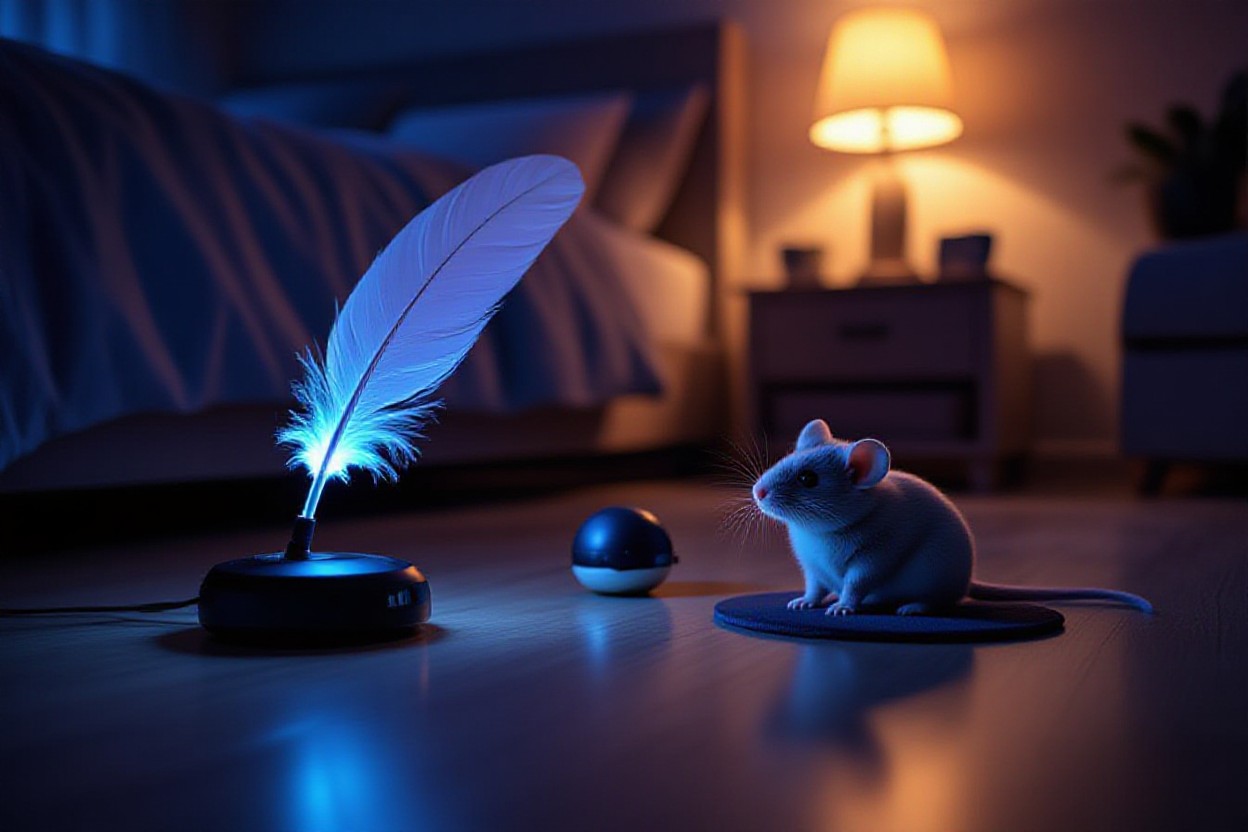
Pitch black darkness can actually increase anxiety in some cats, especially if they hear noises they can’t identify. Toys with soft, ambient LED glows are way better than flashing strobe lights which can trigger panic in nervous pets. You want a toy that offers a gentle pulse of light – think firefly, not disco ball – to guide their focus and provide a target without overwhelming their sensitive night vision.
Shadows are actually your best friend here. Instead of a toy that lights up the whole room, use a low-light automatic laser or a ball with a faint internal glow to create moving shadows against the wall. This taps into their predator instincts and focuses their nervous energy on a single point. Just ensure the light source is dim enough that it doesn’t disrupt your sleep cycle, but visible enough to keep your cat’s pupils dialled in on the fun rather than the scary unknown of the hallway.
My Take on Toys: What’s Worth the Hype?
Flashy commercials make everything look perfect, but your nervous kitty might disagree. Instead of high-octane gadgets that overwhelm sensitive senses, you want tools that build confidence through predictable play. It’s not about the most expensive item on the shelf – it’s about finding the specific texture or movement that unlocks your cat’s hunting instinct without triggering their fight-or-flight response. Sometimes, the simplest designs are the ones that actually help reduce anxiety because they don’t threaten your cat’s personal space.
Top Recommended Brands & Reviews
You can’t really go wrong with Petstages for quiet, soothing puzzle tracks that don’t make scary mechanical noises. For interactive wands that mimic real birds – giving you control over the intensity – the Go Cat Da Bird is basically the gold standard. If your indoor cat needs to burn energy all night without waking you up, check out SmartyKat’s silent electronic toys; they’re gentle enough not to spook skittish felines but engaging enough to stop boredom-induced meowing. These brands generally get the safety details right, which is one less thing for you to worry about.
Comparing Prices: Expensive vs Budget-Friendly
Dropping fifty bucks on a laser robot feels risky if your cat ignores it, right? The truth is that cardboard and DIY options often beat premium gadgets for anxious cats because they smell familiar and feel safe. However, investing in high-quality automated lasers or durable food puzzles can be a lifesaver when you need to keep them engaged while you’re at work or asleep. You have to weigh the cost against how likely the toy is to survive a panic-scratching session.
Price Breakdown: What You Get for Your Money
Budget Tier ($5 – $15)
Premium Tier ($30 – $60+)
Simple wands, crinkle balls, and cardboard scratchers. Great for immediate interaction and testing what textures your cat likes.
Automated lasers, electronic mice, and heavy-duty puzzles. Best for long-term engagement when you aren’t home.
Pros: Low risk if they hate it, quiet operation.
Pros: Programmable timers, durable materials.
Cons: Breaks easily, requires you to do the work.
Cons: Mechanical noise can scare nervous cats.
You get what you pay for, but only sometimes. A $5 crinkle ball can be a better anxiety reducer than a $100 wheel if your cat is terrified of large moving objects. The real sweet spot for budget-conscious owners is rotating cheap novelty items like springs or mice while keeping one or two sturdy interactive feeders as the main investment. This setup keeps the environment fresh – preventing the boredom that leads to stress – without draining your wallet on tech that might just end up gathering dust under the sofa. Plus, homemade puzzle feeders made from toilet paper rolls are practically free and work wonders for mental stimulation.
Cost vs. Anxiety Relief Potential
Toy Type
Anxiety Reduction Value
Motorized/Loud Toys
Low to Medium – Can trigger fear in very timid cats.
Scent/Catnip Toys
High – Olfactory stimulation is naturally calming.
Food Puzzles
Very High – Engages “hunt” mode, distracting from stress.
Durability and Safety: What’s the Real Deal?
Nothing ruins a good play session faster than a trip to the emergency vet because a toy fell apart. Anxious cats can sometimes channel their stress into destructive chewing, so flimsy plastic or glued-on feathers are a major no-go. You need to check every single seam and battery compartment before tossing it on the floor, because a swallowed button battery is a nightmare scenario you definitely want to avoid. If it smells like strong chemicals right out of the box, trust your gut and toss it.
Inspecting toys isn’t just paranoia – it’s necessary maintenance. String toys are fantastic for bonding and luring a shy cat out of hiding, but leaving them out unsupervised is dangerous since ingested string can cause fatal intestinal blockages. Stick to chunky, solid rubber chew toys or track ball systems for solo play, especially if you’re trying to keep them occupied all night. If you see loose threads or cracked casing on an electronic mouse, toss it immediately; your cat’s safety is worth more than a replacement toy. Always supervise the first few sessions with any new gear to see if your cat plays rough or tries to eat the pieces.
Tips for Encouraging Play in Nervous Cats
Most people assume that if a cat is hiding under the bed, they want to be left alone, but ignoring them actually just lets that anxiety fester in the dark. You have to be the bridge between their fear and their fun. The goal is reducing anxiety by carefully selecting indoor cat toy ideas for nervous cats that don’t make sudden, loud noises which might trigger a panic response. You need to act less like a predator and more like a curious friend.
Start with interactive toys for bored cats that act as a long-distance extension of your hand, like wand toys with extra-long strings.
Keep play sessions incredibly short at first – even 30 seconds of focus is a win.
Never stare directly at the cat while playing; soft glances make you less threatening.
Thou shalt not underestimate the power of patience.
Starting Simple: The Gentle Nudge Approach
You might think you need to buy expensive electronic gadgets immediately, but high-tech gear often terrifies anxious kitties. Simplicity is actually your best friend here. A nervous cat gets overwhelmed by flashing lights or whirring motors. Instead, try sliding a simple ribbon or a crumpled piece of paper under a door crack or around a corner. It mimics hidden prey without forcing a face-to-face confrontation. This low-stakes interaction triggers curiosity without triggering their fight-or-flight response. Subtlety is key – you want the toy to look like a mouse trying not to be seen, not a bird attacking their face.
Using Treats to Make Play Hop In
Don’t listen to anyone who says using food is ‘cheating’ at playtime. For a scaredy-cat, food is often the only reason to be brave enough to leave the safety of the closet. You can integrate high-value treats directly into the game to create a positive association with movement. Toss a kibble, then wiggle the toy near it. It turns the scary object into a treat dispenser. If you’re looking for toys that can keep your indoor cat engaged all night, food puzzles are a lifesaver because they reward interaction instantly and build confidence through success.
And here’s a weird little trick that actually works wonders – rub the treat on the toy itself before you start moving it. Since cats live in a world of smell, a toy that smells like factory plastic is alien and suspicious, but one that smells like salmon is intriguing. You’re basically hacking their nose to bypass their brain’s fear center. Start by just leaving the scented toy near their hiding spot without moving it at all. Let them investigate it on their own terms when the house is quiet. Once they realize the ‘prey’ smells delicious, they’re much more likely to engage when you finally pick up the other end of the wand.
How to Spot When They’re Ready
It’s easy to miss the signs because a nervous cat won’t usually do a backflip the first time they want to play. You’re looking for micro-movements that scream ‘I’m interested’. If their pupils dilate suddenly or their ears swivel forward toward the scratching noise you’re making, you’ve got them hooked. Even if they don’t pounce, just watching the toy intently is a form of engagement. That ‘passive’ watching is actually them calculating distances and risk. If the tail tip starts twitching, that’s the green light to keep the game going.
But be careful you don’t mistake a frozen cat for a focused one. A terrified cat freezes with their limbs tucked tight and whiskers pulled back against their face, while a play-ready cat has whiskers fanned forward and weight shifted to their back legs, ready to spring. It’s a subtle difference but it changes everything about how you should react. If you see them slow-blinking while watching the toy, that’s the jackpot – it means they’re interested but feel safe enough to close their eyes for a split second. That is the exact moment you want to introduce a little more movement to see if they’ll finally break cover and chase.
Factors to Consider for Your Cat’s Play Style
You can’t just toss a generic mouse into the living room and expect a timid cat to blossom. Finding the right gear is about matching the intensity of the toy to your cat’s specific anxiety threshold. A nervous kitty might completely shut down if a toy is too loud or fast, so you’ll generally want to prioritize silent movement and scent-based triggers over flashy electronics that might feel like a threat.
Prey drive intensity
Sensory sensitivity
Physical limitations
Recognizing these nuances ensures playtime builds confidence rather than adding stress.
Age Matters: Kittens vs Adults vs Seniors
While a jittery kitten might burn off nervous energy with high-speed wand toys, that same approach could actually terrify an arthritic senior who feels vulnerable when moving too fast. For older cats, you really want to focus on stationary puzzles or slow-moving targets that allow them to “hunt” without straining stiff joints. It’s about dignity for the seniors – giving them a win without the pain. Younger adults, however, often need vigorous exercise to deplete the cortisol levels that cause anxiety in the first place.
Your high-octane Bengals or Abyssinians usually require vertical territory and complex problem-solving to feel secure; if they’re bored, they get destructive fast. In contrast, a ground-dwelling Persian or Ragdoll might find comfort in low-profile stalking games that keep four paws on the floor where they feel safest. Knowing if your cat is a “bush dweller” or a “tree dweller” by breed instinct helps you pick toys that feel natural to them, turning a scary environment into a controllable territory.
If you’ve got a working breed mix – think Maine Coon or Siamese – standard mouse toys often won’t cut it because their anxiety usually stems from under-stimulation rather than fear. These guys need jobs. You’re better off investing in interactive puzzle feeders that mimic a complex hunt, forcing them to use their brains to unlock a treat. This mental work acts like a sedative for high-strung breeds. On the flip side, sighthounds of the cat world, like Egyptian Maus, track movement intensely. So visual lures that move silently across the room can engage them from a safe distance, letting them observe before they commit to an attack.
Individual Preferences: Not Every Cat’s the Same
Even littermates can have vastly different triggers. One might be a “bird” hunter who goes nuts for feathers in the air, while the other is strictly a “bug” hunter obsessed with laser dots on the floor. You have to test the waters. If you notice your cat flinching at bells but pouncing on shadows, ditch the noisy balls immediately. Forcing a preference they don’t have just creates negative associations with playtime, which is the exact opposite of what we’re trying to do here.
Texture plays a massive, often overlooked role in comforting a nervous cat. Some cats find solace in sinking their claws into cardboard scratchers during high-stress moments, while others get a dopamine hit from bunny-kicking a soft, catnip-filled plush. Pay attention to what they destroy around the house. If they’re chewing plastic bags, a crinkle toy is your best bet for redirection; if they’re shredding the sofa, a heavy-duty sisal toy offers a satisfying, legal outlet for that frustration. It’s trial and error, but finding that one “security blanket” toy can be the key to helping them self-soothe when you aren’t around.
Should You Join in on the Fun?
While those battery-operated gadgets are fantastic for keeping your indoor cat engaged all night, there is a hard limit to what a machine can do for a nervous pet’s confidence. Your anxious cat needs predictable, positive interactions with you to truly feel safe in their territory. It’s not just about burning calories – it’s about building trust through shared success. So yes, get involved, but do it carefully. You want to become the provider of the “hunt,” transforming from a potentially scary roommate into a trusted partner in crime.
Interactive Play: Enhancing the Bond
Unlike leaving them alone with a food puzzle, picking up a wand toy creates a shared experience that actually lowers cortisol levels over time. The distance provided by a long wand – ideally 3 feet or more – allows an anxious cat to hunt without feeling threatened by your proximity. You become the source of the fun rather than a source of pressure. By controlling the “prey” and letting them catch it, you are literally wiring their brain to associate your presence with the dopamine rush of a successful kill.
When to Back Off: Not Pushing Too Hard
Just because you bought the most expensive interactive toys for bored cats doesn’t mean your pet is ready to perform right away. Forcing interaction is the quickest way to shatter trust. If you dangle a feather and they don’t pounce immediately, don’t shove the toy in their face. That is aggressive behavior in cat language and will send them running under the sofa. Patience is your best tool here, allowing them to observe the “prey” from a distance until they feel brave enough to strike on their own terms.
Passive observation is actually a valid form of play for high-anxiety animals. Your cat might sit three feet away, pupils dilated, just watching the toy move – that is still mental stimulation. Don’t mistake hesitation for disinterest. If you keep pushing the toy toward them when they are in this state, you risk triggering a flight response instead of a prey drive. Let them be the voyeur for a while. Eventually, that pent-up energy will override the nerves and they will make a move, but it has to be their idea, not yours.
Recognizing Signals: Does Your Cat Want You There?
Cats are subtle communicators, but when they are stressed, the signs get louder if you know where to look. A tail twitching just at the tip is excitement, but a hard, thrashing tail means you need to stop immediately. Watch the ears too. If they swivel sideways like airplane wings or flatten against the head, that is not play aggression – that is genuine fear. You want to see forward-facing ears and whiskers pushed forward, indicating they are focused on the toy and not worried about what you are doing.
Pupil dilation is the trickiest signal because big, black saucer eyes happen during both extreme fear and intense play. You have to look at the rest of the body to get the full story. A cat that is crouched low with tension in their hind legs is ready to pounce, which is great. But a cat that is leaning away, with fur standing up along the spine (piloerection), is terrified. If you miss these cues and keep playing, you aren’t helping their anxiety – you are confirming their suspicion that the environment is unpredictable and scary.
The Pros and Cons of Different Toy Types
Selecting the right tool for the job is about more than just entertainment – it’s about lowering cortisol levels in your stressed-out companion. If you grab something too aggressive for a nervous kitty, you might accidentally reinforce their fear instead of building confidence. You want to find that sweet spot where engagement meets safety, ensuring your cat feels like a hunter rather than the hunted.
Toy Category
Anxiety Impact & Considerations
Soft Plushies & Kickers
Pro: Allows “prey carrying” which reduces stress. Con: Can be ignored if not infused with fresh catnip.
Electronic/Automated
Pro: Provides consistent movement for desensitization. Con: Mechanical noise can trigger flight response in timid cats.
Wand/Fishing Pole
Pro: Builds confidence through guided, successful hunts. Con: Requires your active participation; not for solo play.
Food Puzzles
Pro: Engages “seeking” circuit to distract from anxiety. Con: Can cause frustration if too difficult initially.
Cardboard DIY
Pro: Familiar scents make them less intimidating. Con: Short lifespan and creates a mess.
Soft Toys: How Safe Are They?
Carrying a “kill” back to a safe space releases tension for many indoor hunters. Soft plushies are perfect for this specific anxiety-reducing behavior, but you have to check the stitching like a hawk. Cheap fillers or loose button eyes are major choking hazards if your cat is an aggressive chewer. It’s usually safer to stick with embroidered features – better safe than sorry when dealing with a nervous chewer. And if the toy is too big, it might intimidate a shy cat, so size matters here.
Electronic Toys: The Good, The Bad, The Battery Life
Automated devices are the heavy hitters when you need toys that can keep your indoor cat engaged all night while you sleep. The motion is consistent, which helps desensitize skittish cats to movement over time. However, the mechanical whirring sound found in cheaper models can sometimes trigger a nervous cat’s flight response, so you gotta test the noise level first. If it sounds like a vacuum cleaner to you, it sounds like a monster to them.
Battery drain is the real enemy here. Nothing kills a play session faster than a dead motor, and constantly buying AAs gets expensive fast. You should definitely look for rechargeable USB models that have auto-shutoff features – these prevent overstimulation and save juice. For really anxious cats, look for silent modes or “smart” toys that react only when touched. This gives them a sense of control over the environment, which is huge for building confidence.
DIY Toys: Crafty Options That Actually Work
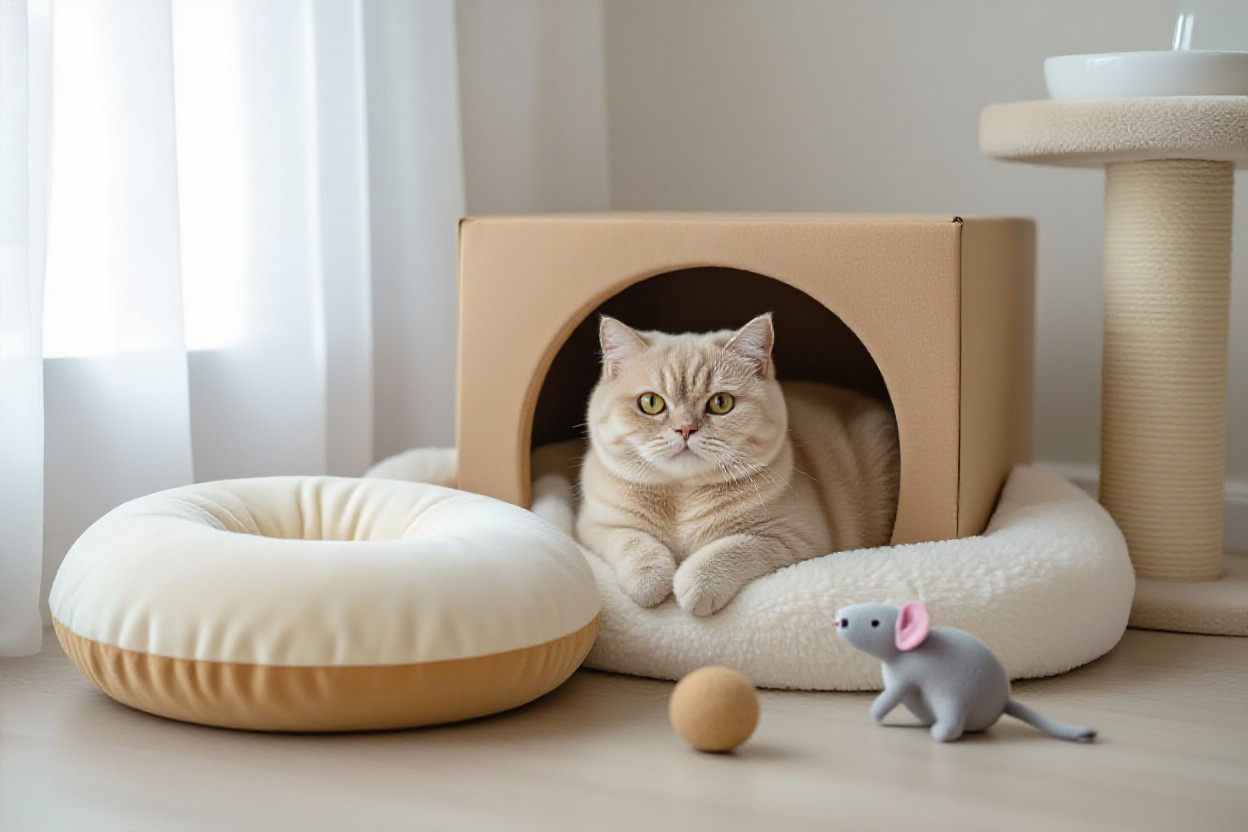
Cardboard boxes reduce stress in shelter cats by huge margins, and the same logic applies to your living room. Simple indoor cat toy ideas for nervous cats often start with the recycling bin – a toilet paper roll with treats inside is less intimidating than a flashing plastic robot. Plus, since they smell like your home already, they don’t introduce weird factory scents that might freak your cat out. It’s practically free, so if they hate it, you haven’t wasted twenty bucks.
Making a custom food puzzle is easier than you think and works wonders for confidence building. Just cut different sized holes in a shoebox lid and drop their favorite kibble inside. This forces them to use their paws to “hunt” the food, which engages their brain and distracts them from environmental stressors. It’s messy – you’ll find cardboard bits everywhere – but these are excellent interactive toys for bored cats that need a mental outlet without the pressure of high-speed chases.
Time Management: How Long Should Playtime Be?
You might assume that exhausting a nervous cat is the goal, but pushing them until they drop is actually risky. It’s not about marathon sessions that leave them panting – that can mimic the stress of being chased by a predator. Instead, you want to replicate the natural hunting cycle. For an anxious kitty, predictability is everything. Aiming for 10 to 15 minutes is usually the sweet spot per session. Anything longer might turn fun into stress, defeating the whole purpose of using toys to build confidence.
Short Bursts vs Longer Sessions: What’s Best?
Marathon play sessions can actually backfire with timid cats. Their adrenaline spikes, but if they don’t get a “kill” soon, that excitement turns into frustration or fear. Stick to short, intense bursts of play. Think of it like a sprint, not a jog. Three 5-minute sessions are infinitely better than one 15-minute drag. This keeps their engagement high without crossing the threshold into overstimulation, which is exactly what you need to avoid when dealing with a skittish personality.
Finding the Right Frequency: Daily Playtime
Routine is your anxious cat’s best friend – seriously, they crave it. If you play at random times, they never know when to expect that energy release. Try to schedule at least two dedicated sessions a day, preferably around dawn and dusk when their natural hunting instincts kick in. Doing this consistently signals safety. They learn that “okay, this is play time, not danger time,” which slowly lowers their overall baseline anxiety levels.
You can’t just phone it in on the weekends and expect them to be chill during the week. Consistency builds a framework of security. When a nervous cat knows exactly when the feather wand comes out, they spend less time hiding under the bed anticipating scary unknowns. It’s about creating a predictable environment. Even if you’re tired, just five minutes of engaging with a quiet puzzle toy before bed can stop them from pacing all night. It burns off that nervous energy that otherwise turns into destructive scratching or 3 AM zoomies.
Signs It’s Time to Call It a Day
Panting isn’t a sign of a good workout for a cat – it’s actually a red flag that you’ve pushed them too far. If you see open-mouth breathing, dilated pupils that won’t shrink, or if they suddenly flop over and refuse to track the toy, stop immediately. With nervous cats, flattened ears or a twitching tail tip can also signal they’ve moved from “hunting mode” to “threat mode.” You want to end on a high note, not a stressful one.
Ending the game abruptly can leave a cat feeling frustrated, like a hunter who lost their prey at the last second. Always let them “catch” the toy one last time. Give them a treat or a meal right after to complete the hunt-catch-kill-eat cycle. This triggers a release of dopamine and settles them down naturally. If you ignore the signs of fatigue or overstimulation, you risk associating playtime with fear, which sets your progress back by weeks. Watch their body language closely – if they start grooming excessively or aggressive biting starts happening, that is your cue to cool down.
Ever notice how a shared game of fetch – or chasing a laser – melts the tension in a room? Using interactive toys isn’t just about burning calories; it’s a bridge to trust. When you engage a nervous kitty with a wand toy, you aren’t just a scary giant anymore. You become the provider of fun. By associating your presence with the dopamine release of a successful hunt, you’re actually rewiring their brain to replace fear with anticipation.
Introducing New Pets or People Safely
How do you stop a shy cat from bolting when guests arrive? Distraction is your best friend here. Instead of forcing interaction, toss a few crinkle balls or start up a battery-operated toy in the middle of the room while guests ignore the cat. This technique, often called “parallel play,” allows your cat to observe the “intruders” from a safe distance while staying engaged. It shifts their focus from the potential threat to the prey drive, making the environment feel significantly safer almost instantly.
How Play Can Build Confidence
Can a simple feather wand really turn a wallflower into a lion? Absolutely. The secret lies in the “catch.” If you’re constantly moving the lure just out of reach, you’re actually increasing frustration and anxiety. You need to let them win. Every time your cat successfully captures that interactive toy, their brain releases a surge of confidence-boosting chemicals. It tells them they are a capable predator, not prey. This sense of mastery over their environment is exactly what a nervous cat needs to stop hiding under the bed.
But it goes deeper than just catching the bird. Think about the mechanics of a hunt. It requires stalking, pouncing, and owning space. When you use indoor cat toy ideas for nervous cats like tunnels or puzzle feeders, you’re encouraging them to navigate their territory boldly. A study on environmental enrichment showed that cats who actively “hunted” for food via puzzles showed fewer signs of behavioral inhibition. So, when you see your kitty dragging a toy mouse around in the dark, they aren’t just playing; they’re claiming their turf. That ownership is what transforms a skittish animal into the king or queen of the living room, reducing their baseline anxiety levels significantly.
Group Play vs Solo: Finding the Balance
Is it better to play with them or let them figure it out alone? You actually need a mix of both. While direct play bonds you together, over-stimulation from a human can sometimes backfire with really anxious cats. Solo play with toys that can keep your indoor cat engaged all night – like ball tracks or electronic mice – gives them a safe outlet to decompress without the pressure of performing for an audience. It lets them work out their nervous energy on their own terms, which is huge for emotional regulation.
Finding that sweet spot is tricky but worth it. If you have multiple cats, group play can be a nightmare for the anxious one if a dominant cat hogs the toy. That’s why having separate interactive toys for bored cats is non-negotiable. You might engage the confident cat with a high-flying bird toy while the nervous one works on a treat puzzle in the corner. This separation ensures the anxious cat doesn’t associate play with competition or bullying. By providing these solo opportunities alongside low-pressure group sessions, you validate their need for safety while still offering the stimulation required to keep those cortisol levels down.
Getting Creative: Unique Play Ideas
Household Items as Toys: What’s Lurking Around?
You don’t always need to drop fifty bucks at the pet store to see your timid kitty come out of their shell. Sometimes the best anxiety-busting tools are already in your recycling bin. A simple cardboard box with paw-sized holes cut into the sides creates an instant, safe fortress where your cat feels protected while swatting at a wand toy – this barrier reduces visual overstimulation significantly. Crinkled receipts or plastic bottle caps skittering across a hardwood floor can mimic erratic bug movements, triggering that hunting instinct without the high-pressure “performance” aspect of complex electronic gadgets.
Seasonal Play: Changing It Up with Holiday Fun
Novelty is a massive factor in keeping a bored cat engaged, so try using the changing seasons to your advantage. During autumn, bring in a dry, crunchy leaf for them to chase – the unique scent and texture are incredibly stimulating for indoor-only cats who rarely experience nature directly. Just make sure the foliage is non-toxic and bug-free before bringing it inside. In winter, save that used wrapping paper. The noise it makes when pounced on is distinct from regular paper bags, offering a sensory change that helps distract nervous cats from the stress of holiday houseguests.
Rotating these seasonal textures isn’t just cute – it actually prevents habituation, which happens when a cat gets bored of the same old mouse toy and stops playing entirely. For a nervous cat, predictability is good for routine but bad for play; they need gentle surprises to build confidence. Try hiding treats inside a plastic Easter egg or creating a “snow fort” out of white towels draped over chairs. By associating these changing environmental cues with positive play experiences, you’re teaching your cat that new things mean fun, not danger, slowly chipping away at their general anxiety.
Outdoor Adventures: Safe Exploration Spots
While the outdoors can be terrifying for an anxious cat, controlled exposure provides mental stimulation that no battery-operated toy can match. Consider installing a secure window perch or “catio” that allows them to sniff the breeze and watch birds without the threat of predators approaching. Even a short trip in a fully enclosed pet stroller can work wonders for a bored cat. It lets them process complex smells and sights from a moving “safe zone,” burning mental energy that might otherwise turn into destructive scratching or night-time yowling.
Safety is obviously the priority here, so never force a terrified cat outside if they’re freezing up or panting. Start small. Open a screened window during a rainstorm so they can smell the ozone and hear the drops – this sensory input is surprisingly tiring for their brains. If you have a secure balcony, supervision is non-negotiable, and you might even want to use a harness and leash specifically designed for cats just in case they spook. The goal isn’t to turn them into an adventure cat overnight but to broaden their territorial confidence so the indoor world feels less confining.
Tracking Your Cat’s Playtime Progress
Keeping a simple log on your phone notes app can reveal patterns you’d otherwise miss in the daily grind. It’s not just about tossing a mouse; it’s about seeing if that interactive toy for bored cats actually holds their attention for more than two minutes. You might notice your anxious kitty plays better at dawn, or maybe they prefer the puzzle feeder right before bed. These little data points add up fast, giving you a roadmap to what actually works.
How to Monitor Changes in Behavior
Cats communicate volumes through subtle shifts, like ear position or tail carriage, often before they make a sound. You’re looking for a tail that’s held high like a question mark rather than tucked away, which is a huge sign of growing confidence. Instead of hiding under the sofa when the toy comes out, does your cat stay put? That’s progress. Even if they just watch the feather wand intently without pouncing yet, that’s active engagement and counts as a win for a nervous pet.
Seeing the Results: Bonding & Confidence
Studies suggest that consistent, interactive play sessions can lower cortisol levels in stressed felines significantly over just a few weeks. You’ll start seeing the payoff when your usually skittish cat starts hanging out in the same room as you after a session. It’s that moment they stop viewing you as an unpredictable giant and start seeing you as the provider of fun and safety.
Confidence bleeds into other parts of the day too. Suddenly, those toys that can keep your indoor cat engaged all night aren’t just distractions; they become tools for independence. Your cat learns they can handle the environment on their own. And when you sit down with a wand toy, you aren’t just exercising them – you’re building a shared language. The trust built during these low-stakes games often translates to less struggling during vet visits or when guests come over. It’s a slow burn, but the bond becomes rock solid.
Adjusting Play Styles Based on Feedback
If your cat bolts every time a noisy motorized mouse starts buzzing, take the hint immediately. You need to swap that out for silent indoor cat toy ideas for nervous cats, like a soft felt snake or a gentle ribbon wand. Pushing a scary toy hoping they’ll “get over it” usually backfires and increases anxiety instead of reducing it. Read the room – or rather, read the cat.
Sometimes the issue isn’t the toy itself but how you’re moving it. Moving a lure directly toward a timid cat is a classic mistake that mimics a predator attack, not prey behavior. Instead, drag the toy away from them or hide it behind a corner to spark that hunting instinct without the threat. If they seem interested but won’t strike, try slowing down the movement. Micro-movements often trigger the best reactions from shy cats who get overwhelmed by fast, chaotic play. It’s all about finding that sweet spot where their curiosity overrides their fear.
FAQ
Q: What are some good indoor cat toy ideas for nervous cats that won’t freak them out?
A: You know that heartbreaking moment when you buy a fancy, loud electronic mouse thinking it’s going to be a hit, but your cat takes one look at it and sprints under the bed? It happens to the best of us. For a timid cat, loud noises and unpredictable movements are basically the enemy because they trigger that flight response instead of a play response.
The best approach is to start with wand toys that have a long string or wire. This is a game-changer because it puts distance between you (the big scary human) and the “prey” at the end of the line.
It lets your cat feel safe while stalking.
My favorite trick is to use a wand toy with a simple feather attachment and drag it slowly around a corner or under a rug. You want to mimic a mouse that is trying to stay hidden, not a bird that is attacking their face.
Building confidence takes time.
Avoid anything with bells or loud motors at first. Once they start engaging and “catching” the lure, their confidence skyrockets because they feel like a successful hunter. It turns that nervous energy into predatory focus, which is exactly what we want.
Q: Do you have recommendations for toys that can keep your indoor cat engaged all night without waking me up?
A: There is nothing worse than the 3 AM “zoomies” where your cat decides the hallway is a racetrack and your bedroom door is the finish line. Usually, this happens because their natural rhythm is to hunt at dawn and dusk, but since they live indoors with us, they get bored and anxious when the lights go out.
You need silent distractions.
Stay away from anything that beeps or squeaks unless you want to lose your mind. I really like ball-and-track towers for this specific problem. They are pretty much silent except for the rolling sound, and the ball can’t get lost under the fridge, so your cat doesn’t come crying to you for help in the middle of the night.
Another solid option is leaving out “scent” toys that they only get at bedtime.
I’m talking about potent silvervine sticks or fresh catnip kickers. These work great as toys that can keep your indoor cat engaged all night because they encourage wrestling and bunny-kicking, which burns a ton of physical energy. After a good ten minutes of wrestling with a kicker toy, most cats will groom themselves and settle down to sleep. It creates a routine where night time means quiet solo play, not howling at the moon.
Q: How do interactive toys for bored cats actually help with anxiety issues?
A: Boredom in cats isn’t just about them having nothing to do – it actually spirals into stress really fast. When an indoor cat has all this pent-up energy and nowhere to put it, they start over-grooming, pacing, or picking fights with other pets.
They need a job to do.
Interactive toys for bored cats, specifically food puzzles and lick mats, are basically therapy tools. When a cat has to use their brain to figure out how to get a piece of kibble out of a tube or a ball, they are tapping into their natural foraging instincts.
It grounds them.
Licking is also a naturally self-soothing behavior for cats. So, if you smear some wet food on a textured lick mat, you aren’t just feeding them; you are giving them a way to calm their own nervous system down. It stops the cycle of anxiety by forcing them to focus on a single, rewarding task. Plus, a cat that has just spent 20 minutes working for their dinner is usually a tired, happy cat that feels satisfied rather than on edge.