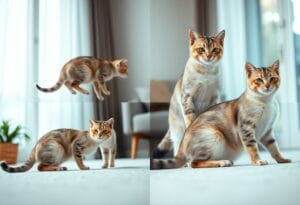
The Science of Feline Enrichment
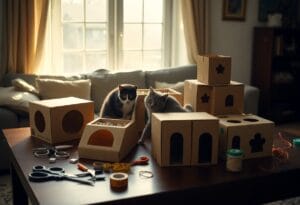
Science-based enrichment shows that you can reduce boredom and stress by offering interactive cardboard puzzles that mimic prey and promote activity and engagement.
Understanding the Hunting Instinct
Your cat relies on stalking, pouncing and chasing; crafting boxes that mimic prey movement lets you satisfy that instinct while keeping play safe and varied with short, supervised sessions.
Health Benefits of Mental Stimulation
Play-based puzzles improve focus and coordination, helping you prevent obesity and reduce stress-related behaviors while sharpening cognitive skills through varied challenges.
Regular engagement with puzzles keeps your cat mentally sharp and gives you reduced anxiety in the household, plus improved problem-solving and better weight control. Inspect cardboard toys for loose staples, tape or small pieces so you can avoid choking or ingestion hazards, and retire worn projects promptly. Vary challenge and session length so you keep play rewarding for both you and your cat.
Project 1: The Multi-Level Foraging Box
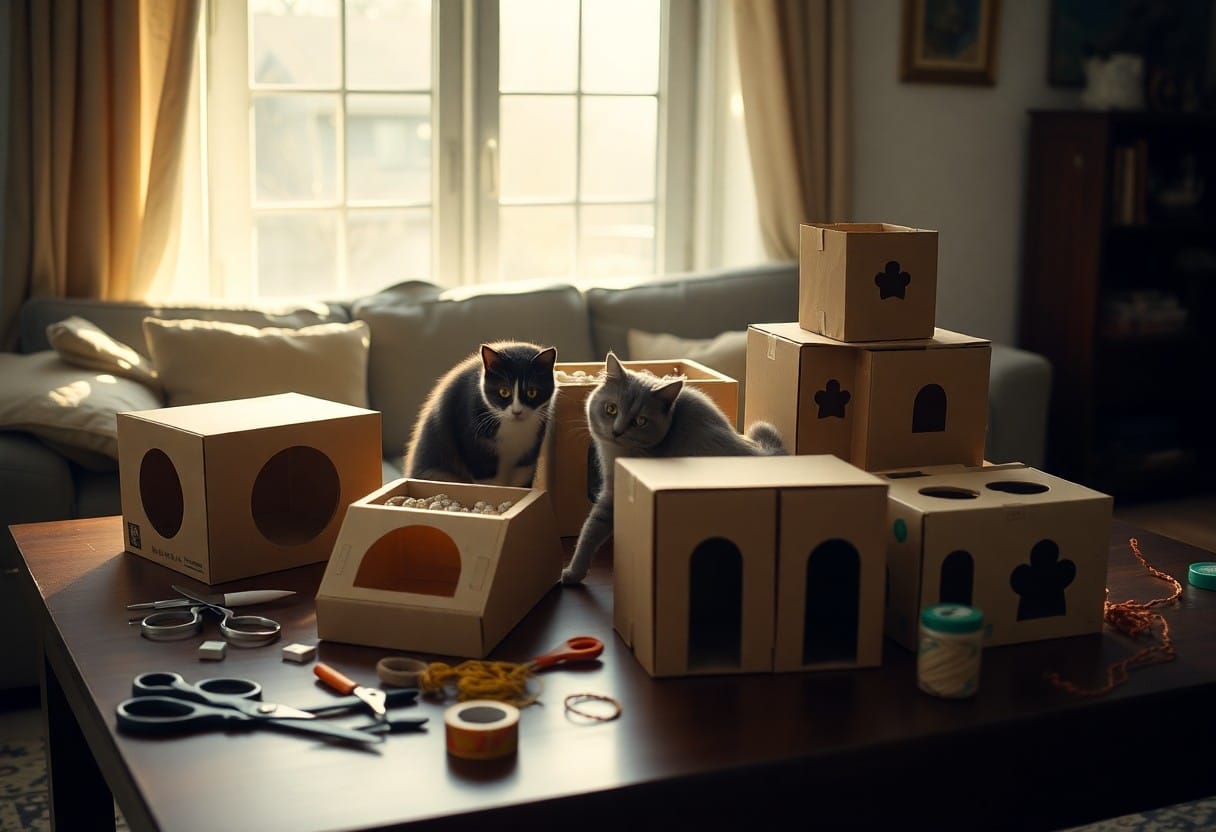
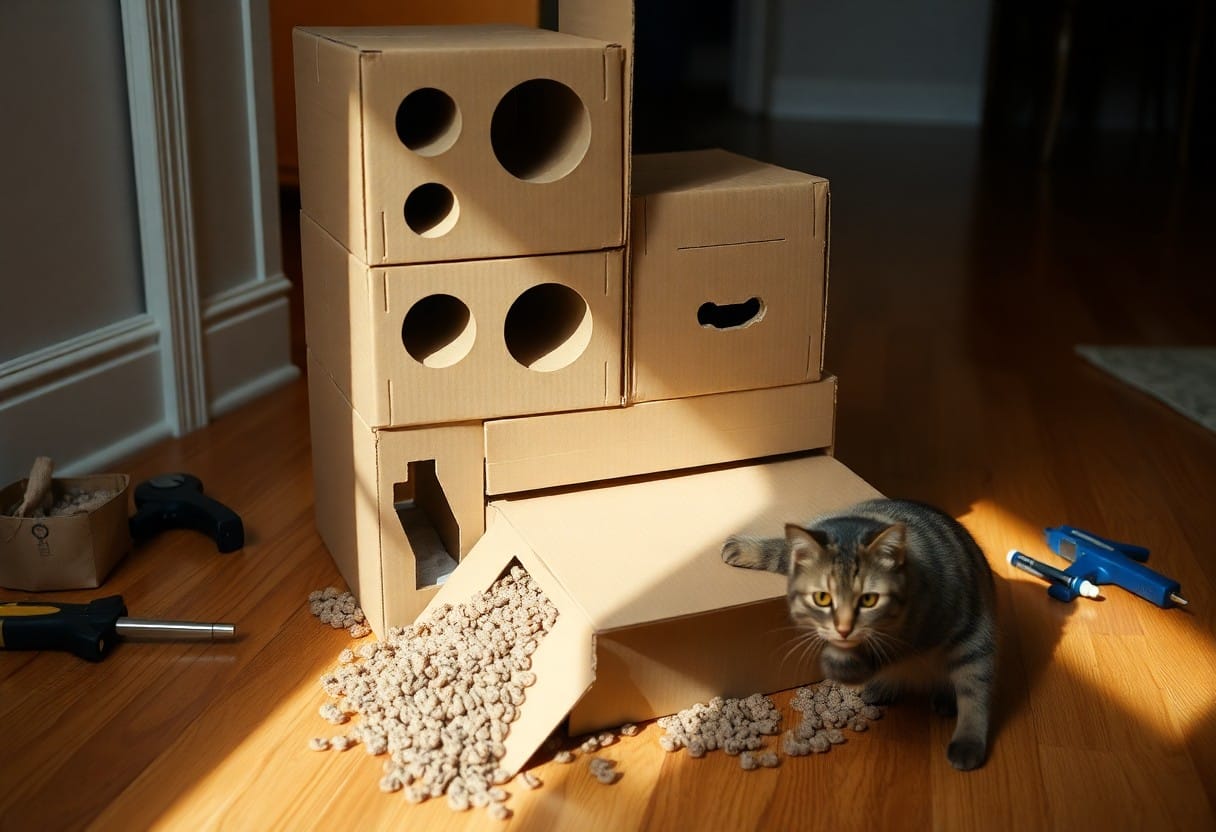
Build a stackable box with staggered openings and hidden compartments so you make your cat forage across levels; use corrugated partitions and small holes for paws. Secure edges and avoid loose staples or tiny parts. Engagement and reward keep your cat curious.
Structural Design and Safety
Check that boxes interlock and rest on a flat base to prevent tipping; sand or pad sharp cuts and seal seams with tape. Remove debris and discard any loose staples, strings, or small bits that pose choking or ingestion risks. You should supervise initial sessions until stability is proven.
Strategic Treat Placement
Place treats in shallow pockets and narrow slots to slow retrieval; alternate obvious and hidden spots so your cat uses scent and paws. Use single, bite-sized treats to prevent overeating while preserving hunting satisfaction and motivation.
Rotate treat locations frequently to keep your cat engaged and to challenge scent-tracking; mix dry kibble, low-calorie treats, and occasionally a smear of wet food in shallow cups behind flaps. Avoid sticky or perishable foods that attract ants and never use items small enough to be swallowed whole. You should also limit total treats to account for daily calories and watch for signs of frustration.
Project 2: The Interactive Peek-a-Boo Maze
You craft overlapping tunnels and peek-holes that encourage batting and stalking; sand all cut edges to prevent injury and hide treats to reward exploration and keep engagement high.
Precision Cutting for Paw Access
Carefully mark paw-sized slots and cut with a utility blade or sturdy scissors, keeping blades pointed away; file or tape edges and remove loose flaps to avoid snags or cuts.
Incorporating Sensory Lures
Use dangling ribbons, small windows, and hidden crinkle paper to tempt batting; rotate scents and toys so interest doesn’t wane, and avoid tiny bits that could be swallowed.
Experiment by stuffing side pockets with catnip or silvervine, adding crinkly liners and varied textures; avoid crucial oils and unsecured small parts because they can cause toxicity or choking, and supervise initial play to ensure safety.
Project 3: The Cardboard Treat Dispenser
You can convert a cardboard box into a treat dispenser that boosts your cat’s play and mental stimulation; cut a dispensing hole, add internal baffles to slow treats, and always supervise to avoid loose pieces or choking hazards.
Engineering Gravity-Fed Mechanics
Gravity-fed designs let treats fall as your cat nudges a ramp or wheel, so you can fine-tune the drop rate by changing angles or baffle size; test for consistent dispensing and file any sharp edges to prevent injury.
Adjusting Difficulty Levels
Adjusting opening size and internal obstacles lets you raise or lower challenge quickly; widen holes for easier rewards, add partitions for more work, and always monitor to avoid small parts becoming choking hazards.
Fine-tune difficulty by rotating the box or adding removable inserts so you can test what keeps your cat engaged; try larger treats for quick success and denser kibble for persistence, and discard setups showing torn cardboard or exposed staples as dangerous.
Project 4: The Vertical Scratching Tower
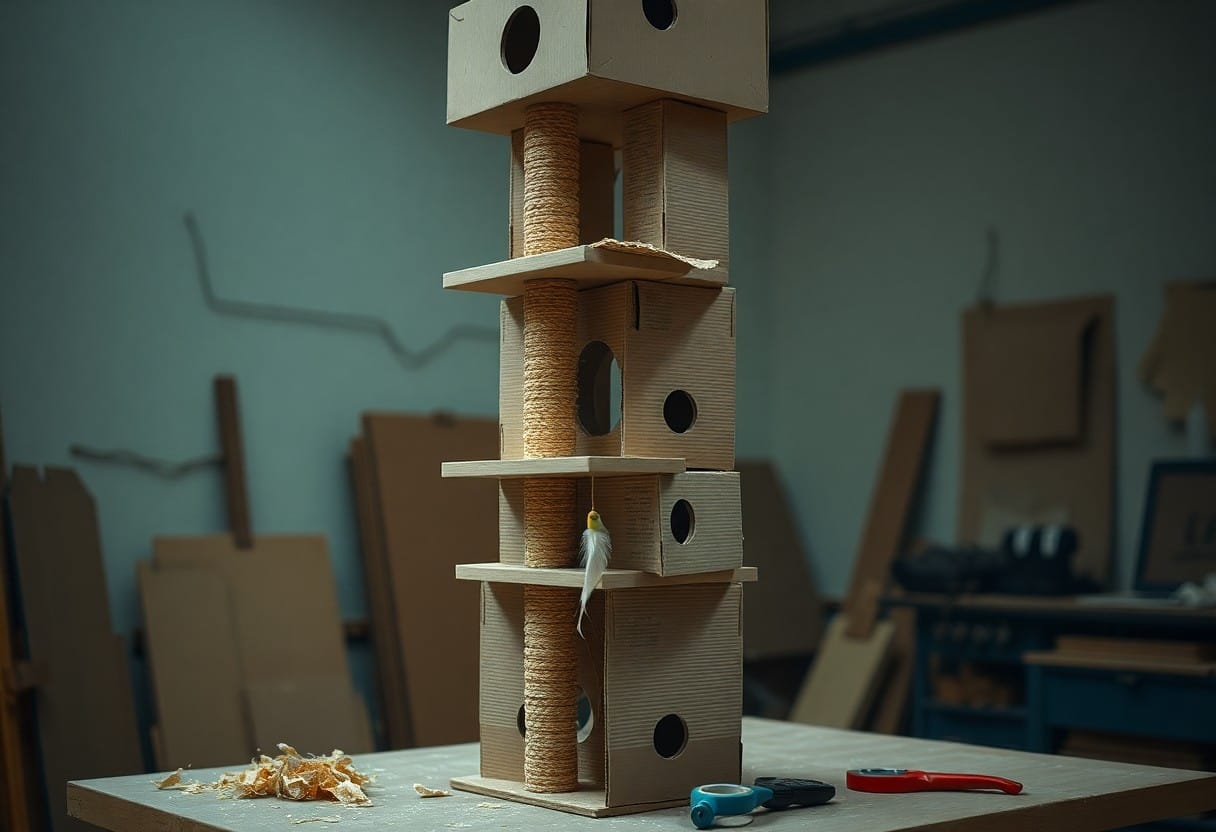
Build a tall tower from stacked boxes wrapped in cardboard and sisal; you will give your cat a vertical outlet for scratching and climbing while a heavy base prevents tipping.
Layering Techniques for Durability
Layer corrugated sheets and glue seams so surfaces hold up to claws; you should alternate grain direction, press firmly, and replace worn layers before edges fray and expose staples.
Anchoring for Stability and Safety
Anchor the tower to a wall or weighted base so your cat cannot tip it; you must use sturdy brackets and avoid loose nails or exposed screws that could injure paws.
Secure L-brackets to wall studs or use furniture straps; if you must attach to drywall, choose toggle anchors rated for the load. For freestanding safety, create a weighted base by filling the bottom box with sand or bricks and sealing it. Cover all hardware with caps or tape to eliminate sharp edges, and vigorously test stability before allowing unsupervised play.
Project 5: The Hidden Prey Puzzle
You can hide toy mice or crinkled paper inside cutouts and sliding panels so your cat hunts through openings; include secure flaps to prevent escaping bits and avoid small parts that pose a choking hazard.
Using Recycled Materials for Internal Obstacles
Cardboard tubes, egg cartons and torn paper let you create layered tunnels and obstacles; secure loose bits with tape and avoid staples or glue that could harm your cat’s paws. Use recycled materials for low cost and a stimulating texture.
Encouraging Natural Problem-Solving
Let your cat paw and sniff through hidden openings, rewarding success with treats so they learn cause-and-effect; short supervised sessions prevent frustration.
Offer progressively harder challenges by hiding treats deeper or adding movable barriers; use scent trails to guide initial attempts and reward your cat’s persistence with praise. Keep sessions short and always supervise to remove toys with small detachable parts that present a choking hazard.

Summing up
Now you can keep your cat mentally and physically engaged using five simple cardboard-box puzzles that cost little and use household materials; rotate designs and supervise play to maintain interest and safety.
FAQ
Q: What are the five cardboard box puzzle projects and how do I make them?
A: Five quick projects: 1) Treat-Dispensing Box: cut several small holes in a box slightly larger than your cat’s paw, drop kibble or small treats inside, seal edges with tape so pieces don’t fall out. 2) Tunnel Maze: connect two or more boxes by cutting doorways and taping them together to form a winding tunnel; add crumpled paper or a hanging toy at one end. 3) Flap Surprise Box: cut a lid or side flap that opens when pawed, hide a toy or treat under the flap, reinforce the flap with tape so it flips back reliably. 4) Peek-a-Boo Stack: stack boxes with different-sized holes so the cat can poke between levels; secure stacks with non-toxic glue or tape and place treats in select holes. 5) Hole-and-String Batting Box: cut a few holes in the top, thread a string or ribbon with a lightweight toy through one hole and knot it inside so the cat bats the string but can’t pull the toy free. Use plain, untreated cardboard, child-safe scissors, non-toxic tape, and remove all staples or sharp bits before giving the toys to your cat.
Q: How can I change difficulty and keep my cat interested in these puzzles?
A: Vary rewards and layout: switch between food, catnip, and favorite toys to keep each puzzle rewarding. Add or reduce the size and number of openings to make retrieval easier or harder. Rearrange tunnels and stacked boxes or add new textures like crumpled paper or a fabric scrap for novelty. Rotate puzzles every few days so each one feels new, and hide treats deeper or use partial barriers to force more paw-work. Observe your cat’s skill level and raise or lower challenge gradually to avoid frustration or boredom.
Q: What safety and maintenance steps should I follow for cardboard cat puzzles?
A: Inspect boxes before use and remove staples, tape edges that could fray, and cut away any small pieces a cat might swallow. Use plain, untreated cardboard and non-toxic adhesives; avoid glitter, paint, or strong-smelling glues. Supervise initial play sessions and retire boxes that become soggy, heavily chewed, or have loose strings or bits. Clean surfaces by replacing top layers or swapping in a fresh box; store unused puzzles dry and replace them when they show wear.