Just plan your balcony to protect curious cats: install safety netting, ensure secure anchoring and remove hazards to prevent falls, while adding shaded perches and cat-safe plants for enrichment.
Assessing the Environment: Key Factors for Balcony Safety
Assess your balcony’s exposure, railing height, surface traction and nearby hazards before fitting a net. This quick survey helps you prioritize safety netting, secure anchoring, and escape prevention.
- Safety netting
- Anchoring points
- Railing height
- Gap dimensions
Evaluating structural integrity and gap dimensions
Measure railing height, baluster spacing and floor load capacity so you confirm the balcony can support net anchoring and your cat’s activity. You should ensure gaps under 3 cm or fit mesh to prevent slipping.
Identifying potential fall hazards and escape routes
Scan for unstable furniture, climbable planter edges, loose tiles and open gaps; also note adjacent trees, air-conditioners or railings that form escape routes. You must block or secure these points to protect your cat.
Inspect railings for loose bolts and check gaps around posts and under doors, remove climbable objects and replace tall stands with low-profile planters; anchor nets to solid points and avoid tying to weak cladding. Seal any open gaps or shared ledges, cover AC units and trim branches so the net and anchors provide reliable protection.
How to Install High-Quality Safety Netting
Install high-quality netting using UV- and bite-resistant mesh, fastened to solid anchors, with constant tension to prevent sagging; check for gaps or frayed areas that could let your cat slip through.
Selecting durable, bite-resistant mesh materials
Choose mesh rated for outdoor use and bite-resistant construction; prefer tight weaves and UV-stabilized polymers. Inspect for thin, fraying fibers and avoid cheap nets that your cat can chew through.
Step-by-step guide to secure mounting and tensioning
Anchor top and bottom using heavy-duty fittings, apply even tension, and space supports close enough to prevent bulging. Use stainless steel hardware and cover sharp edges to protect your cat from cuts.
Follow the checklist below during installation, checking anchor strength, tension, and final gap size to ensure no openings larger than 1 cm and secure fixes.
Installation Checklist
| Step | Action & Tip |
|---|---|
| Measure & cut | Allow overlap and mark anchor positions before drilling. |
| Top attachment | Install eye bolts or wall anchors; tighten firmly; no loose knots. |
| Tensioning | Use turnbuckles or ratchet straps for even pull; avoid sagging. |
| Bottom fixing | Secure to floor or railing with clips or anchors to eliminate gaps. |
| Finish & inspect | Cover sharp hardware, test pull strength, and inspect monthly. |

Creating Vertical Play Spaces and Vantage Points
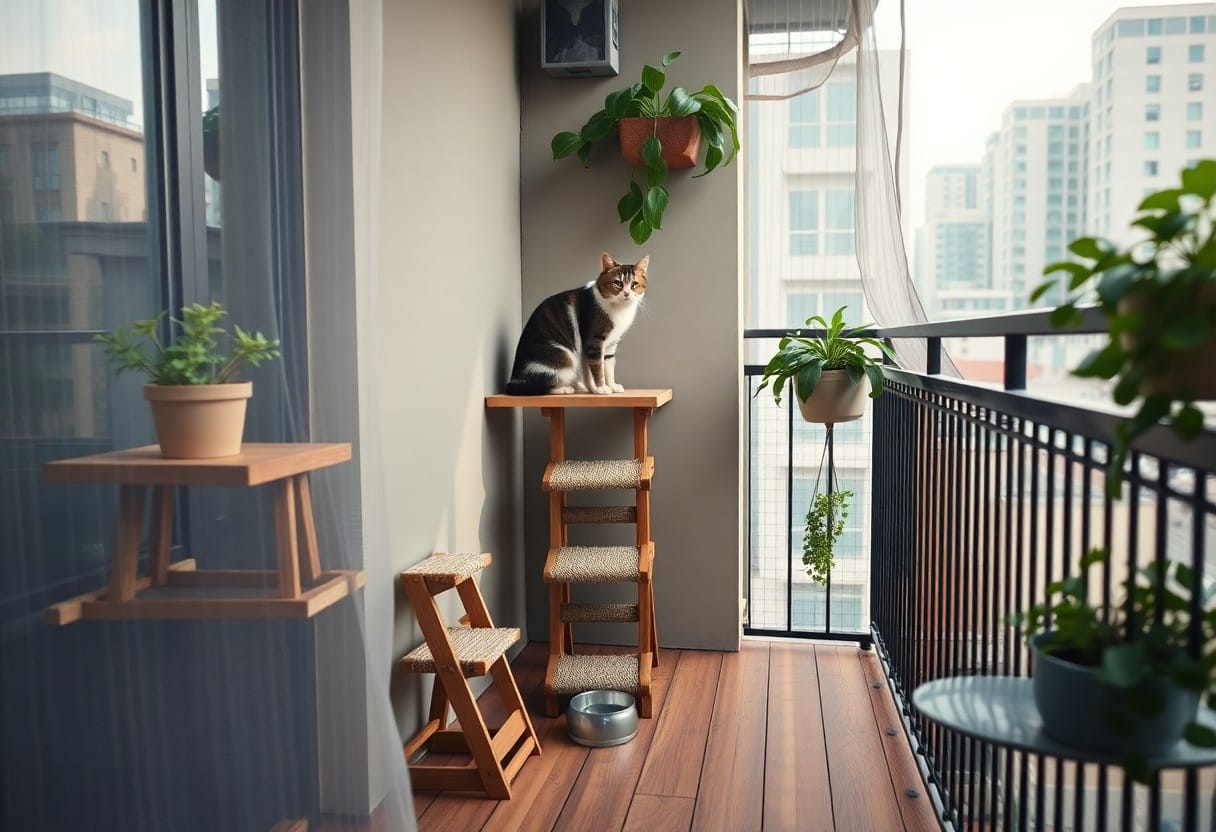
Design vertical routes with staggered platforms, perches, and secure anchors so you can provide vantage points without exposing cats to falls; fit with safety netting and non-slip surfaces to prevent accidents.
Tips for selecting weather-proof cat trees and shelves
Choose materials that resist moisture and UV, with marine-grade finishes and stainless hardware for durability. Secure attachments and rounded edges cut injury risk. Any loose fixtures should be tightened and inspected often.
- weather-proof
- UV-resistant
- marine-grade
- anchoring
- non-slip
How to arrange multi-level platforms for safe climbing
Space platforms with short vertical distances and staggered offsets so you can reduce fall risk; include broad perches and non-slip surfaces, and keep clear sightlines to prevent startling. Anchor every level with secure brackets.
Secure each platform into studs or heavy-duty anchors, testing load capacity before use; provide staggered steps no higher than 20-30 cm for adult cats and shorter for seniors, add deep landing ledges and non-slip coverings, and place soft impact mats under high routes. Inspect mounts and netting regularly to prevent falls or hardware failure.
Selecting Feline-Safe Greenery and Flooring
You can outfit your balcony with non-toxic plants and paw-safe flooring, keeping your cat stimulated while minimizing escape, poisoning, and fall risks.
Non-toxic plant options for a balcony garden
Select safe species like cat grass, catnip, parsley, and thyme to satisfy nibbling without exposure to toxic plants. After you confirm pesticide-free soil, secure pots in stable holders away from the railing.
- Cat grass – aids digestion and safe to chew
- Catnip – enrichment without harm
- Parsley and thyme – aromatic, generally safe in small amounts
Factors for choosing paw-friendly outdoor surfaces
Evaluate surface texture, temperature, and drainage to prevent burns, slips, and paw irritation; prefer soft, non-abrasive choices. After you test materials at peak sun, rule out surfaces that become dangerously hot.
- Rubber tiles – cushioned, cool underfoot
- Artificial turf – soft but check drainage
- Composite decking – smoother than raw wood, lower splinter risk
Check padding, grip, and maintenance needs so you protect joints and claws; rough concrete and untreated wood can cause abrasions and hide pests, while well-draining, cushioned options reduce injury risk. After installation, inspect seams, replace worn sections, and hose surfaces to remove debris and keep your balcony safe for your cat.
- Shock-absorbing padding – reduces impact injuries
- Non-slip texture – prevents slips when wet
- Heat-resistant materials – avoid midday burns
To wrap up
Upon reflecting, you should secure your balcony with properly installed safety netting, solid railing barriers, shade, climbing alternatives, and routine supervision so your cat can enjoy fresh air safely; follow local codes and inspect materials often.

FAQ
Q: How do I choose and install safety netting for a cat-friendly balcony?
A: Measure the full height and width of the balcony, adding 10-20% extra material to allow for fastening and tension. Select UV-stable polyethylene or nylon netting rated for outdoor use with a mesh size small enough to stop paws and heads; 1-2 cm (0.4-0.8 in) is best for kittens while up to 3 cm (1.2 in) can work for steady adult cats. Use hardware rated for outdoor exposure: stainless-steel eye bolts or expansion anchors for concrete, toggles for hollow walls, and corrosion-resistant hooks or carabiners; space anchors every 30-50 cm (12-20 in) for even tension. Install the net by fixing the top edge first, then pull it taut and secure the sides and bottom, closing any gaps against the railing or floor; finish with turnbuckles, tensioning straps, or a base rail to prevent sagging. Perform a pull test on several points to confirm there are no weak spots, and inspect monthly for chafing, UV damage, or loose fastenings; replace or repair any compromised sections immediately. Obtain building-owner permission and confirm local codes before drilling into balcony structures.
Q: What structural alternatives and additions improve balcony safety beyond netting?
A: Mount clear polycarbonate or tempered-glass panels along the railing to block gaps while maintaining the view and wind protection; panels should be professionally fastened to avoid creating new failure points. Install a full-height framed screen or a rigid wooden or aluminum frame fitted with mesh to create a secure enclosure if netting is not permitted. Add a solid lower barrier, such as a plywood panel or planter box securely attached to the railing, to prevent jumping and reduce drafts; ensure planters have proper drainage and are anchored so they cannot tip. Use non-slip flooring options like outdoor carpet, rubber tiles, or artificial turf with drainage to give cats secure footing and reduce the risk of slipping during play. Secure heavy furniture and tall cat trees to the balcony or wall to prevent tipping, and check the balcony’s load limit before adding large items or filled planters.
Q: How do I furnish the balcony for enrichment and keep it safe over time?
A: Provide vertical and horizontal enrichment with a low, sturdy perch near the railing, a sheltered hideaway for naps, and a scratching post anchored to the floor or wall. Plant cat-safe species such as cat grass, catnip, and rosemary in secured pots; avoid toxic plants including lilies, oleander, philodendron, pothos, and sago palm. Offer shade and wind protection via an awning, umbrella, or a simple fabric sail clipped to balcony anchors; place a non-spill water bowl and rotate toys to prevent boredom. Train the cat to a harness and leash for supervised outings if you want off-net time, and never leave kittens or anxious cats unattended for long periods. Create a maintenance schedule: inspect fastenings and netting after storms, clean dirt and bird droppings, treat UV degradation and fraying promptly, and replace worn netting every few years or as needed. Keep records of landlord approvals, installation details, and any repairs to simplify future inspections or modifications.