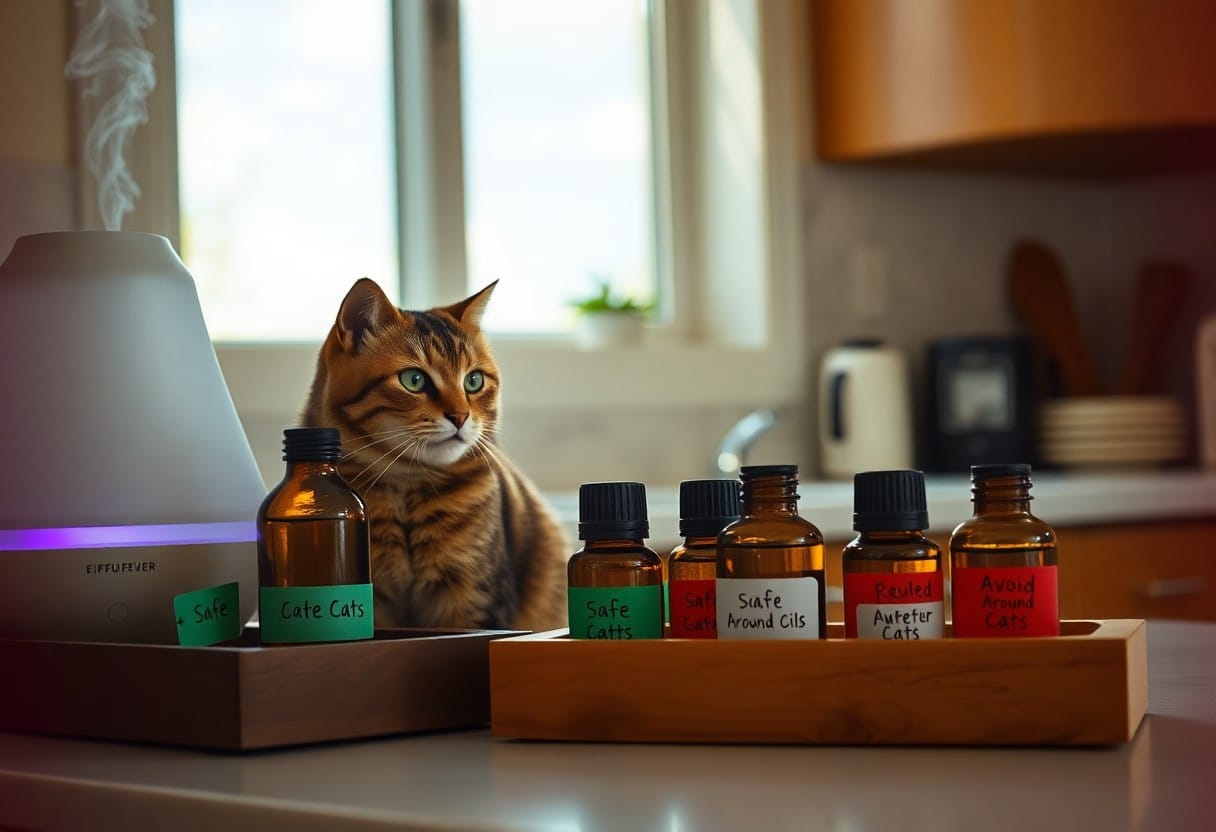
Over 30 common oils pose risks to cats; you should avoid tea tree, cinnamon, clove, and citrus oils, while lavender and chamomile (diluted) are safer when used cautiously around your pet.
Feline Physiology and Essential Oil Metabolism
Your cat metabolizes many necessary oil constituents poorly because it has limited glucuronidation, so you must be cautious with products containing phenols or phenylpropanoids and favor avoidance or extreme dilution.
The Role of Glucuronyl Transferase Enzymes
You should know that cats lack sufficient UDP-glucuronyl transferase activity, which means compounds like eugenol and methyl salicylate accumulate and can cause liver damage and neurological signs even at low exposures.
Risks of Airborne vs. Topical Exposure
Airborne particles can concentrate in small spaces and expose your cat to toxic vapors, while topical oils risk higher systemic absorption during grooming; you should prioritize dilution and ventilation to reduce harm.
Directly applying concentrated oils to fur or skin leads to significant ingestion during grooming, producing rapid-onset symptoms such as hypersalivation, tremors, vomiting, or respiratory distress; you must prevent exposure, remove contaminated bedding, ventilate rooms, and seek immediate veterinary care if signs appear.
Essential Oils Generally Considered Safe for Cats
Some imperative oils are commonly regarded as safer for cats when you use them properly: lavender, copaiba, and frankincense, applied sparingly and well-diluted, with good ventilation and no direct contact to avoid respiratory or liver stress.
Lavender: Calming Properties and Safety Limits
Lavender can soothe anxious cats when you use a very low dilution (0.1-0.5%) and avoid continuous diffusing; do not let cats lick oils or apply undiluted because concentrated exposure can cause gastrointestinal upset or sedation.
Copaiba: Support for Joint and Digestive Health
Copaiba resin oil offers anti-inflammatory support for joints and digestion when you use veterinarian-approved, low dilutions topically and avoid ingestion; always consult your vet before regular use.
Use low dilutions (around 0.25-1%) and apply to a small area; copaiba’s beta-caryophyllene-rich profile can reduce inflammation and discomfort, but do not let cats ingest oil and stop use if you see drooling, vomiting, or lethargy. You should perform a patch test and discuss prolonged use with your veterinarian to monitor liver function and drug interactions.
Frankincense: Immune System and Cellular Support
Frankincense supports immune and cellular health when you use short, well-diluted topical applications or brief diffusion; avoid undiluted use and prolonged diffusion, and monitor your cat for respiratory irritation or digestive upset.
Apply frankincense at low dilutions (0.25-1%) to a limited area and avoid broken skin; its anti-inflammatory properties can help aging cats, but ingestion and undiluted application pose liver and GI risks. If your cat shows coughing, wheezing, vomiting, or lethargy, stop use and contact your veterinarian.
Toxic Essential Oils to Avoid Completely
Avoid exposing your cat to any of these oils; even tiny amounts inhaled, licked, or absorbed can cause severe poisoning, so do not diffuse or apply them where your cat can contact them.
Phenol-Rich Oils: Oregano, Clove, and Thyme
Oregano, clove and thyme contain high phenol levels that overwhelm your cat’s liver enzymes; you should avoid them entirely because phenol toxicity can lead to liver failure, vomiting, tremors, and collapse.
Monoterpene Hydrocarbons: Citrus and Tea Tree
Citrus and tea tree oils release monoterpenes that irritate your cat’s skin and airways; you must not diffuse or apply these oils near cats since inhalation or topical exposure can cause drooling, ataxia, and respiratory distress.
Tea tree and citrus oils contain compounds like limonene and terpinen-4-ol that your cat metabolizes poorly, so even small exposures can overwhelm hepatic pathways; you should avoid using them in any form because they can produce persistent neurological signs, photosensitivity with citrus, and in severe cases be life-threatening, requiring emergency care.
Ketone-Heavy Oils: Peppermint and Pennyroyal
Peppermint and pennyroyal are rich in ketones such as pulegone and menthone that can cause seizures and liver damage; you must never use these oils around your cat due to high toxicity risk.
Exposure to pennyroyal or concentrated peppermint can produce rapid CNS depression, tremors, seizures, and acute hepatic necrosis in cats; if your cat licks, inhales, or has skin contact with these oils, you should seek immediate veterinary attention because outcomes can be fatal without prompt treatment.
Identifying Symptoms of Essential Oil Poisoning
Signs of important oil poisoning include respiratory changes, drooling, vomiting, tremors, and behavioral shifts; watch for seizures or collapse and get immediate care if you see them.
Respiratory Distress and Neurological Signs
If your cat shows coughing, wheezing, open-mouth breathing, or blue gums, stop exposure and seek urgent veterinary help for possible respiratory distress and hypoxia.
Gastrointestinal Irritation and Lethargy
Vomiting, drooling, diarrhea, and lethargy often indicate ingestion; monitor your cat closely and contact your vet if you notice repeated vomiting, blood, or prolonged weakness.
Treatment depends on severity: your vet may induce vomiting, administer activated charcoal, provide IV fluids, and run bloodwork to monitor liver and kidney function. Watch for worsening lethargy, falling temperature, or persistent anorexia. Rapid veterinary intervention improves outcomes, so transport your cat promptly and follow professional guidance.
You must diffuse sparingly-use low concentrations, short sessions, and monitor your cat closely; avoid prolonged, high-concentration diffusion and stop if you see coughing, drooling, or lethargy.
Passive vs. Active Diffusion Methods
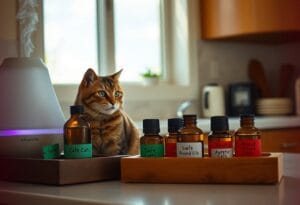
Passive methods like reed diffusers release lower concentrations over time, while active ultrasonic or nebulizing diffusers emit stronger bursts; you should prefer passive or intermittent active use with cat-safe oils and short sessions.
Maintaining Proper Ventilation and Escape Routes
Keep windows or doors open when diffusing and provide an easy escape route so your cat can leave scented areas; never confine your pet with an active diffuser running.
Air exchanges of several per hour dilute airborne oils-place diffusers near ventilation, run in short cycles, and you should observe breathing and behavior; remove diffusers immediately if respiratory signs appear and ventilate well.
Emergency Response for Accidental Exposure
If your cat is exposed to an necessary oil, move them away from the source and ventilate the area. Wipe excess oil with a cloth, avoid applying substances, and call your veterinarian or pet poison helpline right away. Quick action reduces systemic absorption and can prevent serious toxicity.
Immediate First Aid Steps for Skin or Eye Contact
Rinse affected skin or eyes with cool, running water for 10-15 minutes and gently remove contaminated fur; avoid rubbing. If available, flush eyes thoroughly and pat dry. Keep your cat calm and call your veterinarian if redness, discharge, or behavioral changes occur.
When to Seek Urgent Veterinary Intervention
Contact your veterinarian or emergency clinic immediately if your cat develops tremors, seizures, difficulty breathing, persistent vomiting, collapse, or disorientation; these indicate systemic poisoning and need urgent care.
Have the product label, approximate amount, and time of exposure ready to bring to the clinic; if possible, bring a sample of the oil or bottle. Do not induce vomiting unless instructed by a professional, and follow veterinary directions for decontamination and care.
Summing up
You should choose low-risk oils, use minimal dilution and short diffusion, and consult your veterinarian; avoid proven feline toxins such as tea tree, eucalyptus, cinnamon, citrus, and peppermint to protect your cat’s respiratory and skin health.
FAQ
Q: Which vital oils are considered safer for use around cats, and how should they be used?
A: Lavender (Lavandula angustifolia) in very low dilution (about 0.25-0.5%) and short diffusing sessions is commonly tolerated by some cats. Frankincense (Boswellia) and Roman chamomile (Chamaemelum nobile) are often recommended as lower-risk options. Use only high-quality, pure oils and dilute for topical use to around 0.25%-0.5% (approximately 1-3 drops per 30 ml/1 oz of carrier oil), with 0.25% appropriate for more sensitive cats. Diffuse for short periods (10-15 minutes), keep the room well ventilated, and make sure the cat can leave the area if it chooses. Never apply undiluted vital oils to a cat’s skin or fur, avoid the cat’s face, and store oils out of reach. Consult a veterinarian familiar with feline toxicology before introducing any vital oil to a household with cats, especially for kittens, seniors, pregnant or medically compromised animals.
Q: Which vital oils must be avoided around cats and what are the signs of toxicity?
A: Tea tree (melaleuca), eucalyptus, peppermint, citrus oils (lemon, orange, bergamot), pine, cinnamon, clove, oregano, thyme, ylang ylang, wintergreen, and any oil high in phenols or phenylpropanoids should be avoided. Cats lack certain liver enzymes (glucuronyl transferase) needed to safely metabolize many vital oil constituents, which can lead to liver damage, respiratory problems, neurological signs, or severe skin irritation. Signs of toxicity include drooling, vomiting, diarrhea, weakness, unsteady gait (ataxia), tremors, rapid or labored breathing, excessive grooming, skin redness or blistering, and profound lethargy. If you suspect exposure, remove the cat from the area, ventilate the space, wash oil from the cat’s skin with mild soap and lukewarm water only if the cat can be handled safely, and contact your veterinarian or an animal poison-control hotline immediately; bring the oil container or label to the clinic for identification.
Q: How can I safely use vital oils at home, and what are safer alternatives?
A: Diffuse in short bursts with minimal oil volume and never run a diffuser continuously in a small, enclosed space where the cat cannot escape. Use one to two drops in the diffuser reservoir, run for about 10 minutes, then stop for at least an hour while monitoring your cat’s behavior. Keep bottles sealed and stored high out of reach, and do not add oils to bedding, collars, or grooming products. For any topical application use a carrier oil with a dilution of 0.25% or less and perform a very small, supervised test away from the cat’s face. Safer alternatives include veterinarian-approved pheromone products (for example, Feliway), unscented environmental changes (more vertical space, hiding spots, play), and, after veterinary approval, hydrosols or diluted floral waters. Consult your veterinarian before using any scented product around a cat, especially if the cat has underlying health issues.