Physics is actually working against your cat’s coat because that dense undercoat doesn’t just fall out – it gets trapped by longer guard hairs. This creates a painful web that tightens against the skin every time your cat moves, turning a simple grooming session into a minefield. While shorthairs handle self-grooming fine, long-haired breeds swallow dangerous amounts of fur that can cause severe intestinal blockages. Skimming the surface with a brush isn’t enough; you have to reach the skin, or you’re just smoothing over a disaster waiting to happen.
Tools You Gotta Have for Long-Hair Grooming
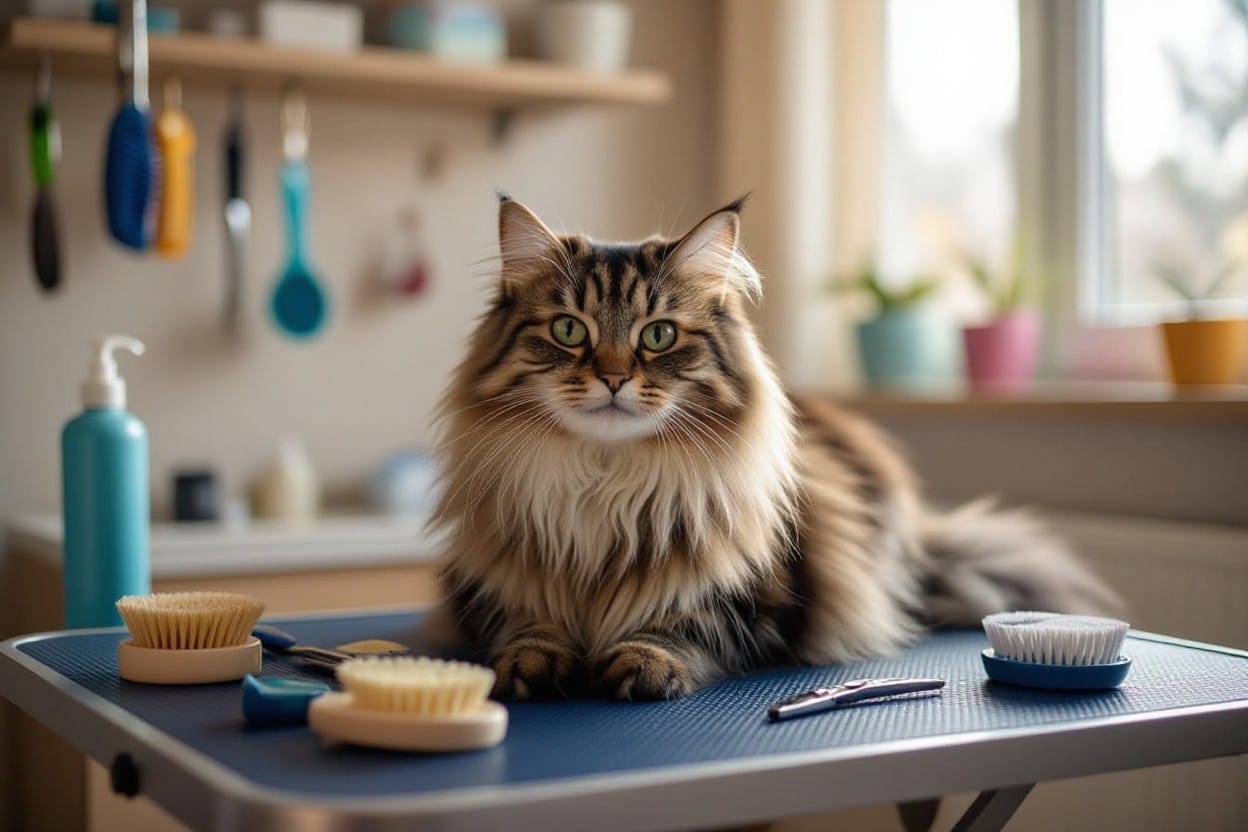
You can’t fix a matted mess with just any old brush found in the clearance aisle. The difference between a smooth session and a scratched-up arm usually comes down to your hardware. You need a toolkit that cuts through undercoat without cutting skin. It’s not about buying the most expensive gadget, but grabbing the specific items that handle fine, dense fur. Get this right, and you’ll stop dreading grooming time.
The Right Combs: What Works Best
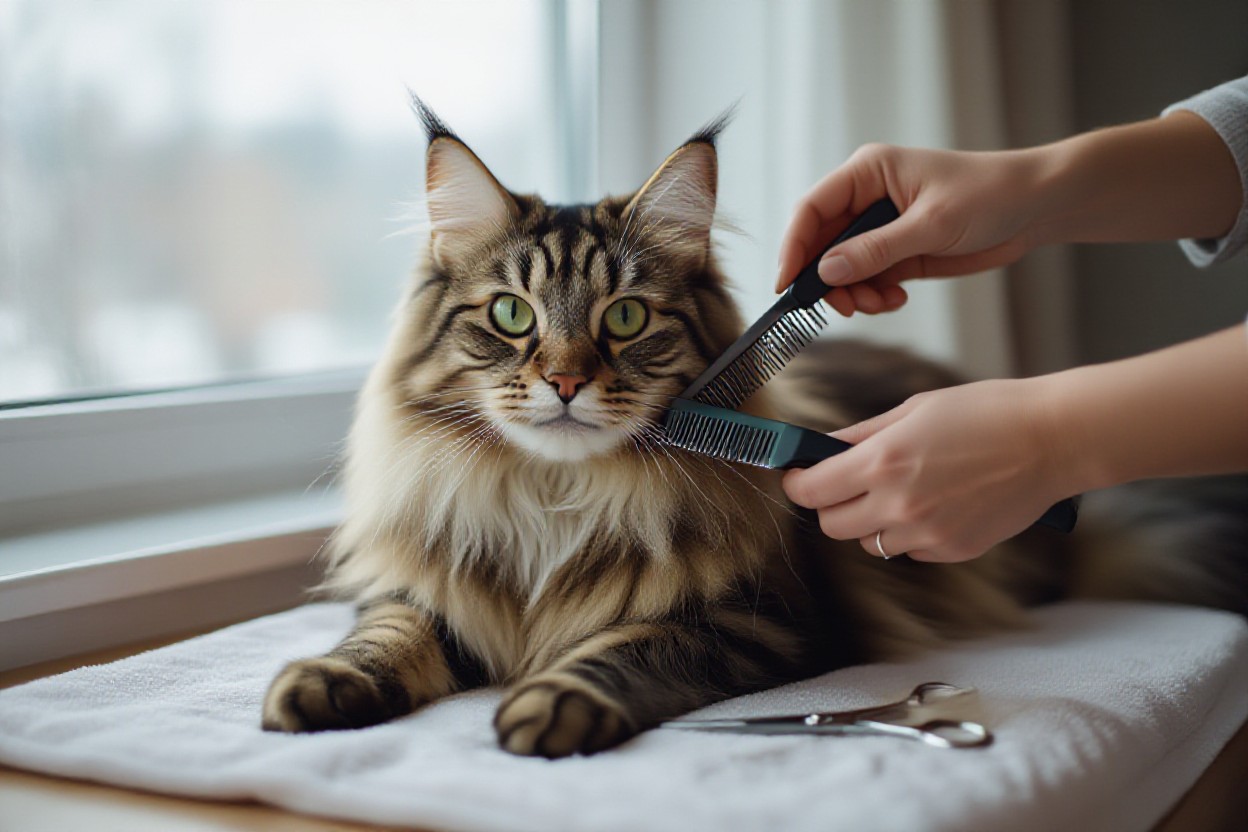
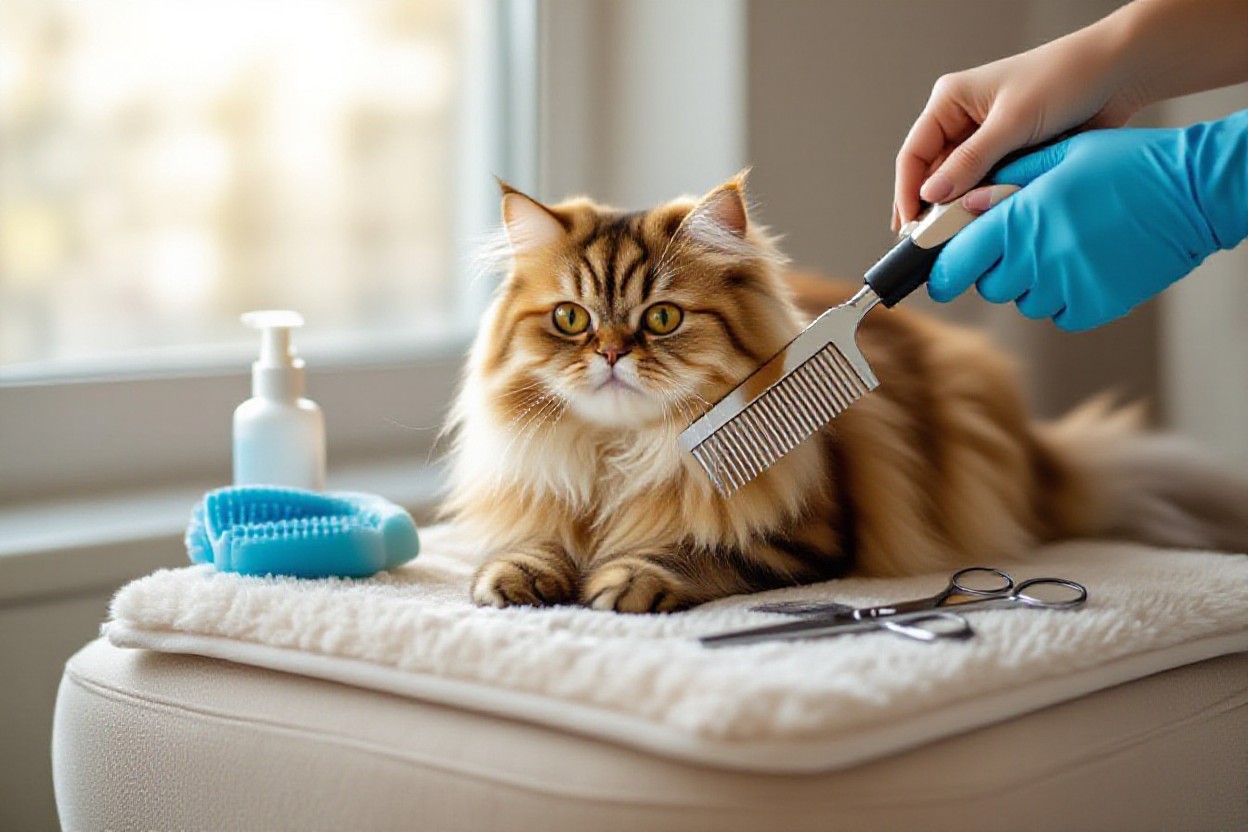
Throw away those plastic combs immediately – they create static and snap instantly against tough knots. You need a stainless steel Greyhound comb with dual spacing. The wide teeth tackle the initial fluff, while the fine teeth find those tiny, hidden tangles close to the skin before they turn into felt. It’s the absolute MVP of your kit. If the comb can’t glide through, you aren’t done yet.
Demat Tools: Do They Really Help?
When you hit a solid knot that your comb won’t budge, a dematting rake is a life-saver, but it’s not for daily brushing. These tools have sharp, curved blades designed to slice through the mat rather than pulling it out by the root. Used correctly, it saves your cat a ton of pain. But be careful – used wrong, you can slice the skin.
You have to use a sawing motion with these rakes, holding the hair at the base so you aren’t yanking on the skin. It feels a bit like sawing through a tiny log. Never force the blades if they get stuck. Also, don’t go crazy on one spot for too long or you’ll leave a bald patch – known as “brush burn” – which hurts just as much as the mat did. It’s a surgical strike tool, not a whole-body brush.
Detangling Sprays: Worth the Hype?
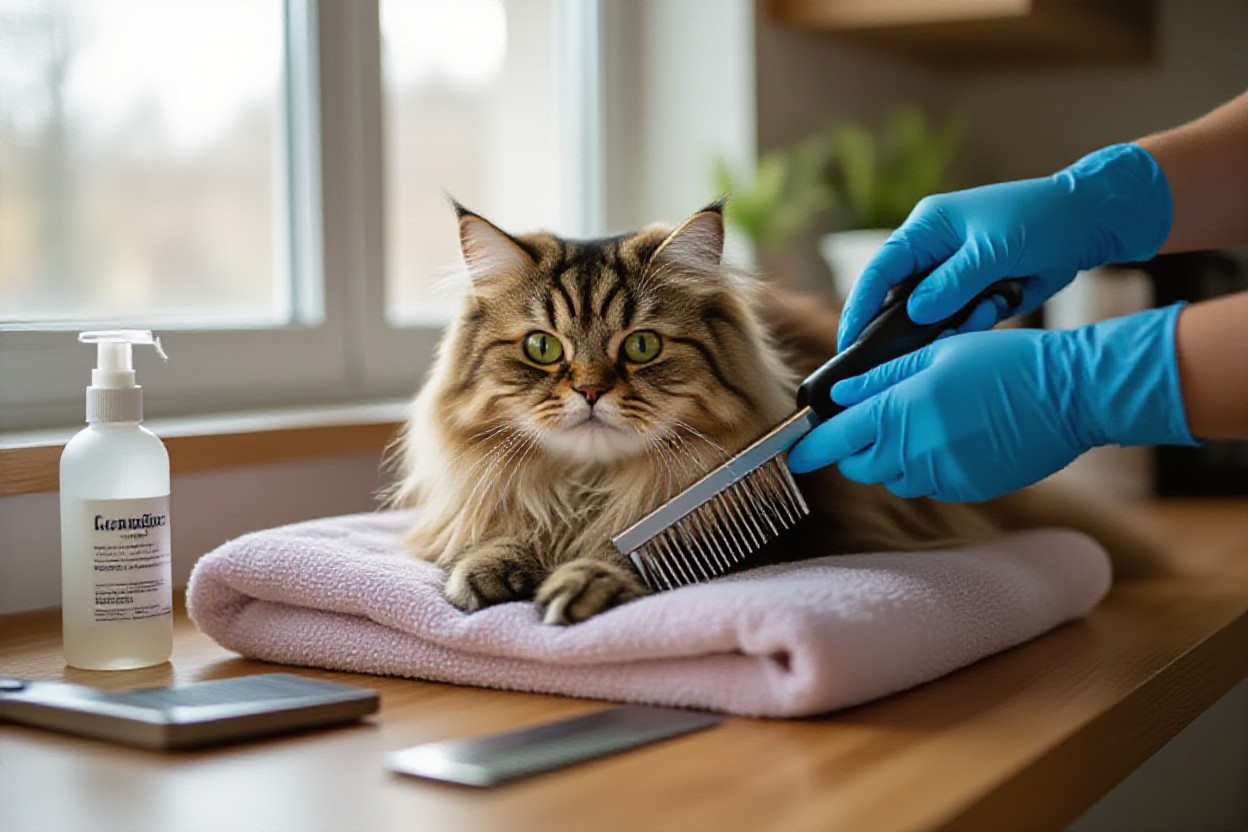
Trying to dry-brush a tight knot is a recipe for a cranky cat, but water actually makes mats tighter. A good detangling spray adds necessary slip, coating the hair shaft so hairs slide past each other instead of locking up. It cuts your brushing time in half. Avoid heavy silicones if you can, as they build up over time, but definitely keep a bottle handy for the tough spots.
Don’t just spray the top of the coat – that does nothing for the chaos underneath. You need to part the fur and apply the mist directly to the knot, working it in with your fingers before you even touch it with a tool. Let it sit for a minute or two. This softens the debris trapped inside the mat. If the spray isn’t working, a pinch of cornstarch rubbed into the base of the knot provides a similar slippery texture that helps tease the hair apart without pulling.
Daily & Weekly Brushing Routines: How Often Should You Do It?
Skipping just forty-eight hours can actually turn a tiny tangle into a painful, skin-tight mat that pulls at their paper-thin skin. It sounds intense, but the easiest way to manage that fluff is doing less work more often.
Aim for 5 to 10 minutes every single day rather than a marathon weekend struggle.
Because long hair mats from the skin out, catching them early stops you from hurting your cat later – and it drastically cuts down on those gross hairballs on your carpet.
Safe Techniques for Tackling Knots and Mats
Cornstarch is your secret weapon here – yes, the stuff from your kitchen pantry. Before you even pick up a tool, rub a generous pinch of cornstarch directly into the knot. It acts as a lubricant for the hair shaft, helping individual strands slide apart much easier than they would dry. This is often the easiest way to brush out a long haired cat with knots because it reduces the friction that causes pulling. Work the powder in with your fingers first to loosen the debris, then switch to your tool. Never wash a matted cat before brushing, as water just tightens the felt like a wool sweater in a dryer.
When NOT to Cut: Seriously, Don’t!
Scissors are the most dangerous tool in your kit because a cat’s skin is incredibly elastic and paper-thin. When a mat forms, it pulls the skin up into the center of the knot – sort of like a tent. If you cut across the base of the mat, you will likely slice a chunk of their skin off before you even realize it happened. Unless you can clearly slide a metal comb between the skin and the mat to act as a shield, keep the scissors in the drawer. It’s simply not worth the emergency vet trip for stitches.
How to Hold Their Skin (So You Don’t Hurt Them)
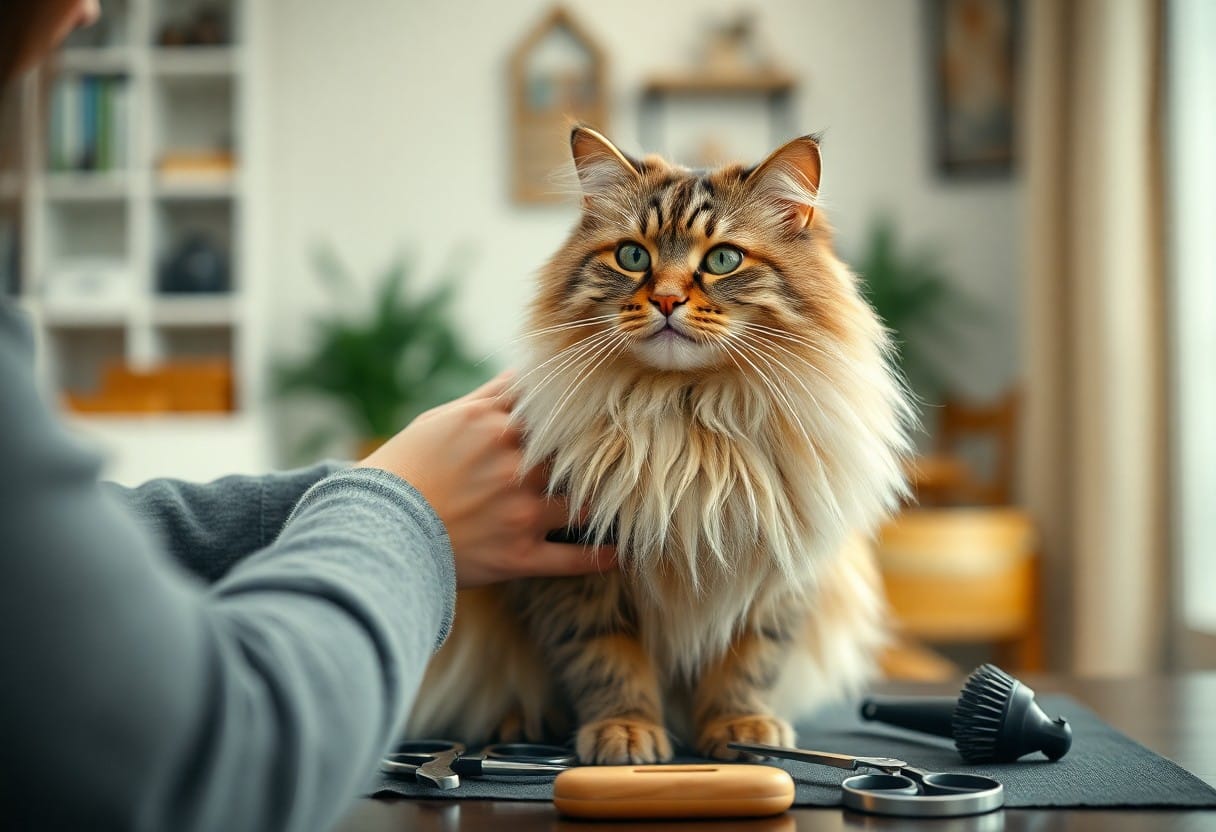
You have to act as a human clamp. Slide your fingers between the mat and your cat’s body, pinching the fur firmly right at the root. By doing this, you isolate the sensation so that when you pull on the knot, the cat feels pressure on your fingers, not their sensitive skin. If you skip this step, every tug on the hair pulls directly on their nerve endings. This technique is non-negotiable for “how to groom long haired cats” without getting scratched.
Think about when you brush your own hair and hit a snag – you instinctively grab the hair above the root to stop the scalp pain, right? Same logic applies here. You need to maintain this anchor grip the entire time you are working on a specific spot. If the mat is too close to the skin to get your fingers underneath, don’t pull at all. Work from the very tip of the hair downwards, picking gently. Constant yanking on loose skin causes invisible bruising known as “brush burn,” which can make your cat terrified of the brush next time. Take breaks if your hand gets tired because a slipping grip means pain for your cat.
When to Call in a Groomer: Knowing Your Limits
If the mats have merged into a hard shell that covers a large area like the hips or back, you are dealing with a “pelt,” not just knots. You cannot brush out a pelt at home safely. This tight matting restricts your cat’s movement and pulls constantly on the skin, often hiding nasty skin infections or parasites underneath. Professional groomers have heavy-duty clippers that can slide safely under the matting – your home trimmers will likely jam and overheat. Admitting you need help is better than traumatizing your pet.
There is absolutely no shame in hitting the reset button. Sometimes life gets busy, the undercoat explodes overnight, and suddenly you’re in over your head. If your cat becomes aggressive, starts panting heavily, or if the matting is tight against the sanitary areas, stop immediately. Pushing through these warning signs destroys the trust you’ve built and makes “long hair cat grooming instructions” irrelevant because your cat won’t let you near them. Painful grooming creates long-term behavioral issues. Let a pro shave them down – it takes them twenty minutes versus your three hours of struggle – and you can start fresh with a maintenance routine once the coat grows back.
Preventing Future Mats: Is Your Cat’s Diet Impacting Their Fur?
You might be brushing daily and still finding those nasty knots, which makes you wonder if something else is going on inside. Often, a lack of Omega-3 fatty acids turns a silky coat into a dry, static-filled mess that tangles the second your cat moves. If you’re feeding low-quality dry kibble with high fillers, you’re basically setting yourself up for a grooming battle because dehydrated skin produces poor quality fur that mats easily. Try adding a pump of salmon oil to their dinner – it works from the inside out to make the hair slip apart rather than stick.
The Environment Matters: Creating a Fur-Friendly Space
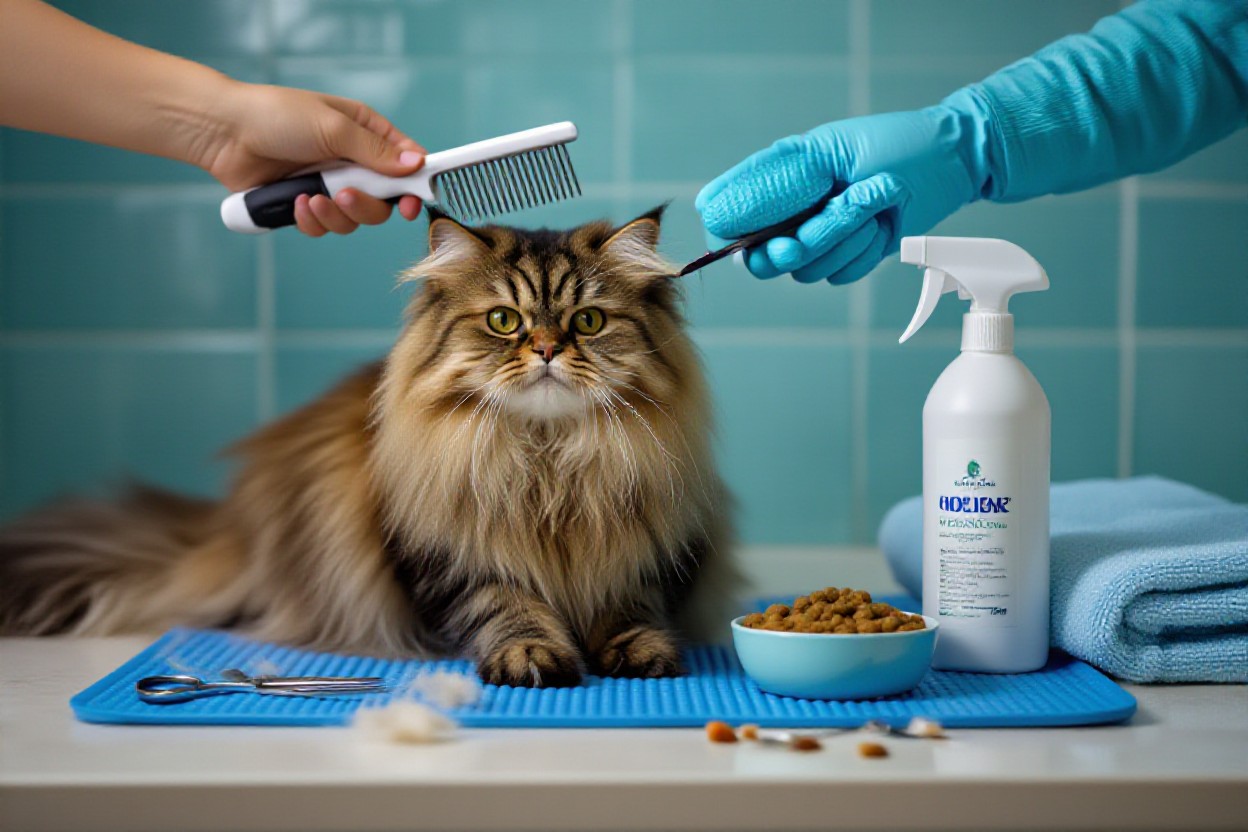
Trying to work out painful mats while chasing a stressed kitty across the living room floor is a guaranteed failure, but moving the operation to a waist-high table changes everything. You need a stable spot where you have total control, so throw down a non-slip rubber mat or towel first. This simple addition gives your cat traction so they don’t panic-scramble when you hit a snag, preventing accidental skin tears. And lighting is non-negotiable – you need bright, direct light to spot exactly where the fur ends and the skin begins before bringing any sharp tools near those knots.
Routine Matters: How a Little Effort Goes a Long Way
Waiting until your cat looks like a felted wool sweater is a nightmare for everyone involved, but spending just five minutes a day with a metal comb changes the game entirely. You aren’t just preventing painful mats that pull tight against the skin – you’re actually cutting down on hairballs by catching that loose fur before it gets swallowed. It’s the easiest way to groom a long-haired cat without the stress. So grab that comb while you’re watching TV, because a few gentle strokes now saves you a trip to the vet for a shave-down later.
My Take on Grooming Tools: High-End vs. Budget
You probably assume that dropping fifty bucks on a professional grooming rake guarantees a pain-free session, but that’s rarely the case. Actually, a simple $12 stainless steel Greyhound comb often out-performs those fancy ergonomic gadgets because it doesn’t flex or skip over deep knots. The real danger isn’t the price tag, it’s the material – cheap plastic combs often have microscopic mold lines that slice into your cat’s thin skin like a serrated knife. So, save your money on the high-tech handles, but never skimp on the metal quality if you want to avoid accidental scratches.
Why I Think Detangling Sprays Saved My Sanity
And just when you think you’ve hit a dead end with a rock-hard clump, these sprays change the physics of the fur. You know that awful feeling in your gut when the comb snags and pulls the skin? A good detangler eliminates that friction almost entirely. By coating the hair shaft, it lets you work through mats without the yanking that makes your cat hate grooming time. You aren’t just saving time; you’re saving your relationship with your pet. It turns a painful chore into a smooth slide, ensuring you get that loose fur out before it becomes a hairball.
The Real Deal About Shedding: What You Need to Know
The Hidden Danger of Trapped Fur
You might think the fur coating your sofa is the enemy, but the hair that doesn’t fall out is actually the dangerous stuff. Because long-haired coats are so dense, dead hairs often get trapped deep in the undercoat instead of dropping to the floor. And when that trapped fluff mixes with natural skin oils, it creates a sticky web that eventually tightens into painful mats right against the skin.
If you aren’t brushing that dead coat out, your cat is swallowing it – leading to nasty hairballs. So, the goal isn’t just neatness; it’s preventing that trapped fur from turning into a hard knot that pulls every time they move.
FAQ: How Often Should You Groom a Long-Haired Cat?
Ever wonder if skipping a day or two actually matters? For dense coats like a Persian’s or Maine Coon’s, daily grooming is the gold standard to stop mats before they tighten painfully against the skin. If life gets in the way, aim for a bare minimum of three times a week, but just know that missing sessions dramatically increases the risk of hairballs and those nasty knots behind the ears. It’s honestly way easier to spend five minutes now than fighting a solid hour of detangling later.
Handling Shedding Season: What to Expect
Photoperiod changes trigger a massive coat blowout twice a year, leaving you with tumbleweeds of fur rolling across the floor. It happens fast. During these peak weeks, loose hair gets trapped in the undercoat instantly, creating tight, painful mats right against the skin before you even notice them.
You’ve got to up your game.
Daily brushing becomes the only barrier between your cat and dangerous intestinal blockages from swallowing all that dead fur. So don’t skip a day – the easiest way to brush out a long haired cat with knots is preventing them during the blowout.
Tricks for Keeping Your Home Fur-Free: Can You Do It?
Is it actually possible to have a pristine, hairless couch with a Persian or Maine Coon roaming around? While achieving a 100% fur-free zone is a bit of a pipe dream, you can definitely stop the tumbleweeds from taking over your living room. By sticking to that daily brushing routine, you’re trapping loose hair in the slicker brush before it hits your upholstery. It’s simple math – every knot you detangle is a clump that won’t end up on your black pants. So grab a lint roller for the rest, because managing shedding starts at the source.
Sniff Test: Is Your Cat’s Grooming Routine Working?
You might think a glossy topcoat means you’ve won the war against knots, but your eyes can be deceiving. You actually need to get right in there and smell the fur. Healthy, clean hair shouldn’t really smell like anything – maybe a bit dusty at most. If you catch a sour or musky funk coming from the skin, that is almost always moisture and bacteria trapped beneath a mat you missed. It’s a major red flag that painful skin infections are brewing below the surface, so don’t just look – sniff.
Final Thoughts on Keeping Your Long-Haired Feline Fabulous
Why stick to a routine when your cat acts like a ninja every time the brush comes out? Sticking to a schedule is actually the easiest way to brush out a long haired cat with knots because you catch them before they tighten. You’re not just making them look pretty; you’re preventing those painful mats that pull at their thin skin.
Plus, less loose fur means fewer icky hairballs on your rug. So take a breath. Trust your gut and keep sessions short – your fluffball will thank you for it.