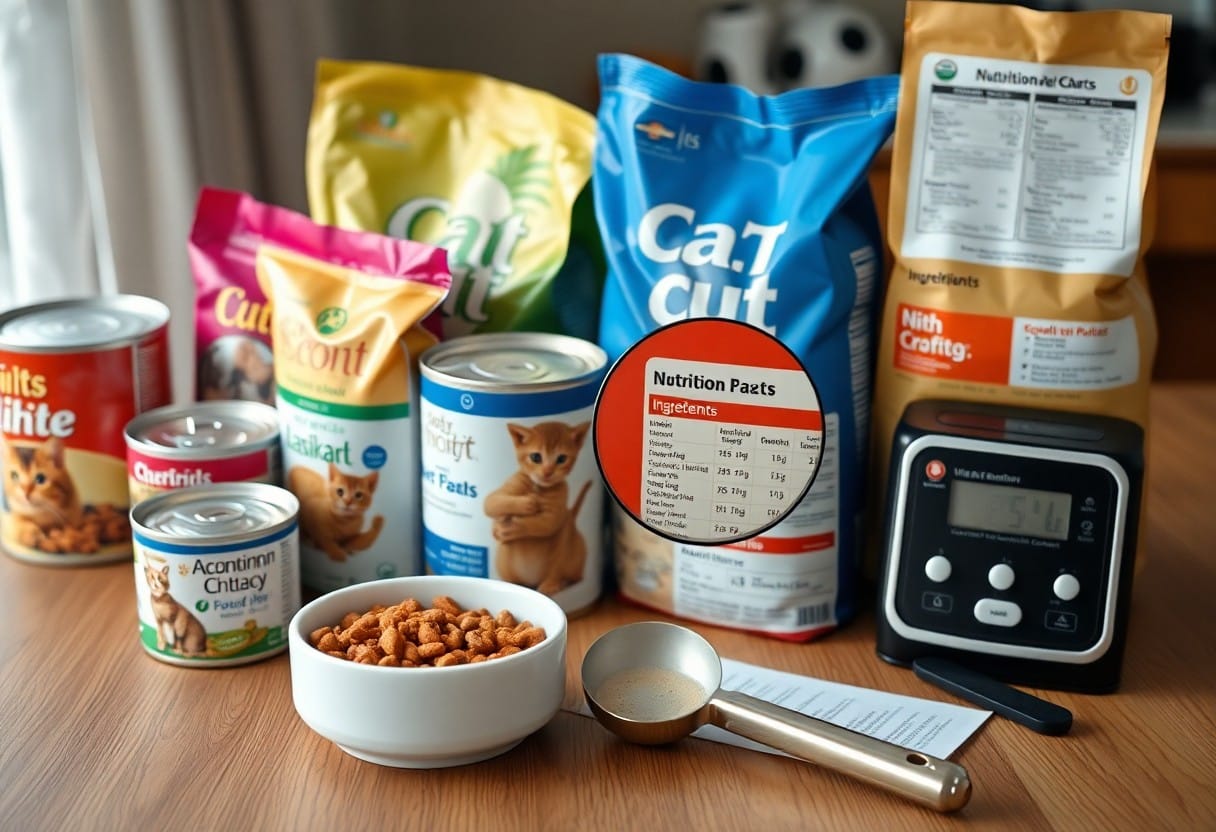
Just use this guide to select a cat food brand that fits your cat’s life stage, health needs, and your budget.
Start by assessing your cat: note age (kitten, adult, senior), weight, activity level, and any medical conditions or food sensitivities. You should track changes in appetite, coat quality, and stool to evaluate tolerance to a new formula.
When you read labels, seek an AAFCO or equivalent statement indicating complete and balanced nutrition for the stated life stage. Check the ingredients list for named animal proteins (e.g., chicken, salmon) as top ingredients and watch for unnamed meat by-products. Use the guaranteed analysis to compare protein, fat, fiber, and moisture percentages.
Decide between wet and dry formats based on your cat’s hydration needs and dental health; wet food boosts water intake, dry food is more calorie dense and convenient. Consider prescription, limited-ingredient, or grain-free formulas only if they match medical advice or specific sensitivities.
Check brand reputation and recall history before buying: you can find reports and owner reviews online. Evaluate manufacturing transparency, third-party testing, and whether the brand employs veterinary nutritionists. Balance these factors with the price per calorie and typical portion sizes.
If your cat has allergies, kidney, weight, or other conditions, consult your veterinarian about prescription diets or tailored nutrient profiles. Always transition gradually over 7-10 days by mixing increasing amounts of the new food to avoid digestive upset.
Create a short checklist before purchase: verify AAFCO statement; confirm named animal protein is primary ingredient; review guaranteed analysis; assess brand reputation and recall history; check feeding guidelines, storage recommendations, and expiration date. Try small bags or samples and monitor how your cat responds to finalize your choice.