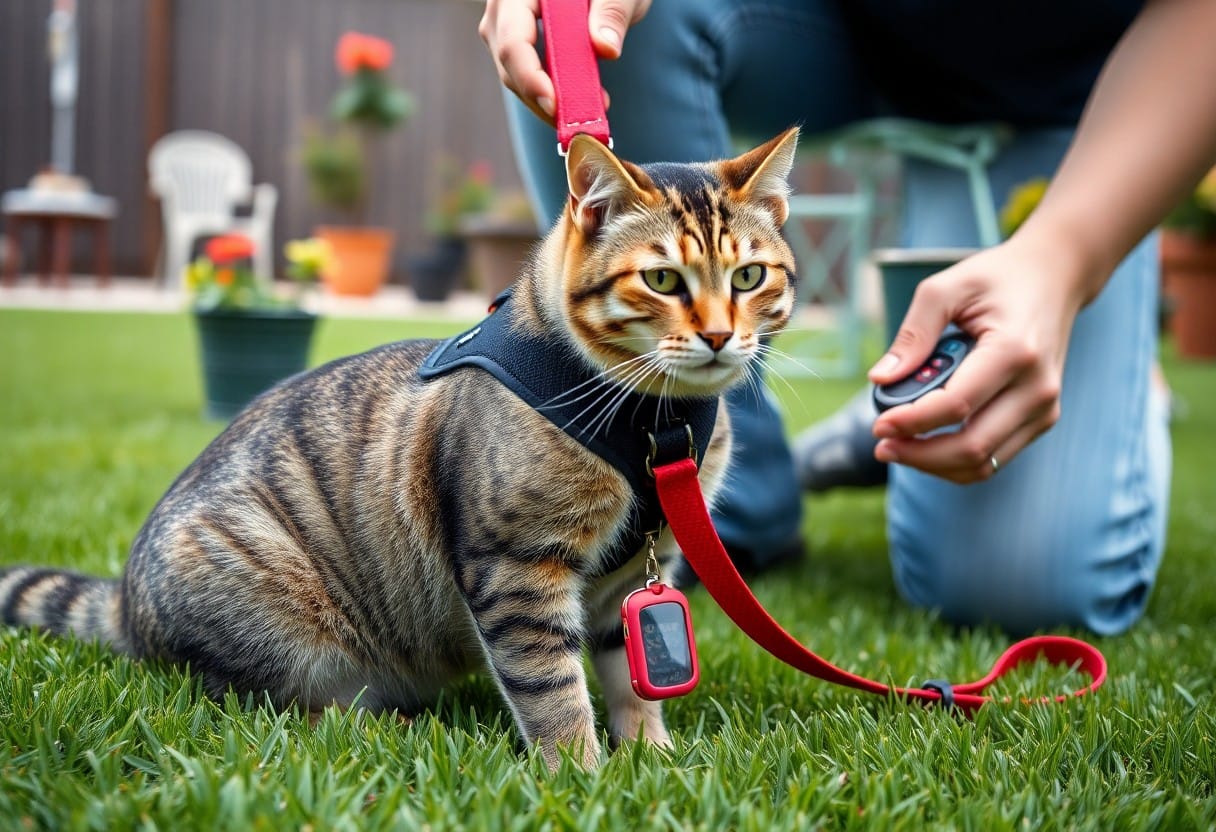
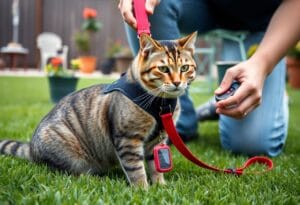
Over weeks you can teach your cat to accept a harness and leash; escape and traffic are dangerous, so train indoors, reward slowly, and you’ll enable safe outdoor exploration and stronger bonding.
Evaluating Essential Gear: Factors for Safety and Comfort
Assess your gear for safety and comfort: sturdy harness, padded vest, and a tested leash. Any loose straps or weak clips are dangerous; you must replace them immediately.
Check that the harness is escape-proof.
Verify the leash is break-tested and secure.
Confirm the vest provides padding without restricting breath.
Keep ID tags visible and updated for quick recovery.
Selecting between vest and H-style harnesses
Compare vest and H-style harnesses by your cat’s shape: vests give more comfort and coverage, while H-style offers increased mobility; you should favor escape-proof designs and trial both indoors.
Measuring for a secure and escape-proof fit
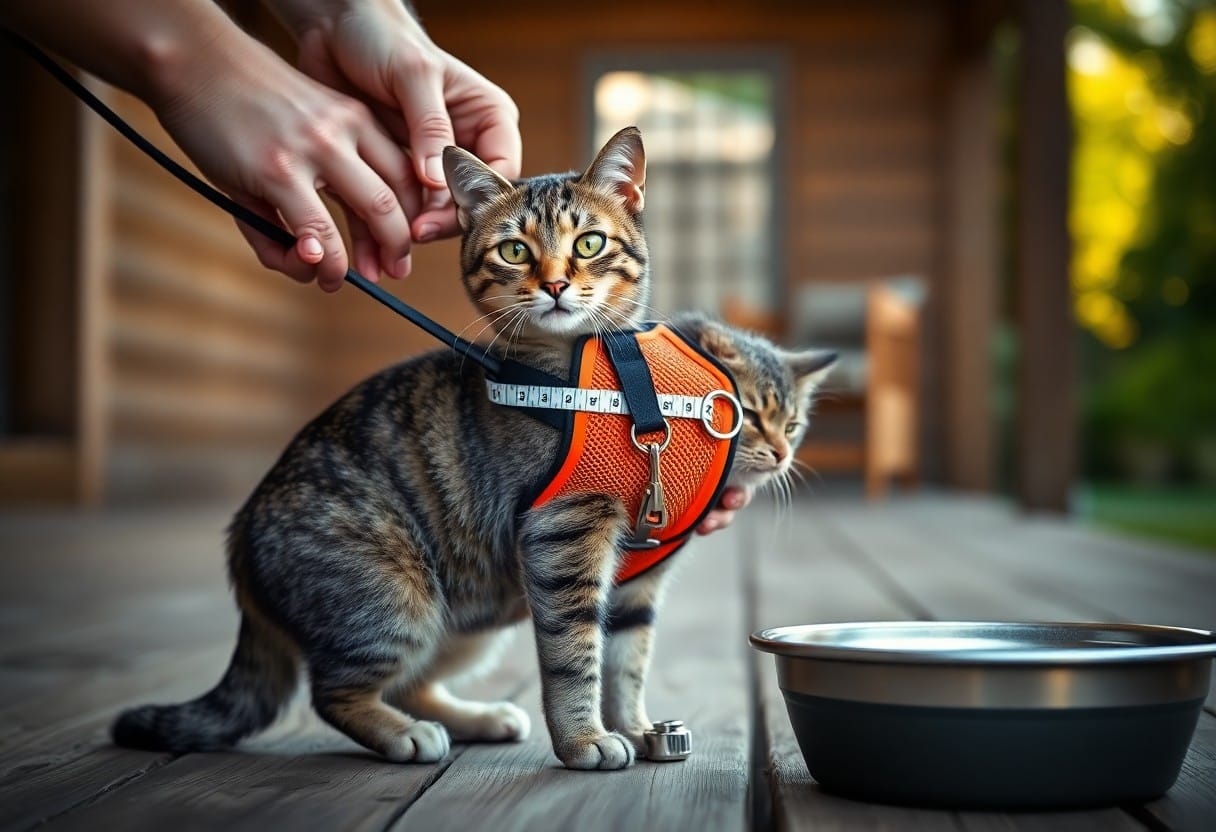
Measure snugly: wrap a tape at the neck and around the widest chest point, allowing two fingers’ room; you should record sizes and test with short supervised walks to confirm escape-prooffit.
Take careful measurements by placing a soft tape where a collar sits and around the widest part of the ribcage behind the front legs, then note both numbers; you must allow two fingers’ slack for comfort but not more, as excess lets cats wriggle free. You should test the harness indoors while your cat walks, twists, and backs up, watching closely for any head or leg escape, and replace worn straps or weak clips immediately since those failures are the most dangerous on outings.
How to Acclimate Your Cat to the Harness
You should introduce the harness indoors, letting your cat sniff and explore it, then fasten briefly while offering high-value treats; watch for stress signs and stop if your cat panics to keep the experience positive.
Utilizing scent familiarization and positive rewards
Allow your cat to rub the harness on bedding and toys so scent feels familiar, then reward gentle interaction with tasty treats and calm praise to build a positive association.
Gradual duration building in a controlled environment
Extend sessions slowly, starting with one to two minutes and working up to 15-20 minutes indoors while keeping the leash clipped and watching for escape attempts or stress.
When you increase time, split sessions into predictable steps: choose quiet rooms, always fit the harness snugly (two-finger rule), keep the leash attached for immediate control, reward calm behavior, and pause progression if you see flattened ears, dilated pupils, frantic running, or repeated freezing; never leave a harnessed cat unsupervised and avoid pulling to prevent injury.
Master the Leash: How to Lead Without Force
Practice a loose-leash walk by rewarding your cat when the leash is slack and avoiding pulls. You should keep sessions short and consistent, watching for stress signals and stopping if you see fear. Use treats and praise to encourage forward steps.
Teach your cat to relax under light leash tension by rewarding calm responses and never yanking. Apply brief, gentle pressure and release immediately when your cat yields, reinforcing that slack equals treats. Observe for sharp pulls or freezing and pause training if you detect panic.
Guiding movement through indoor obstacles
Set up low, stable obstacles indoors so you can teach directional cues and pace control without risk. Guide with treats and soft leash taps, rewarding calm negotiation. Remove hazards such as open windows or unstable perches, and stop if you notice fearful reactions.
Progress to more complex routes only after your cat masters basics; increase turns, textured surfaces, and short distances while keeping sessions brief. Inspect each course to remove hazards like open doors, loose cords, or wobbly furniture. Ensure a proper harness fit and give immediate rewards so you avoid panic and steadily build your cat’s confidence.
Environmental Factors for a Successful First Outing
Consider assessing traffic, nearby roads, and escape routes when planning a first outing with your cat; choose shaded, fenced spots and verify the harness fit in calm areas. This reduces stress, limits dangerous encounters with vehicles or predators, and builds confidence.
Low-traffic parks
Secure fenced yards
Shaded resting spots
Minimal wildlife activity
Identifying low-traffic and secure locations
Scout quiet parks, cul-de-sacs, or fenced backyards where you can monitor exits and control access; avoid busy streets and large open fields to reduce escape risk for your cat.
Assessing weather conditions and local wildlife risks
Check temperature, humidity, and forecasted storms; avoid extreme heat or cold that can cause heatstroke or hypothermia, and be alert for predators like coyotes, raptors, or unleashed dogs when outside with your cat.
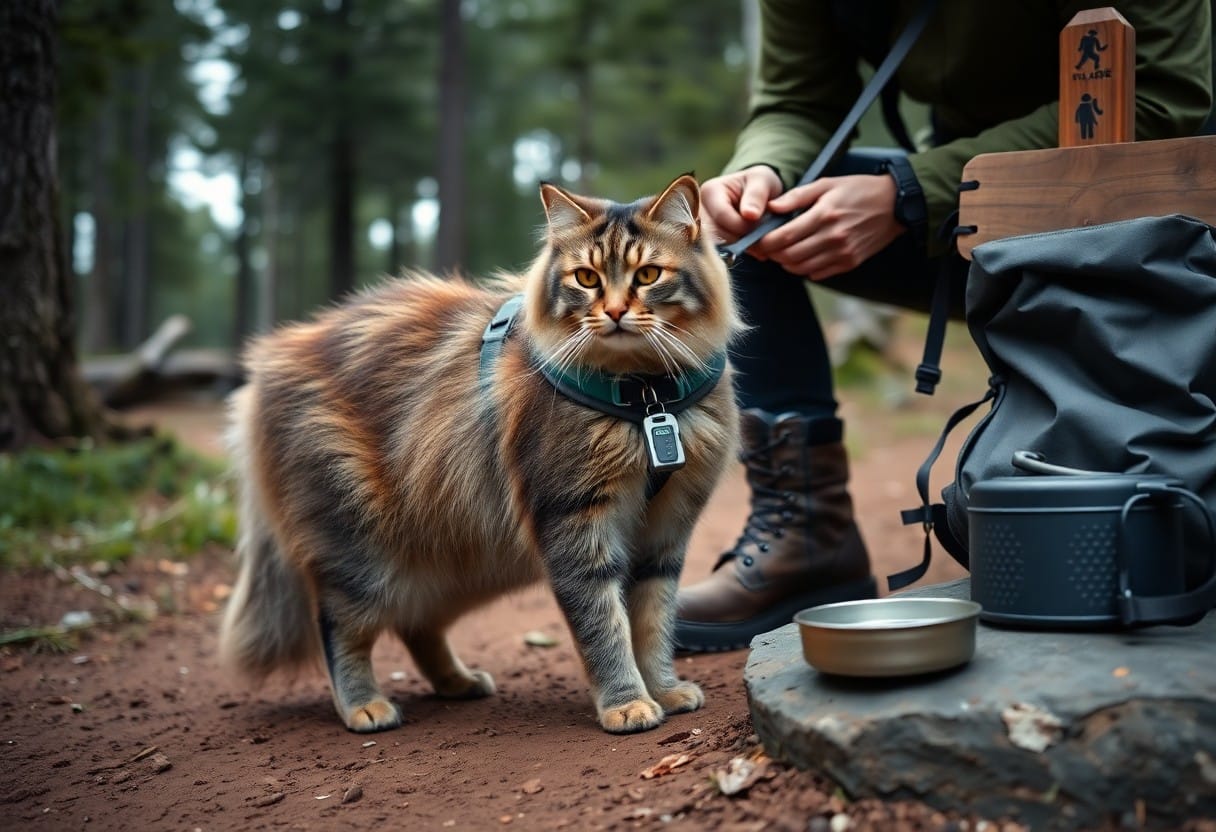
Monitor microclimates and timing: aim for mornings or late afternoons in warm months, avoid midday sun; carry water, a collapsible bowl, and a basic first-aid kit. Inspect for ticks and snake habitat, keep your cat on a snug harness and leash, and practice calm recall so you can respond quickly to wildlife or sudden weather changes.
Expert Tips for Safe Outdoor Exploration
Use short, positive sessions to introduce the harness and outdoor sights while you supervise closely. After you confirm calm behavior and reliable recall, lengthen outings and explore varied, safe areas.
Ensure harness fit is snug and escape-proof.
Observe stress cues and limit session length.
Avoid traffic and known predator areas.
Monitoring feline body language and stress signals
Watch your cat’s tail, ears, pupils, and vocalizations; flattened ears, wide pupils, or prolonged hissing signal stress, and frozen posture or frantic circling can precede an escape attempt-stop, soothe, and end the outing if needed.
Manage meetings by keeping your cat close on a short leash, placing your body between your cat and oncoming animals or people, and using treats to redirect attention; withdraw calmly if the other party is a dog or aggressive wildlife.
When you spot a potential threat, reduce leash length, speak in a low, steady voice, and offer a treat or toy to refocus your cat; if a dog approaches, turn away, move toward shelter, and avoid direct eye contact while keeping your cat between you and the threat-prioritize safety and prevent close confrontations.
Advanced Safety Protocols and Troubleshooting
Practice pre-walk safety checks: inspect harness and leash, test buckles, and ensure a snug fit to prevent escapes. Keep a compact first-aid kit and emergency contacts on hand, and teach your cat a reliable recall near busy areas.
Inspect harness and hardware before each outing.
Carry a backup leash and current ID tag.
Practice recall with a distinct cue and high-value rewards.
Limit exposure near busy streets until confidence is built.
Troubleshooting Guide
Problem
Action
Harness slipping
Adjust fit, replace worn straps, and use a short backup leash immediately.
Recall failure
Return to quieter practice spots, shorten sessions, and increase treat value.
Leash entanglement
Stay calm, secure the cat, and work methodically to free the leash.
Preventing and responding to harness slipping
Check harness fit before each outing; a slipping harness can let your cat bolt into traffic. If slippage occurs, calmly secure your cat, tighten or replace the harness, and use a backup leash. Practice quick fittings at home so you can adjust calmly during walks.
Establishing a routine for returning home
Set a consistent end-of-walk routine: call your cat’s recall cue, offer a high-value treat, and head straight home to reinforce returning. Repeat cues in varied locations so you build reliability; reward promptly when your cat arrives.
Develop a stepwise recall plan: start indoors with short, enticing rewards, then move to quiet outdoor spots, increasing distance and mild distractions over days. Use the same verbal cue and a visible cue like a jingling tag, guide with the leash rather than forcing, and shorten sessions if your cat hesitates near busy streets. Finish each session with calm praise and a brief indoor treat to solidify the habit.
Final Words
To wrap up, you should train your cat with a harness and leash, use positive rewards, build sessions in short stages, practice safe outdoor routes, ensure vaccinations and a microchip and ID tag, and supervise every outing to keep your cat secure and confident.
FAQ
Q: How do I choose and fit the right harness for my cat?
A: Choose a harness designed for cats, such as a soft vest or an adjustable H-style with secure buckles and a sturdy D-ring. Measure your cat’s neck and chest girth with a flexible tape and consult the manufacturer’s sizing chart. Fit the harness so you can slide two fingers between the harness and the cat’s body; a harness that is too loose allows escape, while one that is too tight causes chafing and restricts movement. Look for wide straps or a vest-style front to distribute pressure across the chest rather than the throat. Select breathable, lightweight materials for hot weather and reflective trim for low-light outings. Test all clips and seams with a gentle tug before the first outdoor trip.
Q: What step-by-step method works best to train a cat to accept a harness and leash?
A: Introduce the harness by leaving it near the cat’s bed or food so the cat can inspect and smell it without pressure. Pair the harness with high-value treats and brief play sessions to build positive associations. Place the harness on for a few seconds initially, praise and offer a treat, then remove it; repeat this several times daily and slowly increase wearing time to several minutes, then to 10-20 minutes as the cat stays calm. Attach the leash indoors and let the cat drag it under supervision to get used to the weight; supervise closely to prevent snagging. Pick up the leash and encourage the cat to follow with treats or a favorite toy, taking one to three steps at a time and rewarding forward movement. Practice short indoor walks across rooms before moving to a quiet, enclosed outdoor area. Keep sessions short (5-15 minutes) and end them on a positive note. Watch body language for signs of stress-flattened ears, crouching, dilated pupils-and pause training if the cat becomes overwhelmed, returning to an easier step the next session.
Q: What safety precautions and supplies should I use for outdoor adventures with my cat?
A: Microchip your cat and use a visible ID tag on a breakaway collar, plus keep contact details current. Ensure vaccinations, flea/tick and internal parasite prevention, and any local permits or leash rules are current before frequent outdoor trips. Use a short leash in busy areas and a long line for controlled exploration in open spaces; avoid retractable leashes that can tangle or allow sudden runs. Carry a small pack with a collapsible water bowl, fresh water, treats, a towel or blanket, a basic first-aid kit, and a secure carrier for rapid transport. Choose quiet routes away from heavy traffic, dogs, and wildlife; check for hazardous plants, sharp objects, or hot pavement. If the cat freezes or panics, scoop the cat into the carrier or wrap in a towel to calm and contain them, then move to a safe location. Keep sessions brief until the cat consistently shows calm, confident behavior, and always supervise outdoor time-do not allow unsupervised off-leash roaming.