Harmony begins when you introduce your new cat slowly, using scent swaps and separated spaces; supervised, brief meetings prevent fights and reduce bite risk, while consistent routines help both cats accept each other.
Introduction: You should introduce cats slowly, using scent swaps and separate spaces to prevent fights and disease while you encourage bonding and calm, monitoring body language and providing hiding spots and positive reinforcement.
How-to Setup the Initial Isolation Zone
Set up a quiet, secure room where the new cat can acclimate alone for several days; include separate litter, food, water, bedding, and hiding spots. Keep the door closed and monitor stress signs while you swap scents through a door crack.
Creating a High-Value Sanctuary Space
Arrange a vertical perch, cozy hiding box, and toys to give the newcomer choices. Place high-value treats and a pheromone diffuser to reduce anxiety, and ensure you keep the area calm and free from other pets’ intrusion.
Essential Supplies and Environmental Enrichment
Stock multiple litter boxes, interactive toys, scratching posts, and soft bedding so the new cat feels safe. Offer rotating toys and scented items from your resident cat to support gradual familiarity and help you prevent boredom.
Provide a variety of puzzle feeders and timed feeders to encourage natural foraging and slow eating; place scratching posts at different heights and add window perches. Watch for signs of overgrooming or hiding, which should prompt you to seek veterinary advice.
Establishing Consistent Feeding and Interaction Routines
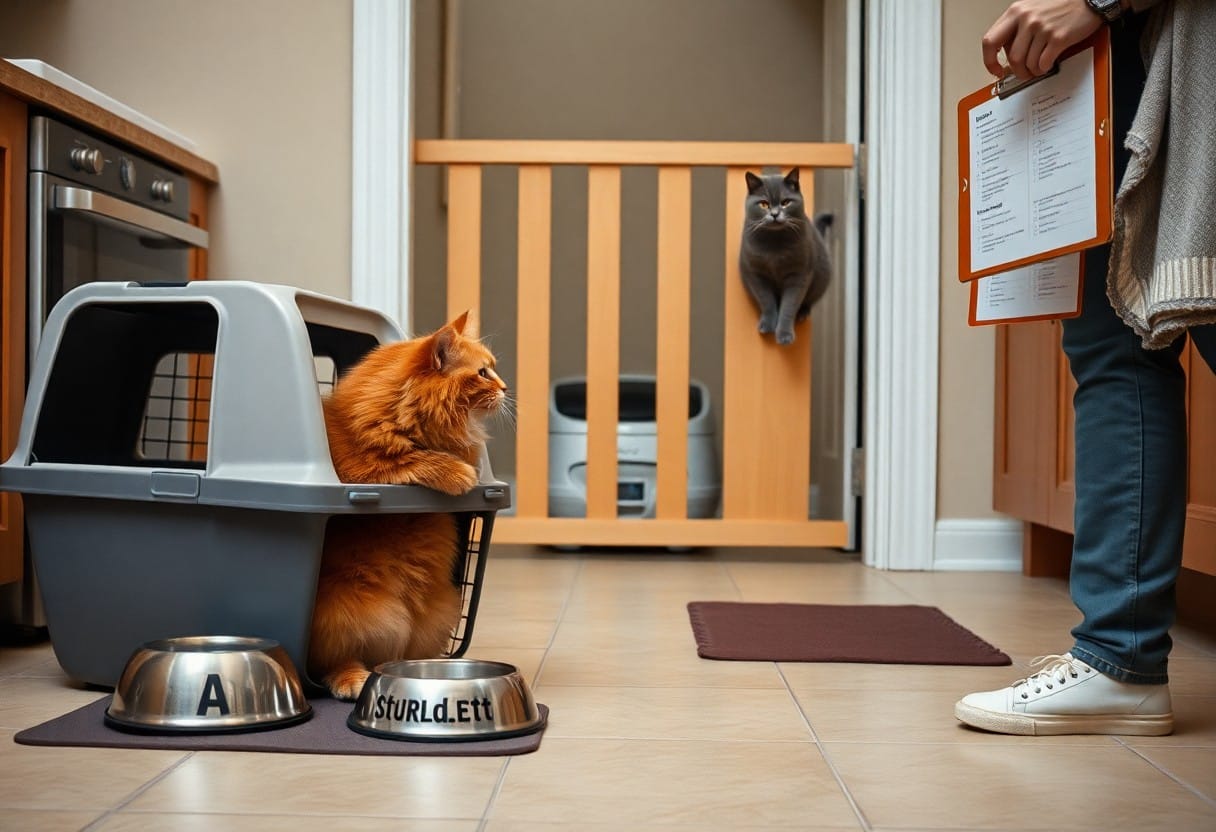
Schedule meal times, short play sessions, and calm handling so you create predictable patterns both cats can trust. Use identical bowls and separated feeding locations, and gradually move them closer as stress decreases with measured progress.
Maintain a log of feeding times, portions, and behavior around meals so you can spot tension early. If you detect growling, stiff postures, or guarding, stop the session and contact your veterinarian or behaviorist to prevent escalation.
The Scent and Sound Integration Phase
Scent and soft sounds help you ease both cats into each other’s presence; expose each to the other’s bedding and recorded purrs, watching for calm curiosity or signs of aggression that require a slower pace.
Techniques for Successful Scent Swapping
Swap towels and toys between cats daily so you let them inspect new scents; pause if you see hissing or intense staring, and reward gentle sniffing with treats to build positive links.
Site Swapping to Familiarize Environments
Rotate access to rooms so each cat explores the other’s territory with escape routes and high perches available; this reduces territorial responses and promotes neutral scent associations.
When you perform site swapping, start with short sessions-15-30 minutes-then lengthen exposure as both cats stay calm. Swap bedding, toys, and feeding stations so you create positive associations; keep multiple litter boxes and water in both areas. Watch closely for raised hackles or repeated chasing, and immediately separate cats if you observe escalating aggression.
Utilizing Pheromone Diffusers to Reduce Anxiety
Plug pheromone diffusers in shared zones to reduce arousal; you should run them continuously for several weeks and combine with scent and site swaps for the best effect, watching for reduced anxiety.
Place diffusers near entryways and common rooms, avoiding behind furniture; keep them on 24/7 and expect visible change in 2-4 weeks. Brands like Feliway target feline comfort and are safe and helpful, but they are not a cure-all; you should pair them with scent swaps and consult your vet for persistent aggression.
How-to Manage Controlled Visual Contact
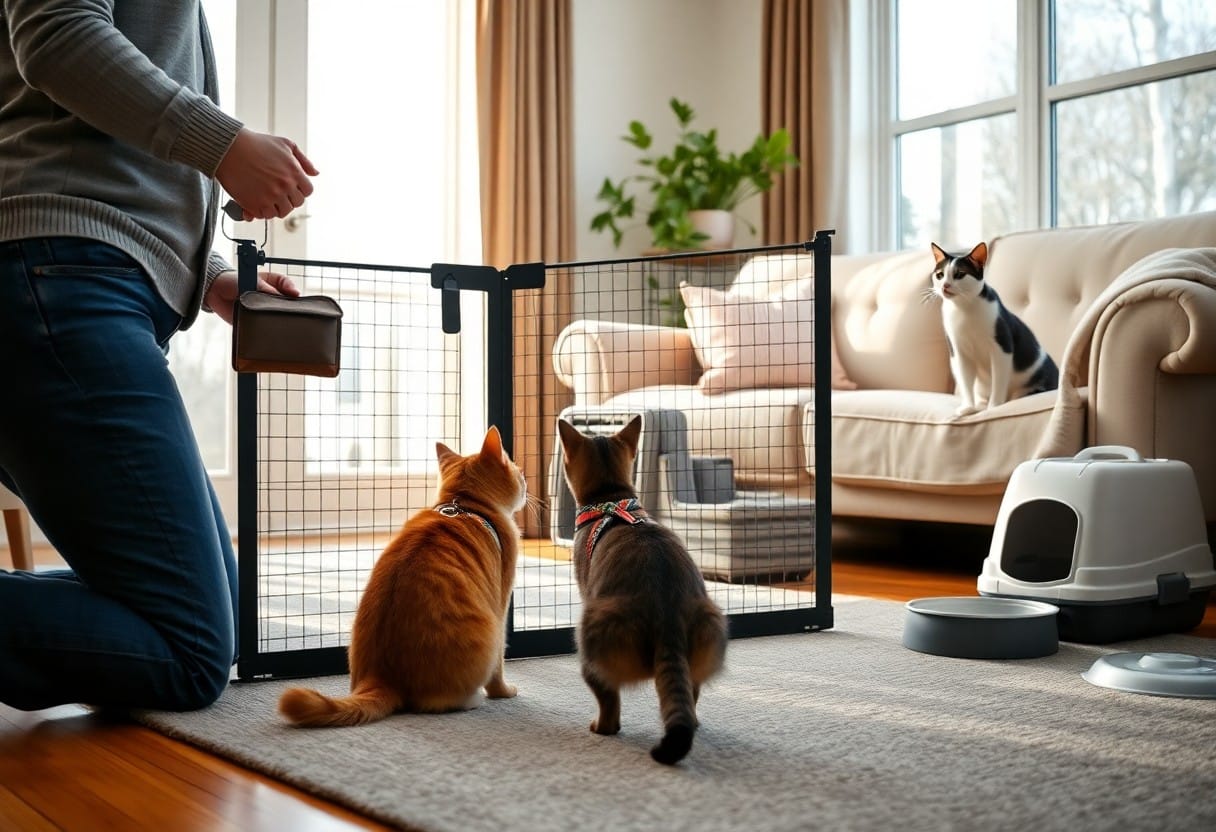
You can manage early visual contact by using doorways and screens for short, supervised viewings, keeping sessions under five minutes. Watch for hissing, stalking, or lunging and end before escalation; reward calm behavior with treats so both cats link sight with positive outcomes.
Utilizing Physical Barriers for Safe Observation
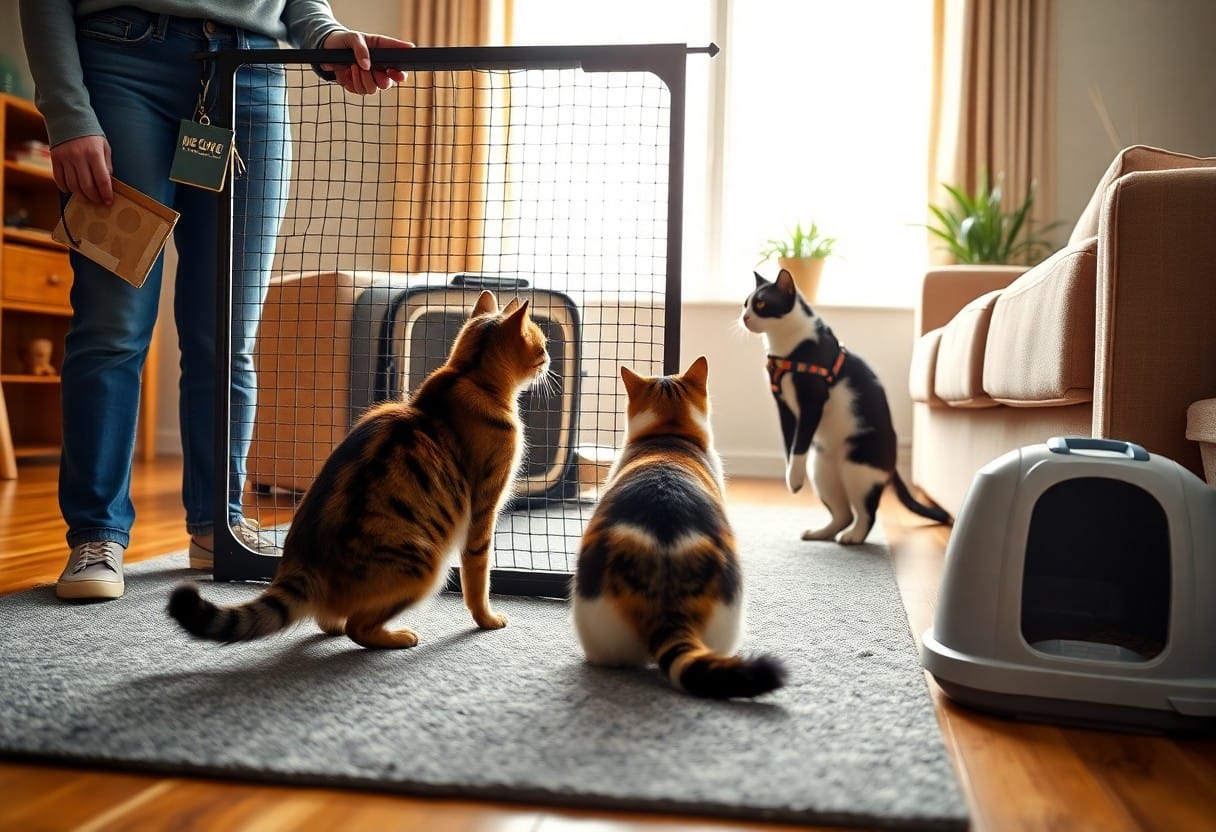
Gate or screen setups let you control distance while both cats observe safely; keep a clear escape route and supervise. Intervene at any sign of lunging, swatting, or prolonged hissing. Reward quiet curiosity with treats to reinforce calm, non-aggressive investigation.
Positive Reinforcement During Near-Door Interactions
During near-door sessions, give both cats treats for calm posture and brief attention shifts. Keep rewards immediate so you tie sight to positive reinforcement. Stop if you see stiff bodies, direct staring, or tail lashing to avoid escalation.
Offer high-value treats and soft praise when you both are near the door, gradually increasing exposure time only while cats remain relaxed. If one cat approaches calmly, reward immediately; if you see flattened ears, hair standing, or aggressive swatting, end the session and return to shorter, barriered exposures to rebuild trust.
Identifying Body Language Cues for Progression
Watch for relaxed ears, slow blinking, and loose tail movement as signs you can progress; pause if you see stiff posture, fixed stare, or tail thrashing. Use these cues to adjust session length and distance, rewarding moments of calm to encourage further positive contact.
Learn to read subtle signals: relaxed sniffing with loose posture shows curiosity, whereas direct staring, repeated swatting, or piloerection are clear warnings to separate them immediately. You should shorten sessions after any aggressive display and only extend exposure when you observe play bows, mutual sniffing, or relaxed grooming attempts.
Essential Tips for Supervised Face-to-Face Meetings
Keep meetings short and supervised, with you controlling distance, using calm tones and keeping escape routes open for both cats. Any escalation requires immediate separation and a slower reintroduction.
Begin with short, leashed encounters or through a gate so you can reward calm behavior; you should prioritize safety and a slow timeline.
Using Distraction Techniques and Interactive Play
Distract both cats with simultaneous treats and interactive play, keeping sessions brief so you build positive associations without pressure.
Offer parallel wand-toy sessions and food puzzles so attention shifts away from direct staring; you can alternate rewards when both remain calm, reinforcing friendly responses and reducing chase risk.
Managing Hissing and Territorial Posturing
Watch for hissing, flattened ears, puffed fur, or tail lashing and immediately increase separation while you avoid forcing contact.
Reduce tension by providing vertical escape routes and separate litter, food, and resting spots; you can add pheromone diffusers and short, supervised reintroductions to prevent bites and long fights.
Troubleshooting Common Behavioral Setbacks
Spot subtle signs like prolonged hissing, avoidance, or sudden aggression; you should pause the introduction and give both cats time. Offer separate safe spaces, monitor interactions closely, and resume steps only when both cats show calm body language for multiple days.
Knowing When to Revert to Previous Introduction Stages
Pause reintroductions if either cat shows repeated hissing, chasing, or any signs of injury. You should move back to scent swapping, separate feeding, and short visual meetings until both display relaxed eating and play cues for several days.
Addressing Resource Guarding and Bullying
Separate high-value items and provide multiple feeding stations, litter boxes, and resting spots so you reduce tension; watch for persistent blocking or swatting and intervene early to protect the bullied cat.
Intervene by rearranging the environment: add extra bowls, litter boxes (one per cat plus one), elevated perches, and locked-off hideaways so you remove scarcity. Use supervised meal times, reward calm sharing, and redirect attention with play. If you observe escalating fights, bleeding, or severe stress, separate immediately and seek veterinary or behaviorist advice.
When to Consult a Feline Behaviorist
Consider professional help when aggression persists despite structured steps, when either cat shows chronic anxiety, or when conflicts cause injury; a behaviorist can design a tailored plan and help you implement desensitization safely.
Engage a certified feline behaviorist if you see repetitive targeting of one cat, mounting fear responses, or if medication may be needed; they will assess for medical causes, observe interactions, and teach you reward-based strategies, counterconditioning, and stepwise reintroductions to reduce risk of escalation and improve long-term coexistence.
Summing up
Upon reflecting, you must proceed with patient, staged introductions, scent exchanges, clearly separated resources, and consistent positive reinforcement so you reduce tension and guide your resident and new cat toward stable coexistence.
Q: How long should the introduction process take and what stages should I follow?
A: The process typically takes anywhere from one week to several months depending on the cats’ ages, temperaments, and prior social experience. Begin with full separation by keeping the new cat in its own room with food, water, a litter box, toys, and hiding places for several days. Swap scents by exchanging bedding and rubbing a towel on one cat then the other to build familiarity without face-to-face stress. Allow controlled visual contact using a cracked door, baby gate, or carrier; keep sessions short and supervised while gradually increasing duration as both cats remain calm. Progress to supervised face-to-face meetings in a neutral, uncluttered area with escape routes and vertical perches. Move toward full integration only when both cats eat near each other, show relaxed body language, and display little or no aggression during interactions.
Q: What signs of stress or aggression indicate I should slow down or seek professional help?
A: Common signs of stress or aggression include persistent hissing, growling, swatting, chasing that leads to injury, flattened ears, puffed-up fur, prolonged hiding, marked changes in appetite, or inappropriate elimination outside the litter box. If these behaviors appear after a new exposure, revert to the previous step for several days and resume introductions more slowly. If one cat relentlessly corners or injures the other, separate them immediately and consult a veterinarian to rule out pain or illness as triggers. If medical issues are cleared and aggression continues, consult a certified cat behaviorist for a tailored plan that may include behavior modification and safe management strategies.
Q: How can I encourage positive associations and reduce competition for resources?
A: Provide one litter box per cat plus one extra, spaced in different parts of the home to reduce competition. Offer separate feeding areas and scheduled mealtimes so cats associate positive experiences with each other’s presence rather than guarding food. Increase vertical territory with cat trees, shelves, and perches to give cats options for retreat and observation. Use interactive play sessions and high-value treats to build positive associations during or shortly after controlled visual contacts. Avoid punishing aggressive behavior; interrupt escalation with a toy or sound and remove the cats to their safe rooms to reset the introduction pace. Monitor body language and adjust resource placement, enrichment, and interaction times until both cats display relaxed behavior and normal social interactions.