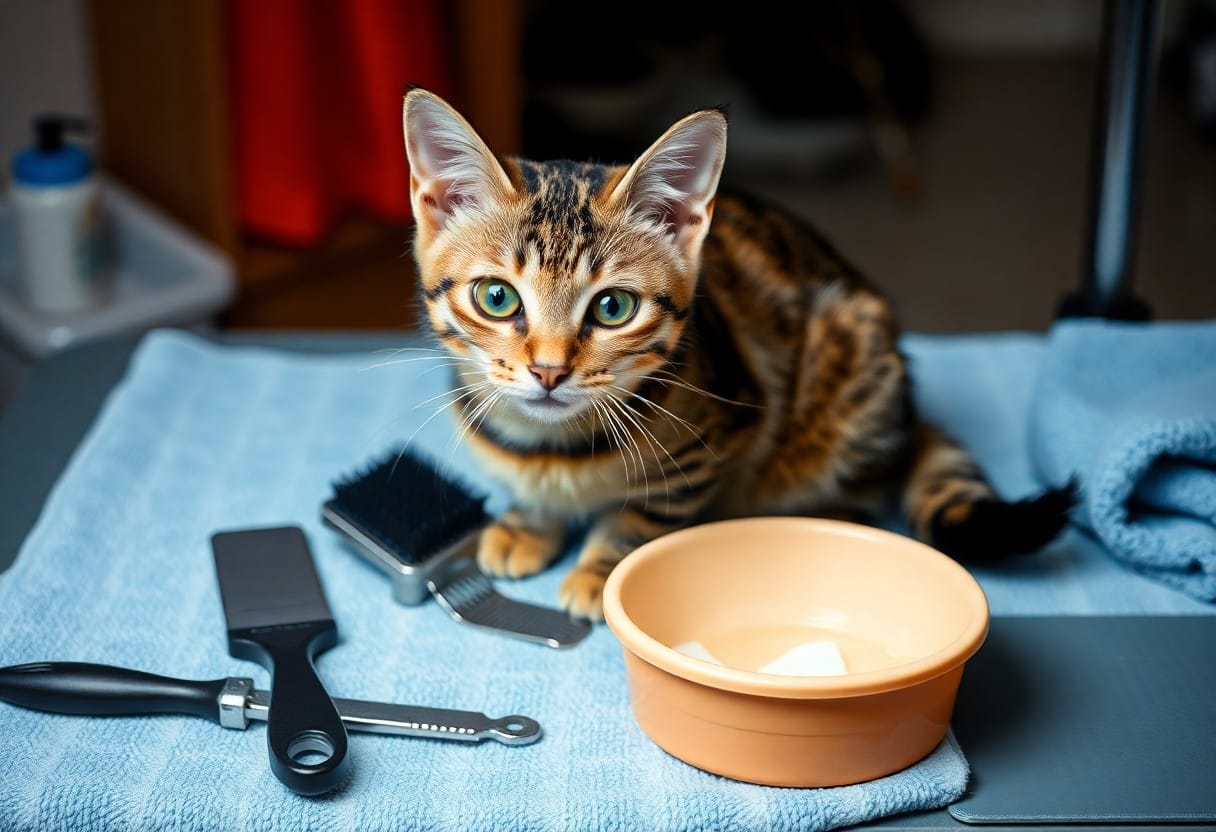
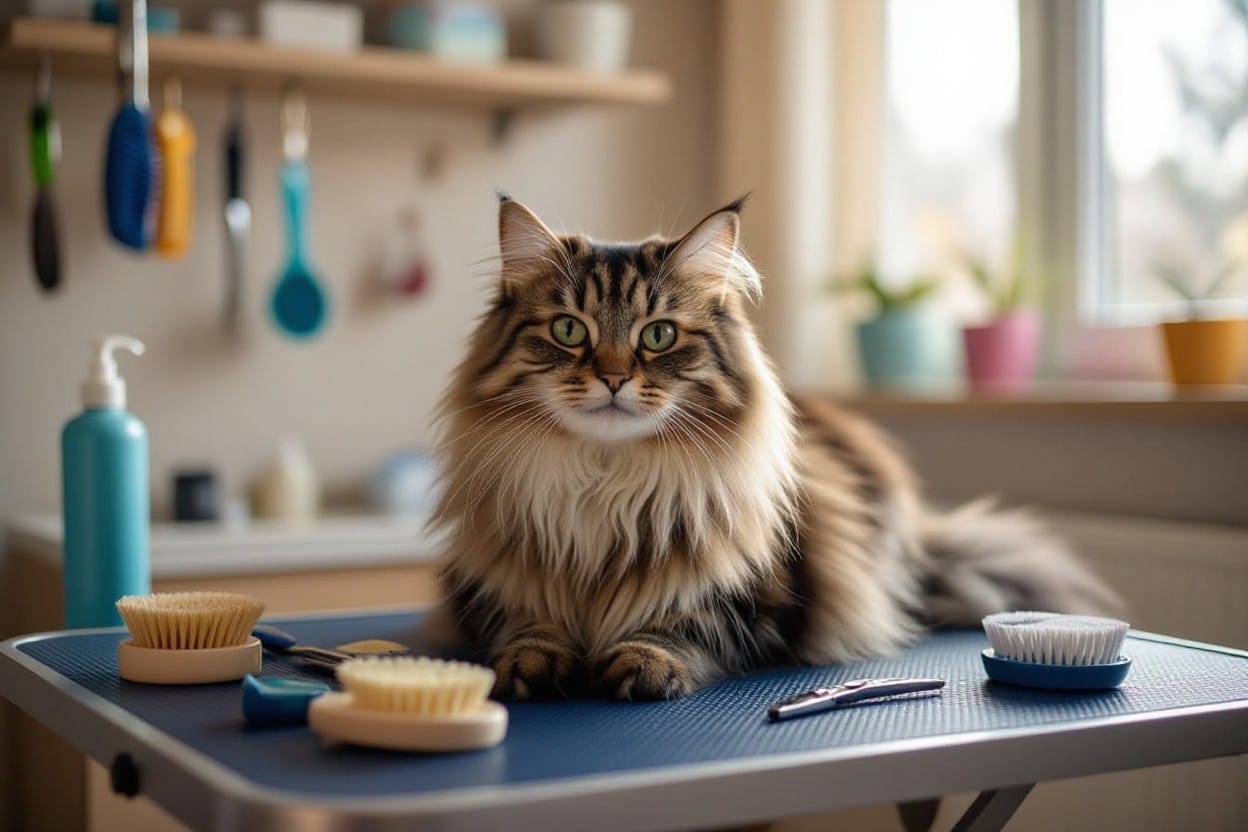
Most cats respond better to grooming when you approach the session slowly, calmly and with positive reinforcement. You will set the tone by choosing a quiet room, soft lighting and a non-slip surface. Gather your supplies: a brush or comb suitable for your cat’s coat, deshedding tool if needed, blunt-tipped nail clippers, a towel, mild cat shampoo (only if bathing), styptic powder for emergencies and treats you can use immediately.
Step 1 – Acclimate: Spend short sessions getting your cat used to each tool. Let your cat sniff the brush and reward calm behavior. Keep sessions under five minutes at first and gradually increase duration as your cat relaxes.
Step 2 – Brushing: For short-haired cats, use gentle strokes in the direction of hair growth and focus on high-shed areas like the neck and base of the tail. For long-haired cats, start with a wide-tooth comb to detangle, then use a slicker brush to remove loose undercoat. Hold the skin taut near mats and work from the edges inward; if a mat resists, cut or seek professional help to avoid pain.
Step 3 – Bathing (only when necessary): Fill a sink with a few inches of warm water, support your cat securely, wet the coat quickly, apply a tiny amount of cat shampoo and rinse thoroughly. Avoid the eyes and ears. Wrap your cat in a towel and blot dry; use a low-heat dryer only if your cat tolerates it.
Step 4 – Nail care: Gently press the paw to extend the claws and clip only the transparent tip, avoiding the pink quick. If you clip the quick, apply styptic powder to stop bleeding. Keep sessions short and offer treats after each paw.
Step 5 – Ears and eyes: Wipe outer ears with a vet-approved wipe or a cotton ball dampened with a recommended solution; do not insert anything into the ear canal. Use a separate damp cotton pad to gently remove discharge from the eyes.
Step 6 – Handling stress: If your cat becomes agitated, pause and try again later. Use a calming voice, short strokes and frequent treats. Consider a pheromone diffuser or consult your vet about short-term anti-anxiety options for difficult cases.
Maintenance: Brush high-shed cats several times weekly and long-haired cats daily. Trim nails every 2-4 weeks and inspect skin, ears and coat regularly. Seek professional grooming or veterinary care for persistent mats, behavioral resistance or health concerns.