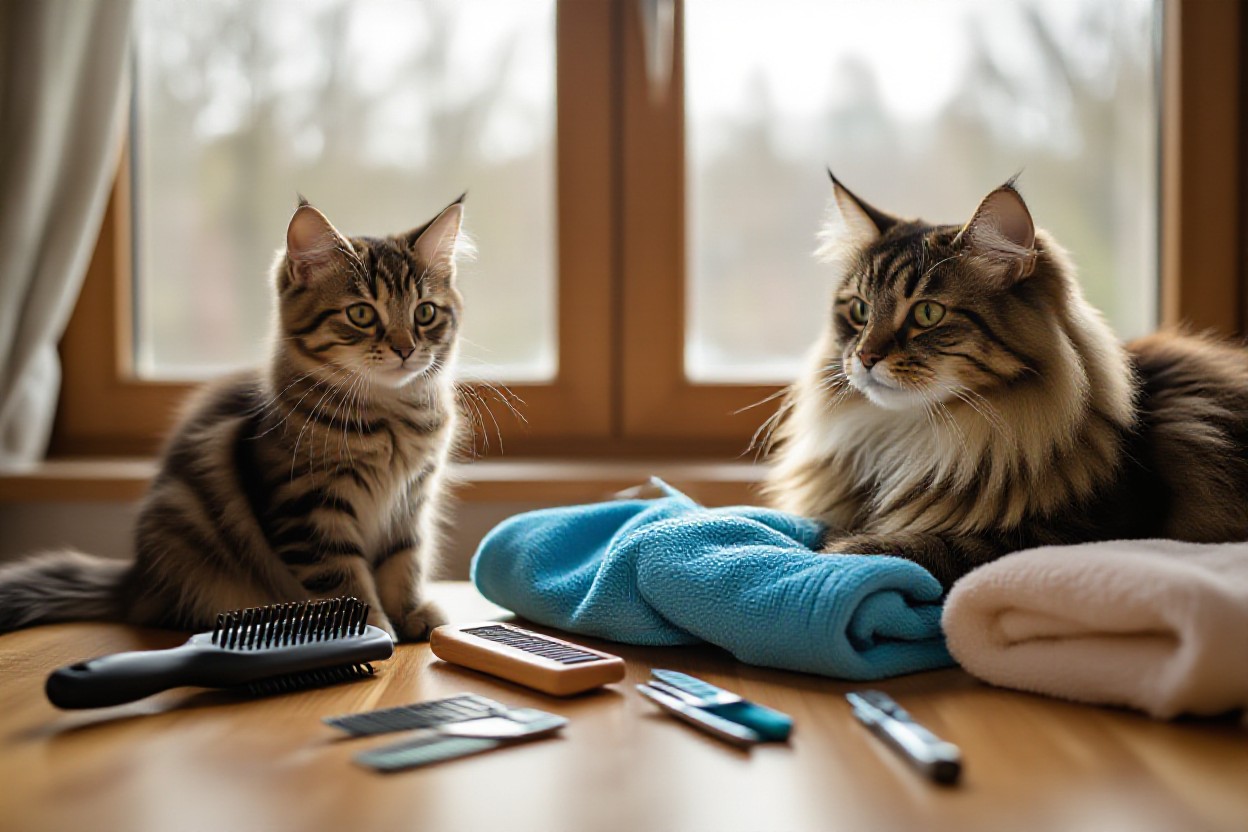
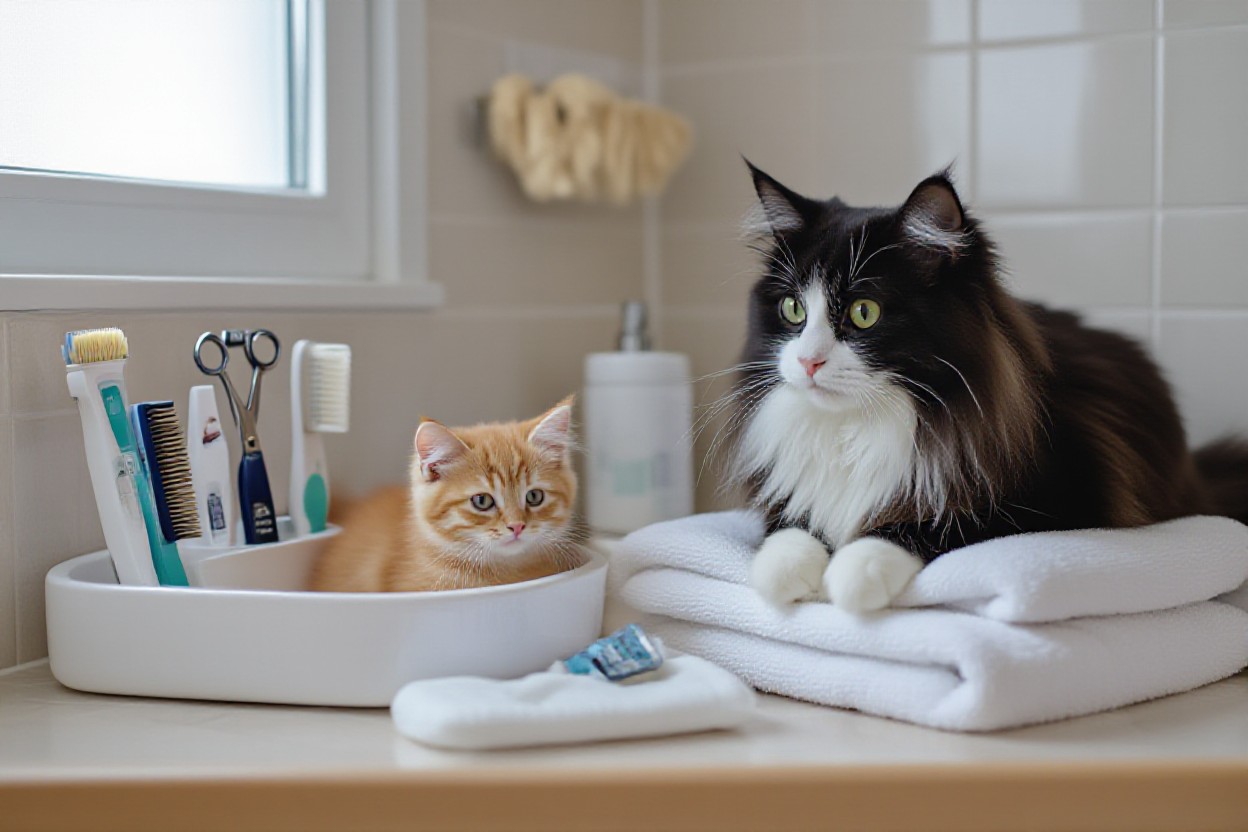
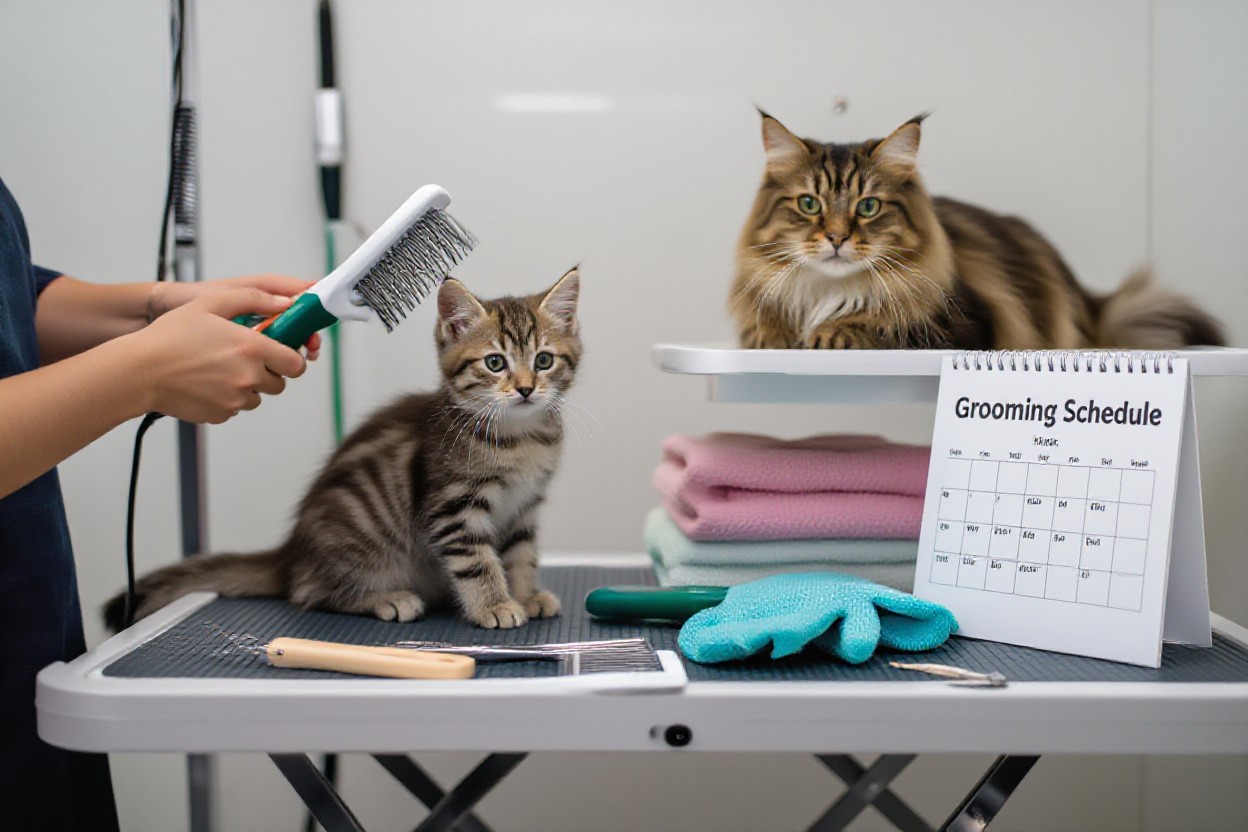
Grooming isn’t just about fluffing up your pet – it’s actually the perfect time to spot hidden health issues before they become big problems. Figuring out the best tools to have for grooming house kitten fluff versus thick adult fur can be confusing, but getting it right prevents painful matting. You might even want a dedicated grooming table for cats at home to save your back. House cat grooming doesn’t have to be a battle if you have the right kit, so let’s get you set up with gear that makes the whole thing safe and stress-free.
The Basics: What Every Cat Owner Should Have
Ever tried to groom a wiggling furball without the right gear? It usually ends in scratches and half-finished jobs. You don’t need a full salon setup, but having a dedicated kit changes everything.
We’re talking about the absolute vitals here – the stuff that turns a chaotic wrestling match into a calm bonding session. These are the best tools to have for grooming house kitten or adult cat, focusing on safety and speed.
Brushes and Combs – Finding the Right Fit
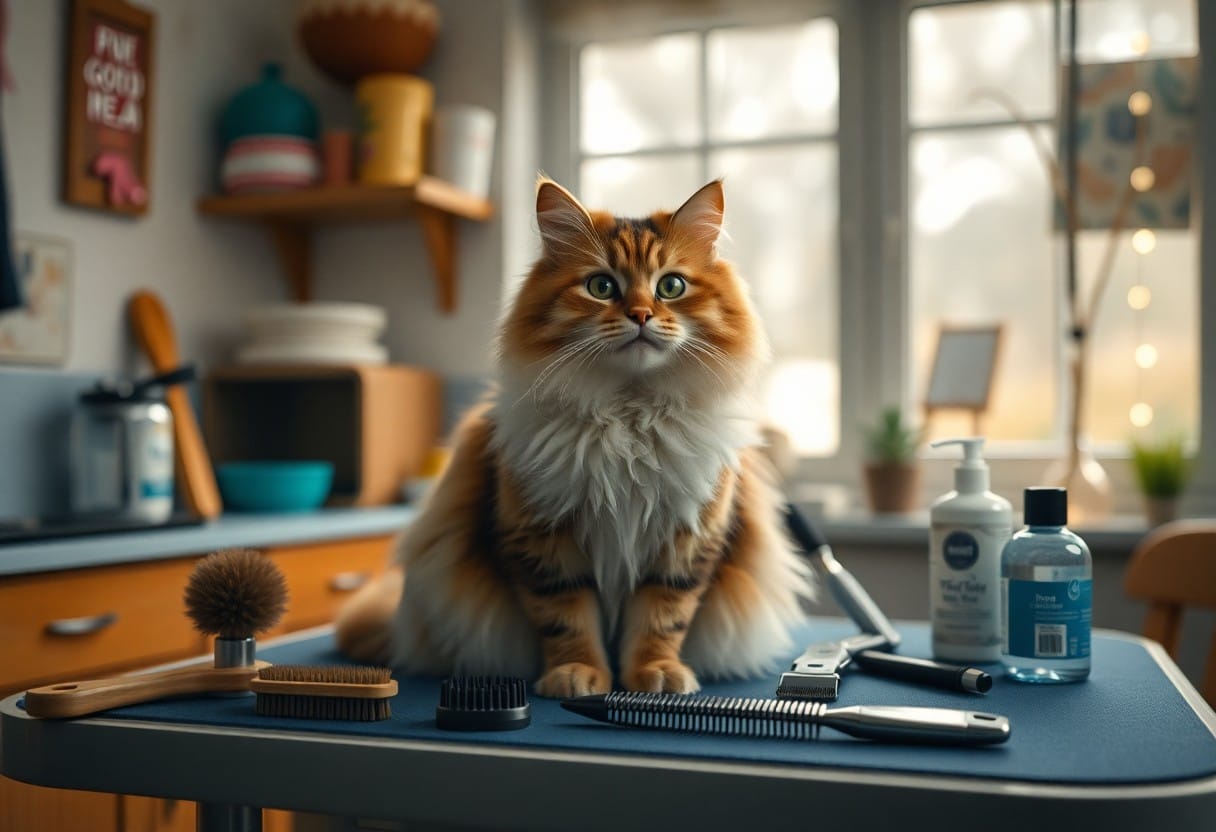
Does your cat look like a fluffy cloud or a sleek panther? That answer determines your weapon of choice. For long-haired breeds like Persians, a metal greyhound comb is non-negotiable for getting down to the skin to prevent mats.
But if you’re dealing with a shorthair, a simple rubber curry brush or a soft bristle brush works wonders to remove loose fur and stimulate natural oils. It’s not one-size-fits-all, so check the coat type before buying.
Nail Clippers – Keeping Those Claws in Check
Why are regular human nail clippers such a bad idea? They tend to crush the nail rather than slice it, which can cause pain and splitting. You really want scissor-style clippers specifically designed for cats.
They give you way more control and visibility than the guillotine style, especially when you’re working with tiny kitten claws. A sharp stainless steel pair will slice through the nail tip like butter, making the whole process faster for everyone involved.
Accidents happen even to the pros, so what’s your backup plan if you nip the quick? You need to have styptic powder or cornstarch within arm’s reach before you even start clipping. This stops bleeding instantly if you cut too short.
Also, don’t try to do all 18 claws in one sitting if your cat is stressing out. Doing just two or three nails a day is perfectly fine. It keeps the experience positive and prevents your cat from associating the clippers with being restrained for twenty minutes straight.
Wipes – Quick Clean-Ups Made Easy
Who has time for a full bath every time their cat gets a little dusty? Hypoallergenic grooming wipes are a lifesaver for spot cleaning dirty paws or messy bottoms. Look for fragrance-free options since cats are incredibly sensitive to strong scents like lavender or citrus.
You can grab a pack formulated with aloe or oatmeal to soothe itchy skin while you clean. They are basically the dry shampoo of the cat world.
Be super careful around the face, though. You should never use general body wipes near the eyes unless the package specifically says it’s safe. For kittens with tear staining or eye discharge, use a separate, sterile wipe or a warm damp cloth to avoid infection.
And check the label – alcohol and vital oils are toxic to cats and should never be in your grooming wipes. If the ingredients list looks like a chemical lab, put it back on the shelf.
Non-Slip Mats – Grooming Without the Slip and Slide
Ever notice how your cat panics the second their paws start sliding on a smooth table? Traction equals confidence. Placing a rubber yoga mat or a silicone grooming mat under your cat gives them the grip they need to feel secure.
This simple addition transforms any flat surface into a safe grooming table for cats at home. If they feel stable, they’re 50% less likely to try and bolt.
Don’t just use an old towel – claws get stuck in the loops and the whole thing slides around anyway. A proper non-slip mat stays put. Plus, cleaning up is way easier.
Fur sticks to the rubbery surface instead of floating all over your kitchen, so you can just wipe the hair off into the trash when you’re done. It defines the “grooming zone” for your pet, helping them understand that when they’re on the mat, it’s time to sit still.
When You’ve Got a Fluffball: Tools for Long-Hair and High-Shedding Cats
Dematting Tools – Untangling the Madness
Mats can tighten against the skin within 48 hours if moisture gets trapped, creating painful tension points for your pet. You’ll want a stainless steel dematting rake with serrated edges because it cuts through the knot without pulling out live hair. Always keep the blades facing away from your cat’s skin to avoid nasty nicks while you work. It’s strictly for the tough stuff behind ears or under armpits. If the mat is hard as a rock, put the tool down and call a pro because scissors are too dangerous for home use due to how easily cat skin lifts and cuts.
Specialized Brushes – What’s Got Your Cat’s Coat Covered?
Long-haired breeds like Maine Coons have a double coat that sheds differently than a domestic shorthair. You need a slicker brush with extra-long pins to actually reach the skin – otherwise, you’re just brushing the surface. If you just brush the top layer, you’re leaving the undercoat to rot and mat underneath. A simple pin brush won’t cut it here. Get something that grabs the loose fur before it ends up on your sofa. It’s one of the best tools to have for grooming house kitten fluff before it turns into adult matting.
Silicone or rubber curry brushes act like a magnet for that fine, flyaway dust and dander that wire brushes miss. They’re fantastic for finishing up a session on a grooming table for cats at home, giving the coat a glossy shine by distributing natural oils. Plus, most cats actually enjoy the massage-like feeling, which helps if your kitty is getting cranky. Avoid Furminators on single-coated cats like Turkish Angoras though – they can actually cut the guard hairs and damage the coat texture permanently. You want to remove the dead stuff, not strip the healthy protection.
Vacuuming Essentials – Cleaning Up the Shedding Disaster
One shedding season can result in enough loose fur to knit a whole second cat. Standard vacuums often clog instantly with pet hair, so look for a grooming kit with a vacuum attachment that sucks the hair straight from the brush. It keeps the mess off your floor entirely. Noise is the biggest enemy here. Start with the lowest setting to avoid terrifying your pet. If you’re doing house cat grooming regularly, this saves you hours of lint rolling later.
Dander particles are microscopic – about 1/10th the size of a dust mite – and they stick to everything during a groom. That’s why a vacuum with a sealed HEPA filtration system is non-negotiable if you have allergies. It traps 99.97% of those particles instead of blowing them back into your face. Don’t rely solely on robot vacuums for the heavy lifting after a brushing session; they usually just push the hair clumps into corners. You need strong suction power immediately after brushing to capture the airborne fluff before it settles into your carpets and furniture fabrics.
Kittens Need Love Too: Safe and Easy Grooming Tools for Your Little Babe
Ever tried brushing a wiggly jellybean? That’s basically what grooming a kitten feels like. While adult tools might technically work, they’re usually overkill for a 2-pound furball. You want to build positive associations now, so having the best tools to have for grooming house kitten setups is actually about safety and comfort, not just detangling. Start small – literally – and you’ll save yourself a headache later.
Smaller-Sized Brushes – Perfect for Tiny Tails
Why use a shovel when you need a spoon? Using a standard slicker on a tiny body is awkward and can actually scare them. You’re better off grabbing a kitten-specific brush or even a toothbrush for those tricky spots around the face. These smaller tools give you way more control – especially if you haven’t invested in a grooming table for cats at home yet – preventing you from accidentally scraping sensitive areas like their armpits or belly.
Softer Bristles – Gentle Grooming for Delicate Skin
Are you worried about scratching that pink, delicate skin? You should be. A kitten’s coat isn’t fully developed until about 6 months, meaning there’s less fur to protect the skin from hard metal tines. Swap out the heavy-duty rakes for soft boar bristle brushes or rubber curry combs. These gently massage the skin rather than scratching it, turning house cat grooming into a bonding session instead of a battle.
It’s not just about avoiding scratches, though. Soft bristles actually help distribute natural skin oils, which is crucial for that glossy coat development. If you use something too harsh right now, you risk creating a “brush shy” cat who runs away the second the grooming kit comes out. Stick to tools that feel like a mother cat’s tongue – specifically rubber mitts or soft nylon brushes – to mimic that nurturing sensation they crave.
Nail Care for Kittens – Making It a Breeze
Does the thought of cutting those needle-sharp claws make your hands shake? It’s the most nerve-wracking part for new owners. Forget the guillotine-style trimmers for now; they are way too bulky for tiny paws. You need scissor-style kitten clippers with a small safety stop. These allow you to see exactly where the quick is – that pink blood vessel inside the nail – ensuring you don’t cut too deep and cause bleeding.
To get a clean cut, you have to gently press the paw pad to extend the claw, since kittens are masters at retracting them. Since their nails are so translucent, spotting the quick is actually easier than on adults, but they wiggle a lot more. Wrapping them in a “purrito” (towel wrap) can help keep them still if you don’t have a helper. Just clip the very white tip – don’t get greedy – and follow up immediately with a high-value treat so they learn that snip equals snack.
Setting Up Your At-Home Grooming Station: What You Really Need
Choosing the Right Space – Where the Magic Happens
You might think the living room couch is fine, but trust me, your back will hate you after five minutes of wrestling a wiggly feline. Instead, pick a waist-high surface like a utility counter or a sturdy desk where you have total control without hunching over. While a professional grooming table for cats at home with a non-slip mat is the gold standard, a yoga mat on top of your washing machine works in a pinch to provide traction. Just make sure the lighting is bright enough to see those tiny quicks when trimming claws – shadows are dangerous here.
Organizing Your Tools – Keep It Neat and Efficient
Nothing ruins a session faster than realizing the slicker brush is across the room while you’re holding a half-brushed, annoyed Tabby. You need to keep your best tools to have for grooming house kitten or adult cat within arm’s reach but – and this is big – out of the cat’s immediate strike zone. A simple plastic shower caddy or a specialized grooming tote keeps everything upright and ready to grab the second you need it. If you have to let go of the cat to find a comb, the session is basically over.
If you’re getting serious about house cat grooming, consider wearing a grooming apron with deep pockets. It sounds like overkill until you realize it keeps your shears and combs instantly accessible without you having to turn your back on your pet. Plus, it protects your clothes from the inevitable fur explosion. Never leave sharp shears or clippers lying loose on the table where a sudden paw swipe could knock them onto your foot or the cat’s tail. Keep a small trash bin right next to the table too, so you can dump hair clumps immediately rather than letting them pile up and distract your kitty.
Creating a Cat-Friendly Vibe – Making Grooming a Joy, Not a Chore
Cats are sensory sponges, so if the room feels stressful, they’ll bolt before you even lift the brush. Start by closing the door to block out barking dogs or loud TV noises that might trigger their fight-or-flight response. Plug in a synthetic feline pheromone diffuser about 20 minutes before you start; it’s like a spa scent for cats that signals safety. You want this space to feel like a treat zone, not a vet clinic.
Speaking of treats, distraction is your absolute best friend here. Smear a little Churu or wet food on a silicone lick mat suctioned to the table surface. It keeps their head down and tongue busy while you work on the back end. Some owners swear by playing “music for cats” – yes, that’s a real thing on Spotify – which uses frequencies that mimic purring. It might sound weird, but if it buys you an extra five minutes of calm brushing, it’s worth it. End every single session on a high note, even if you only got one nail clipped, so they associate the grooming station with good things.
The Lowdown on Grooming Frequency: How Often Should You Brush?
You might assume your cat’s rough tongue is the only tool they need, but relying solely on self-grooming is actually a myth that leads straight to hairball city. While cats spend nearly half their waking life cleaning themselves, they can’t digest all that loose hair safely. You need to step in to help. Generally, aim to brush at least once a week, though the exact timing totally depends on coat type and shedding season. A consistent schedule prevents painful mats and keeps your furniture from looking like it grew a sweater.
Short-Haired Cats: A Quick Guide to Grooming
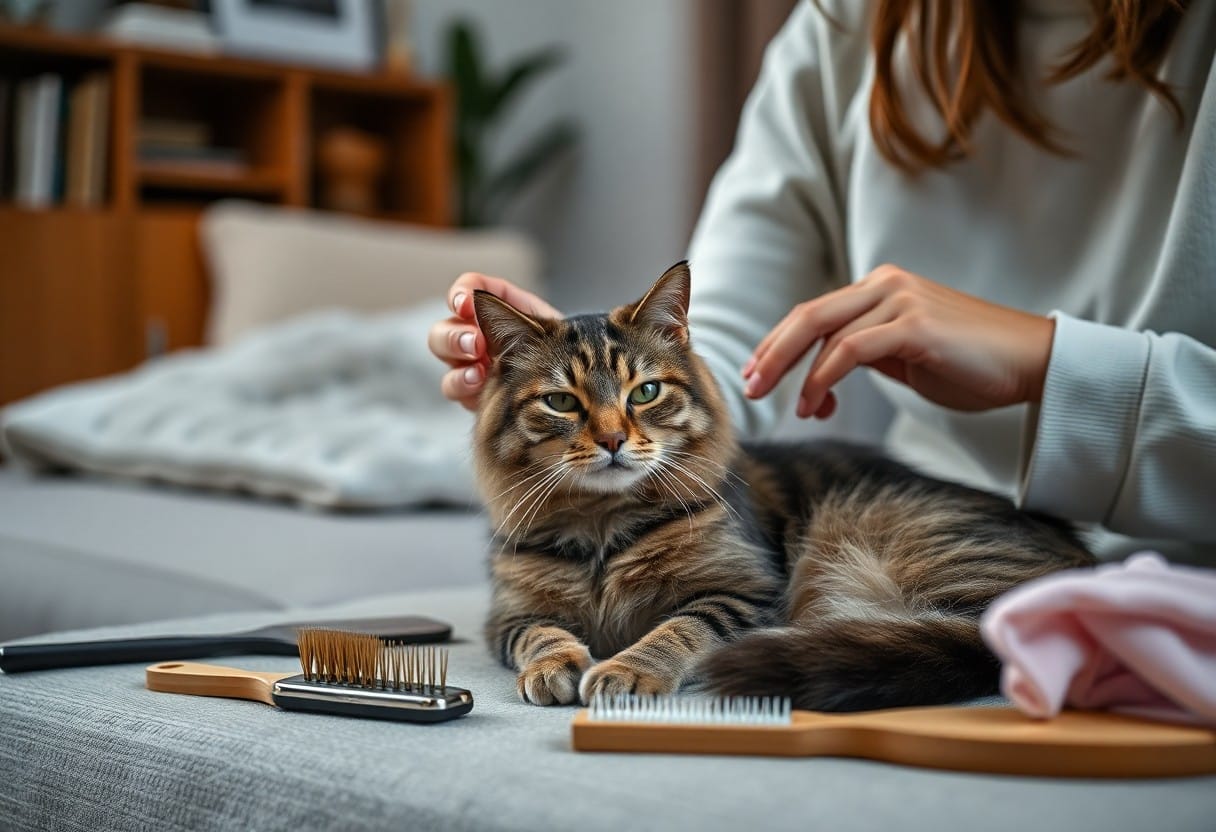
Just because you can’t see the tangles doesn’t mean they aren’t forming close to the skin. For short-haired breeds like Bengals or Domestic Shorthairs, a good once-a-week session usually does the trick. You want to focus on removing dead undercoat before it ends up on your black pants. Using a rubber curry brush or a glove makes this super easy and feels like a massage for them. It’s the cornerstone of basic house cat grooming maintenance that keeps their coat shiny without overdoing it or irritating their skin.
Long-Haired Cats: Keeping Up with the Mantle of Fur
Ignoring a Persian or Maine Coon’s coat for even a few days is basically asking for trouble. These guys require daily attention – or at least every other day – to prevent those nasty, tight mats that form behind the ears and under the armpits. You’ll want to use a long-toothed comb to get all the way down to the skin. If you skip this, you might end up needing a professional shave down later. Daily brushing is the only way to stay ahead of the shed and keep the skin breathing.
Dealing with that much fluff can be a workout, so setting up a dedicated station helps a ton. Investing in a small grooming table for cats at home saves your back and keeps your fluffy friend contained during the process so they don’t wander off. Pay extra attention to the “trousers” and belly fur, as these areas trap debris like kitty litter. If you find a mat, never use scissors to cut it out close to the skin – cat skin is paper-thin and cuts easily. Use a mat splitter or clippers instead.
Kittens: Establishing Good Habits Early On
Start messing with their paws and ears the day you bring them home, even if they don’t really need grooming yet. You aren’t doing this for the fur right now – you’re doing it so they don’t shred your hands when they’re fully grown adults. Keep sessions short, maybe two minutes tops. The best tools to have for grooming house kitten sessions are soft bristle brushes that won’t scratch their delicate skin. Make it a game with plenty of treats so they associate the brush with good vibes only.
You have a tiny window of opportunity called the socialization period, and once it shuts, convincing a cat to like grooming gets way harder. Touch their toes, check their teeth, and comb their belly while they are sleepy and relaxed. If they start biting the brush, stop immediately – don’t let it become a wrestling toy. You want to normalize the feeling of being handled on a table or your lap. By making this routine boring and predictable now, you’re setting yourself up for stress-free grooming for the next fifteen years.
What’s the Cost of Grooming Tools? Are They Worth It?
Professional grooming can easily run you $50 to $90 per session depending on where you live, so building a kit for house cat grooming pays for itself almost immediately. You really don’t need a second mortgage to keep Fluffy mat-free. While the initial setup might pinch your wallet a tiny bit, the long-term savings are massive compared to monthly salon trips. Plus, having the best tools to have for grooming house kitten means you catch issues early, saving on vet bills too.
Budget-Friendly Options – Grooming Without Breaking the Bank
You can absolutely start small. A basic stainless steel greyhound comb costs less than a fancy latte – usually around $5 to $8 – and it’s practically indestructible. Even a simple rubber curry brush for short-haired cats can be found for under ten bucks. You don’t need a motorized grooming table for cats at home right away; a sturdy kitchen table with a non-slip yoga mat works just fine for beginners. Focus on basic functionality over brand names when you’re starting out.
Investing in Quality – When Cheaper Isn’t Better
Plastic combs snap and cheap clippers snag, turning a bonding session into a wrestling match. If you’re buying nail trimmers, spending an extra $10 for high-carbon steel means a clean cut instead of a crushed nail that splits later. The same goes for slicker brushes; cheap bristles can scratch sensitive skin. It’s better to buy one high-quality tool that lasts a decade than five cheap ones that break or hurt your cat.
Think about your own hands too – ergonomic handles on pricier tools prevent cramping during long de-shedding sessions. When you pick up a professional-grade slicker brush, the pins are usually polished and soft-tipped, gliding through the coat rather than raking the skin. I’ve seen cheap knockoffs with sharp, unfinished edges that actually cause “brush burn” on cats. And for those considering electric clippers for mats, a $150 unit stays cool and quiet, whereas the $30 bargain bin version gets hot enough to burn skin in minutes and sounds like a lawnmower. Your cat knows the difference.
Where to Find the Best Deals – Smart Shopping Tips
Big box pet stores aren’t your only option – and they’re often the most expensive. Online marketplaces often bundle items, like a comb and scissor set, saving you about 20%.
Check online grooming supply specialty stores for bulk discounts.
Wait for holiday sales to snag a grooming table for cats at home.
Look for “open box” deals on expensive house cat grooming electronics.
Any discount code you find is money better spent on treats.
Don’t ignore the professional show dog/cat vendor sites; they look like they were built in 1999 but the prices for professional gear are often lower than Amazon. Signing up for newsletters from brands like Chris Christensen or Andis can net you a 15-20% off welcome code. Also, keep an eye on local marketplace listings – sometimes people buy high-end gear, use it once, and sell it for half price.
Set price alerts for the best tools to have for grooming house kitten kits.
Join breed-specific forums where members sell used house cat grooming gear.
Buy shampoo concentrates instead of ready-to-use bottles to save money long-term.
Any extra cash saved here can go straight into the “emergency vet fund” jar.
How Often Should You Replace Your Grooming Tools?
Most people wait until a handle snaps in half to buy a replacement, which is way too late. You actually need to swap out items like nail trimmers every six months to a year depending on how many cats you have. Dull blades crush the nail instead of slicing it clean – ouch. Even high-quality stainless steel combs develop microscopic burrs over time that snag fine kitten fur. So if you’re asking yourself when you bought that slicker brush and can’t recall, it’s probably time for an upgrade.
Signs Your Tools Are Worn Out – Don’t Risk It
Rust is the obvious enemy here, but the real silent killer is bent bristles on slicker brushes. Run the brush over your own inner forearm first. Scratches? That’s exactly what you’re doing to your cat’s skin. Also, watch for nail clippers that require extra force or leave a ragged edge – that’s a sure sign the blade is shot. Using damaged gear isn’t just frustrating; it turns a simple house cat grooming session into a painful ordeal that makes your pet hate the grooming table.
Maintaining Your Tools – Simple Steps for Longevity
Water is actually the worst thing for your shears if you don’t dry them instantly. You’ve got to wipe down blades with rubbing alcohol to sanitize without causing rust. For brushes, use a comb to pull out the trapped fur after every single session – don’t let it build up. A drop of clipper oil on the hinge of your trimmers keeps the action smooth and prevents jamming. Treating your kit like surgical instruments makes them last years longer.
Storing everything is just as big of a deal as cleaning. Chucking expensive shears into a junk drawer allows them to bang against other metal, nicking the blades. Get a dedicated roll-up pouch or a small tackle box to keep your best tools to have for grooming house kitten organized and separated. It sounds obsessive, but keeping those edges sharp means you spend less money replacing gear and less time fighting through mats.
Eco-Friendly Choices – Going Green with Grooming Supplies
Plastic handles take centuries to decompose, which is wild when you think about how often we toss them. Bamboo brushes are a solid alternative because they’re durable, lightweight, and naturally antibacterial. You can also ditch the disposable synthetic wipes for compostable grooming wipes or just a good old-fashioned washcloth. Making your house cat grooming routine sustainable doesn’t mean sacrificing quality – often the natural materials actually feel better in your hand anyway.
Buying cheap plastic junk is the least green thing you can do. It breaks, you toss it, you buy more. Investing in one high-end metal comb or a professional-grade grooming table for cats at home reduces waste because you aren’t replacing it every few months. It’s the “buy nice or buy twice” rule. Plus, a lot of eco-brands are now using recycled ocean plastics for handles, so you’re actively helping clean up the planet while keeping your kitty’s coat fresh.
Sterilizing Your Tools: Do You Really Need to?
Ringworm spores can survive on grooming surfaces for up to 18 months, which is pretty terrifying if you think about it. You might assume that just rinsing off the fur is enough, but microscopic bacteria love hiding in the deep crevices of your slicker brush. If you skip this step, you aren’t just grooming – you’re potentially spreading infections between your pets or reintroducing old bacteria to clean skin. Even for a single house cat, cross-contamination from a previous grooming session can turn a tiny scratch into a nasty hot spot.
The Importance of Clean Tools – Health First!
Dull or dirty clipper blades cause drag, which leads to razor burn in about 40% of home grooming attempts. It’s not just about germs. Gunk buildup prevents the best tools to have for grooming house kitten from working smoothly, causing them to snag and pull sensitive skin. Imagine shaving with a rusty razor – that’s what you’re doing to your cat if you ignore hygiene. Keeping things sterile prevents painful folliculitis and staph infections, ensuring your grooming table for cats at home remains a safe zone rather than a hazard.
Simple Sterilization Methods – Quick and Easy Hacks
70% Isopropyl alcohol kills 99.9% of bacteria within 30 seconds of contact, making it your best friend here. You don’t need expensive autoclaves. Just soak your combs and scissors in a small tray of alcohol or a dedicated disinfectant like Barbicide. For electric clippers, a quick blast of Cool Care spray while the motor is running works wonders. It cleans, cools, and disinfects all at once.
If you’re in a pinch and out of sprays, an old-fashioned scrub with hot, soapy water and a toothbrush gets into the grooves of slicker brushes better than anything else. Just make sure you dry metal tools immediately with a microfiber cloth or a hair dryer on a cool setting. Rust is the enemy of sharp edges. Moisture left in the pivot point of scissors will ruin the tension faster than you can say “hairball,” so drying is just as vital as the washing part.
Best Practices – Ensuring Your Tools Are Always Safe
Bacteria populations can double every 20 minutes on a warm, damp grooming tool. So, make it a habit to clean your gear immediately after you finish house cat grooming, not right before the next time. Store everything in a breathable container or a dedicated tool roll rather than tossing loose items into a plastic drawer where humidity gets trapped. A dry environment stops mold growth dead in its tracks.
Before you even start sterilizing, run your finger along the teeth of your combs and the edge of your slicker brush. Bent tines on a brush can scratch a kitten’s thin skin, and sterilization won’t fix physical damage. If you find a bent tooth, use pliers to straighten it or toss it out. Damaged tools are dangerous tools, regardless of how clean they are. Keeping your kit in top shape ensures that your investment in quality gear lasts for years and keeps your kitty happy.
The Real Deal About Grooming Cats – Tips and Tricks from Experienced Owners
Most people think grooming is just about fur maintenance, but it’s really about reading your cat’s body language before things go south. You need a setup that works for you, because if you’re uncomfortable, your cat will be too. Having the best tools to have for grooming house kitten personalities makes a massive difference in how much they tolerate the process.
Use a stable surface or a dedicated grooming table for cats at home so they feel secure.
Keep sessions under 5 minutes for successful house cat grooming routines.
Always have high-value treats ready to reward compliance instantly.
Knowing when to stop is just as important as knowing how to start.
Dealing with a Fidgety Cat – How to Make It Work
Wrestling a squirming cat is a recipe for disaster and scratches. If your cat won’t sit still, try the “burrito wrap” technique with a thick towel to gently restrain their legs while you work on their head or ears. You can also try distraction feeding – smearing a little wet food or treat paste on a lick mat keeps them busy while you brush out a mat. Never force a stressed cat to stay put because that’s exactly how bites happen.
Building Trust with Your Cat – The Key to Stress-Free Grooming
You can’t just grab a cat and start clipping claws without earning their permission first. Start by just touching their paws or letting them sniff the brush without actually doing anything. It’s all about positive association. If you accidentally hurt them or scare them, you set your progress back by weeks. Go at their pace, even if it means you only get one nail trimmed a day.
Consistency creates a sense of safety for your pet. If you establish a routine where you place them on a grooming table for cats at home at the same time every week, they eventually stop fearing the unknown. It helps to keep your own energy calm – cats pick up on frustration instantly. Talk to them in a low, soothing voice and take breaks if you feel your own patience wearing thin. When they realize that you listen to their signals and back off when they’re uncomfortable, they learn that they are safe with you, which makes them much more willing to cooperate next time.
Fun and Playfulness – Turning Grooming into a Bonding Experience
Grooming doesn’t have to be a serious medical procedure. Incorporate their favorite toys right into the session to break up the monotony. This is one of the best tools to have for grooming house kitten energy – distraction via play. Brush for thirty seconds, then dangle a feather wand for thirty seconds. By mixing the “work” with play, you keep their mood elevated and prevent that grumpy, tail-thumping irritation from building up.
After you put the tools away, make sure you throw a little party. Give them their absolute favorite snack or engage in a wild session of laser pointer chasing immediately after you’re done. This helps them burn off any nervous energy or adrenaline that built up while they were being restrained. Ending on a high note is crucial. You want the last thing they remember to be the fun game and the treats, not the sound of the clippers. Over time, they might actually start running toward you when they see the grooming kit come out.
Common Grooming Mistakes to Avoid – Seriously, Don’t Make These!
You might have the absolute best tools to have for grooming house kitten setups, but technique is where things usually go sideways. It’s surprisingly easy to turn a bonding session into a wrestling match just by misreading your cat’s tolerance levels or skipping steps. Bad habits form quickly, and undoing them takes twice as long, so let’s nip these specific errors in the bud before you pick up that brush again.
Over-Grooming – When It’s Too Much of a Good Thing
It sounds weird, but yes, you can actually brush your cat bald in spots if you aren’t careful. Slicker brushes are fantastic for removing loose fur, but pressing down too hard or going over the same spot twenty times causes “brush burn,” which leaves the skin red and raw. You want to stop *before* the skin gets irritated, not after. If you see the skin turning pink or your cat starts twitching their back skin, put the tool down immediately.
Ignoring the Ears and Paws – Important Spots We Often Forget
Most house cat grooming routines focus entirely on the back and tail, leaving the extremities to gather grime. Dirty ears are a breeding ground for mites and yeast infections, while neglected paw pads can trap litter granules that eventually cause sores. You need to check these spots weekly. Tufts of hair between the toes can also cause your cat to slip on hardwood floors, so keeping those trimmed is actually a safety issue, not just an aesthetic one.
You don’t need heavy-duty equipment here, just a simple inspection routine. For the ears, a quick wipe with a vet-approved cleaner prevents wax buildup that leads to expensive vet visits – just never dig deep into the canal. And for the paws? Gently pressing the center of the pad extends the claws for inspection, letting you see if there’s any cracked skin or ingrown nails starting to form. Catching a split nail early saves your furniture and your cat a lot of pain, so make it a habit to touch their feet even when you aren’t clipping.
Rushing the Process – Take Your Time for Better Results
Trying to blitz through a grooming session because you’re running late is the number one reason owners accidentally cut the nail quick. Cats pick up on your frantic energy instantly and will become skittish, making a simple ten-minute task take an hour. Patience is your most valuable tool. If you’re stressed or the cat is struggling on the grooming table for cats at home, stop and try again tomorrow; forcing it only creates a negative association that lasts for months.
Think of grooming as a marathon, not a sprint, especially if you’re dealing with a mat or a difficult nail. Breaking the session into small, two-minute chunks is often more effective than trying to do the whole body at once. You can do the front claws in the morning and the back ones after dinner. This approach keeps the stress hormones low for both of you. High-value treats are important here – rewarding small victories keeps your cat cooperative, whereas pinning them down to finish “just one more section” usually results in scratches and a cat that hides the moment they see the brush.
Understanding Your Cat’s Grooming Needs – Listening to Their Cues
There’s been a real shift lately towards “cooperative care” where we stop pinning cats down and start actually working *with* them. You can buy the best tools to have for grooming house kitten, but if you aren’t paying attention to what your cat is saying, that expensive brush is useless. It’s about timing. Catching them when they’re relaxed makes the whole house cat grooming session way smoother. Force never works with felines, so pay close attention before you even pick up the clippers.
Reading Body Language – What’s Your Cat Telling You?
You’ve probably noticed how quickly a purring cat can turn into a biting machine if you miss the memo. Watch the tail tip – if it starts twitching like a metronome, you need to back off immediately. Ears swiveling sideways or flattening against the head are huge red flags that say “I’m done.” And don’t ignore the skin rippling along their back; it usually means they’re overstimulated. Reading these tiny flickers prevents a full-blown meltdown.
Handling Sensitive Areas – Being Gentle with High-Alert Areas
Most cats have a strict “no touch” policy for their belly and paws, which makes these spots tricky. You can’t just dive in with a slicker brush here. Start by lightly touching their paws when they are sleepy without holding them. It desensitizes them. For the belly, approach from the side rather than flipping them over, which makes them feel vulnerable and defensive. It’s all about respecting their boundaries while getting the job done.
When you are working on the tummy or the sanitary area, switching tools can be a game-changer – try using a smaller, softer brush or a comb with wide teeth to avoid snagging delicate skin. The skin under the armpits is paper-thin, so never pull mats upwards; you could accidentally tear the skin. Instead, place a comb between the skin and the mat to create a safety barrier before cutting or brushing. If your cat gets twitchy while you’re near the tail base or back legs, take a break. Pushing through discomfort in these high-alert zones is the fastest way to make your cat hate grooming forever.
Recognizing Stress Signals – Avoiding the Pawsitive Cat-tastrophe
Panting is actually super dangerous. If your cat starts open-mouth breathing, stop everything immediately because their stress levels have hit the red zone. Unlike dogs, cats don’t pant to cool down easily; it’s a sign of extreme distress or medical emergency. Other subtle signs include “freezing” in place or sweaty paw pads leaving wet marks on your grooming table for cats at home. Pushing past these signals isn’t brave, it’s risky.
You have to realize that once the adrenaline kicks in, it takes a long time for a cat to calm back down – sometimes hours. That’s why short, frequent sessions are better than one long marathon. If you hear a low growl or see their pupils dilate until their eyes are almost entirely black, you’ve already gone too far. End the session on a positive note with a treat before the hiss happens. Ignoring these stress markers can lead to “groomer burnout” where your cat runs away the second they see the brush, making future house cat grooming nearly impossible.
Keeping it Fun: When Grooming Turns Into Playtime
Nobody wants a wrestling match with a ball of claws. If you treat the grooming table for cats at home like a surgical suite, your cat is gonna panic. Keep the vibe light. The goal is to trick them into thinking that the slicker brush is just another weird, bristly toy that feels good. By shifting the energy from “mandatory maintenance” to “fun bonding,” you reduce the stress for everyone involved.
Incorporating Toys – Distracting While You Groom
Distraction is your best friend here. While you’re working out a mat behind the ears, dangle a feather wand or a laser pointer with your free hand. It keeps their focus forward and away from the tools. Interactive toys are some of the best tools to have for grooming house kitten energy because they simply can’t focus on being annoyed if they’re busy hunting. You’re basically utilizing their predatory drive to keep them still.
Treats and Rewards – Positive Reinforcement for Good Behavior
Bribery works. You need to pay your cat for their time. Squeeze-up treats – those tubes of meat paste – are absolute gold because they force the cat to stay in one spot while licking. If they associate the brush with their favorite snack, they won’t run under the bed next time you bring out the kit. It changes the context of the grooming session entirely.
Timing is everything with food rewards. If you wait until they’re squirming or hissing to hand over a treat, you’re just training them to be bratty. Instead, offer a high-value reward – like freeze-dried chicken or a tiny bit of tuna – immediately after a successful brush stroke. You’re building a neural pathway that says “brushing equals chicken.” Over time, house cat grooming becomes less of a chore and more of a vending machine experience for them. And don’t be stingy in the beginning; you want to establish a strong positive association quickly.
Making Use of Your Grooming Sessions – Building a Routine
Don’t try to do a full spa day all at once. That’s a rookie mistake. Aim for five minutes a day rather than an hour once a month. Short, frequent sessions stop the cat from getting overstimulated and biting you. Consistency is the secret sauce to making this manageable long-term. If you make it part of the morning coffee ritual, your cat will start expecting it.
These daily check-ins are about more than just fur. When you’re handling your cat every day, you become an expert on their body map. You’ll notice a new lump, a patch of dry skin, or a tick way faster than if you only looked occasionally. Effectively, your grooming routine doubles as a health scan. It’s the most practical way to catch issues early, saving you money on vet bills and keeping your buddy safe. Ignoring small changes in their coat or skin condition can lead to bigger problems down the road, so use this time to be observant.
What To Do When Grooming Goes Wrong – The Oh No Moments
Mobile pet grooming is exploding right now, but let’s be real – most of us are still doing this in the bathroom to save cash. Even with the best tools to have for grooming house kitten, slip-ups happen. Maybe your hand shakes or Fluffy decides to breakdance mid-clip. Panic is the absolute worst reaction. You need to know exactly how to handle the chaos before you even set up your grooming table for cats at home.
Cuts and Scrapes – First Aid for Grooming Accidents
If you accidentally nip the skin, stop everything immediately. Apply gentle pressure with sterile gauze to stop the bleeding. For nail quicks, styptic powder is a lifesaver, but plain cornstarch works in a pinch if your kit isn’t stocked. Never use human antiseptics without checking a vet reference first since some are toxic. Your calm energy prevents the cat from freaking out further.
Hairballs and Furballs – How to Handle Post-Grooming Messes
It seems backward, but a deep house cat grooming session often stirs up loose fur that doesn’t make it into the brush. Your cat then licks this up, leading to a spike in hacking later. To minimize this, wipe them down with a damp cloth or grooming wipe immediately after brushing to catch those surface floaters before they get swallowed.
You can’t catch every single hair. So, adding a dab of hairball gel or a teaspoon of plain canned pumpkin to their food post-groom helps move things along the digestive tract. Hydration is huge here too – make sure the water fountain is running. If the hacking persists for more than a day or they seem constipated, that’s not just a furball issue anymore and needs a vet’s look.
When to Call in the Pros – Knowing Your Limits
There is zero shame in tapping out. If you encounter mats that are tight against the skin, put the scissors down instantly. Cutting these at home creates a high risk of slicing the skin because it’s pulled up into the fur clump. Also, if your cat turns violent – hissing, swatting, or biting – stop before someone gets hurt.
Professional groomers have restraints and clippers that are safer than your standard home kit. For severely matted or aggressive cats, a “sanitary shave” done under veterinary sedation might be the only safe route. It costs more, sure, but it’s cheaper than stitching up a laceration on a squirming cat or treating an infected bite on your own hand.
Summing up
Hence, when you’re trying to trim claws and your fluffball decides to turn into a liquid, you’ll wish you had the right setup ready. Getting the best tools to have for grooming house kitten is a total lifesaver – it keeps the stress levels way down.
You might think a grooming table for cats at home is overkill, but honestly? It changes everything.
House cat grooming doesn’t have to be a nightmare. So get the right gear, save your furniture, and keep your kitty looking sharp.
FAQ
Q: What are the absolute crucials I need to start grooming my new kitten versus my older cat?
A: Adult cats usually require heavy-duty metal combs to tackle shedding undercoats, whereas kittens need much softer touches because their skin is incredibly thin and sensitive. You really don’t want to go in with a sharp de-shedding rake on a tiny baby since it might scare them off grooming forever. The best tools to have for grooming house kitten setups are a soft bristle brush to get them used to the sensation and a small slicker brush with rubber-tipped pins.
I started with just a cheap human comb on my first cat and learned the hard way that it doesn’t grab the fur right. A proper metal greyhound comb is worth the few bucks – it finds hidden tangles on both kittens and adults without pulling too hard.
Start with short sessions and lots of treats.
For the older guys, you’ll want to add a pair of scissor-style nail trimmers and maybe a rubber curry brush. The rubber ones are great because they massage the skin while pulling out loose hair, and most cats actually act like they’re getting a spa treatment instead of fighting you.
Q: Is it really worth buying a dedicated table, or can I just groom them on the couch?
A: Brushing a cat on your lap feels intimate and sweet until they decide they’re done, but putting them on a raised surface puts them in a “work mode” mindset where they are less likely to squirm away. While you might think buying a professional grooming table for cats at home is a bit extreme for a pet owner, it saves your back and gives you way more control. When they are elevated, they tend to freeze up a little bit rather than treating the session like a wrestling match on the living room rug.
You don’t necessarily need the expensive hydraulic ones the pros use, though. A foldable table with a grooming arm works wonders.
The surface texture matters more than the height.
If you don’t want to buy a table, just get a high-quality non-slip rubber mat and put it on your washing machine or a sturdy desk. If their paws can grip the surface, they panic less. Slippery surfaces make cats feel unsafe, and that’s when the claws come out.
Q: How do I handle mats and sharp nails without hurting my cat or myself?
A: Trying to cut out a mat with scissors is a recipe for disaster since cat skin pulls up into the knot, but using electric clippers or a specific mat-splitter is much safer and faster. Safety is the biggest hurdle in house cat grooming, so you need tools that prevent accidents before they happen. For nails, stay away from those guillotine-style clippers made for dogs because they can crush a cat’s hollow claw.
Use scissor-style trimmers instead.
They slice cleaner and let you see exactly where you are cutting. I also keep a little jar of styptic powder right next to me every single time. Even if you’ve been doing this for years, accidents happen and the cat might jerk a paw at the wrong second.
Knowing you can stop any bleeding instantly gives you the confidence to get the job done. If your cat is particularly spicy, you might want to look into a grooming bag or a muzzle, but usually, just having the right sharp tools makes the process so fast they don’t have time to get angry.