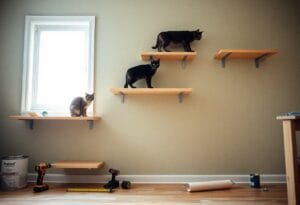
Furniture can be saved from shredded upholstery when you give your cat an appealing scratching post that meets its instincts; choose tall, sturdy sisal-covered posts to deter clawing, place them near favorite lounging spots, and rotate toys to keep interest high. If you ignore this you risk costly, irreversible damage, while the right post provides long-lasting protection and satisfied cats that preserve your home and save you money.
Importance of Cat Scratching Posts
You should match posts to behavior: tall vertical posts (24-36 inches) let adult cats fully stretch, while low horizontal pads suit kittens and elderly cats. Choose sturdy bases, secure anchoring, and durable materials like sisal (6-10 mm rope) or corrugated cardboard. Position one post per cat plus one extra, with at least one placed within 2-3 feet of previously damaged furniture to redirect habits effectively.
Benefits for Cats
Your cat uses scratching to shed outer claw sheaths, mark territory, and stretch core and shoulder muscles; providing a dedicated post supports all three. Kittens often scratch dozens of times daily while adults vary by personality. Offering varied textures (sisal, carpet, cardboard) and heights increases engagement; in multi-cat homes, supply multiple posts to reduce competition and lower stress-related behavior such as inappropriate marking.
Protecting Furniture and Surfaces
Place posts near favorite targets and on the same floor level-cats prefer scratching where they rest. Use tall, stable posts for sofas and upright surfaces; horizontal scratchers work for armrests. Combine posts with furniture-safe deterrents like double-sided tape or motion-activated air sprayers to discourage repeat attacks. Rotate or replace worn coverings; a frayed post can attract more scratching and may pose a paw injury risk if materials unravel.
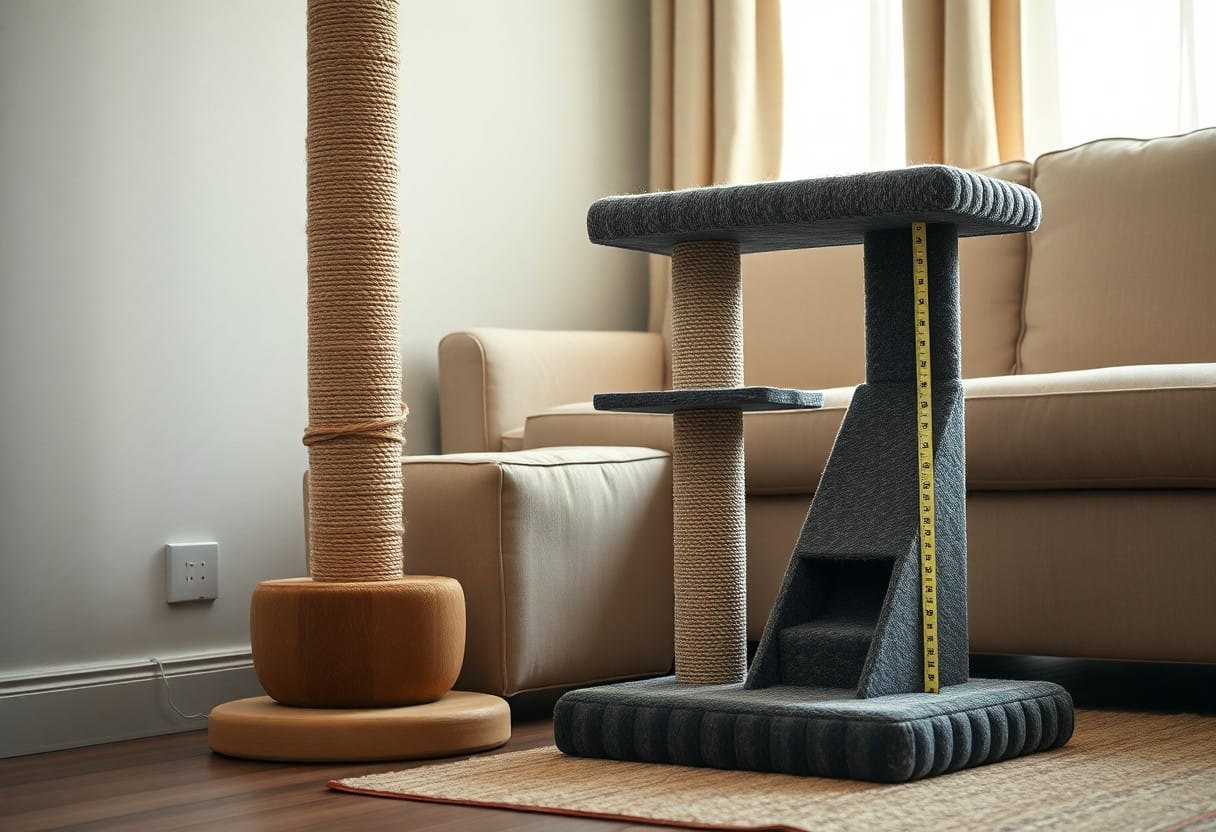
Measure your cat fully stretched-many adults extend 18-28 inches; match post height so they can stretch vertically and anchor taller posts to walls to prevent tipping. For high-value pieces, place a post within 2-3 feet and temporarily protect edges with clear plastic guards while retraining. Monitor progress over 2-4 weeks and relocate posts if ignored-placement often matters more than aesthetic style.
Types of Cat Scratching Posts
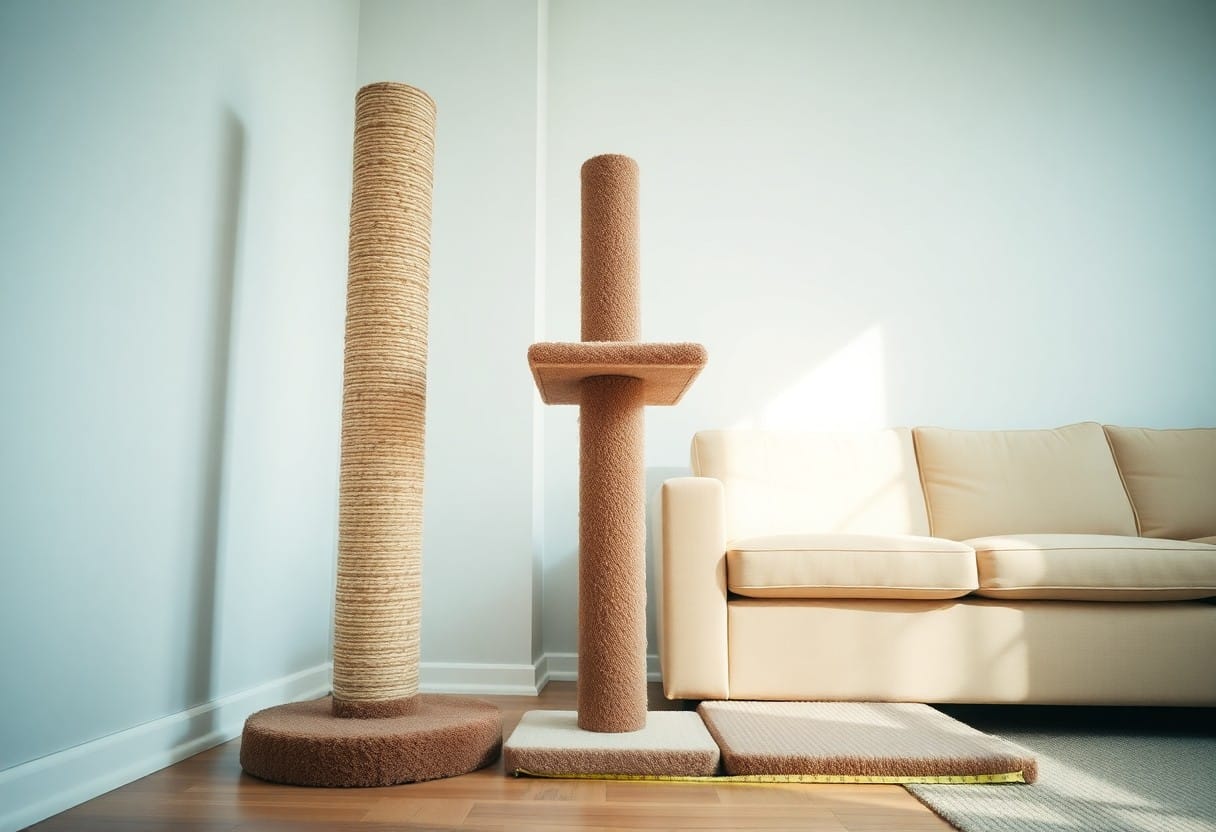
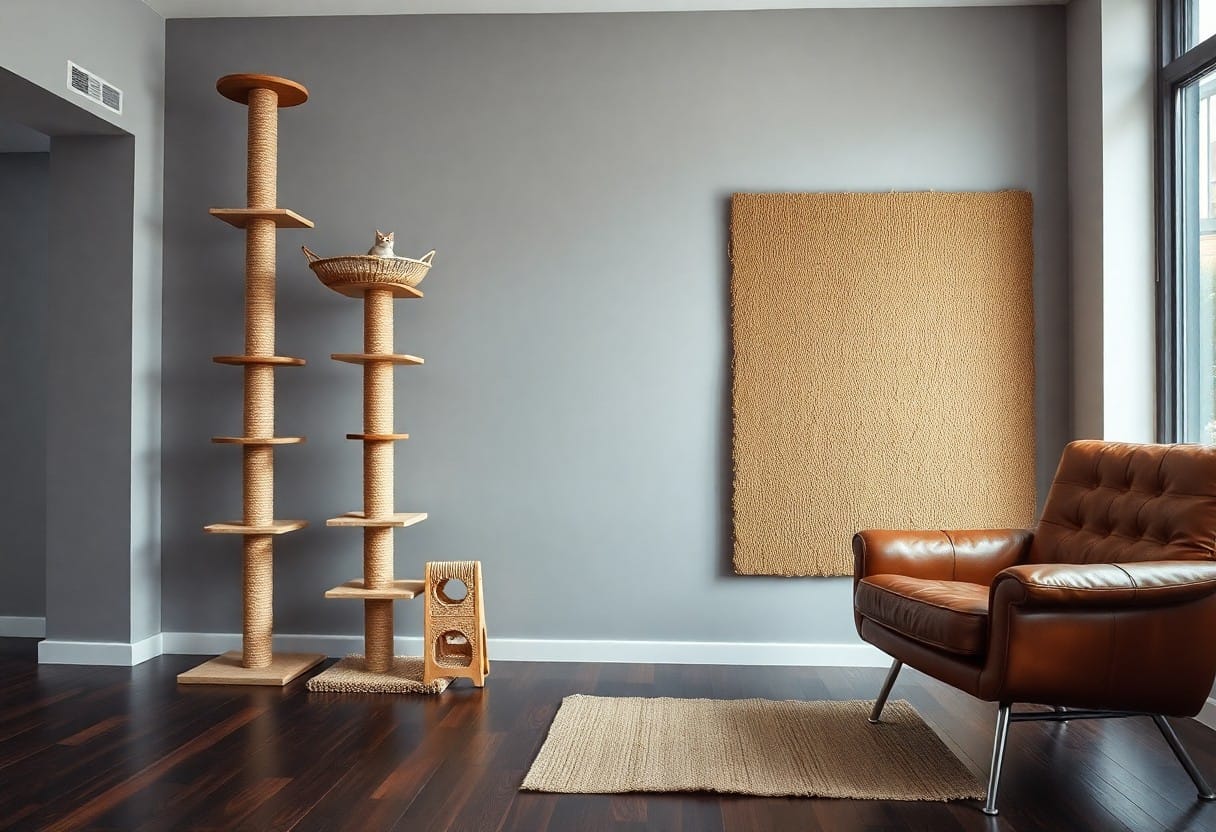
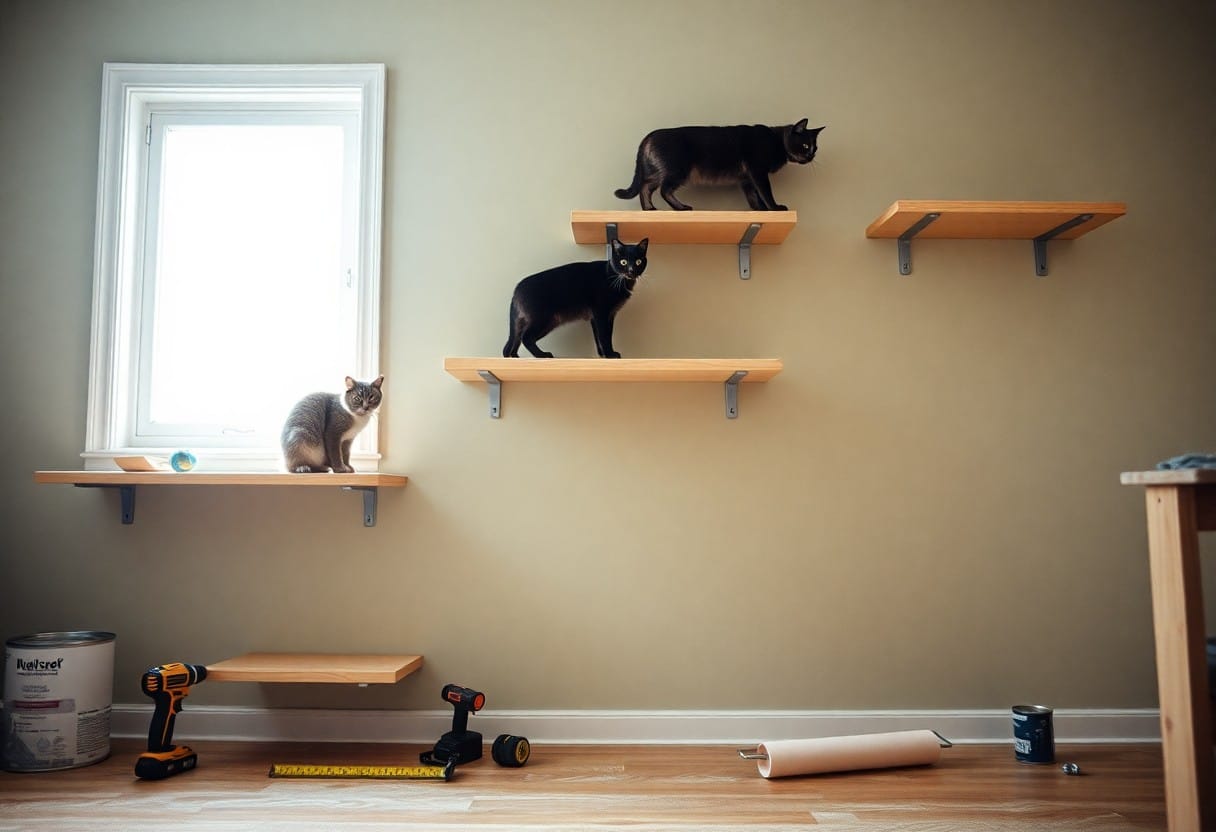
You’ll find five main designs: wall-mounted scratchers, vertical posts, horizontal boards, cat trees with integrated posts, and corrugated cardboard pads. Choose based on your cat’s posture, age and strength: kittens often prefer low, angled surfaces while adult toms need taller, sturdy posts. Many posts are 18-36 inches tall; horizontal pads are typically 12-24 inches long. Inspect material and base stability before purchase. This helps you match your cat’s behavior to the right style.
Vertical post
18-36″ tall; ideal for full-body stretches and marking; choose a 12-14″ base for stability.
Horizontal board
12-24″ long; favored by kittens and flat-scratching cats; place on the floor or low furniture edge.
Sisal rope
Durable natural fiber; 3/8″-1/2″ rope provides good grip and longevity under frequent use.
Cardboard pad
Inexpensive and highly attractive to cats; expect replacement every few weeks to months depending on activity.
Cat tree/post combo
Combines climbing, scratching and rest; look for solid bolting and bases at least 20″ wide for tall units.
Vertical posts – support full-body stretching and marking.
Horizontal boards – suit kittens and flat-scratching cats.
Sisal – long-lasting and provides firm feedback for strong scratchers.
Cardboard – low-cost, high attractant but short lifespan.
Cat trees – multi-function: scratch, climb, sleep.
You should match orientation to technique: vertical posts (18-36″) let your cat fully extend and deposit facial pheromones, while horizontal boards (12-24″) suit rolling, kneading or short swipes. If your cat rears up against furniture, pick a taller, anchored post; if they drag claws along rugs, try a flat pad. Many owners find placing one of each type in separate rooms reduces unwanted scratching.
Material Considerations
When you evaluate materials, sisal and natural wood resist shredding and provide firm feedback, while cheap carpet can fray and trap fibers. Corrugated cardboard attracts quickly but wears fast; select thicker corrugation for longer life. Always test for odors and loose staples; a stable base reduces tipping injuries and keeps your cat safe.
Drill down into practical choices: choose posts wrapped with 3/8″-1/2″ sisal rope for durability and a natural grip; thicker rope lasts longer under heavy use. Replace worn sisal or cardboard when deep grooves appear to prevent splintering or claw entrapment. Avoid glued-on fabric that peels, and steer clear of items with persistent chemical smells-these often indicate strong adhesives or treatments. Also inspect fastenings: countersunk screws and covered staples prevent cuts, and bases of 12″-14″ (or wider for taller units) reduce tipping risk for average cats.
Features to Look for in a Scratching Post
Stability and Durability
You want a post that won’t wobble when your cat launches or stretches; a heavy base (often 5-15 lbs or a 12-16″ footprint for taller posts) and solid-core materials like kiln-dried wood or thick MDF prevent tipping. Choose tightly wound sisal rope or 8-12 mm sisal fabric for long wear, and avoid thin carpet covers that shred quickly. For large breeds such as Maine Coons, anchoring to a wall or a weighted base is often the safest option.
Size and Height
Match the post height to your cat’s full-body stretch: kittens do well with 12-18″, average adults need 24-32″, and large or very athletic cats benefit from 36″ or taller so they can fully extend. Diameter matters too-posts around 3-4″ let paws grip while wider columns suit big paws. If your cat likes to hang mid-stretch, prioritize vertical height over decorative elements.
Think about placement and quantity: place a tall post near favorite resting spots and provide at least one post per cat plus one extra in multi-cat homes. Measure your cat standing on hind legs to check reach, and combine one tall vertical post with a low, horizontal corrugated scratcher if your cat alternates scratching styles; studies of behavior show many cats use both vertical and horizontal surfaces.
Top Recommended Cat Scratching Posts
Budget Options
You can protect furniture on a shoestring by choosing posts or pads in the $10-$40 range; 24-32 inch sisal posts and corrugated cardboard loungers work well. Aim for a base at least 12×12 inches or >3 lb to reduce tipping. Examples include corrugated scratch pads ($10-25) and compact sisal posts like the 32″ styles often sold for under $40; you’ll trade premium finishes for affordable durability.
Premium Choices
For lasting results, invest $80-$250 in 36-48 inch solid-wood posts with thick natural sisal, heavy bases (>15 lb) and replaceable sleeves. Models with multiple platforms, integrated beds, or wall-anchoring hardware deliver superior stability and appeal to climbers; brands offering modular systems and multi-year warranties tend to perform best. Prioritize a tall post if you want your cat to stretch fully and stop targeting sofas.
Delving deeper, choose a post with a 36-40 inch height for full-body stretching and a base ≥16×16 inches or bolted mounting to prevent tipping. Look for sisal rope ~6-8 mm for longevity, replaceable posts, and weighty construction (15-30 lb). When owners pair these with positive reinforcement and catnip, anecdotal reductions in couch scratching often range from 70-90% within weeks; secure installation is imperative to avoid the tipping hazard.
Maintenance and Care for Scratching Posts
Cleaning Tips
You should vacuum posts weekly to remove fur and dander, spot-clean stains within 24 hours, and wipe woven surfaces with a damp cloth; use a diluted pet-safe cleaner (1:10 water) for odors, and avoid bleach or ammonia-based products that harm fibers and your cat’s nose. Assume that you deep-clean or replace liners every 3-6 months, more often in multi-cat homes.
sisal rope – brush loose fibers weekly
carpeted posts – vacuum and trim pulled loops
cardboard scratchers – rotate and replace after heavy wear (30-60 days)
vacuum – use brush attachment for seams
pet-safe cleaner – enzymatic formulas for urine and odor
Replacement Indicators
You should replace a post when fraying covers more than 50% of the surface, the base wobbles over 1 inch, or there are exposed staples and splinters that could injure paws. Compressed cardboard beyond 40% thickness loss or sisal gaps larger than 1 cm also signal replacement. Check high-traffic posts monthly, since kittens and multi-cat households may wear posts down in 6-12 months.
If wear is localized, you can re-wrap sisal using 4-6 mm rope, stapling every 5 cm to restore grip; a DIY re-wrap takes 30-60 minutes and usually costs about $10-20 in materials. When structural joints creak, the post lists more than 5 degrees, or quick fixes leave a risk collapse, replace the unit-temporary repairs can be unsafe. Dispose of heavily soiled cardboard scratchers after 2-3 cycles and check local recycling options.
Training Your Cat to Use the Scratching Post
Place the post where your cat already scratches-within 3-6 feet of the targeted furniture-and anchor it so it doesn’t wobble. Offer both vertical and horizontal surfaces because preferences vary, and use sturdy sisal or corrugated cardboard that holds claws. Tie a wand toy or feather to the top for initial interest, and reward every successful use with treats or praise for the first 2-3 weeks before fading to intermittent reinforcement.
Positive Reinforcement Techniques
When your cat uses the post, give a high-value treat or 30-60 seconds of play within 1-2 seconds to mark the behavior; a clicker or a consistent cue word speeds learning. You should reward every use for about 10-14 days, then switch to an intermittent schedule (every 2-4th successful use) to maintain the habit. Examples of effective rewards: freeze-dried chicken, small soft treats, or a quick wand session.
Redirecting Scratching Behavior
If you catch your cat starting to scratch furniture, calmly pick them up and place them on the post within 2-3 seconds, then reward the action. Use double-sided tape or a temporary furniture cover for 1-2 weeks to make the old target unattractive, and add a catnip spray or pheromone diffuser near the new post to increase appeal. Avoid physical punishment or spraying water, which increases stress and often worsens scratching.
Match texture and orientation to your cat’s habit: for horizontal carpet-scratchers use a corrugated cardboard pad; for sofa-arm scratchers use a tall sisal post next to the armrest at the same height as the scratch marks. Try a simple 14-day plan: relocate the post days 1-3, reward every use days 4-10, then fade treats days 11-14 while increasing play rewards; many owners see marked reduction within two weeks when these steps are followed consistently.
Hence you can protect your furniture by selecting a sturdy, appropriately sized scratching post with durable sisal, stable base, and enticing height; combine it with positive reinforcement and placement near favorite scratching spots to redirect behavior. Invest in quality, rotate toys and catnip, and maintain surfaces to keep your cat engaged-this ensures long-term preservation of your upholstery and happier feline habits.
FAQ
Q: How do I choose the best scratching post for my cat’s needs?
A: Assess your cat’s size, age and preferred scratching orientation. For fully grown cats choose a vertical post at least 28-36 inches tall so they can stretch fully; for kittens a shorter post is fine. Stability matters: a heavy, wide base prevents tipping. Material affects durability and appeal-tight-wound sisal rope or sisal fabric resists wear and satisfies most cats; cardboard is attractive for cats that prefer horizontal scratching but wears faster; carpet-covered posts can sometimes encourage furniture-scratching if the texture is too similar to household carpets. Consider multiple types (vertical post, horizontal pad, and a tall cat tree) if your cat shows varied preferences. Check construction details: solid core or thick tube, securely fastened top and base, and smooth, snag-free finishes.
Q: What are effective steps to train my cat to use a scratching post and protect furniture?
A: Place the new post right beside or in front of the object the cat currently scratches so it becomes the obvious alternative; if the cat scratches multiple spots, put one post at each hotspot. Encourage use with positive reinforcement: rub catnip on the post, play with toys that invite stretching on it, and reward every successful use with treats or praise. Make the unwanted surfaces unattractive by applying double-sided tape, a temporary furniture cover, or a plastic protector, and never punish the cat for scratching-punishment increases stress and can worsen behavior. Gradually move the post to a preferred location once the cat consistently uses it. For multi-cat households provide multiple posts of different styles to reduce competition and territorial conflicts.
Q: How should I maintain, repair, and when should I replace a scratching post?
A: Inspect posts weekly for loose parts, exposed staples, frayed rope or splintering wood. Light cleaning includes vacuuming loose fibers and spot-cleaning fabric with mild detergent; avoid harsh chemicals that leave odors. Repair by rewrapping sisal rope using strong indoor-safe twine and adhesive, or replace worn cardboard inserts. Replace the post when the surface no longer provides resistance (deep grooves, shredded material), structural stability is compromised, or hazards like sharp staples or broken pieces appear-typically every 6-24 months depending on material and frequency of use. In high-use or multi-cat homes, keep several posts in rotation so you can retire a heavily worn one without leaving the cats without options.