Just follow these vet-approved, simple 3-ingredient recipes to make safe, nutritious treats that support your cat’s wellbeing; you’ll learn easy steps, portion guidance, and ingredient swaps. Avoid onions, garlic, chocolate, and xylitol, which are toxic to cats, and always consult your veterinarian if your cat has allergies or medical conditions.
Benefits of Homemade Cat Treats
Making treats at home gives you direct control over ingredients and portions, so you can eliminate artificial preservatives and fillers and keep treats to under 10% of daily calories to lower obesity risk. You can choose lean, single-source proteins and adjust fat and sodium for weight or medical needs, plus most 3-ingredient recipes are easy to scale and store for consistent portion control.
Healthier Ingredients
You can pick 95% lean chicken, canned tuna in water (drained), or pureed pumpkin to add fiber and moisture without added salt or sugar. By avoiding artificial preservatives like BHA/BHT and limiting added oils, you reduce unnecessary additives and control fat:protein ratios, which helps you manage weight and digestive tolerance more precisely than many commercial treats.
Avoiding Allergens
You can make single-protein treats using novel options such as rabbit or venison to test tolerance and simplify ingredient lists for identification. Common allergens include beef, dairy, and wheat, so avoid those when testing and keep toxic items off-limits: onions, garlic, xylitol, chocolate. Label ingredients and prevent cross-contamination in the kitchen to protect sensitive cats.
For suspected food allergies, your vet may advise an elimination trial of 8-12 weeks; during that time you should feed only the prescribed hypoallergenic diet plus your single-protein homemade treats so you can accurately assess reactions. You should track symptoms-vomiting, diarrhea, excessive grooming, or itchy skin-and timing (days to weeks). If signs improve, reintroduce other proteins one at a time under veterinary supervision to identify the specific allergen and adjust future treat recipes accordingly.
Simple 3-Ingredient Recipes
These three-ingredient formulas let you make healthy, vet-approved cat treats quickly: you can assemble and bake in about 15-25 minutes at 350°F (175°C), and a single batch typically yields ~30 bite-sized treats. Aim for a balance of lean protein, a binder and a single vegetable for fiber. Avoid pumpkin pie filling and any onion, garlic or added salt, as those ingredients are toxic to cats and can cause serious harm.
Chicken and Pumpkin Bites
Use 1 cup cooked shredded chicken, 1/2 cup pure pumpkin puree and 3/4 cup oat flour; mix, form pea-sized bites and bake 12-15 minutes at 350°F. Pumpkin supplies soluble fiber to support digestion while chicken provides lean protein for muscle maintenance. If your cat shows grain sensitivity, swap oat flour for rice flour. Do not use pumpkin pie filling-its sugars and spices are harmful to cats.
Tuna and Oatmeal Delights
Combine a 5‑oz can of tuna in water (drained), 1/2 cup rolled oats and one beaten egg; pulse oats for texture, shape small patties and bake 10-12 minutes. Tuna’s strong aroma makes these highly palatable-many cats respond immediately-but canned tuna contains more mercury and sodium than other fish. Limit tuna treats to about once weekly and rotate proteins to reduce toxin buildup.
Store tuna treats in the fridge up to 3 days or freeze portions for up to 2 months, thawing in the refrigerator before serving. If your cat has pancreatitis or kidney disease you should consult your vet first, since high-sodium or oily fish can worsen those conditions. You can substitute mashed white fish or low-sodium canned salmon to lower mercury and maintain palatability.
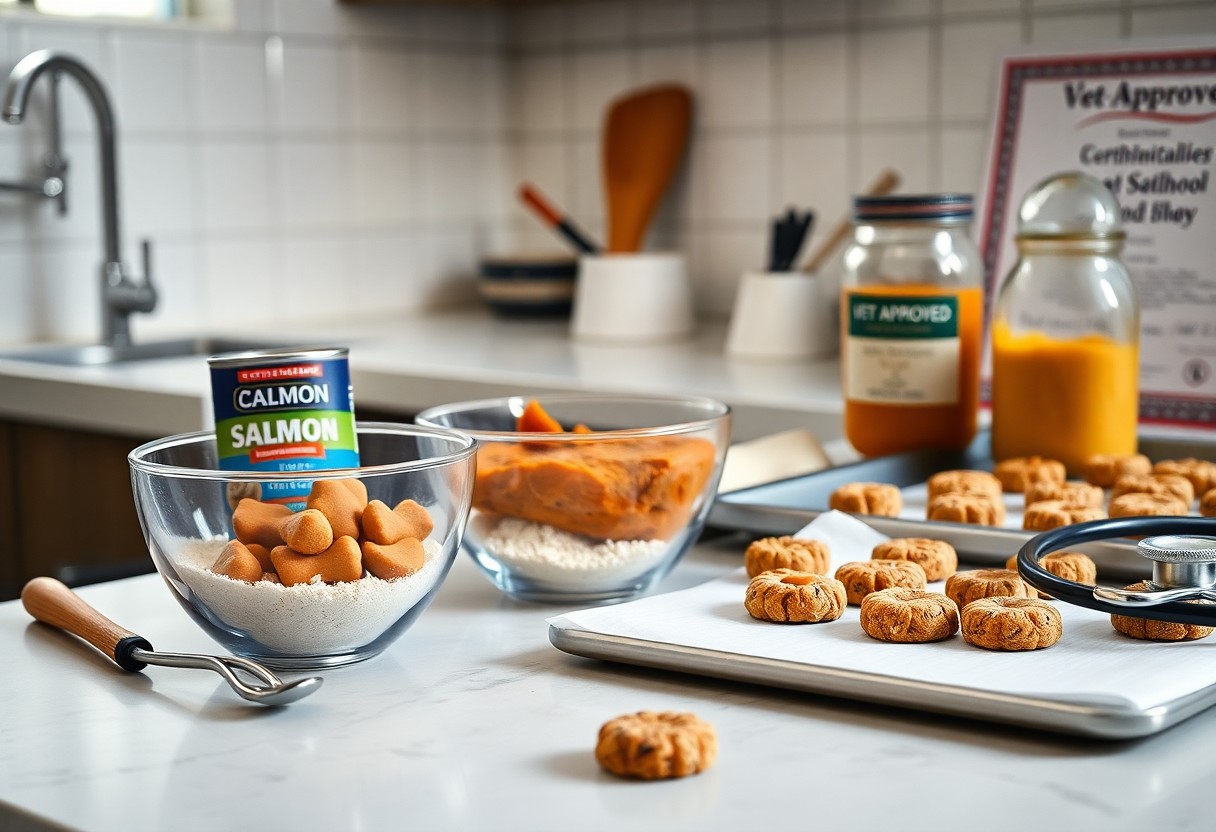
Mix 3/4 cup cooked, flaked and de-boned salmon, 1/2 cup mashed sweet potato and 1/2 cup oat flour; press into small shapes and bake 12-15 minutes at 350°F. Salmon provides omega‑3s (EPA/DHA) that support coat and skin while sweet potato adds beta‑carotene and gentle carbs. Many cats love the texture, but keep treats to about 5-10% of daily calories to avoid weight gain.
When you prepare salmon treats always remove all bones and avoid smoked or heavily salted salmon because of dangerous sodium levels. For maximum omega‑3 benefit choose wild or responsibly sourced salmon and limit fish-based treats to 2-3 times weekly. Freeze single-serve portions and thaw only what you need to control freshness and portions.
Tips for Making Cat Treats
Use simple techniques to keep your homemadecat treats nutritious and safe: press mixtures thin for even baking, aim for 300-350°F (150-175°C) and about 8-12 minutes until just firm, and prioritize high-protein ingredients while minimizing fillers. Test a tiny amount for sensitivities before offering a full portion, and avoid onions, garlic, grapes, chocolate at all costs. Perceiving your cat’s reactions and adjusting texture, size, and ingredients will improve acceptance and safety.
Measure ingredients so each batch stays consistent; treat calories add up.
Keep recipes to 3-ingredient simplicity for digestibility and fewer allergens.
Use fresh protein (cooked chicken, turkey, or canned fish in water) rather than processed meats.
Test one small piece and watch 24-48 hours for adverse reactions before regular feeding.
Proper Storage Solutions
You should store small batches in an airtight container in the refrigerator for up to 5 days or freeze portions for up to 3 months, labeling with the prep date; thaw in the fridge overnight. Vacuum-sealed or silicone containers reduce oxidation, and you can portion treats into single-serve zip bags to control feeding. If a treat smells off or shows mold, discard immediately.
Frequency of Treats
Limit treats to under 10% of daily calories: if your cat needs ~200-250 kcal/day, keep treats below about 20-25 kcal total; that often equals one or two small pieces. Use treats mainly for training or enrichment rather than as meal replacements, and adjust other food accordingly to avoid weight gain.
To fine-tune frequency, calculate your cat’s maintenance calories (roughly 20 kcal per lb for adults) and subtract treat calories before feeding meals; monitor weight weekly and reduce treats if body condition score rises. You should consult your vet for cats with obesity, diabetes, or special diets and use treats as controlled rewards rather than free-snacking.
Nutritional Considerations
When you make treats, keep them as supplements to a complete diet: aim for treats to account for no more than 10% of daily calories. Cats are obligate carnivores needing high animal protein and specific nutrients like taurine, arachidonic acid, and preformed vitamin A. Adult maintenance diets should contain at least 26% crude protein (dry matter); design treats to boost protein and fat rather than carbs, and limit sodium and calories to prevent weight gain.
Balanced Diet for Cats
Focus your treats on animal proteins-cooked chicken, turkey, or canned fish in water-to supply taurine and digestible amino acids. You should keep treat calories low (a small bite ≈ 2-4 kcal); treat portions that replace more than 10% of daily intake can unbalance crucial nutrients. Rotate proteins and match treats to your cat’s life stage since kittens and seniors have different protein and calorie needs.
Avoid ingredients known to harm cats: onion/garlic (all forms), grapes/raisins, chocolate, artificial sweetener xylitol, alcohol, raw dough, and cooked bones; also limit dairy and raw fish. You should never use these in homemade treats because they can cause anemia, kidney injury, neurologic signs, or gastrointestinal obstruction even in small amounts.
You should avoid onion and garlic as they cause oxidative damage to red blood cells leading to hemolytic anemia within days, with signs you might see including weakness and pale gums. A single chocolate-containing item can deliver enough theobromine to be dangerous for smaller cats, while cooked bones often splinter and cause obstruction or perforation. Raw fish contains thiaminase that can induce thiamine deficiency over time, and lactose intolerance typically produces vomiting and diarrhea-avoid these to keep your cat safe.
Transitioning to Homemade Treats
When shifting treats, pace the change over about 7-14 days: start by offering homemade snacks alongside the old ones and gradually increase the homemade proportion. Aim to keep treats under 10% of your cat’s daily calories – most adult cats need ~200-250 kcal/day, so limit treats to ~20-25 kcal/day. Watch intake and weight closely and adjust portion sizes if your cat gains more than 5% body weight in a month.
Gradual Introduction
Begin with a 25% homemade / 75% usual mix for 3-5 days, then move to 50/50 for another 3-5 days before offering only homemade treats. Offer treats at consistent times, such as post-meal, to avoid overfeeding; many owners find two small treats per day (totaling ~15-25 kcal) prevents begging while maintaining routine.
Monitoring Your Cat’s Reaction
Watch for gastrointestinal changes in the first 24-48 hours and for subtler changes up to two weeks: vomiting, diarrhea, decreased appetite, lethargy, or new itching are key signals. Log each treat type, quantity, and time to spot patterns; if mild loose stool appears, reduce quantity and reintroduce more slowly.
If you see severe signs – such as repeated vomiting, bloody stool, facial swelling, difficulty breathing, or collapse – stop the treat immediately and contact your veterinarian or an emergency clinic; these are medical emergencies. When reporting a reaction, provide the recipe, exact amounts given, onset time, and any prior allergies; this information helps your vet decide on diagnostics or treatment quickly.
Vet Recommendations
You should check with your veterinarian before regularly offering homemade treats: vets advise keeping treats to under 10% of daily calories and monitoring body condition score. Ask about toxic ingredients like onions, garlic, chocolate, grapes/raisins and artificial sweeteners (xylitol). For an average 10 lb cat, that typically means 1-3 small treats per day; adjust for kittens, seniors, or medical conditions. Vets can also screen for allergies or interactions with medications.
Consulting Your Veterinarian
Bring your treat ingredients list and your cat’s medical history, including recent labs. Vets often recommend baseline bloodwork-CBC, chemistry panel and urinalysis-especially if your cat is >7-8 years or has signs of illness. Expect guidance on portion sizes, frequency, and whether to avoid certain proteins for suspected food allergies. If your cat is on insulin or other drugs, your vet will advise on timing to prevent hypoglycemia or adverse interactions.
Tailoring Treats for Specific Needs
For weight management, choose single-ingredient, low-calorie treats like steamed chicken or green beans and limit to 1-2 treats daily; a 10 lb indoor cat needs about 200 kcal/day so keep treats <20 kcal total. For renal or urinary disease, your vet may recommend lower phosphorus or moisture-rich options. For allergies or sensitivities, trial single-protein treats for 6-8 weeks to identify triggers. Adjust based on your cat's response and periodic rechecks.
Weigh treats and tally calories to implement your vet’s plan: use a kitchen scale and log intake for 2-4 weeks to spot trends. For diabetic cats give treats after insulin or as your vet directs to avoid hypoglycemia. For kidney concerns, favor moisture-rich options like plain pumpkin or wet-food-based treats and ask your vet for a target phosphorus limit. When in doubt, single-ingredient, freeze-dried proteins make it easier to isolate reactions.
Conclusion
To wrap up, these vet-approved, three-ingredient recipes let you safely treat your cat with minimal effort-using whole ingredients, vet-guided portion control, and attention to allergies ensures benefits without added risk. You can customize flavors within safe limits, store treats properly, and consult your veterinarian for special diets so your cat enjoys tasty, nutritious rewards you prepare at home.
FAQ
Q: What are three vet-approved 3-ingredient cat treat recipes and how do I make them?
A: Tuna Bites – Ingredients: canned tuna in water (drained, low-sodium), oat flour (or finely ground oats), egg. Method: mash 1 can tuna, mix with 1 cup oat flour and 1 beaten egg into a firm dough. Form pea-sized balls or press into a thin sheet and cut small shapes. Bake at 325°F (160°C) for 10-12 minutes until lightly golden. Chicken & Pumpkin Crisps – Ingredients: cooked plain chicken breast (shredded), canned plain pumpkin (not pumpkin pie mix), oat flour. Method: blend 1 cup shredded chicken with 1/2 cup pumpkin and 3/4-1 cup oat flour to form a dough; roll thin and bake 12-15 minutes at 325°F (160°C) until firm. Salmon & Sweet Potato Drops – Ingredients: cooked salmon (boneless), cooked mashed sweet potato, chickpea flour (or oat flour). Method: combine 1 cup flaked salmon with 1/2 cup mashed sweet potato and 1/2-3/4 cup chickpea flour, form tiny drop-sized treats, bake 12-14 minutes at 350°F (175°C). Use small portions (pea- to fingertip-sized) so cats can eat easily.
Q: How many homemade treats can I safely give my cat and what ingredients should I avoid?
A: Keep treats under about 10% of daily calories; for an average 9-11 lb cat this is usually 10-30 kcal worth of treats per day (roughly 1-3 small bites depending on recipe). Introduce new treats slowly and watch for vomiting, diarrhea, itching, or decreased appetite. Avoid toxic ingredients entirely: onions, garlic, chives, chocolate, grapes/raisins, xylitol, raw dough, and high-sodium canned products. Do not use seasonings, salt, or added sugars. If your cat has kidney disease, pancreatitis, food allergies, or weight issues, ask your veterinarian which ingredients and portion sizes are appropriate before offering homemade treats.
Q: How should I store homemade cat treats and how long do they last?
A: Cool baked treats completely, then store in an airtight container. Keep at room temperature for up to 2-3 days, refrigerate up to 4-5 days, or freeze portions up to 2-3 months. Thaw in the refrigerator and warm to room temperature before serving; discard if smell, texture, or color changes, or if mold appears. For safety, fully cook eggs, poultry, and fish used in recipes to reduce bacterial risk. Label containers with date made and use oldest treats first.