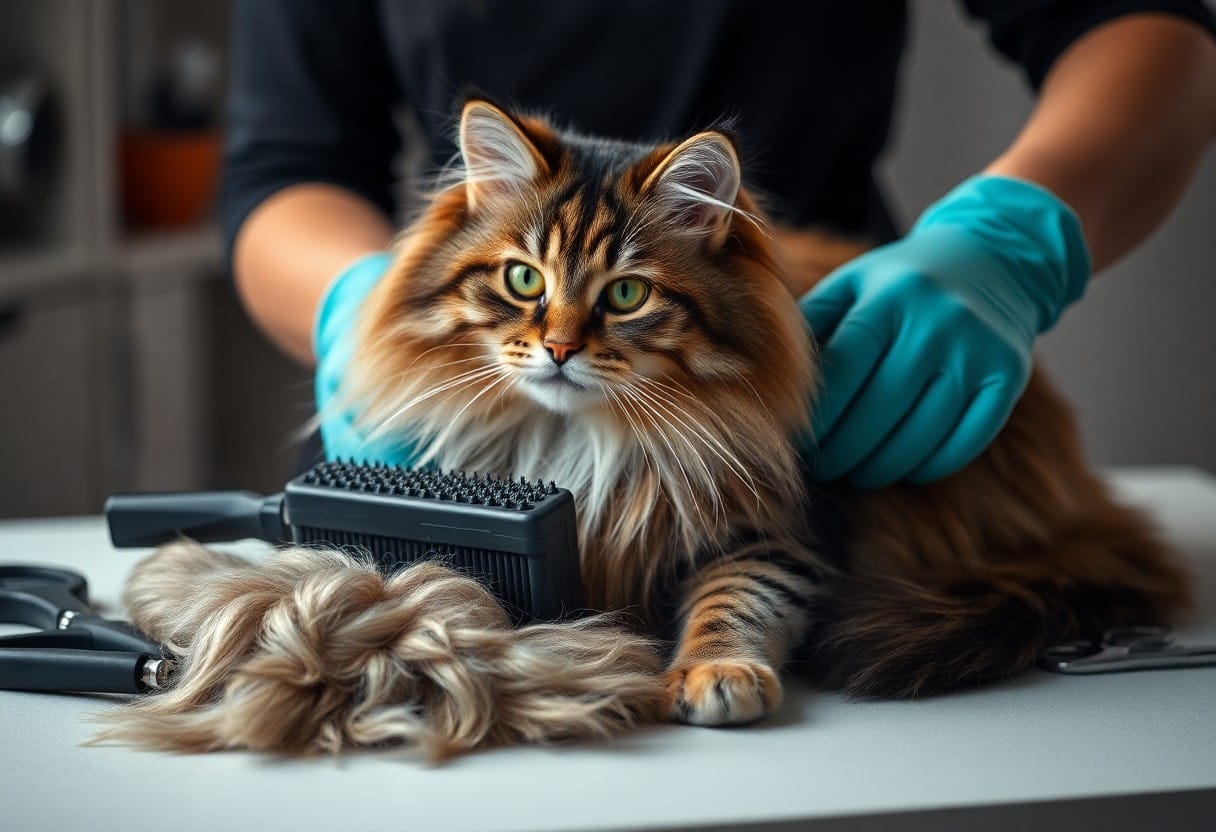
With regular grooming, you directly support your cat’s overall health and comfort. When you create a consistent routine, you lower the risk of painful mats, reduce hairballs, and increase the chance of early detection of skin problems or parasites.
As you brush your cat, you remove loose fur and distribute natural oils that keep the coat glossy and the skin healthy. Regular handling helps your cat tolerate inspections, so you can spot redness, bumps, or wounds sooner. For long-haired breeds you may need daily attention; for short-haired cats weekly sessions often suffice.
Your grooming toolkit should include a gentle brush or comb suited to your cat’s hair type, quality nail trimmers, a soft cloth or pet wipes for ears, and a pet toothbrush to support dental care. You should avoid overbathing-cats typically need baths only for sticky messes or under veterinary guidance-while focusing on regular brushing and nail trimming to prevent splinters and ingrown claws.
By removing loose hair you reduce the frequency and severity of hairballs, which can lead to vomiting or, in severe cases, gastrointestinal blockage. While grooming, you can detect signs of parasites like fleas and ticks or symptoms of allergic dermatitis. Early detection allows you to seek treatment from your vet before conditions worsen.
Tailor your approach to your cat’s age and temperament: kittens and senior cats often need gentler, shorter sessions and more help with grooming tasks. If you notice persistent scratching, hair loss, sores, lumps, or changes in behavior during grooming, contact your vet. Consistent, positive grooming strengthens your bond, improves your cat’s physical well-being, and makes routine care less stressful for both of you.