Cat-proofing your home keeps your cat healthy and your space intact. Use these 10 Essential Safety Tips to spot common hazards, secure risky areas, and create a safe environment for your pet.
Tip 1: Secure windows and balconies. Install screens or window guards and add harness-safe barriers so your cat can enjoy fresh air without falling.
Tip 2: Tidy up small objects. Move rubber bands, hair ties, string, and small toys into closed containers so your cat cannot swallow them and risk an obstruction.
Tip 3: Store cleaning supplies and chemicals in locked or high cabinets. Use childproof latches and avoid leaving bottles on counters where paws can tip them over.
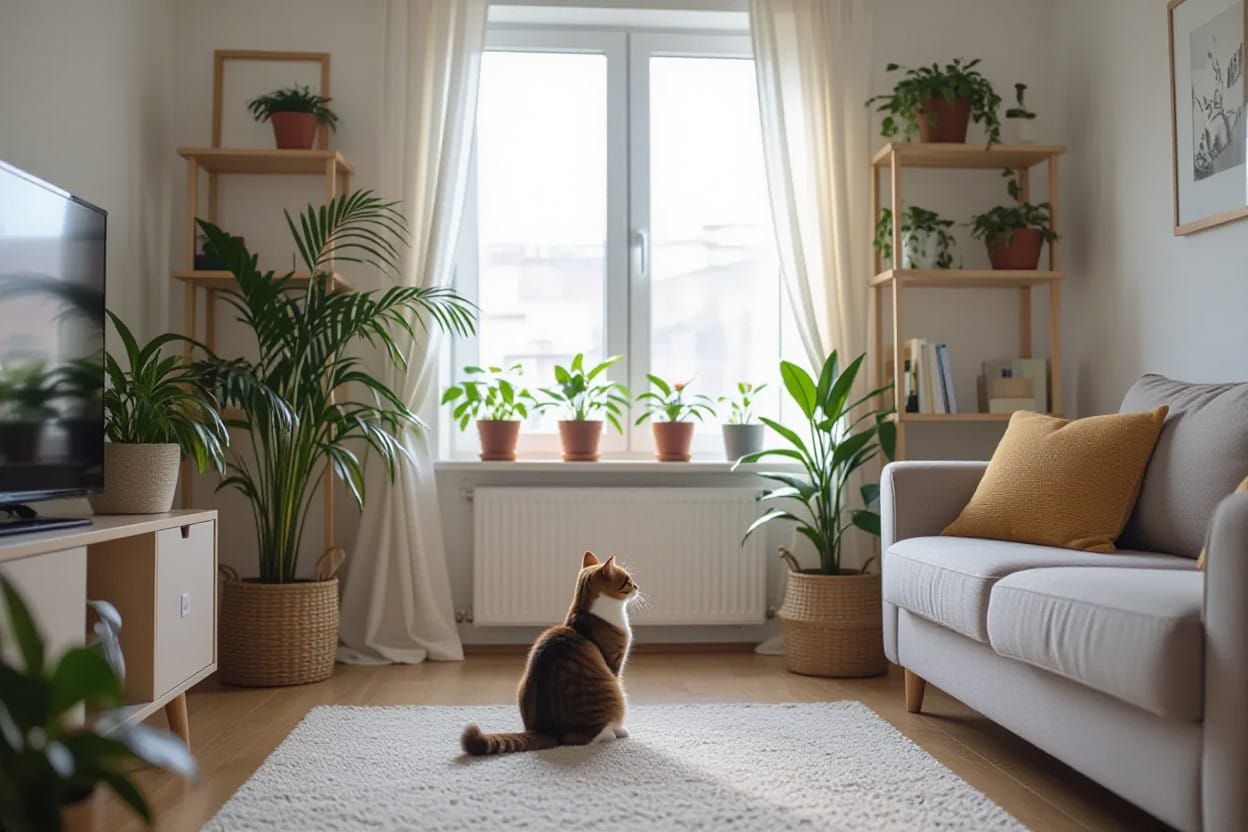
Tip 4: Check plants for toxicity. Replace dangerous varieties like lilies with cat-safe plants, and keep any potentially harmful foliage well out of reach.
Tip 5: Manage electrical cords. Hide or cover cords with cable protectors and unplug unused devices so chewing does not cause shocks or fires.
Tip 6: Secure rubbish and food waste. Use lidded bins to prevent ingestion of bones, fatty scraps, or toxic foods like onions and chocolate.
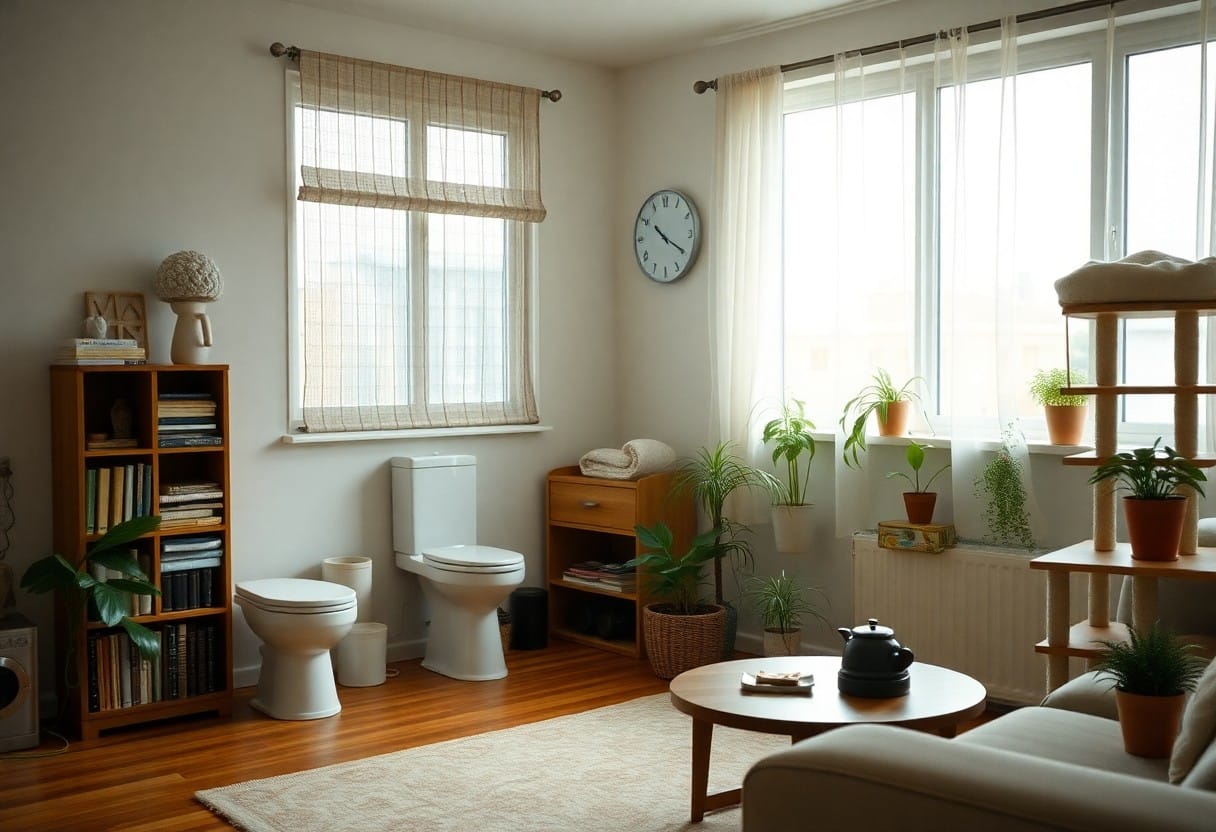
Tip 7: Make the bathroom safe. Keep toilet lids closed, secure shower curtains, and store medications in locked cabinets to avoid accidental poisoning.
Tip 8: Create safe vertical spaces. Provide sturdy cat trees and wall shelves so your cat can climb without risking unstable furniture or falling items.
Tip 9: Control access to danger zones. Close bedroom doors during unsupervised hours, block gaps behind appliances, and ensure washing machines and dryers are checked before use.
Tip 10: Use identification and microchipping. Fit a breakaway collar with ID tags and register microchip details so you can be reunited quickly if your cat slips out.
Apply these tips gradually and inspect your home regularly. A safe environment reduces accidents and helps your cat thrive.