Overprepare your supplies and plan calm, short steps so you control stress; you will minimize the risk of bites and scratches and protect both of you by using gentle handling, warm water, non-slip grip, and dry alternatives.
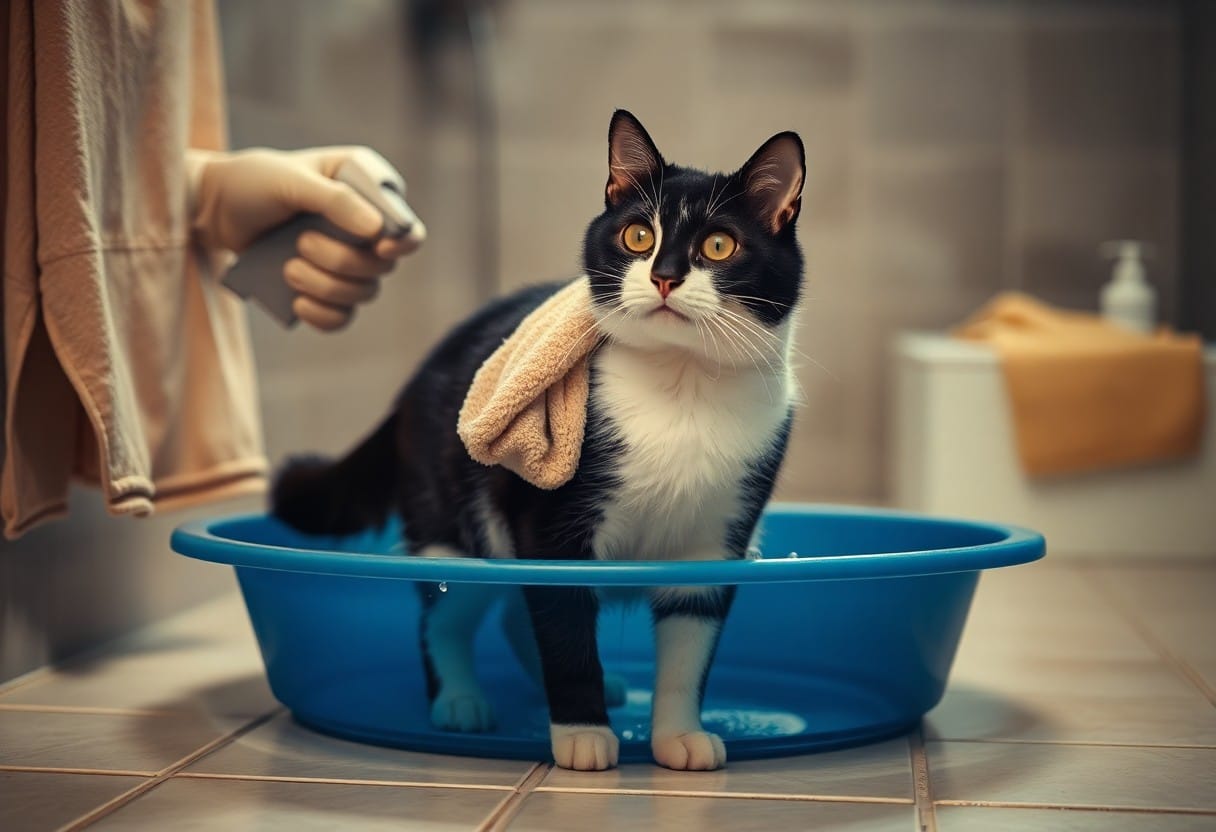
Understanding the Factors Behind Water Aversion
Cats avoid water because sensory sensitivity, prior trauma, instinctual grooming habits, and discomfort with temperature or texture raise their anxiety, making baths stressful for you. Thou can reduce triggers by testing warm water, adding non-slip surfaces, and using cat-safe shampoo.
- Sensory sensitivity
- Past trauma
- Instinctual grooming
- Temperature & texture
Feline sensory sensitivity and instinct
Sensory systems make loud water, wet fur, and strong scents overwhelming for your cat, so you must move slowly and speak softly to avoid escalation; apply gentle touch and quiet rinsing to lower stress.
Identifying common triggers for bath-time anxiety
Triggers often include slippery surfaces, loud running water, cold temperatures, and prior negative handling; you should log reactions like hiding, hissing, or frantic scratching to target interventions.
Often you’ll notice patterns: sudden splashes provoke panic, cold rinses shock the coat, and slick tubs increase injury risk; aggressive resistance or freezing are dangerous signs that require you to stop and calm the cat. Identify specific cues, desensitize with brief positive steps, and prioritize non-slip mats, warm water, and calming rewards to protect both you and your cat.
Essential Preparation Tips Before Getting Wet
Prep the space before you bathe a cat that hates water: towel, non-slip mat, mild shampoo and treats. Set lukewarm water and enlist a helper. Thou secure exits, plan drying, and keep a first-aid kit nearby.
- Gather gear: towel, non-slip mat, mild shampoo.
- Prepare the room: warm, quiet, no drafts.
- Have safety items: styptic powder, gloves, a helper.
Trimming claws to prevent injury
Clip nails 24-48 hours before bathing to lower scratch risk; use proper trimmers and gently press each toe to expose the quick. If you nick the quick, apply styptic powder and contact your vet to avoid serious injury.
De-shedding and brushing the coat thoroughly
Brush the coat the day before using a de-shedding tool and slicker brush to remove loose fur and reduce matting; work in short sessions and reward your cat frequently.
When you de-shed, work in short, calm sessions with a quality de-shedding tool and slicker brush, moving with the hair to prevent pulling. Check for tight mats; never cut them with scissors near the skin – that risks bleeding. Pause if your cat tenses, use treats, and seek a professional groomer for stubborn tangles.

How to Assemble Your Bathing Toolkit
Gather everything within arm’s reach: towel, treats, soft brush, a cup or gentle sprayer, and a cat-safe shampoo. Keep a dry towel for quick wrapping to reduce scratches and place a non-slip mat to prevent dangerous slipping.
Selecting cat-safe shampoos and conditioners
Choose a tear-free, cat-formulated shampoo and mild conditioner; avoid products with imperative oils like tea tree, eucalyptus, or citrus that are toxic to cats. Check labels for pH balance and minimal scents.
Utilizing non-slip mats and gentle sprayers
Place a textured non-slip mat in the tub and test a handheld sprayer at low pressure or use a cup for gentle pouring; keep water lukewarm and avoid spraying the face to reduce panic.
Position the mat so your cat’s paws grip edges; move slowly and speak softly as you use a handheld sprayer on low flow, aiming at fur and avoiding ears and eyes. When your cat freezes, stop and soothe them with a towel and treats; keep one steady hand to prevent sudden lunges.
How to Prepare a Stress-Free Environment
Quick Prep Checklist
| Set warm room temperature | Keeps your cat comfortable and reduces stress |
| Silence devices and close windows | Minimizes sudden noises that can startle your cat |
| Pre-fill basin and cover faucet | Removes running water sounds and lowers panic risk |
Managing room temperature and noise levels
You should keep the room comfortably warm, close windows, and silence appliances so your cat feels secure; use soft tones only and limit foot traffic to avoid startling them. Avoid drafts and abrupt noises that can trigger panic.
Pre-filling the basin to avoid running water sounds
Pre-fill the basin with warm water to ankle depth so you remove running water sounds that often terrify cats, making rinses calmer and reducing frantic splashing.
Place the basin on a non-slip mat and test the water on your wrist; the temperature should be warm, never hot. Cover the faucet to stop drips, pour from a cup to keep noise low, and keep water shallow-this reduces panic. Have towels ready and dry your cat thoroughly to prevent chilling and avoid any deep water that could cause drowning risk.
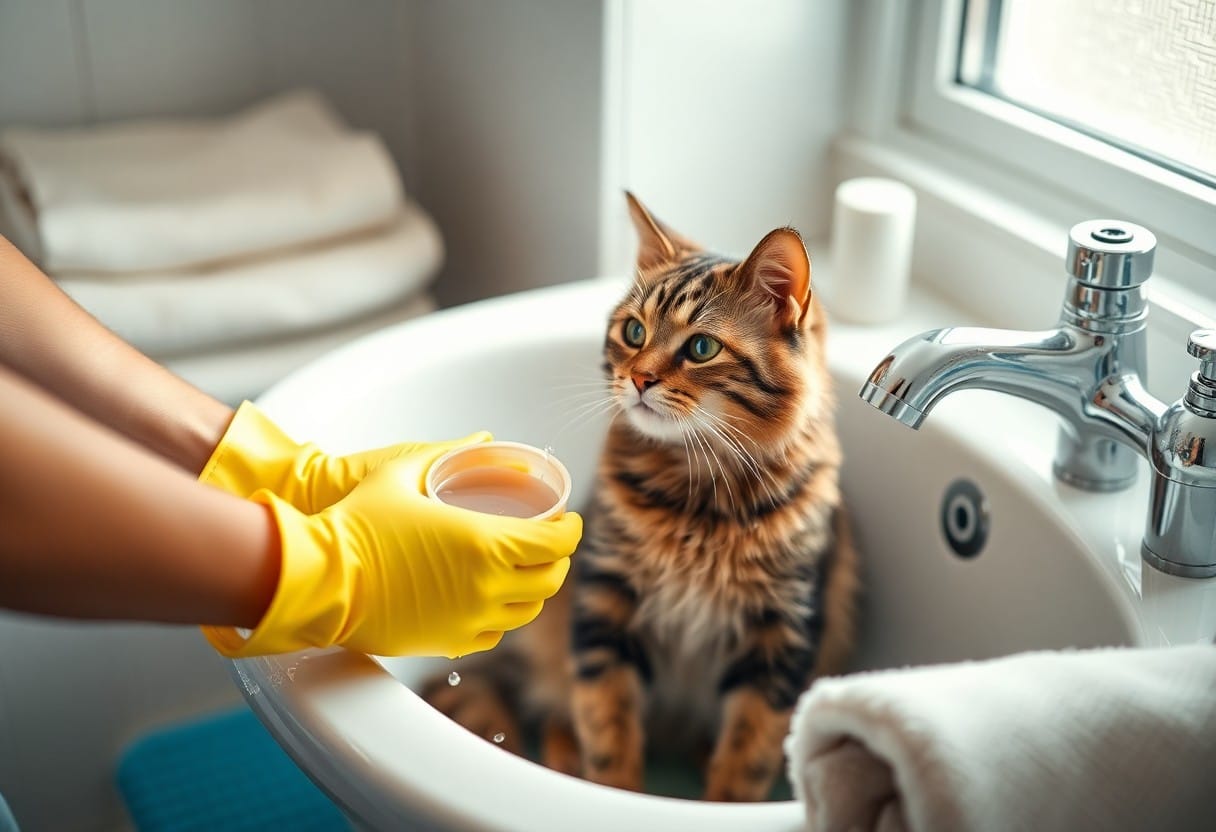
Step-by-Step Guide to the Washing Process
| Step | Action |
| Wetting |
Begin with a calm environment and secure your cat on a non-slip surface. You should use a handheld sprayer or cup to wet fur slowly, keeping water lukewarm. Shield face and ears; keep one hand on the cat to steady it. |
Implementing the slow-immersion technique
Use a shallow tub and support your cat’s chest while lowering it until lower legs are wet; let it acclimate for a minute. Keep water level low and do not submerge the head. Speak softly and offer treats between steps.
Proper lathering and rinsing procedures
Apply a small amount of cat-formulated shampoo and massage gently with short strokes, focusing on body and tail base while avoiding eyes and ears. Rinse until water runs clear to prevent residue.
Check under limbs, neck folds and belly for shampoo residue; thorough rinsing prevents itching. Make sure you use your fingers to part the fur and run water close without splashing the face. Towel-dry gently, then keep your cat in a warm room until completely dry to avoid chills.
How to Manage the Post-Bath Recovery
After the bath, guide your cat to a warm, quiet area and keep it away from drafts. You should dry fully to prevent chilling, monitor breathing, and allow calm recovery without sudden handling.
Effective towel-drying and heat management
Use thick towels to blot and absorb water, rubbing gently; wrap your cat in a towel for 5-10 minutes and provide a warm spot. Avoid hot dryers or direct heating that can burn, and watch for shivering.
Using positive reinforcement and high-value rewards
Offer calm praise and immediate high-value treats to link baths with rewards; keep sessions short and end on a positive note so you build trust for future baths.
Combine gradual steps with consistent rewards: start by rewarding tolerance to damp paws, then increase exposure. Use soft, aromatic treats like tuna or cooked chicken and mark calm behavior so you reinforce it. Keep interactions brief, give treats during drying, and never force compliance-consistency and patience will reduce fear over time.
Summing up
With this in mind you can bathe a water-hating cat safely: prepare supplies, acclimate slowly, use warm shallow water, keep sessions brief, reassure with calm tones, dry thoroughly, and reward cooperation to minimize stress and build trust for future grooming.
FAQ
Q: How do I prepare a cat that hates water for a bath?
A: Gather supplies before starting: cat-formulated shampoo, several towels, a non-slip mat, a shallow tub or sink, a cup or gentle sprayer, cotton balls for ears, nail clippers, and high-value treats. Trim nails and brush the coat to remove loose hair and mats; short mats may need a dematting tool or groomer before wetting. Warm the room and test water to a lukewarm temperature so it feels neither hot nor cold on your wrist. Place a towel in the bottom of the sink or tub for traction and set towels within arm’s reach for quick wrapping. Use a pheromone spray in the room 15-30 minutes ahead to lower stress for many cats. Arrange a helper to hold the cat if possible and keep a clear exit route so the cat can leave once finished if you prefer a less forced end to the process.
Q: What step-by-step method works best for bathing a water-averse cat?
A: Tire the cat with play for 10-15 minutes to reduce escape attempts. Fill the sink or tub with 2-4 inches of lukewarm water or use a shallow basin. Hold the cat securely with one arm over the shoulders and the other supporting the hindquarters, or have a helper gently restrain. Wet the body from neck to tail using a cup or low-pressure sprayer, avoiding the head and ears. Apply a small amount of cat-specific shampoo and lather gently, working from the neck down and concentrating on soiled areas. Rinse thoroughly with the cup or sprayer until no suds remain, keeping water away from eyes and inside the ears; use cotton balls in ears if your cat tolerates them. Clean the face with a warm, damp washcloth rather than pouring water. Wrap the cat immediately in a towel and pat dry; swap to a second dry towel if the first becomes soaking. Keep the room warm until completely dry and reward with treats and calm praise. Stop and give the cat a break or end the session if breathing becomes rapid, pupils dilate, or aggressive attempts to escape increase.
Q: How do I handle special cases like long-haired cats, flea baths, medicated shampoos, or extreme fear?
A: For long-haired cats, brush thoroughly to remove tangles and mats before bathing; use a detangling spray or groomer if mats resist. Use conditioner formulated for cats to ease drying and reduce tangling, and consider a low-heat blow dryer only if your cat tolerates it. For flea baths, use a veterinarian-recommended flea shampoo and follow label and vet instructions for contact time and rinsing; protect the eyes and ears and monitor for skin reactions. Medicated baths prescribed by a vet must be used exactly as directed, wearing gloves and noting frequency, dilution, and rinsing steps to avoid irritation. For cats that panic with water, try waterless alternatives first: grooming wipes, waterless foam shampoos for cats, or spot-cleaning with a damp cloth. Seek a professional groomer or veterinary clinic for safe handling or for sedation when medical or flea treatments require full bathing and the cat poses a danger to handlers. Consult your veterinarian about anxiety-reducing strategies or short-term medications when behavior prevents necessary medical care.