Many owners face cats scratching sofas; you can stop it with consistent training, appealing scratching posts, and safe deterrents to protect your sofa permanently.
Identifying the Biological Factors of Scratching
Cats scratch to mark territory, remove worn nail sheaths and stretch muscles, making sofas targets; these biological factors drive persistent behavior. Recognizing how scent glands, sheath renewal, and stretching interact helps you create permanent fixes.
- Territorial marking
- Nail sheaths
- Muscle stretching
Understanding territorial marking and scent glands
Scent marks from facial and paw glands tell other cats you own the space, so you should redirect that instinct by providing nearby, treated scratch posts and scent-neutralizing options to protect furniture.
The necessity of nail sheath removal and muscle stretching
Nail wear strips old sheaths and stretching keeps muscles toned; you must supply sturdy, vertical scratch posts so claws are used on proper surfaces instead of your sofa.
Provide daily opportunities for stretching and nail maintenance: rotate textures (sisal, cardboard, carpet) to find your cat’s preference, place posts near favored spots, trim claws safely if needed, and use soft caps temporarily. If you see infection, bleeding, or limping, seek veterinary care because damaged sheaths can be painful and worsen without treatment, and use consistent redirection so the posts become preferred.
How-to Guide for Implementing Immediate Sofa Protectors
Protect your sofa now by covering high-traffic zones with clear vinyl protectors, fitted slipcovers, or blankets; these give immediate protection while you redirect scratching to approved posts and prevent further fabric damage.
Applying specialized double-sided feline deterrent tape
Stick specialized double-sided feline deterrent tape along edges and arms; the tacky surface discourages scratching without harming paws, and you can replace strips until your cat adopts preferred scratching posts.
Installing heavy-duty furniture guards and textile shields
Attach heavy-duty furniture guards or textile shields to sofa sides and legs to block claws; choose durable, non-toxic materials that stay in place and protect upholstery while you retrain your cat.
Measure affected panels and align shields so seams lie flat; secure with furniture-safe Velcro, industrial-grade adhesive, or concealed brackets, and sand or cover any sharp edges to prevent injury while you ensure guards remain firmly attached during play.
Proactive Tips for Choosing the Perfect Scratching Post
Choose a sturdy scratching post placed near the sofa to redirect your cat and prevent damage. Opt for tall, anchored designs and reward use. Thou reinforce success with treats and praise.
- scratching post
- cat
- sofa
Selecting materials based on feline texture preferences
Match your cat‘s preference: sisal for deep digs, cardboard for clawing, and carpet for gentle scratches; rotate options until one outcompetes the sofa.
Ensuring height and stability for full body extension
Provide a post tall enough for your cat to fully stretch; make the base heavy and mountings secure to avoid dangerous tipping that can frighten or injure them.
Measure your cat upright and add several inches so they can extend fully; choose posts that are wall-anchorable or have a wide heavy base, fillable columns, and anti-slip pads; test for wobble and replace any unit that shows movement to prevent falls or injury.
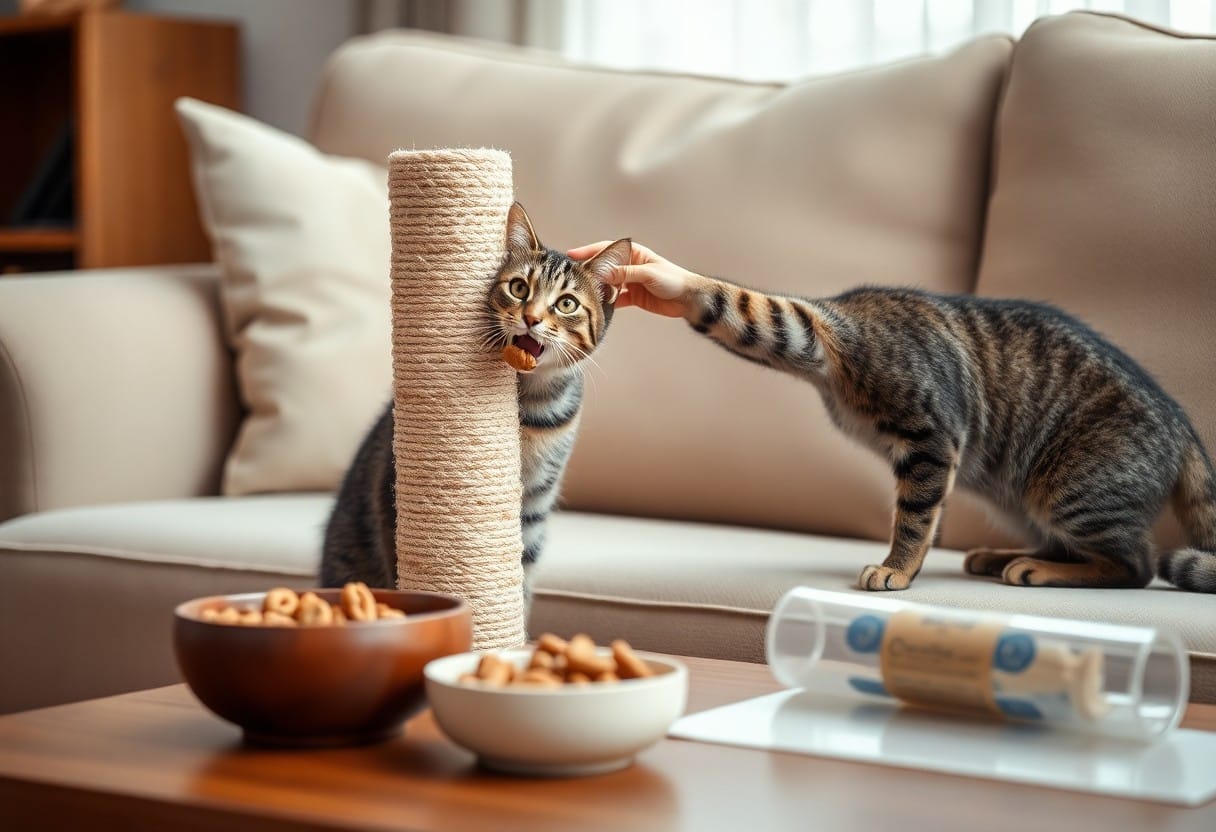
Redirecting Behavior with Positive Reinforcement
Use consistent, immediate rewards when your cat scratches approved posts; pair treats, praise, or short play to reinforce the choice. Offer alternatives whenever you catch them approaching the sofa and ignore unwanted scratching to avoid reinforcing it. Immediate rewards speed learning.
Using attractants like catnip and pheromones on new surfaces
Place catnip, valerian, or synthetic pheromone sprays on new scratching surfaces to make them more appealing; rotate scents and keep the scratcher visible and stable so your cat adopts it quickly.
Rewarding your cat for utilizing approved scratching zones
Praise and reward your cat the instant they use approved scratchers; use high-value treats, brief play, or a clicker and always follow up within seconds so the association is clear. Immediate, consistent rewards strengthen good habit formation.
Offer varied rewards beyond treats-short play sessions, gentle petting, or a favored toy-to keep motivation high; alternate rewards so your cat doesn’t lose interest. Avoid punishing or startling your cat, as aversion can increase sofa scratching. Always reward within seconds and be consistent to cement the behavior.
Routine Maintenance and Claw Management Tips
Routine upkeep saves your sofa: trim your cat‘s claws, rotate and vacuum posts, and inspect scratching equipment weekly to spot wear. Thou set a simple nail trimming schedule and do quick daily checks.
- Trim every 2-4 weeks to limit sofa damage.
- Keep scratching equipment attractive and replace when frayed.
- Use deterrents on the sofa and reward redirected scratching.
Safe techniques and schedules for regular nail trimming
Trim nails every 2-4 weeks, using a dedicated clipper and a calm hold; avoid the quick, stop if you nick it, apply styptic powder, and praise your cat to build trust.
Monitoring and replacing worn-out scratching equipment
Check posts weekly for frayed sisal, loose staples, or wobble; replace any that risk injury or stop attracting your cat, protecting the sofa from renewed scratching.
Replace any post with exposed staples, torn sisal, a collapsed base, or loose attachments immediately because these defects can cause injury or deter use. Choose replacements with heavy bases, replaceable sisal or cardboard, and anchor tall trees to prevent tipping; wash fabric covers and reward use with treats or catnip to reinforce the preferred outlet.
Conclusion
Following this, you can stop your cat from scratching the sofa permanently by providing appealing scratch posts, trimming nails, using deterrents or protective covers, rewarding use of approved surfaces, and keeping a consistent routine so the behavior shifts for good.
FAQ
Q: Why does my cat scratch the sofa and how can I stop it permanently?
A: Cats scratch to mark territory, stretch muscles, and shed old claw sheaths. Offer multiple acceptable scratching options close to the sofa so the cat learns an alternative. Protect the sofa temporarily with double-sided tape, a slipcover, or a fitted throw while training continues. Trim claws every 2-3 weeks and consider soft nail caps applied according to package instructions. Reward use of scratching posts with treats, praise, and short play sessions to reinforce the alternative. Avoid punishment; interrupt gently and redirect to a post each time the cat starts to scratch the sofa.
Q: What types of scratching posts and placement work best?
A: Vertical posts and horizontal scratchers both work; preference depends on the cat’s natural stretch and paw motion. Sisal rope, corrugated cardboard, and tightly woven fabric appeal to most cats. Choose posts tall enough for a full stretch with a sturdy base to prevent tipping. Place a post next to the sofa and near resting spots and doorways where cats often scratch. Provide at least one scratching surface per cat plus one extra and replace or refresh worn options. Use catnip, toys, or treats to attract the cat to new posts and reward correct use.
Q: Are deterrents and products safe and effective long-term?
A: Double-sided tape and commercial sticky deterrents make the sofa surface unpleasant for claws and often stop the habit quickly. Motion-activated air sprays can interrupt attempts without causing fear when used properly. Pheromone diffusers like Feliway reduce stress-related marking and can support long-term behavior change. Soft nail caps provide a harmless physical barrier to damage when applied correctly and replaced as nails grow. Declawing is a surgical amputation and is not recommended. Consult a veterinarian or feline behaviorist if scratching continues despite consistent training and environmental enrichment.