Many cat owners find clicker training effective; you can teach quick tricks in ten minutes by using clear cues, consistent timing and tiny rewards, and avoid toxic treats to prevent harm.
Clicker Association
You begin by pairing the click with a reward so your cat learns the sound predicts food. Use short sessions and end on a positive note. Avoid loud clicks near startled cats; stress can set back training.
Click the device
You press the clicker the instant the cat offers the behavior so timing is precise. Keep clicks brief and consistent; precision matters more than volume. If the sound scares your cat, swap to a softer click or finger-click.
Give a treat
You deliver a tiny, high-value treat immediately after the click so the cat links click-to-reward. Use small, tasty bites to avoid overfeeding and never give toxic foods like chocolate or onions.
You feed treats by hand or drop them near the cat to promote approach; fast, consistent rewards build trust. Rotate treats to keep interest and cut portions so sessions don’t exceed daily calories. Avoid human snacks that can be dangerous for cats.
Target Training
Target training teaches your cat to touch a chosen object, building focus and control in minutes when you use a stick or target and a clicker to mark the exact moment of contact, never force the cat to avoid stress.
Touch the stick
Hold the stick near your cat and wait calmly until they touch it, then click the instant their nose or paw makes contact to link the action with the reward; keep sessions under ten minutes.
Reward the touch
Give a tiny, high-value treat immediately after the click so your cat links action and reward; avoid overfeeding by using small pieces and brief sessions.
Timing and consistency determine success, so click and reward within one second to form a clear association. Choose smelly, soft treats for fast responses, and watch caloric intake to avoid weight gain.
Sitting Command
You can train your cat to sit in short sessions; click as soon as the hips touch the floor and give a treat. Click timing matters. Do not force the cat into position and keep sessions under 10 minutes to keep it positive and safe.
Lure head upwards
You hold a tiny treat above the cat’s nose and lift slowly so the head goes up and the rear lowers; click the instant the hips drop. Move slowly and avoid forcing the neck or body.
Mark the sit
You must click the exact moment the rear hits the floor, then reward immediately so the cat links action and reward. Late clicks teach the wrong behavior; clear timing builds reliability.
You can fade the lure by clicking for sits without a treat in hand, then reward from your pocket. Consistent timing and high-value treats speed progress, and stop if the cat shows stress or aggression.
High Five
You can teach a high five with clicker timing, tiny treats and patience. Use short sessions to keep your cat engaged, stop if your cat shows stress, and avoid forcing its paw-this is dangerous. Expect faster learning when you reward immediately; the trick builds trust and focus.
Lift the paw
You shape lift the paw by rewarding tiny paw lifts, then increase criteria to a full raise. Keep sessions under five minutes and use tiny treats. Never pull the paw-doing so can be dangerous and damage trust. Consistent clicks speed learning.
Tap the hand
You teach tap the hand by presenting a flat palm and clicking when your cat touches it. Use a clear cue and immediate rewards. Avoid fast movements that trigger swipes; claws can make this dangerous. This trick improves focus and tactile trust.
Start by rewarding any nose or paw touch to your palm, then add a cue. Use gentle pressure and tiny treats; stop if your cat stiffens. Keep sessions short and trim nails beforehand to reduce scratch risk, which helps keep the experience positive for both of you.
Spinning Circle
You can teach your cat a spinning circle using a clicker and treats, keeping sessions short to avoid stress. Keep sessions under five minutes, use high-value treats, and stop if the cat freezes. Never force spins; reward calm steps to build confidence and focus.
Lead with treat
You lure your cat with a treat near its nose, guiding a small turn while clicking for correct motion. Use a fast treat and gentle lure. Pause if your cat stiffens. Signs of stress: flattened ears or tail twitching mean take a break.
Full circle turn
You ask for a full circle by gradually increasing lure distance and rewarding each bigger turn. Increase the turn only when your cat offers it willingly. Keep sessions short and upbeat to reinforce success and avoid frustration.
When you shape the full circle, break the behavior into small steps: reward quarter turns, then half, then three-quarters before the full rotation. Reward tiny improvements and use a smooth, non-slip surface. Stop if your cat freezes or digs claws. Consistent short sessions build confidence and maintain fun.
Hoop Jump
You can teach your cat to jump through a hoop using short sessions and precise click timing. Keep the hoop low to avoid strain and use treats to reward each attempt. Watch for stress signs and stop if your cat resists; praise quick successes to build confidence.
Low hoop height
Set the hoop just above the floor so your cat steps or hops without stretching. Short sessions prevent fatigue; always offer a treat after correct passes. If your cat hesitates, lower the hoop or guide gently, and avoid forcing to prevent injury.
Step through hoop
Place the hoop on the floor and reward each paw crossing; click each improvement the moment all four paws pass. Use tiny treats to keep focus and avoid chasing rewards. Stop if your cat freezes and try again later to protect from stress.
Use shaping by rewarding tiny steps toward passing fully through the hoop; click each improvement and delay treats until the full step-through. Practice on a non-slip surface and keep the hoop low, raising height only after consistent success. Pause if your cat shows fear to prevent injury and to preserve confidence.
Stand Up
You can teach your cat to stand by clicking when it lifts forepaws and offering a treat; use short sessions and increase expectations slowly. Quick wins build confidence, but don’t force rear legs or pull on your cat-stop if your cat resists or strains.
Hold treat high
You lure standing by holding a tiny treat slightly above your cat’s head and click the moment paws rise; use very small treats and keep hands steady. If your cat strains its neck or balks, reduce height and try again to avoid stress.
Balance on feet
You teach balance by clicking for longer holds and rewarding steady posture; start with seconds and increase slowly. Keep sessions brief and use a non-slip surface; watch for slips or fatigue and stop before your cat loses footing.
You shape longer stands by rewarding small increases and using a target or raised treat; support gently if hips slip and stop if your cat shows pain. Use a soft, non-slip pad and keep short, frequent sessions to build balance without overstraining joints.
Wave Goodbye
You can teach your cat to lift a paw and wave using clicker rewards; short sessions work best. Use a clear cue, mark the exact moment with the clicker, then reward immediately. Avoid forcing the paw and stop if your cat resists; keep training fun and positive.
Hand signal cue
You present an open palm near your cat and say the cue as they lift the paw; click at the first lift then reward. Keep the same palm shape and timing; consistent hand shape and timing helps your cat link gesture to action. Move slowly to avoid startling.
Paw in air
You reward any paw lift at first, then click only for higher raises to shape a clear wave. Keep sessions short and build progress in small steps. Reward initial lifts and avoid overworking joints to keep the behavior safe and enjoyable.
You can elicit a paw lift by holding a treat near the shoulder or lightly tapping the paw; click the instant the paw leaves the floor to mark the behavior, then reward. Increase the height requirement in small increments and add a cue word or hand signal. Keep sessions under five minutes, watch for limping or resistance, and stop immediately if your cat shows pain.
Ring Bell
You can teach your cat to ring a bell to signal wants like treats or door access; use a clicker and tiny rewards, shaping with quick steps and short sessions. You should avoid loud, startling bells that can frighten cats.
Target the bell
You start by targeting the bell, rewarding any nose or paw approach; click the precise moment of touch and give a tiny treat. You must not force contact, and you should use small, smelly treats to keep sessions positive.
Sound the chime
You teach the actual chime by only clicking when the bell makes sound; gradually require a clearer ring before the click. You should avoid startling the cat and reward every successful chime to build the habit.
You shape sound by reinforcing any touch, then only clear rings; move the bell incrementally away and fade treats to intermittent rewards. Monitor for obsessive ringing and stop if the cat becomes stressed. Use a verbal cue and praise and small rewards to generalize the behavior.
Recall Training
You can build a solid recall with short sessions, a clicker and high-value treats; practice indoors and near exits first. Never call your cat into danger, and reward every quick return to reinforce the behavior.
Call cat name
Use a short, distinctive cue and gentle tone so your cat links the sound to returning. Avoid yelling or chasing, which teaches them to run away; use treats or clicker after the first response.
Reward the return
Reward immediately when your cat returns so the connection sticks; use high-value treats, a click and warm praise. Do not punish hesitations-punishment destroys trust.
Give treats at your cat’s mouth level and vary rewards to keep interest. If outside, use secure recall zones and never call toward roads. Quick, generous rewards build fast, reliable returns.
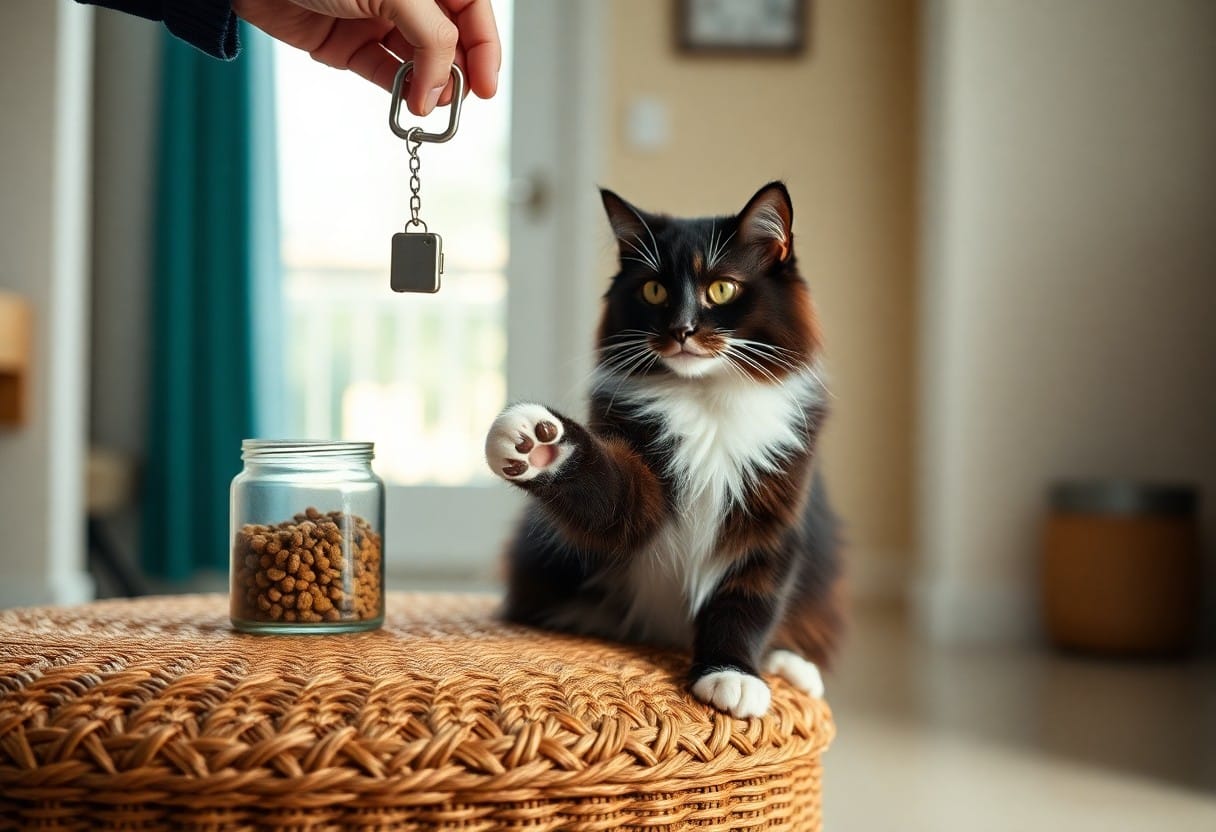
Shake Hands
You teach your cat to shake by offering your hand and gently lifting a paw when it paws at you. Use short sessions, reward immediately, and stop if the cat resists. Avoid forcing the paw and watch for stress signs. Keep training fun with tiny tasty treats.
Hold the paw
You present a flat hand or closed fist; when the cat paws, lift its paw gently and praise. Keep sessions short and end on a positive cue. Do not yank or twist the paw and stop if claws extend to avoid injury.
Click and treat
You click at the instant the paw lifts and immediately deliver a treat; the click marks the correct action. Timing matters to build the association. Use tiny, soft treats so you can reward frequently without overfeeding.
Aim to click within half a second of the paw lift and treat immediately; delayed clicks confuse cats. Fade treats gradually by rewarding every other success. Use tiny, low-calorie treats and avoid hard or choking-prone pieces, especially for older or dental-compromised cats.
Roll Over
You can teach your cat to roll over using clicker training, short sessions and tasty treats. Use gentle pressure and watch body language. Stop if your cat resists; avoid forcing a roll to prevent injury. This trick builds trust and mental stimulation in minutes.
Lure to side
You lure your cat onto its side by moving a treat from nose toward shoulder; click at the movement, reward when it shifts. Keep movements slow and positive. Stop if the cat tenses or struggles to avoid stress or injury.
Complete the roll
You complete the roll by circling the treat around the belly so the cat follows and flips; click the full roll and reward immediately. Practice in short bursts. Do not force the spine; stop if you see stiffness or pain.
Break the roll into tiny steps: side, shoulder turn, then full flip. Use a non-slip mat and tiny treats so your cat can succeed. Older or arthritic cats may need to skip the roll to avoid joint strain. Keep sessions under two minutes and end on a calm, rewarded note.

Fetch Toy
You can teach fetch in short sessions using a clicker, a lightweight toy, and tiny treats. Keep sessions under 10 minutes and end on a win. Fetch builds exercise and bonding, while you should watch for choking hazards from small parts.
Throw the object
You should start with gentle, short tosses close to your cat and click when they touch or chase the toy. Use a soft, light toy and reward immediately to link the action to the click. Short throws prevent fear and encourage chasing.
Return the toy
You can teach return by rewarding any movement toward you with the toy, then click and treat at your feet. Use a cue like “bring” and praise when your cat drops near you. High-value treats speed learning and reduce dropping refusals.
You can shape a full return by trading: offer a treat while your hand is near the dropped toy, click as the cat moves closer, then swap. Avoid grabbing the toy from your cat or chasing, which can trigger guarding or bites. Positive exchanges build trust; avoid force to prevent injury.
Nose Touch
You will teach your cat to touch your hand with its nose using a clicker and treats; keep sessions short and fun. Use click-treat timing, offer small, tasty rewards, and do not force the cat if it backs away.
Finger to nose
You present a finger near the cat’s nose and click the instant the nose lifts to touch it. Start close, reward immediately, and avoid sudden moves that might startle the cat.
Mark the sniff
You click the exact moment the cat sniffs your hand to teach a reliable nose-target cue. Use single, clear clicks and short sessions to build understanding; stop if the cat shows stress and try again later.
You can shape longer nose touches by clicking each sniff and rewarding successive approximations; increase hold time slowly and reduce treats as the behavior stabilizes. Use a quiet room, watch body language, and stop if pawing or hissing appears. Click timing, short sessions, and calm environment speed learning.
Leash Training
You can teach leash basics with short, positive sessions; start inside and keep rewards frequent. Use a well-fitted harness and a lightweight lead to prevent neck injury. Stop if cat freezes or struggles; avoiding force keeps training safe and fun.
Harness on first
You should let the cat sniff and wear the harness for minutes at a time, increasing duration with treats. Check for a secure, snug fit and make sure straps don’t rub. Remove harness if cat panics; forcing it risks injury and fear.
Walk with lead
You attach the lead indoors and let the cat move with a loose line, following rather than pulling. Keep sessions short and calm, rewarding forward steps. Avoid busy streets and dogs; do not drag the cat and keep the lead loose to prevent panic.
You pick quiet parks or quiet residential streets and let the cat pause to sniff; reward exploration. Monitor body language-watch tail and ears-and stop before stress escalates. Bring the carrier and ID, and avoid retractable leads because they can yank or tangle.
Arm Jump
You can teach an Arm Jump using your arm as a moving perch; start low to avoid strain, click for small hops and gradually raise height as your cat gains confidence.
Arm as hurdle
You hold your arm horizontally as a gentle hurdle, keep it low and soft to prevent injury while rewarding any attempt to clear it.
Leap over arm
You cue the jump and reward a clear leap; avoid forcing high jumps and stop if your cat hesitates to protect joints.
You should increase height only after reliable low jumps, using short sessions to keep motivation high. Watch for limping or reluctance-these are dangerous signs and you must stop.
Play Dead
You can teach your cat to “play dead” with a clicker and tasty treats; lure your cat onto its side, click the moment it settles, then reward. Keep practice short and positive-do not force or restrain and stop if your cat shows stress. Short sessions are quick and fun.
Lying on side
You can shape the side position by luring with a treat near the shoulder, then moving it toward the hip; click the instant your cat tips and reward. Avoid pushing or rolling the cat-never force the movement. Keep repetitions brief and mark the behavior with a click.
Freeze the motion
You teach a brief hold by clicking and treating for milliseconds of stillness, then slowly increasing duration. Use a clear release cue so your cat knows when to move, and praise calmly. Build length gradually; do not restrain and reward the calm.
Increase holds in tiny steps and practice during high-motivation times; watch ears, tail, breathing for stress signs and stop if your cat resists. Teaching the freeze boosts impulse control and builds trust between you and your cat, but always prioritize safety and comfort.
Leg Weave
You can teach your cat to weave through your legs for bonding and mental stimulation. Use a clicker and tiny treats, keep sessions short, and stop if your cat hesitates to avoid stress. Watch for paws underfoot as a tripping hazard and never force movement.
Walk between legs
You lure your cat to walk directly between your legs using treats and a clicker. Begin slow, reward each pass, and build distance. Keep sessions brief and avoid sudden movements; start on soft flooring to reduce slips and watch for tail or paw contact to prevent tripping.
Figure eight pattern
You guide your cat in a figure-eight by alternating leg positions, clicking and treating each clean pass. Break the motion into two rewards at first, then link them. Emphasize smooth turns; positive reinforcement builds confidence while avoiding force prevents fear or injury.
You can shape the figure-eight by clicking each direction change, using a low profile treat for quick rewards. Work standing still first, then take small steps; short, frequent sessions help retention. If your cat freezes or hisses, stop and return to simpler steps to avoid stress or physical strain.
Final Words
The quick, consistent clicker training methods let you teach playful tricks to your cat in ten minutes, using small rewards, short sessions, and clear cues to build reliable behaviors and strengthen your bond.
FAQ
Q: How do I introduce my cat to clicker training in 10 minutes?
A: Charge the clicker by clicking and immediately giving a small, tasty treat 10-15 times so the cat learns the click predicts food. Keep sessions short: three to five minutes per round, two to four rounds daily. Use a quiet space and bite-sized treats the cat will eat quickly. Click for any desired movement at first, then shape the behavior by clicking only closer approximations as training progresses. Add a verbal cue after the cat reliably offers the behavior when you click.
Q: What fun tricks can I teach in 10 minutes?
A: Sit: hold a treat just above the cat’s nose and move it back slightly; click the moment the rear lowers and reward. High-five: hold a treat in a closed fist near the cat’s paw; click when the paw lifts to touch and then reward. Spin: lure the cat in a circle with the treat and click when the turn completes; reward immediately. Target touch: present a small target and click when the cat noses it, then use the target to guide jumps or moves. Focus on one trick per 10-minute block and finish on a successful repetition so the cat stays motivated.
Q: My cat ignores the clicker or treats. What should I try?
A: Test stronger reinforcers such as cooked chicken, tuna, or a favorite toy played briefly after a click. Recondition the clicker by clicking and treating several times to rebuild the association. Reduce distractions and train in a quiet, familiar area. Lower the training criteria to reward tiny steps the cat already offers. Check your timing: the click must mark the exact desired instant and the treat should follow within one second. If interest stays low, try shorter sessions and different reward types until you find what motivates your cat.