It’s common for cats to bolt at night; you can trace zoomies to pent-up energy and hunting instinct. Most important: provide evening play to release energy. Danger: collisions can injure your cat or household items. Positive: brief sprints boost fitness and mental stimulation.
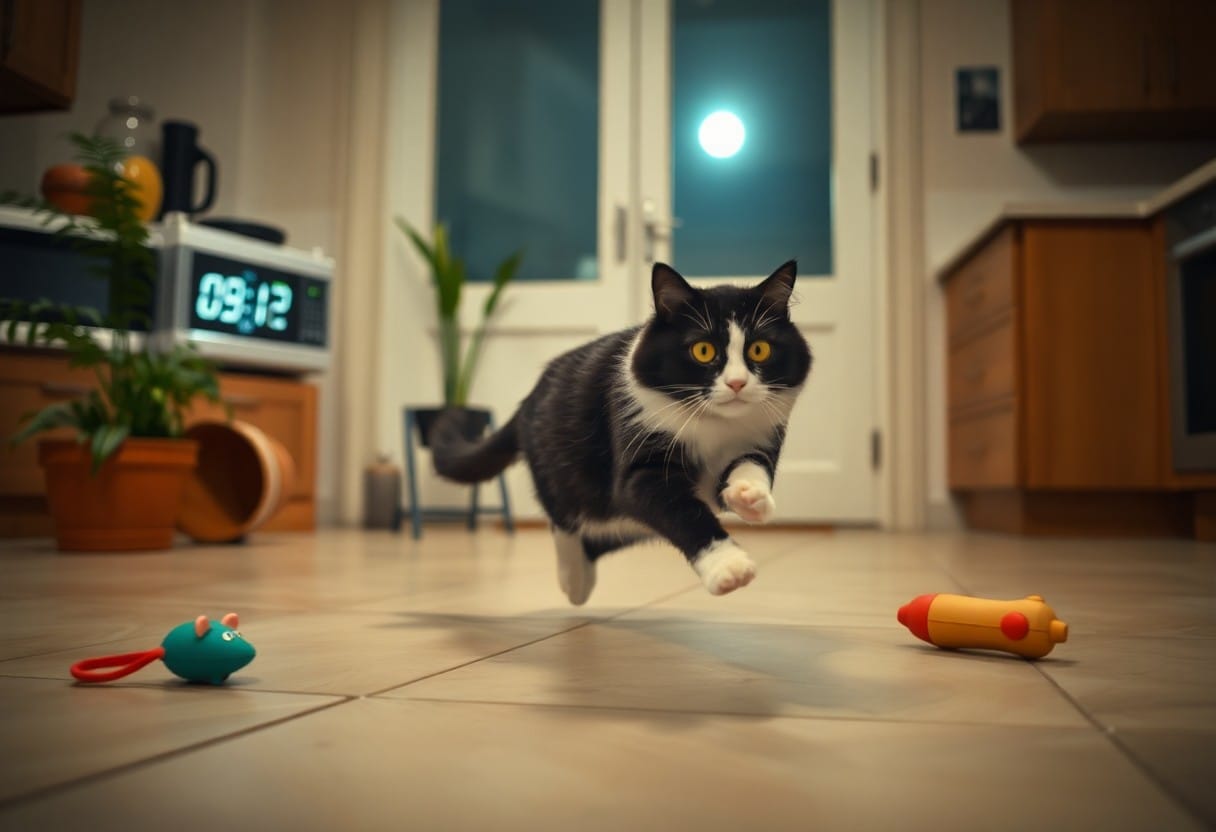
The Biological Basis of Frenetic Random Activity Periods (FRAPs)
Neurons, hormones and circadian cues drive FRAPs, causing brief high-energy bursts you observe at night; these episodes let your cat burn energy, sharpen reflexes and relieve stress, though broken furniture and startled people are common consequences.
Defining the physiological release of pent-up energy
Your cat’s muscles, adrenaline and a spike in cortisol prompt sudden sprints, jumps and zooms; you can reduce triggers with play and routine, because unrestricted bursts raise injury risk for both pet and home.
Evolutionary instincts of the crepuscular predator
Hunting instincts from dawn-dusk ancestors make your cat most active at low light, turning indoor spaces into a stage for practice; that predatory timing explains nocturnal zoomies and sudden pounces.
Generations of stalking and short chases wired quick bursts into your cat’s repertoire, so nightly zoomies are rehearsal for ambushes; you can channel this with interactive prey-like toys to satisfy instinct and cut destructive outbursts.
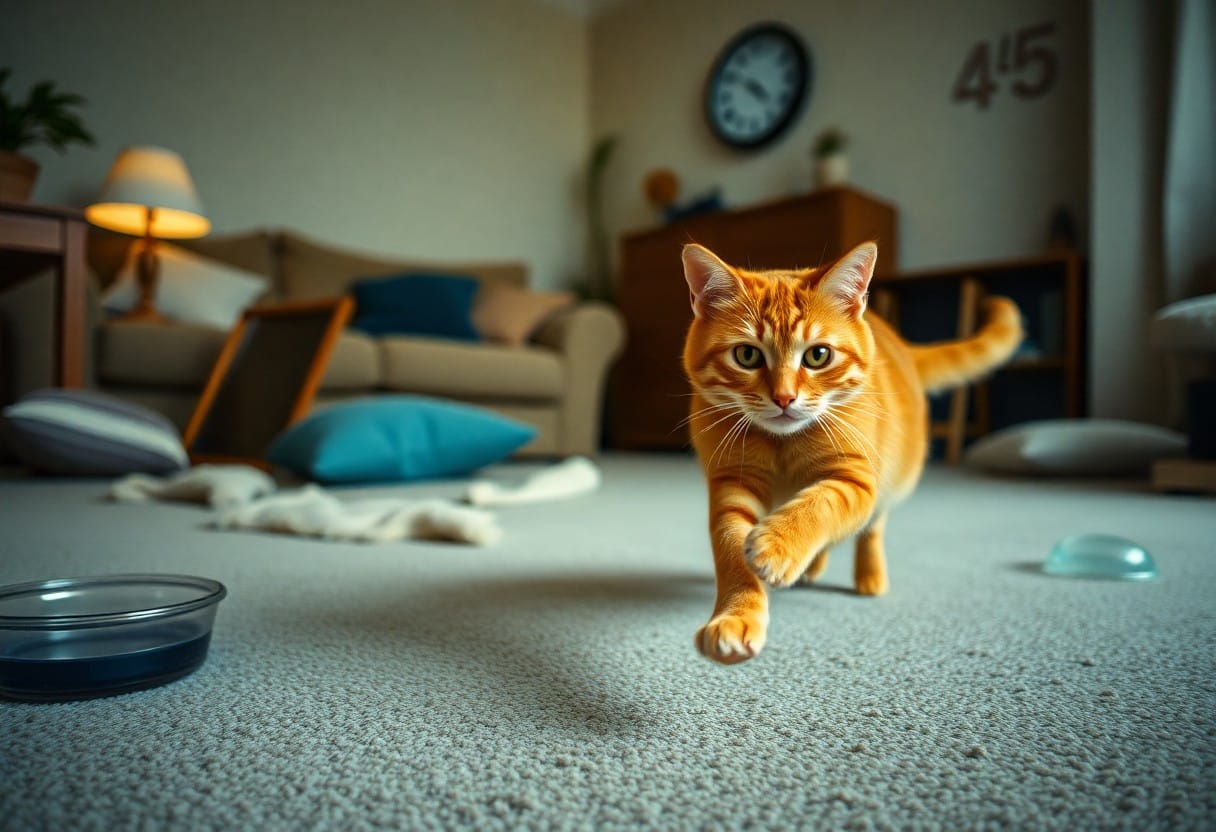
Sensory Influences on Nighttime Bursts
Nighttime intensifies how you experience your cat’s bursts, as enhanced hearing and low-light sight transform faint cues into urgent action, making those sprints a response to amplified sensory input.
Heightened visual and auditory perception in the dark
Eyes adapt so you notice rapid pupil dilation and pinpoint hearing, allowing your cat to track whisper-soft sounds and dim movement you would otherwise miss.
Responding to the movement of microscopic or nocturnal prey
Whiskers and ears pick up tiny air currents and rustles, so you see sudden dashes when micro-movements trigger your cat’s predatory precision.
Hunting instincts turn household creaks into targets, and you may notice rehearsed pounces on insects or shadows as your cat refines micro-movement sensitivity and explosive launch technique.
When the Zoomies Signal Medical Concerns
Watch for sudden, frequent nighttime sprints paired with appetite, weight, or grooming changes; if you see persistent shifts, seek veterinary care to rule out underlying medical causes.
Identifying symptoms of hyperthyroidism and feline hyperesthesia
Spot rapid weight loss, increased appetite, restlessness, or relentless grooming; with hyperesthesia you may notice skin twitching and sensitivity. When you observe these signs, contact your veterinarian promptly.
Distinguishing between healthy play and stress-induced agitation
Compare brief bursts of energetic play and quick recovery to prolonged pacing, hiding, or aggressive outbursts-those often signal stress. If your cat won’t settle or shows repetitive, destructive behavior, consult a veterinarian or behaviorist.
Assess whether zoomies follow play-if so, redirect with interactive toys and extra exercise; if they coincide with environment changes, loud noises, or litterbox problems, they may indicate stress or illness, and you should seek veterinary advice plus behavioral support.
Practical Management and Enrichment Strategies
You can reduce nightly zoomies by combining scheduled play, feeding adjustments, and environmental enrichment; prioritise safety by removing breakables and using soft furnishings to prevent injuries.
Implementing scheduled high-intensity interactive play
Schedule two 10-15 minute sessions in the evening and at bedtime where you use wand toys and quick chases to mimic hunting; this reliably reduces excess energy and helps your cat settle.
Adjusting feeding cycles to align with natural circadian rhythms
Shift main meals to morning and early evening, and offer a small protein-rich snack at night so your cat feels sated; when you avoid free-feeding you prevent nighttime activity spikes.
Timing meals to mimic your cat’s hunting peaks means you offer a substantial meal in the morning and another in the early evening, then give a small protein-rich treat about 30-60 minutes before you settle for the night; this suppresses late-night hunting bursts, lowers the risk of obesity, and works best when you use wet food or puzzle feeders and adjust portions under your vet’s guidance.
Conclusion
Presently you can manage nighttime zoomies by offering evening play sessions, predictable routines, and safe outlets for energy; ensure health checks rule out medical causes and use short interactive games to tire your cat so both you and your pet enjoy calmer nights.
FAQ
Q: What exactly are “zoomies” and why do cats often run wild at night?
A: Zoomies, formally called Frenetic Random Activity Periods (FRAPs), are short bursts of intense running, jumping, and play that help cats release built-up energy. Domestic cats are crepuscular, so activity tends to peak at dawn and dusk, which can make nighttime zoomies more common. Accumulated daytime sleep and an instinctive hunting drive often combine with brief surges of excitement or stress to trigger these episodes. Age and individual temperament matter: kittens and young adults show zoomies more frequently, while indoor-only cats may display them from limited outlets for natural behaviors.
Q: What practical steps can I take to reduce or redirect my cat’s nighttime zoomies?
A: Increase active play sessions in the evening to burn off excess energy, using wand toys, laser pointers, or feather toys that mimic prey movement. Schedule interactive play for 10-20 minutes immediately before a main meal so the cat can “hunt” then eat and settle down. Provide puzzle feeders and food-dispensing toys to encourage foraging and slow feeding throughout the day. Create environmental enrichment with vertical perches, hiding spots, and safe climbing surfaces to promote daytime activity and confidence. Use calming aids such as feline pheromone diffusers or vet-recommended supplements for particularly high-strung cats, and avoid punishment which can worsen stress-driven behavior.
Q: When should I be concerned about zoomies and seek veterinary advice?
A: Most zoomies are normal and short-lived, but consult a veterinarian if episodes change suddenly, become excessively frequent or prolonged, or coincide with other signs like loss of appetite, litter-box changes, aggression, limping, or lethargy. Medical issues that can increase hyperactivity or mimic frantic behavior include hyperthyroidism, pain, neurological disorders, and parasite infestations. Keep a brief log or video of episodes, note any environmental changes, and bring that information to the appointment to help the veterinarian assess whether testing or treatment is needed.