You can protect your cat from dehydration and kidney disease by using seven vet-approved, practical strategies to increase drinking and improve overall hydration.
The Biological Importance of Hydration
Hydration keeps blood volume stable and supports digestion; if your cat drinks too little it strains organs and raises risk of urinary and kidney disease, so you should encourage regular fluid intake.
Understanding Feline Kidney Function
Kidneys filter waste and concentrate urine; when you limit water they work harder, increasing the chance of chronic kidney disease, so include wet food or additional water sources to reduce their load.
Recognizing Clinical Signs of Dehydration
Watch for reduced urine, dry gums, sunken eyes, lethargy or decreased skin elasticity; if you notice these signs you should seek veterinary advice promptly.
If you suspect dehydration, perform a skin-turgor check and note rapid heart rate or weak pulses-these indicate severe fluid loss and require emergency care.
Leveraging the Appeal of Running Water
You can boost hydration by offering moving water that taps into your cat’s instincts; running sources often tempt cats to drink more and help avoid stagnant bowls that harbor bacteria. Position fountains in quiet spots and keep them clean weekly to maintain appeal.
Advantages of Circulating Pet Fountains
Fountains offer constant aeration and visible movement that encourages your cat to drink, often increasing daily intake. You benefit from built-in filters that reduce debris, but you must inspect and replace filters regularly to keep water safe and appealing.
Mimicking Natural Flowing Sources
Running water mimics streams your cat would seek outdoors, so you should present moving taps or fountains to trigger drinking instincts; cats favor cool, flowing water, so keep supplies fresh and monitor pump noise that might scare them off.
Try different flow styles-gentle trickles, bubbling spouts, or faucet adapters-and see which your cat prefers. Place fountains away from food and litter, at low heights with easy access. Keep water cool and moving, clean pumps and bowls weekly, and change filters as manufacturer recommends. Watch for foul odors or slime, which indicate contamination and can discourage drinking. If low intake persists, consult your vet about dehydration or kidney concerns.
Optimizing Bowl Material and Placement
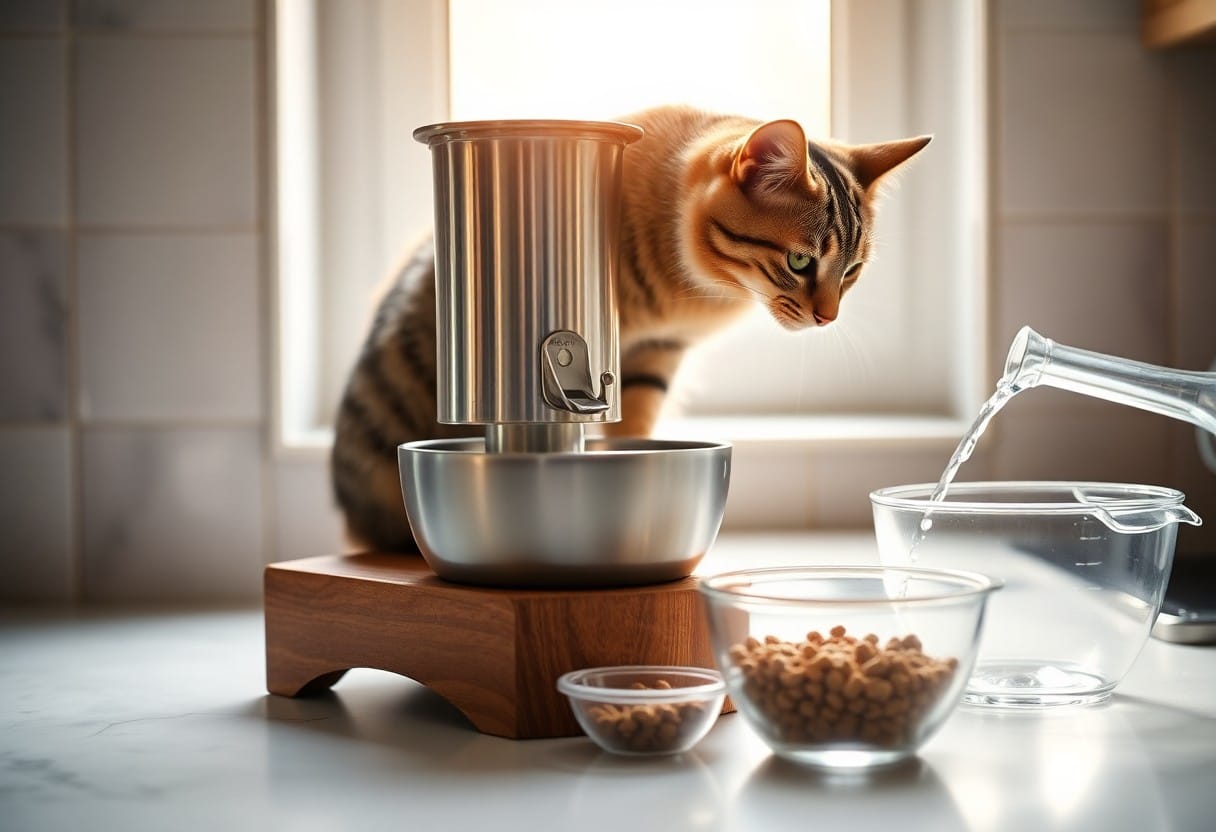
Ceramic and stainless-steel bowls resist odors and bacteria better than plastic; you should place them away from litter boxes and food, on stable surfaces at shoulder height so your cat drinks comfortably. Avoid plastic that can harbor bacteria and cause chin irritation.
Preventing Whisker Fatigue with Shallow Dishes
Shallow, wide dishes reduce whisker contact so your cat can eat and drink without discomfort; you should choose low bowls and watch for increased drinking when whisker stress drops.
Strategic Multi-Room Water Stations
Scatter water stations across rooms, especially near favorite resting spots, so your cat finds water wherever it lounges; this makes your cat more likely to drink. Keep bowls clean and avoid placing them beside litter boxes or busy counters.
Place fountains and bowls in multiple rooms to match your cat’s routines; running water appeals to many cats while stationary bowls suit others, so offer both. For older cats, set stations on low tables or carpet to prevent slipping. You should clean all stations at least every 48 hours to avoid bacterial buildup and keep them away from litter and noisy appliances.
Enhancing Water Palatability
Utilizing Unsalted Broths and Flavor Infusions
Broths can tempt picky cats: offer unsalted chicken or fish broth mixed into water or drizzled over food to increase intake. You should use low-sodium, fully cooled broths and avoid onion or garlic ingredients. Avoid store-bought broths with salt and always monitor for upset stomach.
Broth Options vs Cautions
| Unsalted chicken or fish | Often increases interest; mild flavor |
| Homemade broth | Full ingredient control; omit onion/garlic |
| Commercial broths | Avoid high-sodium products; check labels |
Temperature Preferences and Sensory Interest
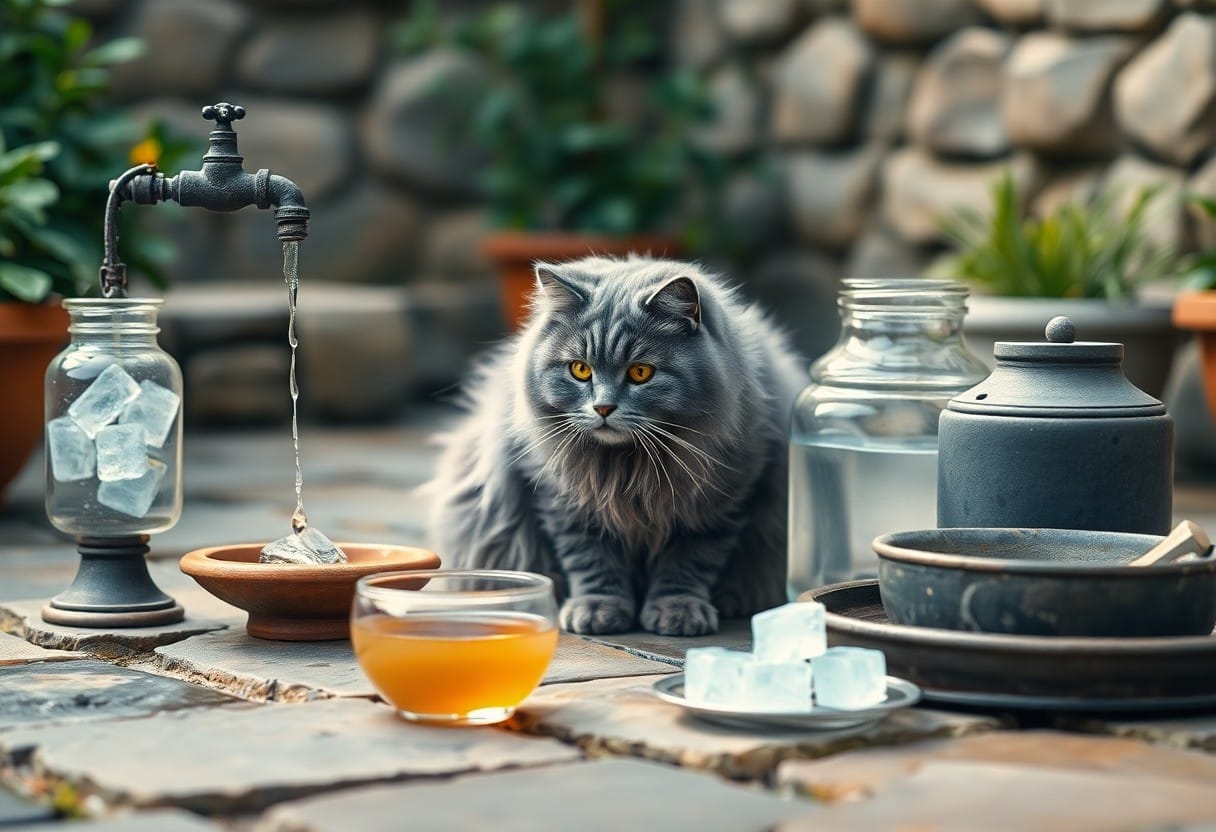
Cool water often draws more sips than warm bowls; try chilled water or ice cubes to spark curiosity. You should avoid extreme cold if your cat has dental sensitivity and watch reactions. Consistency matters-rotate bowls and locations to keep drinking habits active.
Experiment with bowl materials and temperatures to find what your cat prefers; you should test small changes and watch for dehydration signs. Replace plastic bowls if they retain odors and offer ceramic, stainless, and running-water options to see which encourages more drinking.
Temperature Tips vs Notes
| Cool (chilled) | Often attracts attention; may include ice cubes |
| Room temperature | Safe default for sensitive teeth |
| Running water | Stimulates many cats to drink more |
| Ice cubes | Fun for some; avoid if dental issues |
Maintenance and Hygiene Protocols
Clean water dishes, fountains, and filters on a set schedule so you prevent bacterial and mold buildup, keeping your cat safer and more likely to maintain steady hydration.
Daily Cleaning and Filtration Standards
Rinse bowls and fountain parts daily, deep-clean weekly, and replace cartridges per instructions; clogged filters promote bacterial growth and make water less appealing to your cat.
Monitoring Individual Consumption Patterns
Track each cat’s daily consumption with a log or smart feeder; sudden drops often indicate illness, while steady increases mean better health-flag any sharp declines for vet review.
Compare current intake to baseline values and note changes in timing or volume; use scales or apps to quantify amounts, and seek care if you observe persistent decreases.
Final Words
Now you should encourage your cat to drink more by offering fresh water in several shallow bowls, using a flowing-water fountain, adding wet food, flavoring with low-sodium broth, and tracking intake-contact your veterinarian if drinking patterns change.
FAQ
Q: How can I encourage my picky cat to drink more water?
A: Place several water dishes around the house in quiet, low-traffic spots so your cat can choose where it feels comfortable drinking. Offer a mix of bowl types and heights-wide, shallow ceramic or stainless-steel bowls often work better than deep or plastic ones because they don’t trap whiskers and avoid plastic scents. Keep water fresh by changing it at least once or twice daily and washing bowls with hot, soapy water to remove odors and biofilm. Add moisture to your cat’s diet by feeding canned/wet food or mixing a little water into dry kibble; many cats get much more fluid that way. Try a cat water fountain with a gentle flow; some cats prefer running water and will drink more from a fountain than a bowl. Flavor water sparingly with a small amount of low-sodium chicken broth or the water from canned tuna (not oil), offered only occasionally to encourage drinking. Offer cooled boiled water or add a few ice cubes on warm days to entice cats that like colder water.
Q: Are cat water fountains safe and how should I choose and maintain one?
A: Cat water fountains are safe when you choose a model with food-grade materials (stainless steel or BPA-free plastic) and a quiet, low-vibration pump that won’t scare your cat. Pick a design with easily removable parts and replaceable filters to keep water clean; activated carbon filters help remove odors and taste. Clean the fountain thoroughly at least once a week and change filters according to manufacturer instructions, typically every 2-4 weeks, to prevent bacterial buildup. Monitor the pump for noise or reduced flow, and unplug and dry the unit before cleaning. Introduce the fountain gradually by placing it near existing water bowls so your cat can investigate without pressure.
Q: When should I worry about my cat’s water intake and see a veterinarian?
A: Seek veterinary attention if your cat refuses to drink for 24 hours, or shows signs of dehydration such as lethargy, sunken eyes, dry or tacky gums, decreased skin elasticity, or reduced urination. Rapidly increased drinking and urination may indicate underlying conditions like kidney disease, diabetes, or hyperthyroidism and also warrant prompt assessment. Perform a simple skin-tent test at home by gently lifting the scruff or skin over the shoulder; slow return to normal shape suggests dehydration. Bring a record of changes in drinking, urination, appetite, and any vomiting or diarrhea to the appointment, along with a fresh urine sample if possible. The vet can run bloodwork and urinalysis and recommend fluid therapy or specific treatments depending on the diagnosis.