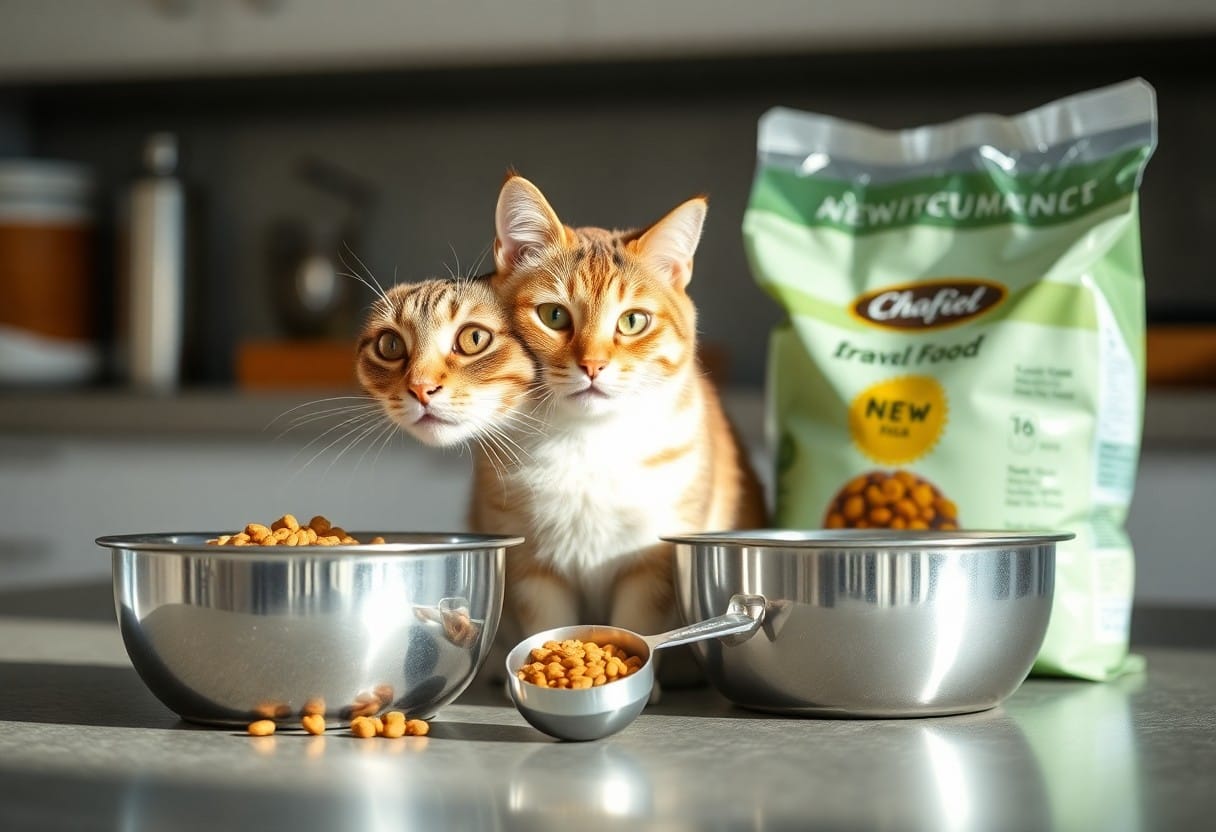
There’s a way to switch brands without stress: you should introduce new food slowly over 7 to 10 days, watch for digestive upset, and consult your vet if vomiting or refusal persists; mixing slowly promotes better appetite and improved nutrition.
Identifying Factors Behind Feline Food Selectivity
Symptoms of feline food selectivity include sudden refusal, texture aversion, and weight change.
- medical issues
- texture or scent preference
- feeding routine
This directs you toward testing, diet adjustment, or a vet visit for suspected medical issues.
Differentiating between medical issues and behavioral habits
Check for medical issues such as dental disease, oral pain, or gastrointestinal upset before assuming preference; if none are present, monitor behavioral habits like boredom, routine shifts, or learned refusals to new flavors.
Environmental factors that impact a cat’s appetite
Noise, lighting, and bowl placement can reduce your cat’s appetite.
- loud surroundings
- dirty or narrow bowls
- crowded feeding areas
Knowing how environmental factors influence eating lets you make simple adjustments to encourage meals.
Lighting and strong odors often suppress eating while proximity to litter boxes or busy doorways creates avoidance; quiet, separate stations and clean bowls encourage intake.
- feeding location
- bowl hygiene
- household stressors
Knowing small environmental fixes-separate feeding areas, regular cleaning, and consistent schedules-can restore appetite and reduce unnecessary diet changes.
How-to Evaluate and Select a Superior Food Brand
You should prioritize brands that list a named meat source first, guarantee complete and balanced nutrition, and avoid excess fillers or added sugars. Look for AAFCO statements and recall history to assess trustworthiness when switching foods.
Analyzing ingredient labels for nutritional transparency
Reading labels helps you spot real protein sources, identify dangerous additives like unnamed by-products, and compare guaranteed analysis numbers; prioritize brands that disclose ingredient sourcing and feeding trials.
Understanding the role of texture and moisture levels
Check texture preferences by offering small samples of wet and dry options; high-moisture diets aid hydration but might be refused if your cat dislikes mouthfeel; slowly mix to test acceptance.
Observe how temperature, aroma, and particle size affect acceptance; offer warmed samples, alternate textures at different meals, and monitor weight, stool and hydration. If your cat shows persistent refusal, vomiting, or weight loss, consult your vet-some texture aversions signal dental pain or gastrointestinal issues requiring attention.
Essential Tips for Preparing the Transition Environment
Prepare a calm feeding area, remove distractions and keep bowls and surfaces clean to help picky eater adjust to a new food brand. Thou must monitor appetite and litterbox changes, and separate feeding stations if multiple cats are present.
- Separate feeding areas for each cat
- Consistent schedule and measured portions
- Quiet, clean space away from litterboxes
Shifting from free-feeding to a structured schedule
Move from free-feeding to timed meals by offering measured portions twice daily; use small steps to shorten access time and track intake so you can spot appetite shifts.
Reducing stress and competition during mealtime
Limit competition by feeding cats in separate rooms or on different levels, using secure feeders for nervous cats, and keeping mealtime calm so you reduce anxiety.
Create clear strategies: stagger feeding times, offer elevated spots, use microchip feeders for food guards, and supervise early meals; watch for weight loss, dehydration, or aggression which demand vet advice, while simple separation often yields easier adjustments.
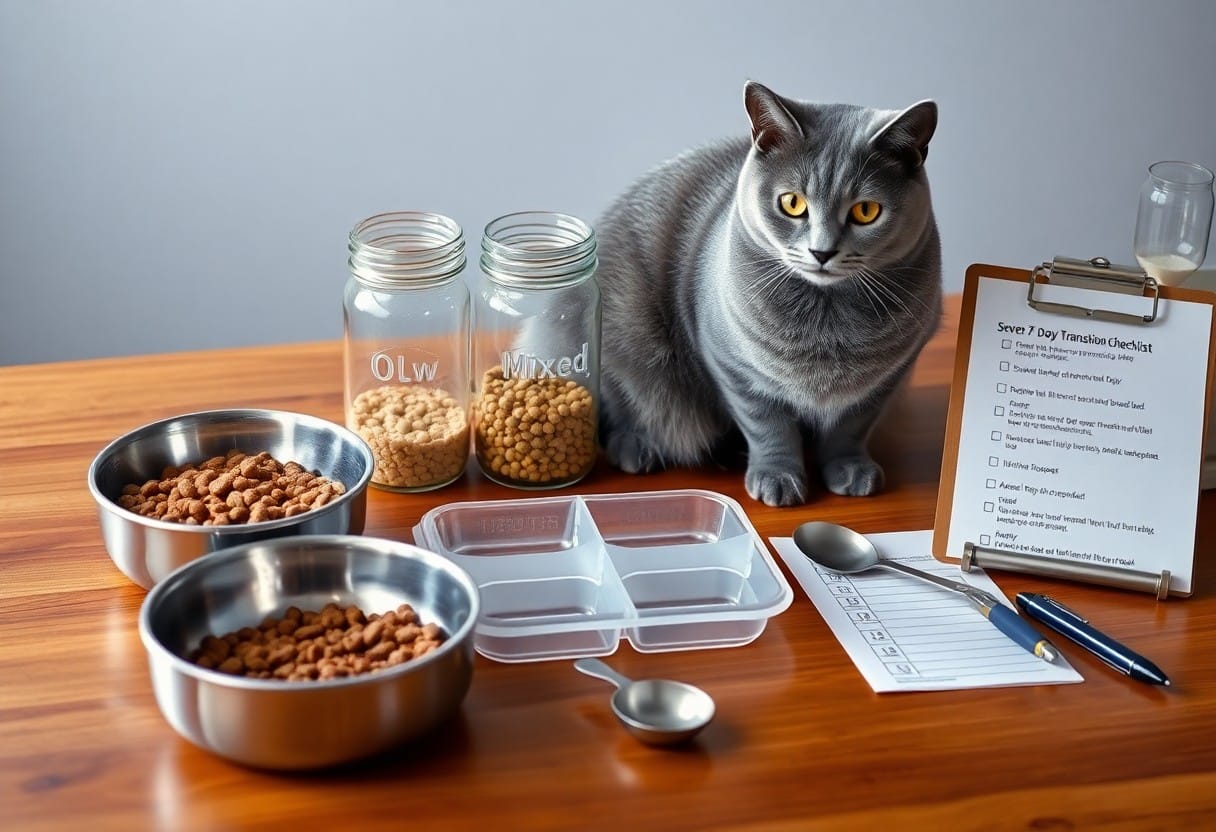
How-to Execute a Dietary Shift
You can minimize refusals and tummy upset by changing diets over seven days; watch for vomiting, severe diarrhea, or rapid weight loss as dangerous signs, and take consistent eating and normal stools as the positive outcome.
Implementing the incremental mixing ratio over seven days
Begin with 25% new food and 75% old for two days, move to 50/50 for two days, then 75/25 for two days, finishing with 100% new on day seven; pause the plan if your cat shows distress.
Monitoring weight and digestive health during the change
Track weight and stool daily; if you notice persistent diarrhea, blood in stool, vomiting, or sudden weight loss, stop the transition and contact your veterinarian, while steady weight and regular stools signal success.
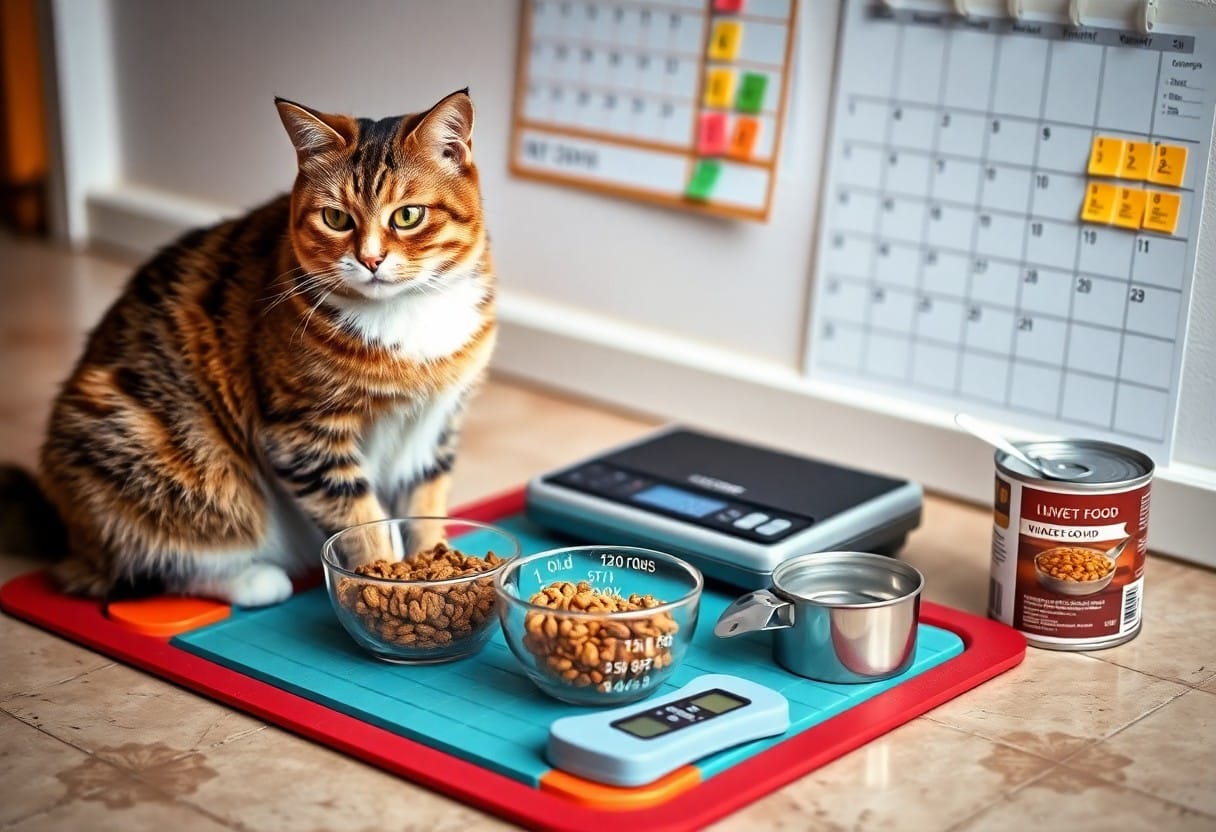
Weigh your cat every 2-3 days on the same scale and record appetite, energy level and stool form; if weight shifts more than about 5% in a week or you see repeated vomiting, bloody stool, or marked lethargy, seek veterinary advice immediately, whereas consistent appetite, firm stools and gradual weight stability indicate the diet is being tolerated.
Proven Tips for Enticing the Most Stubborn Eaters
Try small-step mixing, timed meals, and consistent portions to coax a picky eater toward a new food. Assume that you will monitor appetite, watch for allergic signs, and slow the pace if refusals increase.
- Rotate textures
- Mix familiar with new
- Use toppers sparingly
Utilizing temperature and aroma to increase palatability
Warm wet food briefly to release aroma and entice your cat; keep servings lukewarm to avoid burns and preserve flavor.
Temperature & Aroma Tips
| Action | Benefit |
|---|---|
| Warm 30-60 seconds | Releases scent without causing burns |
| Add warmed low-sodium broth | Boosts smell and hydration; avoid added salt |
Integrating toppers and healthy flavor enhancers
Offer a spoon of plain cooked fish, unsalted broth, or a sprinkle of freeze-dried tuna as a topper to spark interest while avoiding onions, garlic, and fatty scraps.
Mix small amounts of nutritionally safe toppers into meals to shift preferences gradually; measure portions to prevent extra calories, rotate options to reduce boredom, and stop any topper that causes vomiting or diarrhea. Consult your vet if refusal or weight loss persists.
Managing Factors That Complicate the Transition
Factors like stress, meal routines, and texture changes can stall a transition for your picky eater; monitor portions, timing, and environment. Perceiving changes in appetite, vomiting or diarrhea early lets you adjust pace and ingredients.
- Stress and environment
- Texture and temperature preferences
- Hidden treats or meds that disrupt a transition
- Underlying health issues affecting appetite
Addressing signs of food refusal and digestive sensitivity
Watch for persistent sniffing, selective eating, or food refusal; offer small, bland portions and note any digestive sensitivity signs like repeated vomiting or loose stools, then slow the switch and simplify ingredients.
Identifying when to seek veterinary guidance
Seek immediate veterinary guidance if your cat shows rapid weight loss, dehydration, repeated vomiting, bloody stool, or refusal to eat beyond 24 hours.
When symptoms persist, your vet can run diagnostics-bloodwork, fecal tests, and imaging-to rule out pancreatitis, infection, allergies, or metabolic disease; expect tailored treatment, temporary prescription diets, and hydration support if you observe ongoing appetite loss or worsening stool and behavior.
Summing up
Taking this into account, you should introduce new food slowly, observe acceptance and stool, keep feeding times consistent, use palatable toppers sparingly, and contact your veterinarian if refusal or digestive issues persist.
FAQ
Q: Why is my cat suddenly a picky eater?
A: Several reasons can cause pickiness. Medical issues like dental pain, gastrointestinal upset, urinary problems, or thyroid disease often reduce appetite and should be ruled out by a veterinarian when changes are abrupt. Sensory factors such as texture, temperature, and aroma strongly influence acceptance because cats rely heavily on smell. Prior exposure to highly palatable foods or frequent treats can make regular food less appealing. Stress, changes in routine, or environmental factors can also suppress interest in a new diet.
Q: How should I transition my cat to a new food brand?
A: Use a mixing schedule over 7-10 days: days 1-3 offer about 75% old/25% new, days 4-6 offer 50/50, days 7-9 offer 25/75, and switch to 100% new on day 10. A shorter 4-5 day approach with smaller increments can work for some cats if no digestive upset occurs. Offer small, consistent meals and avoid free-feeding during the switch to increase motivation. Warm wet food briefly or add a little warm water to enhance aroma. Keep texture and moisture similar to the old food when possible to reduce rejection. Pause the transition and consult a veterinarian if you see vomiting, diarrhea, marked decreased appetite, weight loss, or lethargy.
Q: What if my cat refuses the new food despite transitioning efforts?
A: Try safe flavor boosters such as plain cooked chicken, low-sodium chicken broth, or a small amount of tuna water mixed into the new food to increase appeal. Change texture by moistening kibble or trying pate versus chunks to find a preferred format. Cut back on treats and feed at scheduled times so the cat is more likely to eat meal servings. Use hand feeding or food puzzles to build positive associations with the new food. If refusal continues for 48-72 hours, or if the cat loses weight or shows other symptoms, have a veterinarian evaluate for dental pain, allergies, or other medical causes and consider trying a different protein or formula.