You need waterless cat shampoos that are non-toxic, fragrance-free, and free of crucial oils toxic to cats, while offering gentle, effective cleaning and quick drying for stress-free grooming.
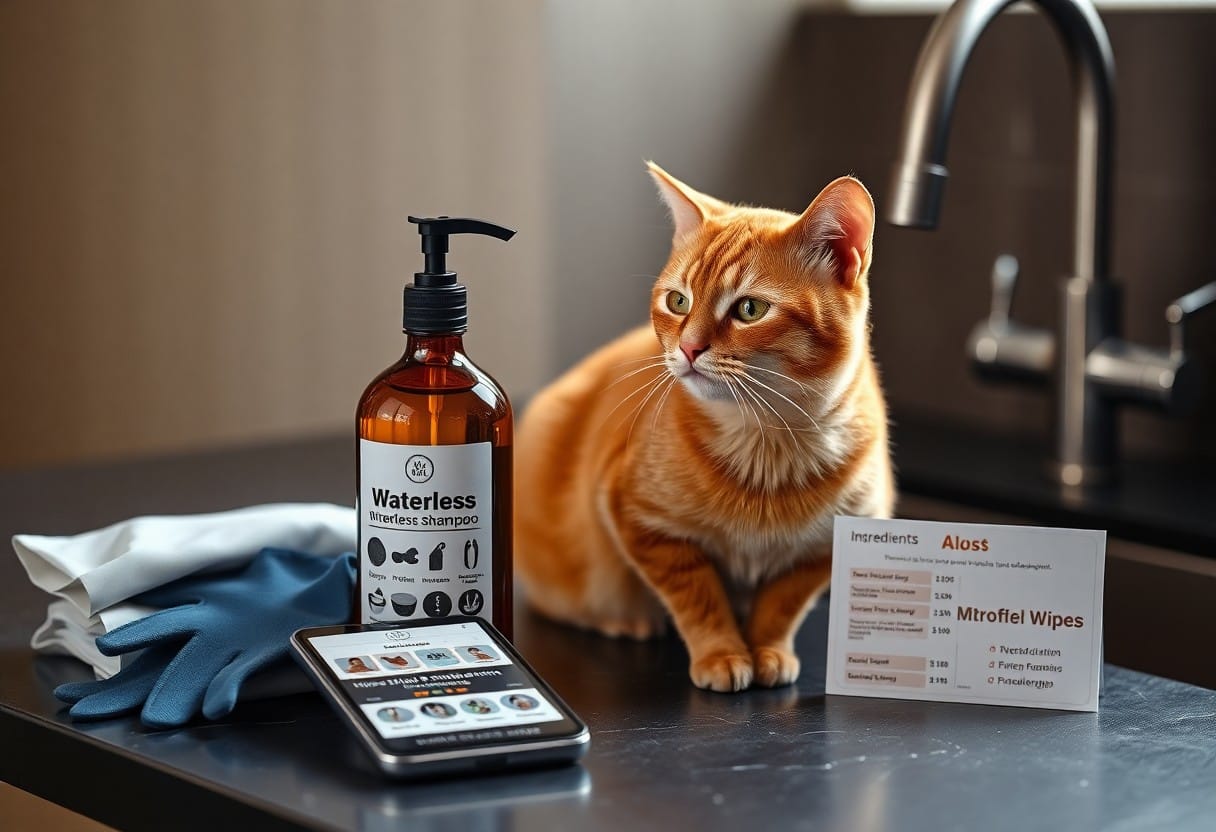
The Advantages of Waterless Bathing for Cats
Waterless bathing lets you clean your cat without full immersion, keeping natural oils intact and cutting grooming time. You protect sensitive skin and reduce the chance of hypothermia or water-induced shock in anxious pets. Use products formulated for felines to avoid irritation.
Minimizing Grooming Anxiety and Stress
Cats often panic during baths; you can use waterless wipes or foam to calm them, reducing struggle and risk of bites or scratches. Short, gentle sessions let you maintain the coat while avoiding the trauma of forced immersion.
Practical Solutions for Senior or Post-Surgical Pets
Senior cats or those recovering from surgery often have limited mobility, so you can keep them clean with dry shampoos and no-rinse sprays that minimize handling and help prevent wound contamination or stress-related setbacks.
You can pad surfaces, use a non-slip mat, apply gentle dry shampoo by hand to avoid pressure on healing areas, and protect incisions by cleaning around – never apply product directly to open wounds. Ask your vet about specific formulas; choosing vet-approved options reduces infection risk and promotes safer, stress-free grooming.
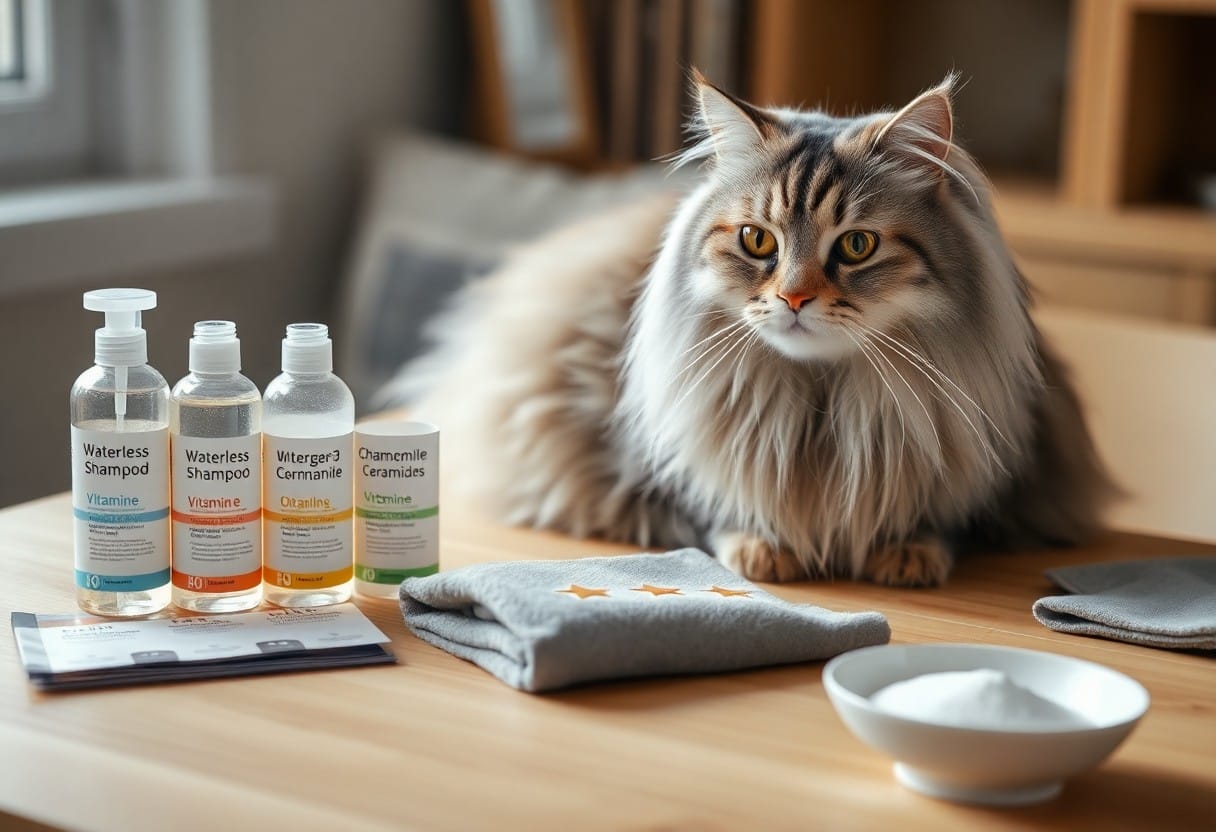
Essential Ingredients for Feline Skin Health
Skin needs gentle hydration and anti-inflammatory support; you should choose waterless shampoos with omega-rich oils, ceramides, and soothing botanicals to protect fur and calm irritation.
Plant-Based Cleansers and Natural Conditioners
Botanicals like aloe and oat extract lift grime while you avoid sulfates and synthetic fragrances; seek formulas with mild surfactants and natural conditioners to keep coats soft.
The Importance of pH-Balanced Formulas
pH matters because feline skin is more alkaline than human skin, so you should pick cleansers labeled pH-balanced for cats to prevent dryness, irritation, or microbiome disruption.
Cats have a skin pH typically between 6.0-7.0; if you use human or alkaline products you risk dryness, itching, and secondary infections. Look for products that state feline pH testing or show balanced ranges, and patch-test on a small area; stop use and consult vet if you see redness, swelling, or persistent discomfort.
Top Recommendations: Best Waterless Shampoos Reviewed
These picks help you keep your cat clean between baths; you should choose formulas that are alcohol‑free, fragrance‑free, and vet‑tested to minimize skin irritation and allergic reactions.
Leading Foam and Mousse Cleansers for Deep Cleaning
Try mousse formulas when your cat needs deeper cleaning; they lift dirt and oils without water, but avoid products with harsh detergents and watch for eye contact-rinse or wipe immediately.
Best Hypoallergenic Options for Sensitive Skin
Choose hypoallergenic sprays that are fragrance‑free and contain soothing ingredients like aloe or oatmeal; you’ll reduce itching and flare‑ups, but test a small area first and consult your vet if reactions appear.
Always patch‑test hypoallergenic shampoos on your cat’s flank for 24 hours; if you spot redness, swelling, or excessive grooming, stop use and call your vet-some “hypoallergenic” labels still include irritants or preservatives you should avoid.
Addressing Specific Needs: Dander and Odor Control
Dander accumulates quickly; you should pick waterless shampoos with enzyme-based anti-allergen action and mild surfactants to lift flakes without irritating skin. Avoid products with strong perfumes or tea tree/phenolic compounds, which can be harmful to cats.
Specialized Formulas for Reducing Feline Allergens
Look for formulas labeled hypoallergenic or enzyme-rich; you can use them to reduce airborne allergens and shed. Steer clear of added dyes and heavy fragrances, and consult your vet if your cat has sensitive skin or respiratory issues.
Effective Deodorizers for Persistent Odors
Choose deodorizers that neutralize odors rather than mask them- you’ll avoid repeated exposure to masking agents; check labels for non-toxic claims and low fragrance levels to keep your cat safe.
You can combine enzyme or oxidizing neutralizers with odor-absorbing agents like activated charcoal for persistent smells; apply sparingly and towel in to avoid overexposure. Watch for tea tree oil, phenols, and high-concentration vital oils, which are dangerous for cats; always test a small area before full use.
Application Guide: How to Dry-Clean Your Cat
Follow a calm routine: hold your cat securely, apply waterless shampoo in small sections while avoiding the face and any open wounds, then massage gently to activate the formula. Test a patch first and stop if you see skin irritation or other allergic reactions.
Proper Distribution and Massaging Techniques
Apply product sparingly along the back and sides, working from neck to tail. Use your fingertips to distribute evenly, pressing into the coat with gentle circular motions to reach the skin. Avoid eyes and ears and monitor for redness or persistent odor as signs of reaction.
Post-Application Brushing for a Lustrous Coat
Brush through after drying to remove residue and loose fur, starting with a wide-tooth comb then a soft bristle brush. Use slow, gentle strokes in the direction of growth to prevent pulling. Treat any matted areas carefully to avoid hurting your cat.
Carefully pick tools suited to your cat’s coat type: a slicker or dematting comb for long hair, a rubber grooming mitt for short coats. Work in sections, holding matted tufts at the base to minimize tugging while you tease tangles from the tips. If you encounter a stubborn matted area that pulls or causes a skin reaction, pause and seek professional help; do not force removal. Continue brushing until the coat shows a soft sheen and you see fewer loose hairs, then reward your cat for cooperation.
Safety Standards and Precautions
You should choose waterless shampoos labeled veterinary-approved or hypoallergenic, inspect ingredient lists, perform a patch test, and avoid products with parabens or sulfates.
Identifying Harmful Additives and Synthetic Fragrances
Check ingredient lists for parabens, sulfates, artificial dyes, and strong synthetic fragrances, which can trigger allergies or respiratory issues in cats.
Recognizing and Preventing Potential Skin Irritations
Watch for redness, persistent itching, swelling, or hair loss after use; if you notice any signs, stop application and contact your veterinarian.
Test any new product by applying a pea-sized amount to an inconspicuous, hairless patch like the inner foreleg and observe for 24-48 hours for redness or itching. If reactions occur, discontinue use immediately and seek veterinary advice; apply sparingly, avoid eyes and ears, and follow manufacturer frequency guidance to reduce irritation.
Conclusion
Considering all points you can pick a gentle, fragrance-free waterless shampoo that suits your cat’s coat and skin; test on a small area, monitor for irritation, and combine with regular brushing to maintain cleanliness and comfort.
FAQ
Q: What is a waterless shampoo and is it safe for cats?
A: A waterless shampoo is a no-rinse grooming product in spray, foam, or powder form that cleans fur by absorbing oils and lifting dirt without bathing. Formulations for cats typically use mild surfactants, plant-derived cleansers, or absorbent powders such as cornstarch or kaolin clay to refresh the coat and control odor. Read ingredient lists and avoid products that contain tea tree oil, eucalyptus, high concentrations of alcohol, or strong vital oils that can be toxic to cats. Perform a patch test on a small area of skin and wait 24 hours for signs of irritation before full use. Skip waterless shampoo on open wounds, infected skin, or severe dermatitis and consult a veterinarian if your cat has a preexisting skin condition, is very young, elderly, pregnant, or otherwise medically fragile.
Q: How do I choose the best waterless shampoo for my cat?
A: Match the product type to your cat’s coat and temperament: sprays and light foams work well for short-haired or anxious cats, while powders can be better for long coats that need oil absorption. Look for labels that state the product is formulated for cats or for both cats and kittens, hypoallergenic or fragrance-free options for sensitive skin, and pH-balanced claims geared to feline skin. Inspect the ingredient list for gentle, recognizable components and avoid unnecessary fragrances, dyes, or known feline toxins. Prioritize brands with transparent ingredient sourcing, positive user reviews from cat owners, and veterinary recommendations rather than marketing claims alone. Consider sample sizes or travel bottles for a trial run before committing to a full container.
Q: What is the correct way to apply waterless shampoo and what precautions should I take?
A: Brush your cat thoroughly first to remove loose hair and tangles, then choose a calm, well-lit area and have towels ready. Shake or dispense the product according to label instructions, spray or apply a small amount to the coat while avoiding eyes, ears, nose, and any broken skin, and massage or rub gently so the formula can lift dirt and oils. Wipe the coat with a clean towel or brush out residue, especially when using powder formulas, and allow the coat to dry fully before allowing the cat to groom itself. Stop use and rinse with water or contact a veterinarian if you notice redness, swelling, persistent scratching, or respiratory distress. Limit use frequency to what the product label or your veterinarian recommends; overuse can dry skin or remove natural oils needed for a healthy coat.