Most long-haired cats need daily grooming to prevent painful mats and skin infections; you should brush gently, trim problem areas, use detangler, and consult a groomer or vet for severe mats.
Understanding the Long-Haired Feline Coat
Coat structure affects how easily your cat develops mats and tangles, so you must check for damp or matted areas that can lead to skin irritation and pain.
The anatomy of guard hairs and the dense undercoat
Guard hairs form an outer shield while a dense undercoat traps shed fur near the skin, so you should brush to remove loose hair before it binds into mats.
Why long-haired breeds are biologically prone to matting
Breeds with longer coat length and plentiful underfur shed continuously, which raises your risk of persistent mats unless you increase regular grooming.
Longer coats also retain moisture and debris, so you should inspect and groom daily when possible; untreated tight mats can pull on skin, cause fur loss, lead to skin infection and restrict movement. Seek professional trimming if mats are close to skin or your cat shows sensitivity to prevent ongoing pain.
Essential Tools for Professional-Grade Grooming
Tools you keep on hand should include a quality slicker brush, a greyhound comb, and a de-matting rake; these reduce tugging and prevent painful mats, lowering the risk of skin irritation and infection while giving you precise control.
Selecting slicker brushes, greyhound combs, and de-matting rakes
Choose a slicker with fine, angled pins for surface tangles; pick a greyhound comb to work close to skin, and use a de-matting rake only on stubborn mats so you avoid excessive pulling and pain for the cat.
The role of specialized detangling sprays and conditioners
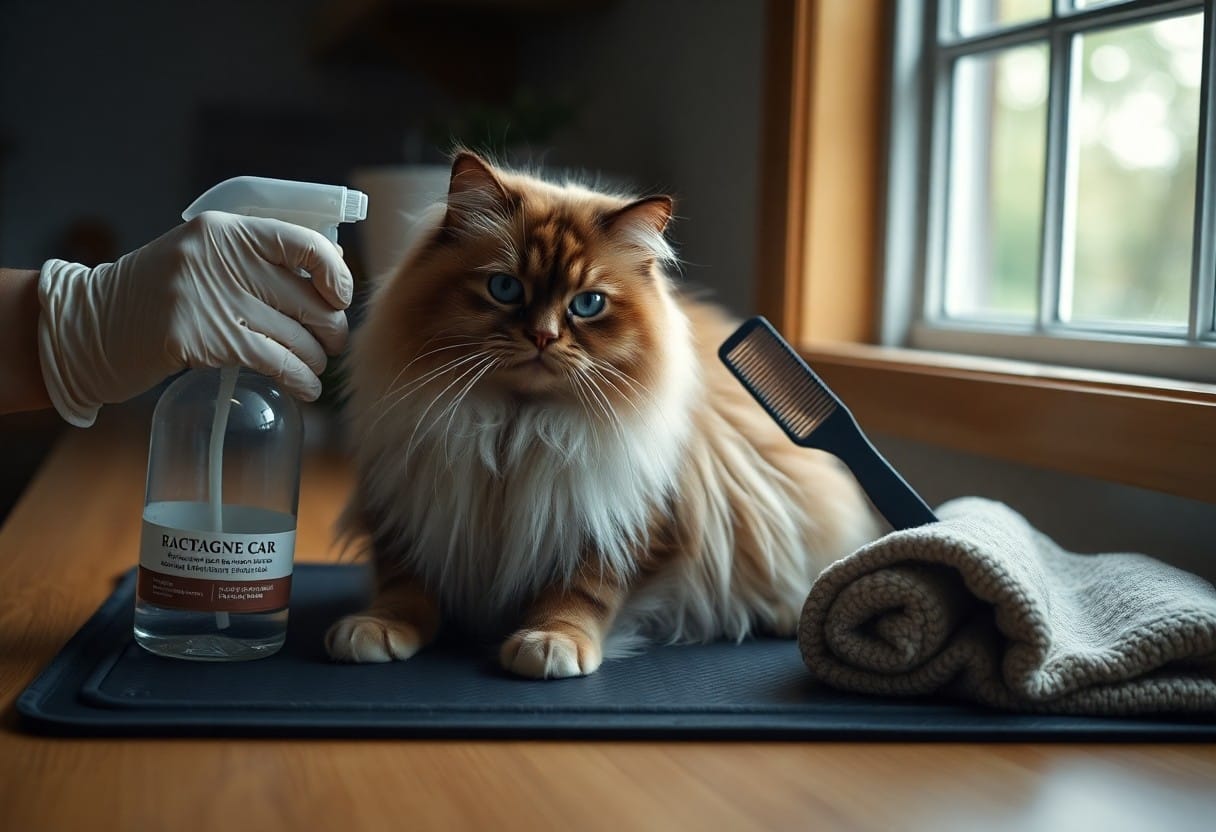
Use feline-formulated detanglers so you can loosen knots, cut static, and make combing gentler; avoid products with toxic crucial oils, and choose formulas that help minimize pain during mat removal.
Apply sprays lightly, misting from ends toward roots and letting the conditioner sit a minute so you can gently work tangles out; always patch-test new formulas, keep sprays away from eyes, and skip any product containing crucial oils or other cat-toxic ingredients to avoid severe reactions.
Establishing a Preventative Maintenance Routine
Set a simple schedule to check and groom your cat several times weekly, combining brushing, spot checks, and occasional trims to prevent painful mats and skin issues.
Implementing daily brushing schedules to manage shedding
Daily short sessions reduce loose hair and stop tangles before they form; use a slicker brush and reward your cat so you can maintain consistent care and lower grooming stress.
Focusing on high-friction areas: armpits, belly, and hindquarters
Target those zones each session, checking for heat, matting, or sores; if you find tight mats near armpits or hindquarters, seek professional help to avoid pain and skin damage.
Examine high-friction spots by parting your cat’s fur and feeling for tight bands against the skin; use a wide-tooth comb for loose tangles and a dematting tool only when you can keep skin taut and the cat calm. Stop if your cat shows pain, clean red areas gently, and contact a groomer or vet for deep, painful mats that risk infection. Regular gentle work prevents severe matting and keeps your cat comfortable.
Safe Techniques for Removing Existing Mats
You should assess mat size and your cat’s stress, working slowly and rewarding breaks; never pull tight mats and stop if skin puckers. Use short sessions and ask a groomer or vet for large mats to avoid pain and skin tears.
Manual detangling methods to prevent skin trauma
Hold skin between the mat and base to shield flesh while you tease knots with fingers and a wide-tooth comb, working from the edges outward; stop if you see skin reddening and give calm breaks with treats.
Proper use of safety shears and electric clippers for severe knots
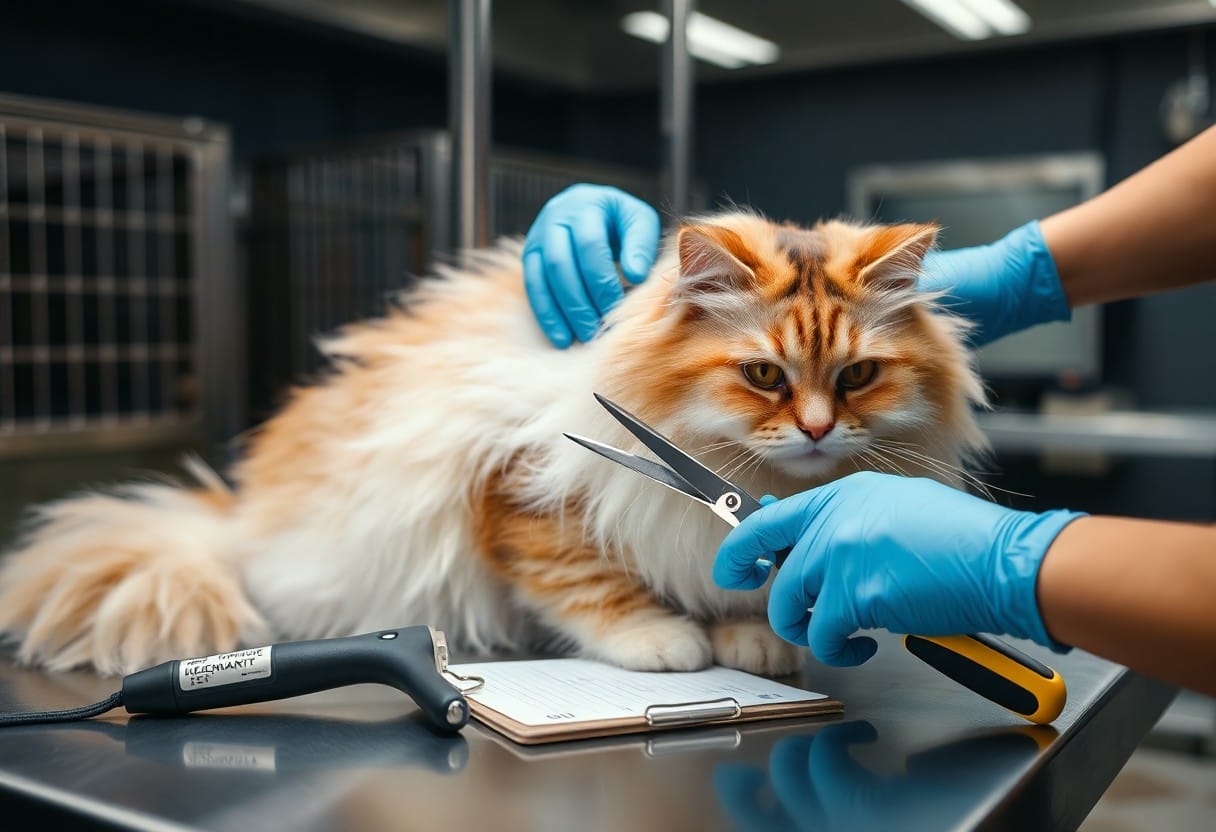
Employ safety shears with the blade parallel to skin and clip in tiny sections, keeping a comb between blade and fur; if you use clippers, attach a guard and move slowly so you avoid cutting over skin folds.
Before attempting clippers on heavy mats, shave a small test area to check tolerance, anchor the skin to prevent pulls, maintain steady hands, and keep a partner to restrain gently; stop immediately if your cat yelps and seek professional help for mats close to the body or sensitive areas.

Nutritional Support for Optimal Coat Health
Dietary balance supports your cat’s coat: high-quality protein and adequate fats strengthen hair and reduce matting, while deficiencies can cause breakage and increased shedding, making grooming harder for you.
The impact of Omega-3 and Omega-6 fatty acids on hair elasticity
Omega-3s and omega-6s lubricate follicles and reduce inflammation, improving hair elasticity so your cat’s fur becomes more flexible and less prone to painful mats.
Hydration levels and their effect on dander and tangles
Water keeps skin supple; low intake increases dander and static, which raises the chance of tangles and matted fur that can hurt your cat.
Maintaining proper hydration means offering fresh water, wet food, or a fountain to encourage drinking; when your cat is underhydrated, skin becomes dry, shedding spikes, and microscopic tangles can tighten into painful mats that trap moisture and bacteria-check the neck, armpits, and behind the ears daily and consult your vet if you find persistent dryness, bleeding, or signs of infection under mats.
Recognizing When to Consult a Professional Groomer
You should consult a professional groomer when mats cause pain, restrict movement, or you spot redness and persistent odor; a groomer can safely remove mats and lower the chance of secondary skin infections.
Identifying signs of pelting and secondary skin infections
Observe for open sores, swelling, constant scratching, or a foul odor-these signs of pelting can hide bacteria and demand professional attention to prevent worsening infections.
The benefits of sanitary trims and seasonal lion cuts
Consider sanitary trims to remove fecal and urine-matted hair and seasonal lion cuts to keep dense coats manageable; both reduce mat formation, lower grooming stress, and improve your cat’s hygiene and comfort.
Professional groomers can tailor trims to your cat’s health: you can request short sanitary trims to prevent urine scalding and irritation, full lion cuts for heavy shedding seasons, or partial trims around problem areas. You should discuss skin sensitivities, flea or fungal histories, and any medication first; expect careful scissor work, dematting tools, and calm handling to minimize stress while preventing mat-related wounds and infections.
To wrap up
As a reminder you must groom your long-haired cat daily, check and gently remove mats, use proper tools, and consult your veterinarian for painful tangles to prevent skin damage and lasting discomfort.
FAQ
Q: How often should I brush my long-haired cat to prevent mats?
A: Daily brushing for 5-10 minutes is ideal for most long-haired cats to prevent mats and reduce shedding. Use a wide-toothed comb to gently remove tangles, then follow with a slicker brush or long-pin brush to smooth the coat. Pay special attention to behind the ears, under the armpits, under the belly and around the tail base, where mats most commonly form. Short grooming sessions several times per week can work for fussy cats while you build their tolerance, and always reward calm behavior to create a positive routine.
Q: What is the safest way to remove a mat at home, and when should I see a professional?
A: Small, loose mats can often be teased apart with fingers or a mat-splitting comb, working from the tips toward the skin to avoid tightening the knot. Hold the base of the mat to protect the skin while you work and use short, deliberate strokes; apply a detangling spray or conditioner designed for cats if needed. For tight mats close to the skin, only attempt removal if you can lift the mat away from the skin and cut parallel to the skin with blunt-ended scissors-otherwise stop and seek a professional. See a groomer or veterinarian if the cat shows pain, the skin is red or broken, the mat covers a large area, or the cat resists handling; sedated clipping may be necessary for safety.
Q: What long-term strategies help prevent mats and tangles beyond brushing?
A: Balanced nutrition and good hydration support healthy skin and coat, which reduces the tendency to tangle. Trim excess hair around sanitary areas and between paw pads to keep fur cleaner and less likely to mat. Introduce grooming tools gradually, keep sessions short and reward the cat so grooming becomes a positive experience. Consider routine professional trims for hard-to-groom cats or specific cuts (sanitary trim, lion cut) if daily maintenance is impractical. Monitor weight and mobility, since overweight or arthritic cats groom less effectively and will need more hands-on care.