You can quickly decode labels to spot named meat sources, an AAFCO “complete and balanced” claim, and danger signs like fillers or artificial preservatives to choose the healthiest option for your cat.
Understanding AAFCO Statements and Regulatory Standards
AAFCO statements tell you whether a food meets industry nutrient profiles, but they don’t assess ingredient quality or safety, so you should watch for ambiguous phrasing or untested supplements.
Distinguishing Between Complete and Intermittent Nutrition
Complete labels mean the food is formulated to provide all nutrients for daily feeding; if you use intermittent or supplemental foods regularly, you may be missing imperative nutrients.
Identifying Proper Life Stage Designations
Look for life-stage labels that match your cat’s age and status; if you feed a growth formula to adults or an adult formula to kittens you can cause nutrient imbalances or health risks.
Check whether a product carries a formulation statement or passed AAFCO feeding trials and match the label to your cat’s needs: growth (kittens, pregnant or lactating cats), maintenance (adult cats), or all life stages (suitable for reproduction and growth). If your cat has medical needs, you should consult your vet before switching.
How to Evaluate the Ingredient List Order
Look at the list from top to bottom: ingredients are by weight, so the first ingredient reveals primary protein sources; avoid foods where fillers or vague terms appear before named meats.
Recognizing High-Quality Meat-Based Proteins
Check that specific meats (chicken, turkey, salmon) are listed early; named meat sources and meat meals indicate higher protein quality than generic “meat” or “by-products.”
Understanding the Impact of Ingredient Splitting
Watch for manufacturers listing similar items separately (chicken, chicken broth, chicken meal) to push real meat down the list; ingredient splitting can mask low overall meat content.
Consider that splitting inflates perceived rankings: you should mentally combine similar entries to estimate true meat proportion. You can also compare the order with the guaranteed analysis and look for prominent named meat meals, which are concentrated proteins. If multiple vague terms appear, treat the product as likely lower in quality and potentially misleading.
Key Factors in the Guaranteed Analysis Chart
Labels list percentages for protein, fat, moisture, fiber and ash. Recognizing you must favor higher minimum protein and fat for energy and muscle support while avoiding excessively high ash.
- Protein
- Fat
- Moisture
- Fiber
- Ash
Guaranteed Analysis Terms
| Term | Meaning |
|---|---|
| Protein | Minimum % of crude protein |
| Fat | Minimum % of crude fat |
| Moisture | Maximum % water |
| Fiber | Maximum % crude fiber |
| Ash | Maximum % mineral residue |
Calculating Minimum Protein and Fat Percentages
Use the guaranteed analysis to compare minimum protein and fat across brands; higher minimums give more energy and muscle support for your cat.
Comparing Wet and Dry Food on a Dry Matter Basis
Compare foods on a dry matter basis so you see true protein and fat; wet products’ high moisture masks concentration.
Dry Matter Calculation
| Step | Example |
|---|---|
| Subtract moisture | 100% − 78% = 22% DMB |
| Convert nutrient | 8% ÷ 22% = 36% protein (DMB) |
Wet food often lists low percentages, but on dry matter you may find comparable or higher protein than kibble-so you must convert labels when assessing nutrition.
Typical Dry Matter Comparison
| Product | Protein (DMB) |
|---|---|
| Wet (8% listed) | ~36% DMB |
| Dry (30% listed) | ~30% DMB |
Identifying Potential Red Flags and Fillers
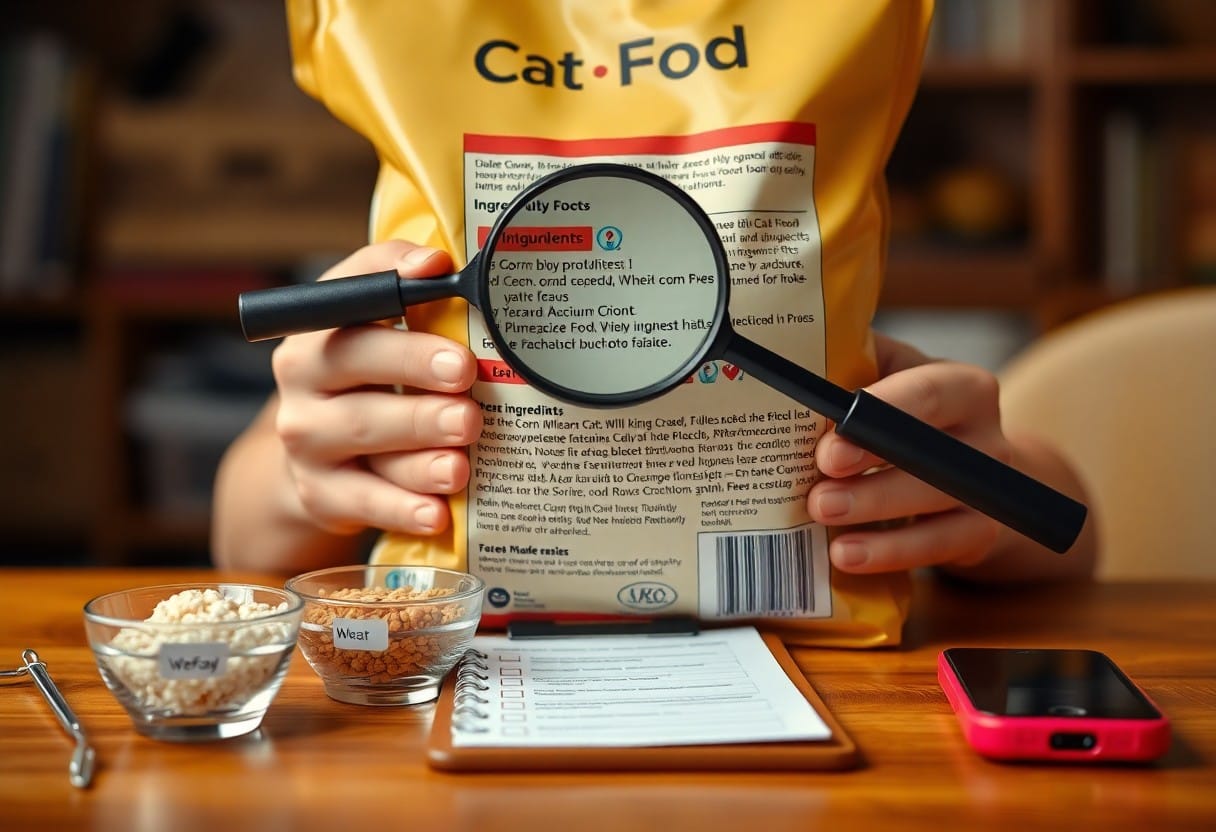
Scan the ingredient list for common fillers such as corn, wheat, or soy that dilute protein and add little nutrition; watch for unspecified starches and long chemical names masking low-quality content.
Spotting Artificial Preservatives and Chemical Dyes
Check labels for BHA, BHT, ethoxyquin, or artificial colors; these preservatives and dyes can trigger allergies and have been linked to long-term health risks in cats.
Decoding Vague Terms and Meat By-Products
Avoid vague terms like “meat flavor” or “animal by-products” when you want clear protein sources; look for named meats first on the list and whole-muscle proteins.
Read ingredient order closely: manufacturers list items by weight, so if “meat by-products” or “meat meal” appears before named meats, most protein comes from unspecified parts like organs, bone, or connective tissue. You should prefer foods listing specific meats (chicken, turkey, salmon) and named whole-muscle protein, and avoid generic by-products that may be lower-quality or inconsistent.
Tips for Selecting the Right Formula for Your Cat
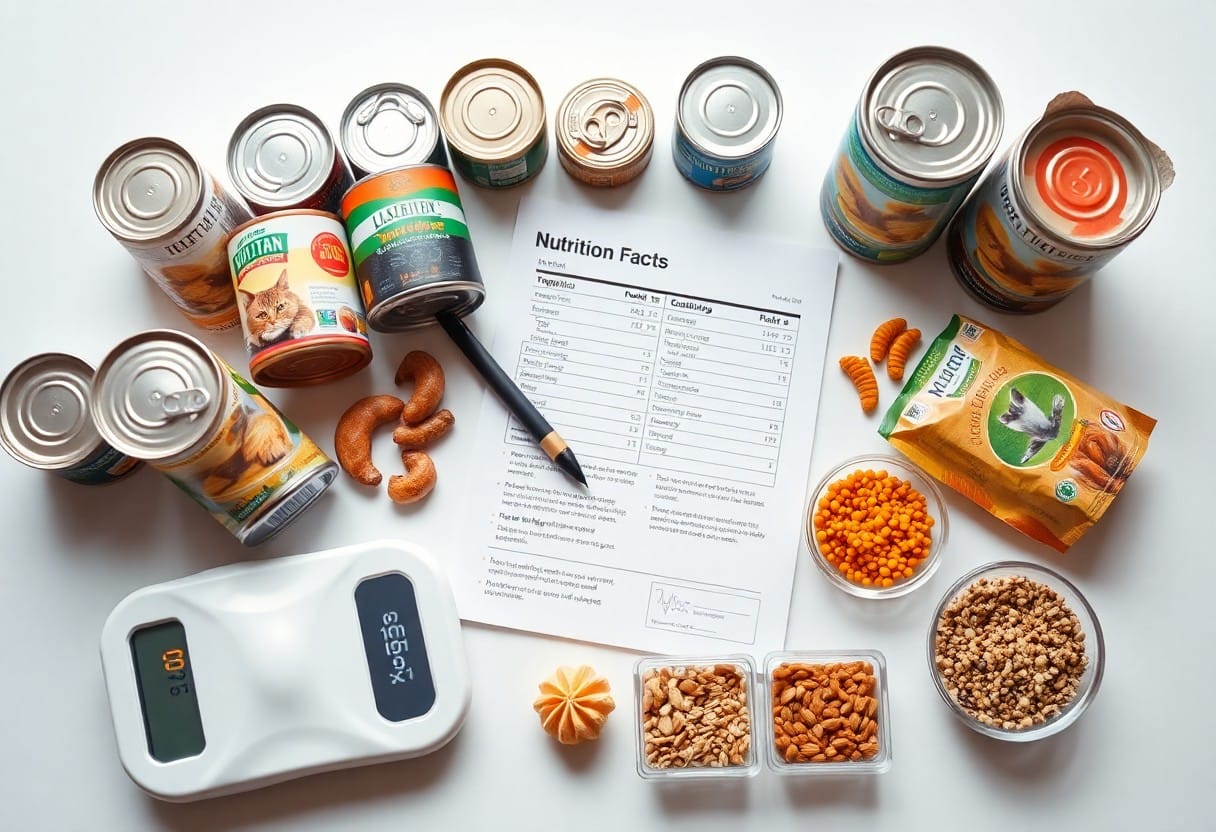
Choose formulas based on your cat’s life stage, activity and health; prioritize protein and controlled calories. Check labels for AAFCO statements and avoid vague by-products. Any diet changes you make, introduce slowly over 7-10 days and monitor appetite and stool.
- Protein: named sources (chicken, fish) listed first
- Moisture: wet food increases hydration
- Life stage: kitten, adult, senior targets differ
- Special diets: renal, weight, urinary require specific targets
Assessing Moisture Content and Hydration Needs
Evaluate how much moisture the formula provides; canned diets boost hydration and reduce urinary tract risk, while dry kibble may require extra water and monitoring of litterbox output.
Matching Nutritional Profiles to Health Requirements
Match the formula’s protein, fat and phosphorus levels to conditions like obesity, kidney disease or allergies; low phosphorus helps renal cats, while higher protein supports active cats, and you should consult your vet for specifics.
Consider the guaranteed analysis and compare on a per‑calorie basis; prioritize named animal protein sources over vague terms, watch phosphorus and sodium for kidney or cardiac issues, and try limited‑ingredient diets if you suspect food allergies while tracking weight and stool changes.
Summing up
With this in mind you should prioritize named animal proteins, check the guaranteed analysis and AAFCO statement, note ingredient order for meat vs fillers, avoid excessive plant-based fillers and unnecessary additives, and choose formulas that match your cat’s life stage and health needs.
FAQ
Q: How do I read the ingredient list and what do terms like “meal,” “by-product,” and named meats mean?
A: Ingredient lists are ordered by weight before processing, so fresh meats with high moisture can appear higher even if they contribute less protein after drying. Meat labeled as “chicken meal” or “salmon meal” is rendered and concentrated, offering more protein per weight than the fresh meat listed ahead of it. By-products can include organ meats such as liver and heart, which supply nutrients but vary in quality depending on source and processing; a named by-product (for example “chicken by-product meal”) is preferable to an unnamed “meat by-product.” Generic terms like “meat” or “animal” hide the source and make quality assessment harder. Ingredient splitting occurs when manufacturers list similar ingredients separately (chicken, chicken meal, chicken fat) to keep any single item from appearing as the top ingredient; group similar items mentally to judge true proportions. Labels that say “with,” “dinner,” or “flavor” reflect specific formulation or palatability claims rather than meaningful guarantees about quantity or quality, so read those as marketing terms rather than nutritional proof.
Q: What does the Guaranteed Analysis and AAFCO statement tell me, and how do I compare foods using dry matter basis?
A: Guaranteed Analysis lists minimum crude protein and crude fat plus maximum crude fiber and moisture, expressed on an as-fed basis and useful for quick comparisons but misleading if moisture differs widely between foods. AAFCO statements that declare a product “complete and balanced” for a specific life stage indicate the manufacturer has either formulated the diet to meet nutrient profiles or validated it through feeding trials; feeding-trial validation is the stronger proof of palatability and nutrient bioavailability. Convert to dry matter basis (DMB) to compare true nutrient concentrations: DMB nutrient % = (as-fed nutrient %) ÷ (1 − moisture % as a decimal). Example: a wet food with 8% protein and 78% moisture has a DMB protein of 8 ÷ (1 − 0.78) = 36.36% protein on a dry matter basis, which lets you compare it directly to a dry kibble.
Q: Which additives, preservatives, or nutrients should I pay attention to when choosing cat food?
A: Taurine must appear in the formulation for all cat diets, since cats cannot synthesize enough on their own. Omega-3 fatty acids (EPA/DHA) support skin and brain health, and probiotics or prebiotics can help digestion but vary in strain and potency. Preservatives fall into natural types like mixed tocopherols or synthetic ones such as BHA, BHT, and ethoxyquin; natural options are generally preferred by owners concerned about long-term synthetic exposure. Ingredients listed as artificial colors or flavors provide no nutritional benefit and indicate the formula relies on palatability enhancers. High ash or bone meals raise mineral content but can lower protein digestibility. Look for a named animal protein near the top of the list, an AAFCO “complete and balanced” statement for your cat’s life stage, and explicit inclusion of taurine and crucial fatty acids when evaluating labels.