Over time you’ll choose brushes by coat: slicker for long-haired Maine Coons, rubber for Sphynx. You should use gentle strokes, avoid over-brushing that irritates skin, and address matted fur that can cause infections promptly.
Understanding Feline Coat Structures
Coats vary in texture, length, and density, so you should assess each before choosing brushes; dense undercoats and hairless skin require very different tools and gentle techniques.
Identifying Primary Guard Hairs and Undercoats
You can distinguish guard hairs-long, shiny strands-from the fluffy undercoat by feeling for coarser fibers; mats trap moisture and can cause skin irritation, so you should address them gently.
How Coat Density Dictates Tool Selection
Dense double coats require firm, penetrating tools while sparse or hairless types need gentle brushes; you should match brush firmness to coat density to avoid skin damage or ineffective grooming.
Choose tools by testing on a small patch so you can gauge your cat’s response: for heavy undercoats and breeds like Maine Coon, use an undercoat rake or de-shedding tool to remove loose fur; for short, dense coats use rubber brushes to lift hair. For thin or hairless skin, use soft mitts and slicker brushes gently to avoid skin abrasions. Treat stubborn mats with a comb and careful trimming only when necessary to prevent injury.
Grooming the Hairless and Minimalist Coat
For hairless or sparse-coated cats, focus on skin care over fur; you should use gentle tools, short sessions, and avoid abrasive brushes to prevent irritation while keeping natural oils balanced.
Soft Bristle Brushes for Sensitive Skin
Soft bristle brushes let you remove loose hairs and stimulate circulation without pressure; you should brush gently, watch for redness, and choose brushes with rounded tips to protect delicate skin.
Chamois Cloths for Oil Distribution and Polishing
Chamois cloths let you polish skin and spread natural oils evenly; you should use light strokes and a clean cloth to avoid clogging pores and reduce flakiness without over-wetting the skin.
Use a slightly damp chamois to lift dirt and distribute oils: fold it, then use gentle circular strokes in the direction of hair growth, rinse often, and never apply alcohol or fragranced cleaners; if you notice persistent redness, scabs, or strong odor, stop and consult your veterinarian promptly.
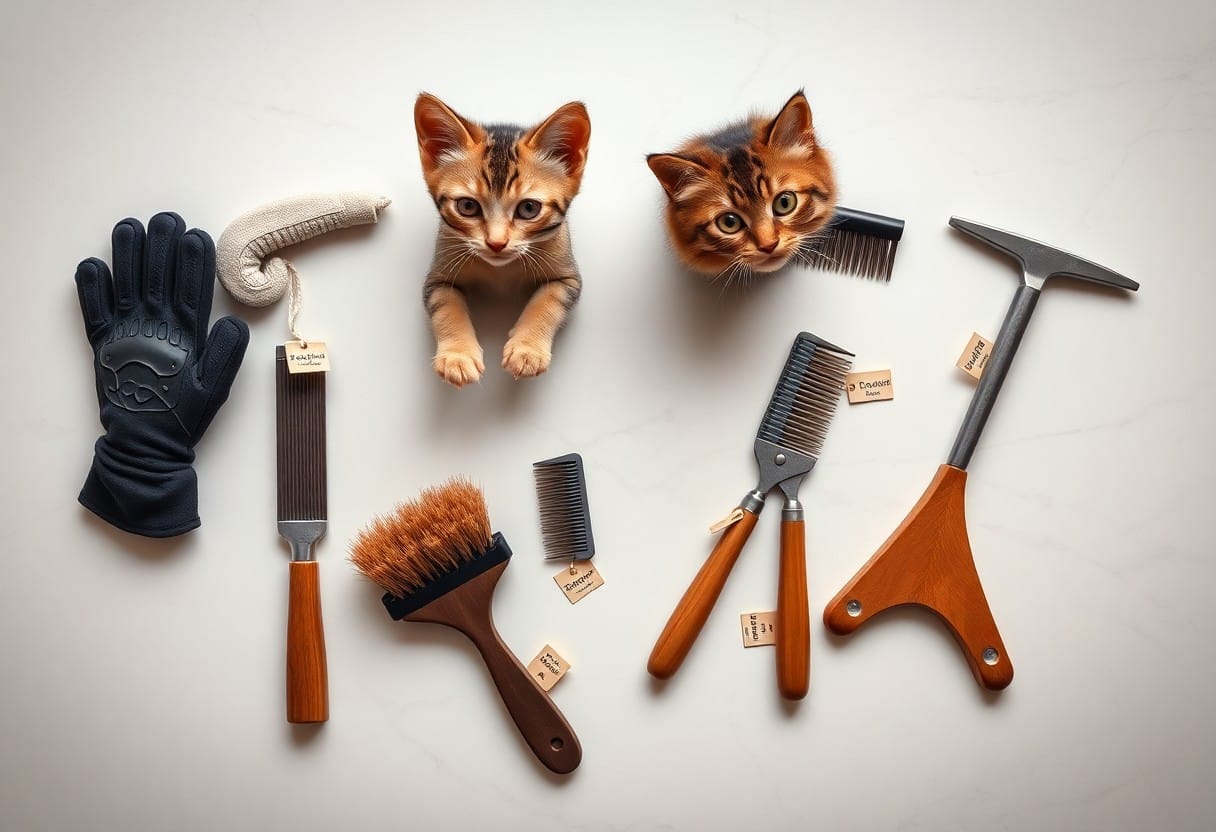
Maintenance Essentials for Short-Haired Breeds
Daily you should inspect your short-haired cat’s coat and brush weekly with a soft bristle or rubber brush to remove loose fur, reduce hairballs, and check skin. Use gentle strokes to avoid skin irritation and achieve less shedding.
Rubber Curry Brushes for Effective Deshedding
Rubber curry brushes gently lift loose hair and stimulate skin oils; you can use them during play to reduce shedding and prevent hairballs. Avoid pressing hard to prevent skin irritation on sensitive areas.
Fine-Toothed Combs for Dander and Debris Removal
Combs remove dander and debris; you should comb gently weekly, especially behind ears and under legs. Use them to spot parasites and loosen dirt, avoiding harsh tugging to prevent skin irritation.
When you follow a methodical approach, work in sections and comb toward the coat’s end to reveal trapped dander and tiny debris; you should pause to inspect the teeth for lice or fleas and stop if you find broken skin or severe mats, then consult your vet.

Managing Dense and Double-Coated Varieties
Thick double coats demand steady grooming to prevent mats and reduce heavy shedding; you should rotate rakes, slickers, and deshedding tools while keeping sessions short to avoid skin irritation and preserve topcoat health.
Slicker Brushes for Deep Undercoat Penetration
Slicker brushes lift loose undercoat and help control seasonal blowouts; you must use gentle, short strokes and avoid pressing hard because fine wires can irritate or puncture delicate skin.
Dual-Level Combs for Texture Maintenance
Dual-level combs detangle while aligning guard hairs without flattening the coat; you should comb with the grain and preserve natural texture to maintain volume and prevent patchy wear.
Start by using the long-tooth side to loosen tangles, then follow with the fine teeth to smooth guard hairs; you should work in sections, hold skin taut to prevent pulling and soreness, clean the comb often, and increase frequency during heavy shedding to reduce mat formation.
Taming Long-Haired Giants: The Maine Coon Standard
Maine Coons demand regular grooming; you should brush at least twice weekly to tame the mane, tail and undercoat, preventing mats that can cause skin infections.
Wide-Toothed Rakes for Mat Prevention
Rakes remove dense undercoat without pulling the topcoat; you should use a wide-toothed rake to prevent severe mats, reduce shedding and avoid skin nicks.
Rotating Pin Combs for Gentle Detangling
Rotating pin combs let you detangle gently; you can work through knots without tugging, lowering stress and breakage while smoothing the coat.
When you use a rotating pin comb, place pins flat against fur and pull slowly through small sections to let pins spin and release knots without tugging. You should avoid forcing through tight mats; use a rake or dematting tool first to prevent skin tears. Clean the comb regularly and inspect pins for bends to maintain gentle, effective detangling.
Advanced Tools for Seasonal Shedding and Finishing
You should match tools to coat density and season to control shedding and finish coats; choose deshedders for heavy undercoats and boar bristles for shine, while monitoring skin sensitivity.
- High-efficiency deshedders
- Slicker brushes for tangles
- Boar bristle brushes for shine
- Finishing combs for detail work
Tool Comparison
| Tool | Best for / Notes |
|---|---|
| Deshedding blade | Removes loose undercoat; use carefully to avoid nicks |
| Slicker brush | Detangles and removes light shedding; good for medium to long coats |
| Boar bristle brush | Distributes oils for shine; ideal for short to medium coats |
| Finishing comb | Polishes coat and catches stray hairs after brushing |
High-Efficiency Deshedding Blades for Heavy Shedders
Blades with tight teeth pull undercoat quickly; you should use short, gentle strokes to avoid nicks and focus on loose hair. Best for Maine Coon and other heavy shedders, but inspect skin frequently during use.
Boar Bristle Brushes for Enhancing Natural Luster
Boar bristles distribute oils to create a deep shine; you should use them daily on short- to medium-coated cats for gloss and reduced static. Gentle on skin and boosts coat health.
Regular use of boar bristle brushes helps you redistribute natural oils, smooth the cuticle, and reduce superficial shedding; use gentle strokes following hair growth and limit sessions to a few minutes for sensitive cats. Clean bristles weekly to remove trapped hair and oils. Avoid brushing over inflamed skin and stop if your cat shows discomfort; you’ll see improved shine and softer texture within weeks.
Summing up
Summing up, you should use rubber mitts or bristle brushes for short coats, slicker or pin brushes for medium fur, and undercoat rakes or long-tooth combs for thick coats like Maine Coon; Sphynx benefits from silicone scrubbers and gentle lint control to keep skin healthy.
FAQ
Q: What brushes work best for hairless breeds like the Sphynx, and how should I use them?
A: Sphynx and other hairless cats benefit from soft rubber grooming mitts or silicone brushes to lift oil, dead skin flakes, and loose debris without abrading the skin. Use a microfiber cloth or hypoallergenic pet wipe between baths to remove surface oils and dirt. Avoid metal-toothed combs and stiff slickers that can scratch sensitive skin. Bathe as recommended by your veterinarian and follow with gentle stroking motions with the mitt to stimulate circulation and keep the skin clean; stop immediately if you see redness or irritation.
Q: Which brushes are ideal for long-haired breeds such as the Maine Coon, and what grooming routine prevents mats?
A: Long-coated cats like Maine Coons require a combination of tools: a wide-toothed comb for initial detangling, a slicker brush to remove loose undercoat, a pin brush to smooth guard hairs, and an undercoat rake or dematting tool for dense areas prone to tangles. Work in small sections from the skin outward, hold the base of the hair to avoid pulling, and brush the neck, chest, belly, and behind the ears where mats commonly form. Brush at least three times a week and increase to daily during seasonal shedding; apply a cat-safe detangling spray for stubborn tangles and consult a professional groomer for severe mats to prevent skin damage.
Q: What brushes suit short and medium coats, including double-coated breeds, and how often should they be groomed?
A: Short-haired pets do well with soft bristle brushes or rubber curry brushes to remove loose hair and distribute natural oils; a slicker brush can be used sparingly on thicker short coats. Double-coated breeds need an undercoat rake or de-shedding tool during seasonal blowouts to extract dead undercoat without cutting guard hairs, combined with a slicker or bristle brush to finish. Groom single coats about once a week and increase frequency to two to three times weekly or daily during heavy shedding periods; monitor the skin for sensitivity and reduce pressure or frequency if the animal shows signs of irritation.