Healthy additions can benefit your cat when you offer small portions of plain cooked lean meats, pumpkin, and fish, while strictly avoiding onion, garlic, and chocolate, which are toxic to your pet.
Cooked Chicken
You can feed plain, cooked chicken to cats as an occasional treat or meal topper. Chicken offers lean protein and crucial amino acids. Avoid skin, bones, and added seasonings. Too much chicken can unbalance the diet; offer it in moderation alongside complete cat food.
Lean protein source
You provide your cat high-quality amino acids with cooked chicken, supporting muscle tone and coat health. Lean protein is easily digestible and helps maintain healthy weight when offered in appropriate portions.
Serve unseasoned and boneless
You must serve chicken plain and fully deboned to avoid choking or splintering bones, and to prevent exposure to toxic seasonings like garlic or onion. Unseasoned, boneless pieces keep meals safe and cat-friendly.
You should boil or bake chicken without oil, remove skin, and shred or chop into small pieces so your cat can’t choke. Check carefully for any small bones, and never add salt, garlic, or onion-these are toxic to cats. Offer as an occasional supplement to complete cat food.
Cooked Salmon
You can serve small amounts of plain, cooked salmon to cats as an occasional treat. Ensure you remove all bones, avoid seasonings, and never feed raw salmon. Cooked salmon is rich in omega-3s and protein but keep portions moderate.
High in omega-3 acids
You’ll get EPA and DHA that support heart and brain health; omega-3s reduce inflammation and help joint comfort. Offer salmon only in small amounts to avoid imbalanced nutrients.
Boosts skin and coat
Omega-3 fatty acids in salmon help your cat maintain a shiny coat and healthy skin, reducing itchiness and dandruff when fed properly. Include salmon sparingly as part of a balanced diet.
You can add small pieces of cooked salmon to boost omega-3 intake, improving coat shine and reducing shedding. Watch for food sensitivities, calorie overload, and fishy breath; limit treats to avoid weight gain and stop feeding if skin irritation occurs. Ask your vet before regular use.
Scrambled Eggs
Scrambled eggs make an easy, cooked treat for your cat when plain and fully cooked. Small portions provide digestible protein and amino acids. Offer sparingly as part of a balanced diet; too much fat can cause stomach upset.
Excellent protein variety
Eggs supply high-quality protein and several crucial amino acids your cat needs, including taurine precursors. They support muscle maintenance and coat health when given in moderation. Cook thoroughly to eliminate salmonella risk.
Avoid butter and salt
Butter and added salt can harm your cat; dairy fat may trigger diarrhea and salt can upset electrolyte balance. Serve eggs plain and unseasoned to keep them safe. Never feed seasoned or greasy eggs.
Small amounts of butter increase fat intake and risk of pancreatitis; salty additions like bacon bits create sodium toxicity risk over time. If your cat shows vomiting, lethargy, or increased thirst after eating seasoned eggs, contact your vet promptly.
Plain Pumpkin
Plain pumpkin is a safe, low-calorie treat you can give in small amounts; you can use canned pure pumpkin or cooked fresh. Avoid spiced or sugary pumpkin pie filling, which is dangerous for cats due to sugar and spices.
High fiber for digestion
High fiber in pumpkin helps regulate bowel movements; you can add a teaspoon to a meal to ease constipation or firm loose stool. Offer small amounts and watch for changes. Fiber aids digestion but too much can cause gas.
Supports healthy gut
Pumpkin contains soluble fiber that feeds beneficial gut bacteria, so you can support microbiome health by mixing tiny amounts into meals. Supports beneficial bacteria and provides vitamins A and C that contribute to overall health.
Use plain canned or cooked pumpkin; avoid pie filling and whole seeds, which can contain seasonings or cause blockage. Start with a teaspoon for small cats, up to a tablespoon for larger cats, and stop if you see vomiting or diarrhea. Pure pumpkin is safe, spiced pie filling is harmful.
Fresh Blueberries
Blueberries can be a safe, occasional snack for your cat when offered in tiny pieces. You should offer them sparingly because cats are obligate carnivores and too many can cause stomach upset or weight gain. Watch for choking in kittens and allergic reactions. Feed only a few blueberries at a time.
Rich in antioxidants
Antioxidants in blueberries support cellular health and may help reduce inflammation when you give tiny amounts to your cat. Use moderation since feline diets don’t require fruits. Low natural sugars still mean limit portions to prevent digestive upset.
Low calorie treat
Blueberries are a low calorie option for rewarding your cat without extra fat. Offer one or two halved berries as an occasional treat, and avoid canned or sweetened varieties. Too many berries can still add unnecessary carbohydrates and cause diarrhea.
You should wash and halve blueberries before offering them to avoid pesticides and reduce choking risk; remove stems. Offer no more than a couple of berries a few times per week. Cats with weight concerns or diabetes need vet approval because natural sugars can affect blood glucose. Stop feeding if you spot vomiting, diarrhea, or allergy signs.
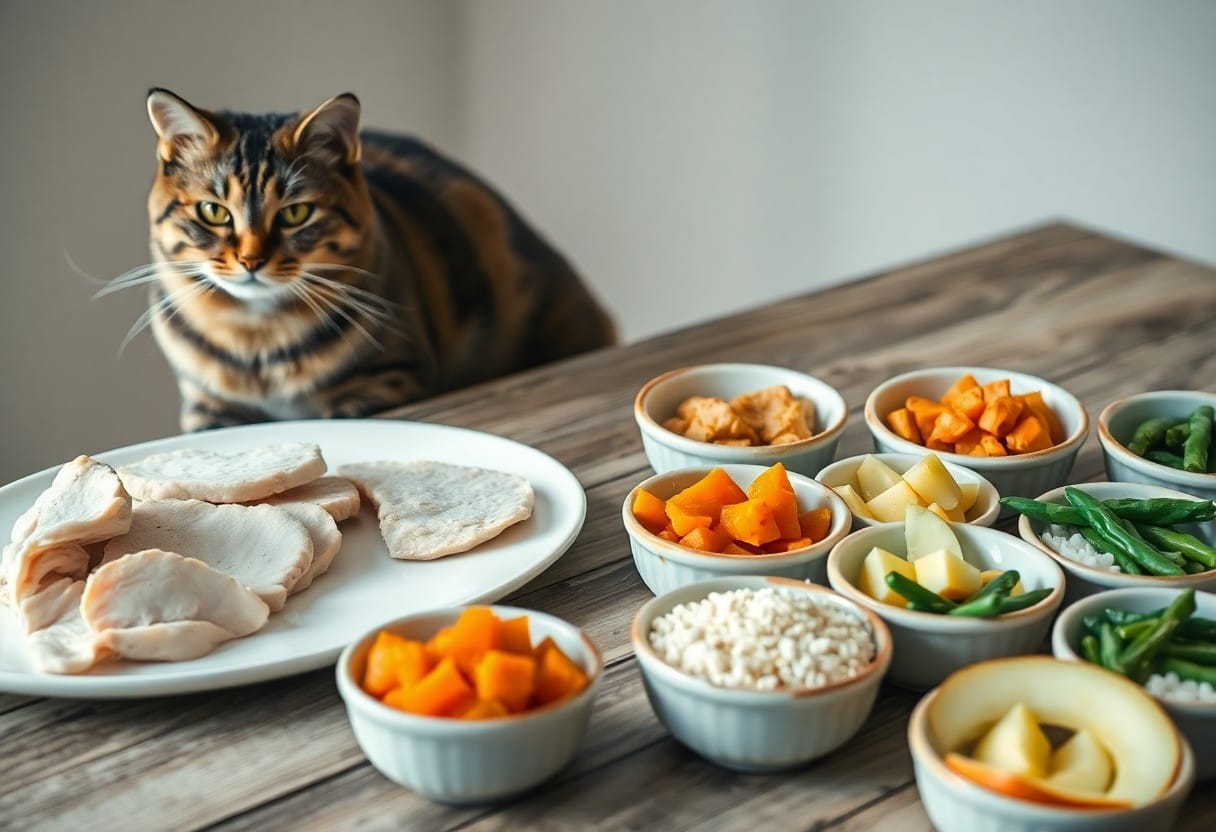
Cooked Turkey
You can offer plain, cooked turkey to your cat as an occasional treat; it provides lean protein for muscles. Serve small amounts, unseasoned and free of bones to prevent digestive upset or choking.
Healthy lean meat
You should pick turkey breast or white meat, which is low in fat and high in imperative amino acids. Offer tiny portions that complement, not replace, balanced cat food.
Remove skin and fat
You must remove skin and visible fat before serving; excess fat can trigger pancreatitis and obesity. Never give seasoned skin or fatty trimmings.
Trim all skin and excess fat from slices and cut meat into small, bite-sized pieces to prevent choking. Inspect to ensure no bones, avoid seasoning and gravy, and keep turkey portions occasional to reduce pancreatitis and weight risks.
Green Peas
You can feed your cat green peas occasionally; they’re a safe, low-calorie snack rich in fiber and nutrients. Offer only plain, cooked peas and avoid salted or seasoned, canned versions. Serve as a small treat-too many can cause digestive upset.
Packed with vitamins
You get vitamins A, K and several B vitamins in peas that complement feline diets; peas add fiber and plant protein without excess calories. Small portions support digestion and nutrient variety.
Serve steamed or mashed
You should steam or mash peas to soften them; cats digest cooked peas better and face less choking risk. Always serve plain and avoid adding salt, butter, onion, or garlic.
Steam peas for 5-7 minutes until soft; mash for kittens or small cats to reduce choking. Offer no more than a few peas per day as treats; excessive serving may cause gas or weight gain. Avoid canned peas with added sodium and any peas mixed with onion or garlic.
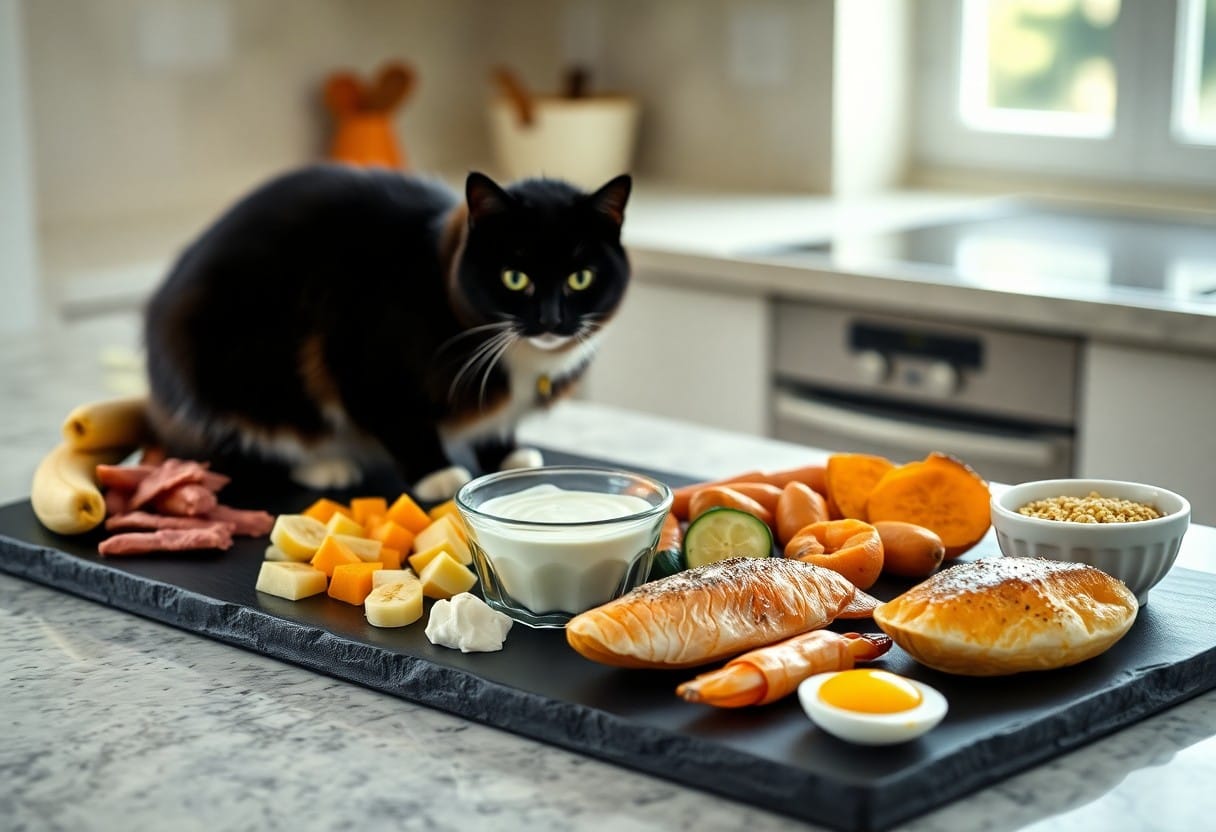
Sliced Bananas
You can offer your cat thin, ripe banana slices as an occasional treat. Always remove the peel and keep servings tiny because bananas are high in sugar. You should treat bananas sparingly since cats need meat-based nutrition and may get digestive upset.
Potassium and fiber source
You can provide small benefits to your cat because bananas contain potassium and fiber, which may aid digestion and electrolyte balance in tiny amounts. Use them only as an occasional supplement to a meat-based diet.
Give in moderation
Give your cat no more than one or two thin slices per serving; frequent feeding boosts calorie and sugar intake. Stop treats if you notice digestive changes or weight gain.
If your cat is overweight or diabetic, avoid bananas due to the sugar content. You should introduce slices slowly to check tolerance and monitor stools. Keep slices plain, never with chocolate or sweeteners like xylitol. Cut pieces small to prevent choking and always remove the peel.
Steamed Carrots
You can give steamed carrots as an occasional low-calorie treat; they provide fiber and beta-carotene. Serve plain, cooled, and finely chopped to avoid choking risk, and never add salt, butter, onions, or garlic.
Source of beta-carotene
Carrots are rich in beta-carotene, an antioxidant that can support overall health. You should know cats convert beta-carotene poorly, so carrots are not a substitute for animal-derived vitamin A in your cat’s diet.
Safe cooked texture
Steam until very soft, then chop or mash so you can feed tiny, manageable pieces. Soft texture reduces choking risk; serve plain and cooled to avoid digestive upset.
Cook carrots until tender but not mushy; you should cut into small pieces or mash for kittens or older cats. Avoid adding oils or spices-no seasonings-and always supervise feeding to reduce choking risk or signs of intolerance.
Fresh Spinach
You can offer fresh spinach raw or lightly cooked in tiny amounts; it’s safe for most cats and adds fiber and micronutrients. Spinach contains oxalates that may worsen kidney or bladder problems, so avoid it for cats with renal issues. Wash leaves thoroughly to remove pesticides.
Essential vitamins and minerals
You can give small amounts of spinach for vitamin A, K, iron, and folate; these provide beneficial micronutrients that support skin and eye health. Spinach is a supplement, not a substitute for the animal-based nutrition your cat needs.
Feed in small portions
You should feed spinach only as an occasional treat-a few leaves or a teaspoon of cooked, chopped spinach. Large amounts can cause digestive upset or oxalate buildup, so limit servings and frequency.
You must wash spinach well and serve plain, lightly steamed, or finely chopped to ease digestion. Introduce it slowly over days and watch for vomiting, diarrhea, or litter-box changes. Avoid spinach if your cat has kidney or bladder disease and consult your veterinarian if you notice any adverse signs.
To wrap up
With these considerations, you can safely offer certain human foods as occasional nutritious treats for your cat while avoiding hazards and excessive portions; consult your veterinarian for personalized guidance to protect your pet’s health.
FAQ
Q: Which 10 human foods are actually safe and healthy for cats?
A: Safe human foods that can be healthy for cats include: cooked plain chicken or turkey (lean, boneless, good source of protein); cooked salmon (omega-3 fats that support skin and coat; serve cooked and deboned); canned tuna in water (small, occasional treats only because of mercury and nutrient imbalance); cooked eggs (fully cooked, scrambled or boiled for protein and B vitamins); plain unsweetened yogurt with live cultures (small amounts can help digestion for some cats; many cats are lactose intolerant so monitor); canned plain pumpkin (fiber that helps with stool consistency and digestion); cooked sweet potato (small portions for fiber and vitamins); cooked carrots (soft, chopped or mashed for beta-carotene and fiber); peas (cooked or thawed frozen peas as a small vegetable treat); blueberries (antioxidants and low-calorie treats in moderation). Serve these foods plain, without salt, garlic, onion, butter, sauces, or spices.
Q: How should I prepare and portion these foods for my cat?
A: Prepare foods plain and fully cooked, remove all bones and skin, and avoid any added salt, oil, seasonings, sauces, or sweeteners. Offer tiny portions at first to test tolerance: a few pea-sized pieces for small cats and 1-2 teaspoons up to 1 tablespoon for larger cats depending on the food and cat’s size. Keep human-food treats to no more than about 10% of the cat’s daily caloric intake to prevent weight gain and nutrient imbalance. Give tuna and other fish only occasionally, not as a primary diet, because long-term feeding can cause mercury exposure and nutritional gaps. Watch stool, appetite, and energy after offering new foods and stop any food that causes vomiting, diarrhea, or behavioral change.
Q: What foods must I avoid and what are signs a cat needs veterinary attention?
A: Avoid foods that are toxic to cats, including onions and garlic in all forms, chocolate, grapes and raisins, alcohol, caffeine, xylitol and other artificial sweeteners, raw bread dough, raw or undercooked meat/fish if contaminated, and macadamia nuts. Do not give cooked bones or fish bones that can splinter. Signs of poisoning or serious intolerance include repeated vomiting, severe or bloody diarrhea, drooling, difficulty breathing, weakness or collapse, tremors or seizures, and sudden changes in behavior or appetite. If you suspect your cat ate a toxic food or shows any of these signs, contact your veterinarian or an emergency animal clinic immediately and bring any packaging or a description of the amount eaten. Symptoms can appear within minutes to several hours depending on the toxin.