You can identify and manage feline food allergies by recognizing common triggers like beef, dairy, and fish; watch for severe reactions such as facial swelling or persistent vomiting, and use veterinarian-guided elimination diets to isolate allergens, with clinical improvement often within weeks.
Clinical Presentation of Feline Adverse Food Reactions
Signs in your cat often combine dermatologic and GI symptoms, with persistent pruritus, recurrent ear problems, vomiting, and diarrhea signaling a possible food-related cause that merits veterinary assessment.
Dermatological Manifestations and Persistent Pruritus
Skin lesions and intense scratching in your cat often appear as erythema, papules, alopecia, and secondary infections, which commonly indicate an adverse food reaction and justify a targeted dietary trial.
Gastrointestinal Indicators and Chronic Malabsorption
Stools that are loose, greasy, or bloody and repeated vomiting in your cat suggest malabsorption and nutrient loss that can produce weight loss and dehydration.
Chronic diarrhea or intermittent steatorrhea in your cat should prompt fecal testing, serum biochemistry, and an elimination diet trial; watch for hypoproteinemia or iron deficiency as markers of serious malabsorption, and expect a positive response to a strict novel-ingredient or hydrolyzed diet to confirm food involvement.
Primary Dietary Allergens in Feline Nutrition
Proteins such as beef, dairy and fish are the most common dietary allergens in cats; you may see itching, vomiting, or chronic ear infections when exposed.
High-Risk Protein Sources: Beef, Dairy, and Fish
Beef, dairy and fish frequently trigger immune responses; you should track recurring symptoms and trial novel or hydrolyzed proteins under veterinary guidance to pinpoint the culprit.
Identifying Hidden Triggers in Commercial Fillers
Watch labels for animal digest, by-products, fillers and vague “flavors”-these can hide allergenic sources and cause persistent reactions even when named proteins are avoided.
Check manufacturing statements, ingredient order and cross-contact warnings; terms like “meat by-products”, “animal digest” or generic “meat flavoring” often mask multiple protein sources, and shared lines increase risk of cross-contamination. You should prefer limited-ingredient, single-source or hydrolyzed diets during elimination trials and discuss options with your veterinarian.
The Pathophysiology of Food Hypersensitivity
Pathways in feline food hypersensitivity involve both immune-mediated and non-immune responses; you often observe persistent skin disease or gastrointestinal signs. Watch for severe pruritus, recurrent ear infections, or chronic vomiting and diarrhea that indicate the need for dietary investigation.
Distinguishing Between Allergy and Intolerance
Symptoms can overlap, but you should suspect an immune-mediated allergy when skin and ear problems dominate, while intolerance more often produces isolated GI upset; report any anaphylaxis or persistent itching for urgent evaluation.
The Role of the Immune System in Dietary Response
Cells such as mast cells, basophils and IgE-producing B cells mediate immediate reactions, while T-cell responses drive delayed dermatitis; you will see histamine-driven itching from mast cell degranulation and longer-term inflammation from cellular immunity.
When sensitization occurs, antigen-presenting cells process dietary proteins and trigger either IgE or T-cell pathways; IgE binds mast cells so re-exposure provokes rapid degranulation with histamine, prostaglandins and leukotrienes, causing pruritus, erythema and possible anaphylaxis. T-cell-mediated responses produce chronic dermatitis. You must rely on strict elimination diets with controlled challenge as the gold standard, typically for 8-12 weeks, since serology and skin tests can mislead.
Selecting an Appropriate Elimination Diet
Choose an elimination diet with a single, unfamiliar protein and carbohydrate you haven’t fed for months so you can isolate triggers; monitor for severe reactions and contact your veterinarian immediately if they occur.
Criteria for Novel Protein Selection
Select a protein your cat has never eaten and pair it with a novel carbohydrate; you should avoid common proteins like chicken or beef and verify there are no hidden ingredients in the formula.
Clinical Utility of Hydrolyzed Protein Diets
Hydrolyzed protein diets break proteins into tiny peptides that often reduce immune recognition, so you may observe rapid itch reduction, though strict dietary control remains necessary.
Veterinary studies indicate hydrolyzed diets can succeed when you can’t identify a novel protein, because peptides under a certain molecular weight are less likely to trigger IgE-mediated responses. Expect improved skin and GI signs within weeks in many cats, but some products may still contain peptides large enough to provoke reactions, and accidental exposure will confound results; work with your veterinarian to choose a reputable, uncontaminated prescription formula.

Implementing the Dietary Trial Protocol
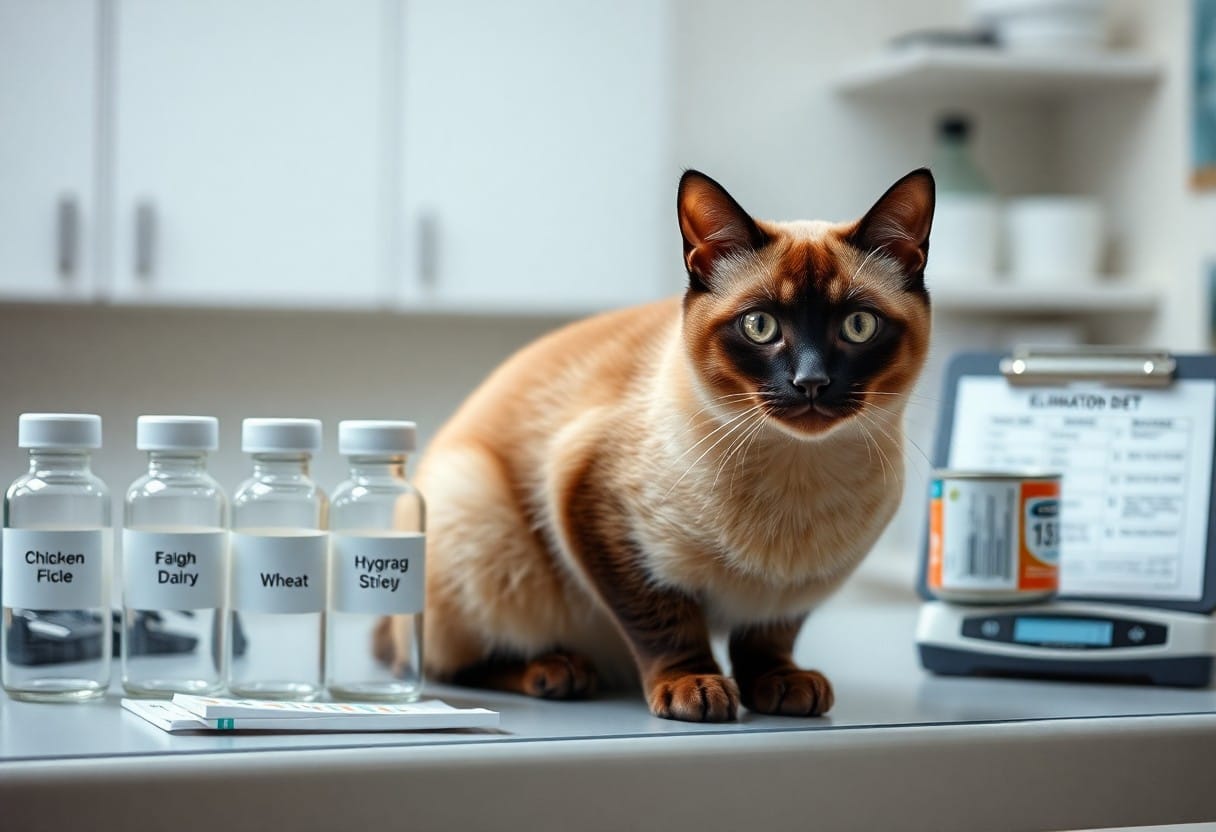
Follow the strict feeding schedule and give only the test diet; avoid treats, flavored medications, and shared bowls. You should record baseline symptoms before starting and contact your vet if severe reactions occur. Expect 8-12 weeks for clear results.
Maintaining Environmental Control and Compliance
Control cross-contamination by washing bowls, storing test food separately, and asking household members to comply. You must stop all treats, table scraps, and flavored supplements. Use vet-approved single-ingredient treats only if allowed.
Observation Periods and Symptom Documentation
Track daily changes in scratching, vomiting, stool quality, and coat condition; take photos and timestamp notes. You should log improvements or flare-ups and mark when medications or other exposures occur. Alert your vet for rapid worsening or signs of anaphylaxis.
Create a daily log noting feeding time, exact product and portion, vomiting episodes, stool consistency, scratching intensity (0-5), skin lesions, and appetite or behavior shifts. Photograph lesions and stools for objective evidence. Note medications, environmental exposures, and any protocol deviations. Contact your vet immediately for breathing difficulty or rapid deterioration, and only reintroduce foods after you document a sustained clear improvement.
Provocation Testing and Long-Term Management
Provocation testing confirms suspected allergens after an elimination diet; you must perform controlled reintroductions under veterinary supervision to avoid severe reactions like anaphylaxis, and document each response carefully for long-term planning.
Sequential Reintroduction of Potential Allergens
You should reintroduce one potential ingredient at a time for at least two to four weeks, observing for recurrence of signs; stop immediately if you note hives, vomiting, or intense itching and contact your vet.
Formulating a Permanent Hypoallergenic Maintenance Plan
Plan a permanent hypoallergenic diet based on confirmed tolerances, selecting a novel-protein or hydrolyzed formula and scheduling routine check-ups to monitor weight, coat, and gastrointestinal health; this supports long-term control and reduces flare risk.
Maintenance plans should specify a single approved diet, list permitted treats and supplements, and include instructions for gradual changes or rotations only if tolerated; you must verify each product’s ingredients and discuss balanced nutrition with your vet. Keep a symptom diary, schedule periodic rechecks and allergy reassessments, and prepare an action plan for acute reactions-seek immediate veterinary care for breathing difficulties or collapse. You can consider carefully tested diet rotations under supervision to improve variety while preserving symptom control.
Conclusion
On the whole you should track symptoms, avoid common triggers like beef, dairy and fish, and use a strict, vet-supervised elimination diet to identify allergens; reintroduce ingredients one at a time and monitor reactions to protect your cat’s health.
FAQ
Q: What are the most common food allergy triggers in cats and how do they typically present?
A: Common triggers are animal proteins such as beef, chicken, fish, and dairy; eggs and some plant ingredients like soy, wheat, and corn can also provoke reactions. Typical signs include chronic itchy skin, recurrent ear infections, hair loss, excessive grooming, vomiting, and diarrhea. Skin symptoms often appear as reddened, inflamed patches, scabs from scratching, or recurrent hotspots. Gastrointestinal signs may occur alone or with skin problems. Onset can be weeks to months after exposure to a new ingredient, and signs may wax and wane with ongoing exposure.
Q: How does an elimination diet diagnose food allergies in cats and what are the key steps?
A: An elimination diet tests for food sensitivity by feeding a single-protein novel diet or a commercial hydrolyzed protein diet exclusively for a set period, usually 8 to 12 weeks. The cat must receive no other food, treats, flavored medications, table scraps, or food-contaminated toys. Clinical improvement is monitored and documented; gastrointestinal signs often improve within days to a few weeks, while skin lesions and itching commonly require 8-12 weeks to show clear improvement. After improvement on the restriction diet, a controlled re-challenge with the original ingredient or suspected protein is given to confirm the diagnosis; recurrence of signs after re-challenge supports a food allergy diagnosis. Veterinary supervision is required to choose an appropriate test diet, monitor progress, and manage concurrent therapies.
Q: What practical tips help with running an elimination diet at home and when should a veterinarian be consulted?
A: Choose a single-source novel protein or a veterinary hydrolyzed diet as directed by a veterinarian, and feed only that product with measured portions to maintain weight. Check ingredient lists on treats, dental chews, supplements, and medications for hidden allergens; use pill pockets or unflavored liquid forms approved by your vet if needed. Keep a daily diary noting food, portions, and any symptoms to track improvements or relapses. If you prefer a home-cooked elimination diet, consult a veterinary nutritionist to meet nutritional needs and avoid deficiencies. Contact your veterinarian immediately if the cat shows signs of severe allergic reaction (sudden swelling, breathing difficulty), rapid weight loss, dehydration, persistent vomiting or diarrhea, or if there is no improvement after the trial period; the veterinarian can adjust treatment, rule out other causes, and plan controlled re-challenges.