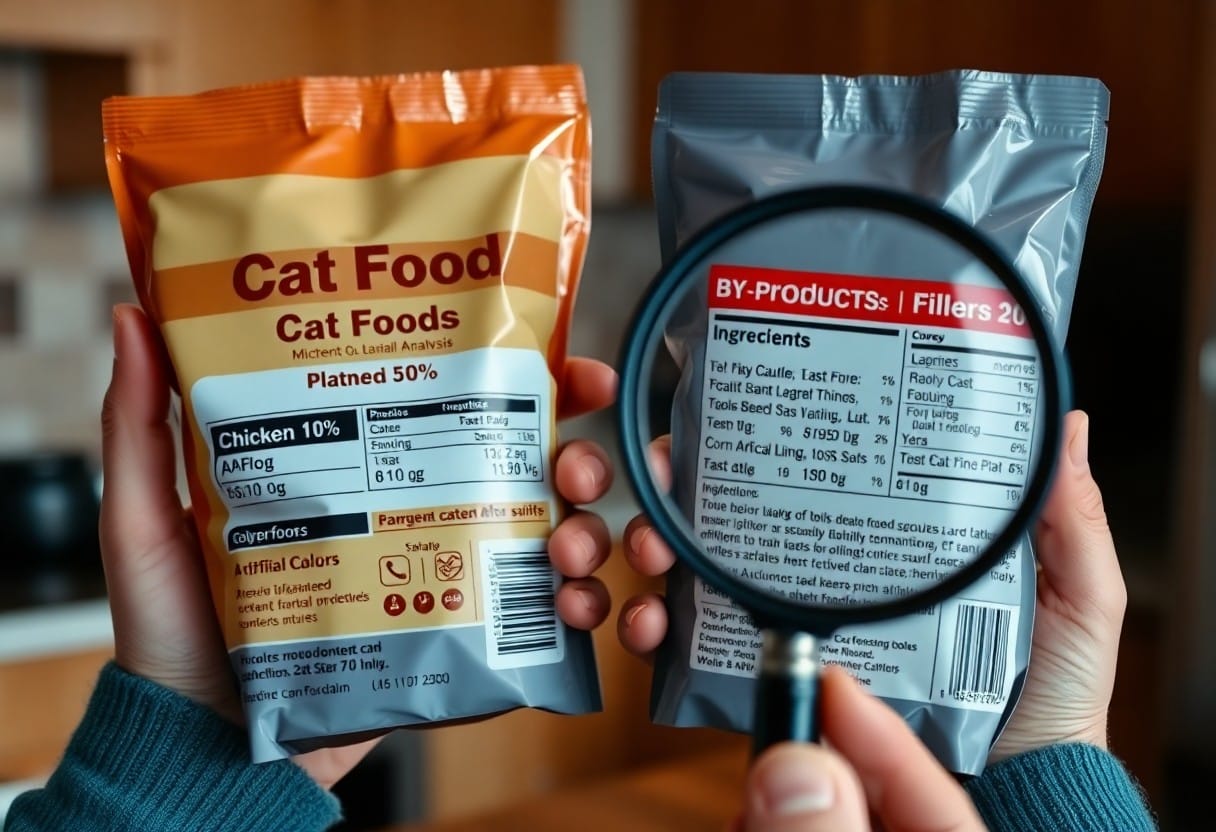
Just because a package looks premium does not mean it meets your cat’s nutritional needs; when you read a label you control ingredients, nutrient balance, and safety for your pet.
Begin with the ingredients panel: the first ingredient should be a named meat source (for example chicken, turkey, salmon) rather than vague terms like meat or poultry. Watch for by-products and rendered meals-some are nutritious, but if a label lists unspecified meat meal or multiple anonymous sources, you may prefer a clearer source. Limit foods with excessive plant protein and cheap fillers such as corn, wheat, or soy when your cat has high animal-protein needs.
Consult the Guaranteed Analysis for crude protein, fat, fiber, and moisture percentages. Because percentages are on an as-fed basis, compare dry matter values when weighing dry vs. wet options. Ensure the label lists taurine and adequate levels of important fatty acids and B vitamins. Prefer foods with an AAFCO statement indicating they meet or exceed tested nutrient profiles or have passed feeding trials for the appropriate life stage (kitten, adult, maintenance).
Pay attention to the calorie or metabolizable energy information and the recommended feeding guidelines so you can portion correctly and avoid weight gain. Recognize that wet foods provide more moisture and often higher protein by weight, while dry foods are energy-dense; choose based on health, dental needs, and hydration.
Avoid unnecessary additives: limit foods with artificial colors, flavors, and excessive synthetic preservatives. Natural preservatives like vitamin E (mixed tocopherols) are preferable. Be wary of marketing terms such as natural, human-grade, or holistic when they lack substantiating details on the label.
Check manufacturing details: the expiration date, batch code, and the manufacturer contact info allow you to trace quality issues. If your cat has allergies, inspect labels for potential triggers and choose limited-ingredient or novel-protein diets when advised by your veterinarian.
Finally, use labels as one tool in decision-making: combine label reading with observation of your cat’s energy, coat, stool quality, and guidance from a trusted veterinarian to select a safe, nutritious diet and avoid misleading claims.