Safety first: you inspect each nail, locate the pink quick and avoid cutting into it; hold firmly, trim small amounts, and praise your cat to reduce stress, ensuring no bleeding and a calmer pet.
Understanding the Anatomy of a Cat’s Claw
Claw has an outer hard keratin shell and an inner soft tissue called the quick, which supplies blood and nerves – you must avoid cutting into it to prevent pain and bleeding.
Identifying the Quick to Avoid Pain and Bleeding
Inspect the translucent portion near a clear claw to spot the quick; on dark claws, extend gently and trim conservatively so you avoid causing bleeding.
Recognizing Growth Patterns and When to Trim
Observe how claws grow: indoor cats may keep shorter nails, while outdoor cats wear them down; you should trim when tips catch on fabric or the curve nears the pad, and check every 1-2 weeks.
Monitor individual nails for signs like flattening, splitting, or curling into the pad; if you see these, you should trim more often. For dark nails, rely on angle and take short snips rather than hunting for the quick, pausing to reassess. Kittens need frequent, gentle trims and seniors may require slower sessions. If you accidentally cut the quick and cause bleeding, you should apply styptic powder and seek veterinary help if bleeding continues.
Key Factors in Selecting the Right Trimming Tools
Select tools that fit your hand and match your cat’s nail size to reduce slips. Perceiving the warning signs of over-cutting lets you stop before you hit the quick.
- claw trimmers
- guillotine clippers
- scissor-style trimmers
- nail files
- safety guards
Comparing Scissor-Style vs. Guillotine Clippers
Scissor vs Guillotine
| Scissor-Style | Guillotine |
|---|---|
| Better for thick nails, precise control | Good for quick cuts on small nails |
| Requires steadier hand, less crushing | Can pinch if misaligned |
| Higher control, slower | Faster, riskier without practice |
Choose scissor-style when you need precision and guillotine for speed, but always test alignment to avoid pinching the toe.
The Importance of Blade Sharpness and Safety Guards
Maintain sharp blades and working safety guards so cuts are clean; dull edges tear nails and increase pain for your cat.
Sharp blades let you trim with fewer attempts, reducing stress and the chance of hitting the quick; inspect blades before each session, replace when nicked, and use guards to set a consistent cut length. If your cat struggles, pause and file rough edges with a nail file rather than taking more off.
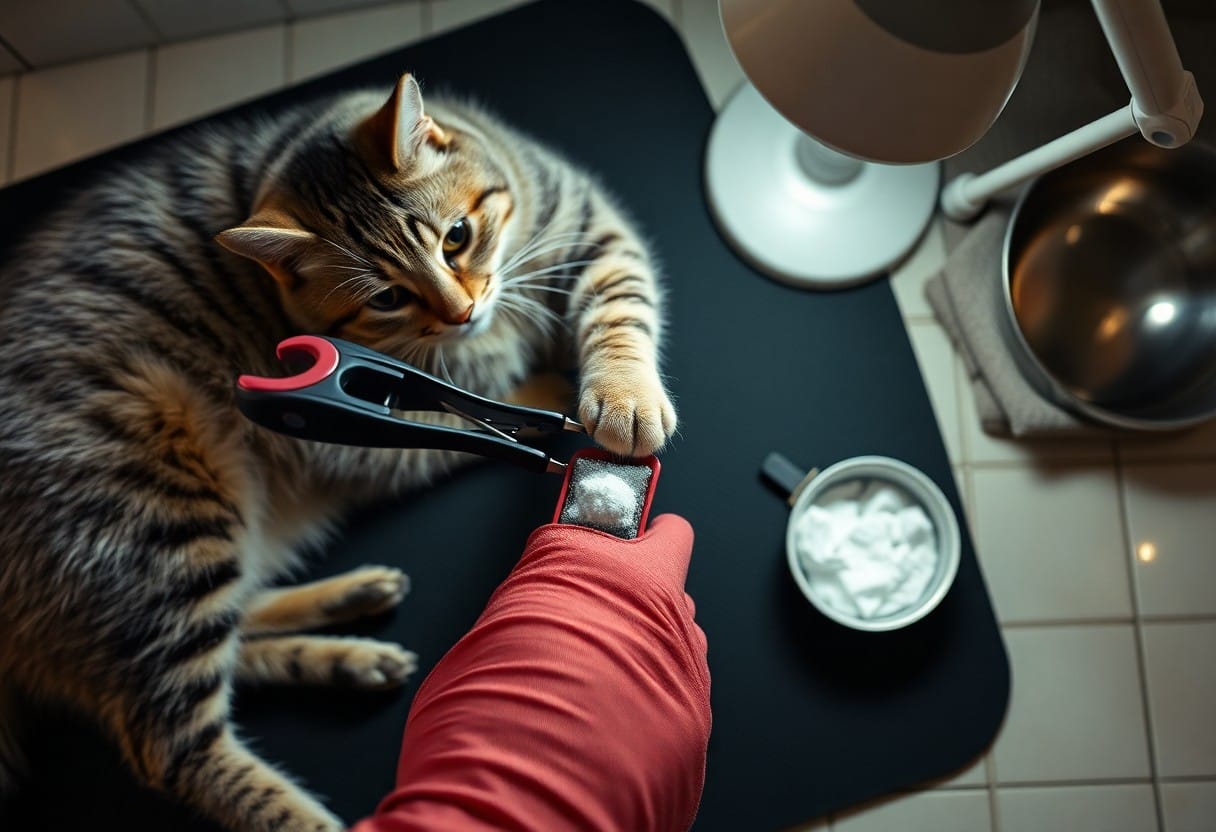
How-to: Preparing Your Cat for a Stress-Free Session
Before you begin, keep sessions under five minutes, have clippers, styptic powder, and treats ready, and stop if your cat tenses-never cut into the quick, which causes pain and bleeding.
Desensitization Techniques for Paw Handling
Practice gentle paw touches for a few seconds daily, pairing each touch with small treats and calm praise; gradually increase duration, stop before your cat retracts, and never force a paw, which raises stress.
Creating a Calm Environment with Positive Reinforcement
Set up a quiet, familiar spot with soft lighting, your lap or a towel, and have rewarding treats ready; keep movements slow and avoid sudden noises that spike your cat’s anxiety.
Use a predictable routine: work when your cat is relaxed, sit at its level, and reward each calm pause with small treats or a click; reinforce quiet behavior often, keep sessions brief, and have styptic powder ready in case of bleeding-never cut the quick and stop if you see hissing, flinching, or tail lashing.
Expert Tips for Managing Restless or Difficult Cats
Manage restless cats using calm movements and steady touch; check each paw for the quick before you clip to avoid over-cutting. Keep sessions brief and have styptic powder ready. Thou stop immediately if you nick the quick and apply pressure.
- Trim your cat’s claws in short snips
- Use proper clippers for precise cuts
- Call a vet or groomer if your cat resists
Utilizing the Burrito Method for Secure Restraint
Wrap your cat in a towel using the burrito method so only one paw is exposed at a time; hold gently to prevent kicking and keep snips quick to avoid nicking the quick.
The Role of High-Value Treats and Distraction
Offer high-value treats immediately after each successful clip and use a favorite toy to divert attention, reinforcing calm behavior and reducing struggle over time.
Use a single, irresistible treat reserved only for trimming so you can shape behavior; give tiny pieces during handling, pair treats with soft praise, and slowly lengthen handling time. If your cat stiffens or hides, stop and try shorter sessions later; keep styptic supplies handy and never force a paw near the quick.
Addressing Accidental Nicks and First Aid
After a nick, press a clean gauze or your finger gently to the nail base for a minute; if bleeding continues, apply styptic powder and keep your cat calm. If you notice heavy bleeding or pale gums, seek veterinary care immediately.
Immediate Steps to Stop Bleeding with Styptic Powder
Apply firm pressure for 1-2 minutes, then dab a small amount of powdered styptic or a styptic pencil to the nail; avoid forcing powder into the wound. If bleeding doesn’t stop within five minutes or reopens, contact your vet.
Monitoring for Signs of Infection or Sensitivity
Observe the trimmed paw for 48-72 hours for increased redness, warmth, swelling, discharge, or limping; note if your cat shows persistent pain, fever, or reduced appetite, and contact your veterinarian.
Examine the paw daily, compare it to the opposite foot, and gently clean sticky areas with saline; prevent licking with an e-collar and note any spreading redness, foul odor, persistent drainage, or lethargy. If you see worsening swelling, continuous drainage, or signs of systemic illness, seek veterinary attention promptly.
Conclusion
Following this, you should trim only the translucent tip of each claw, angle the cutter, clip a few millimeters at a time, pause if your cat resists, use proper clippers and a bright light to avoid the quick, treat any bleeding, and consult a veterinarian if you’re unsure.
FAQ
Q: How can I identify the quick in my cat’s claws so I don’t cut it?
A: Look for the pink crescent (the quick) inside light-colored nails; cutting into that pink area causes pain and bleeding. Dark nails hide the quick; hold a flashlight behind the claw or press the pad to extend the nail against a white background to spot any change in opacity that indicates the quick’s location. Trim only the translucent tip, removing about 1-2 mm at a time, and stop if the nail shows a dark or pink center near the cut line. Use clippers made for cats or a straight-edge human trimmer to make clean cuts without crushing the nail. Keep styptic powder or cornstarch on hand to control bleeding if you accidentally clip too close.
Q: What preparation and technique reduce the risk of over-cutting when trimming claws?
A: Choose a quiet, well-lit room and trim when your cat is calm or sleepy after play. Gather cat-specific clippers, a nail file, styptic powder or cornstarch, treats, and a towel for restraint if needed. Over multiple short sessions, handle and gently press each paw so your cat becomes comfortable with the process; reward calm behavior with treats. Have a helper hold the cat or use a towel wrap for a squirmy cat. Press the pad to extend one claw at a time and make a single, decisive snip across the tip at a slight angle; avoid sawing motions. File any rough edges after trimming to prevent snags. Stop after a few claws if the cat resists and build up the number trimmed per session as tolerance increases.
Q: What should I do if I accidentally cut the quick or my cat strongly resists trimming?
A: If the quick is cut, apply firm pressure with clean gauze for several minutes to slow bleeding. Apply styptic powder or press cornstarch into the wound to promote clotting, and keep the cat calm and still until bleeding subsides. Seek veterinary care if bleeding persists beyond 10-15 minutes, if the cat appears weak or pale, or if signs of infection develop later. For cats that resist, trim one or two nails per session and pair handling with high-value treats to build positive association. Consider asking your veterinarian or a professional groomer for a demonstration or having them trim the nails if home attempts continue to cause stress for you or your cat.