Over time your cat sheds; you can reduce fur and allergens with daily brushing, regular vacuuming, and washable furniture covers to prevent allergen buildup and protect fabrics.
Understanding Feline Shedding Cycles
Shedding follows seasonal light and temperature changes, so you’ll see peaks in spring and fall. You can expect steadier losses in indoor cats year-round. Regular grooming and a balanced diet help, so use daily brushing to cut the amount that reaches furniture.
Biological and Seasonal Triggers
Daylight length and temperature shifts trigger hair growth cycles, so you’ll notice heavier shedding when photoperiod changes. Hormones, breed, and stress also influence coat turnover; target short, daily grooming and a stable environment to reduce hair shedding onto surfaces.
Differentiating Normal Shedding from Health Issues
Observe your cat for patterns: you’ll expect seasonal thinning, but watch for bald patches, intense itching, or scaling, which suggest disease. If shedding is sudden or paired with appetite or behavior changes, act quickly and consult your vet.
If you notice persistent clumps, raw skin, widespread thinning, or rapid weight loss, seek veterinary care promptly because these are red flags for systemic disease. You can rule out fleas and mites with a flea comb and look for crusts, but confirm with a vet exam, skin scrapings, or bloodwork for thyroid, adrenal, or allergic causes. Treatment ranges from parasite control and medicated shampoos to dietary adjustments and prescription medications; maintain regular grooming and preventative care to reduce shedding and protect furniture.
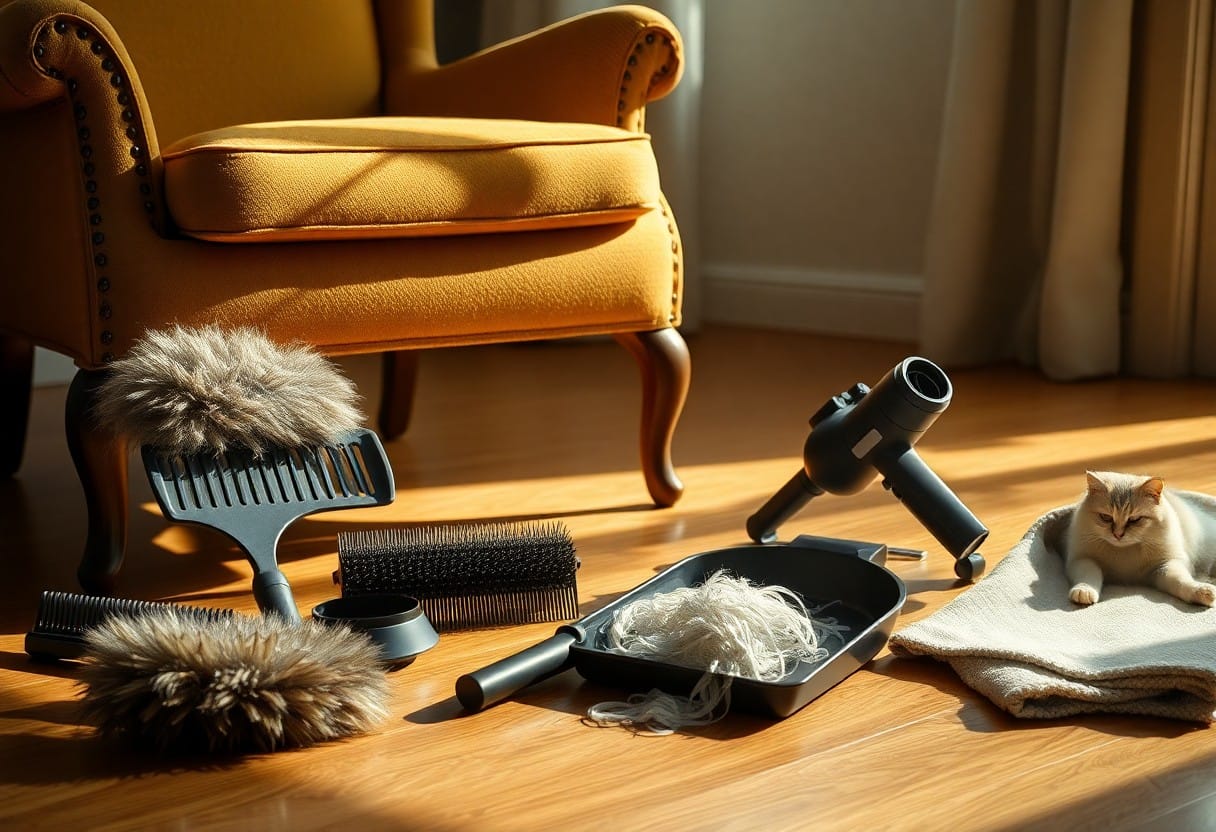
Essential Grooming Tools and Techniques
| Tool | Best use |
|---|---|
| Slicker brush | Long or medium coats, removes loose top fur |
| Bristle brush | Short coats, smooth finish and distribute oils |
| Undercoat rake | Heavy shedders, pulls dead undercoat |
| Fine-tooth comb | Detangling and finding mats near skin |
Selecting Brushes for Specific Coat Types
Match brush to coat: slicker for long or thick fur, bristle for short coats, and a deshedding tool for heavy undercoats. Use gentle strokes to avoid skin irritation. Knowing which tool to use cuts the hair that reaches your furniture.
- Slicker brush
- Bristle brush
- Undercoat rake
- Fine-tooth comb
- Rubber grooming mitt
The Benefits of Regular De-shedding Sessions
Regular de-shedding keeps loose fur off upholstery, lowers hairball risk, and reduces airborne allergens, so you find less fur on furniture and a healthier coat.
Consistent sessions scheduled weekly or biweekly let you remove the dead undercoat before it migrates to sofas and clothes; use proper tools and gentle technique to prevent skin irritation. You will notice fewer hair clumps, reduced vacuuming, and fewer allergy flare-ups for household members.
Nutritional Management for a Healthy Coat
Dietary adjustments help you reduce shedding by supplying a balanced diet rich in high-quality protein and omega fatty acids to support skin resilience and coat sheen.
Impact of Omega Fatty Acids and Proteins
Omega-3s and quality protein improve your cat’s coat and can reduce shedding; you should choose foods with marine oils and real meat to promote stronger follicles and healthier skin.
Hydration Strategies to Reduce Skin Dryness
Water intake affects skin elasticity, so you should offer fresh water, rotate bowls, and add wet food to meals to combat dehydration and minimize flaking.
Keeping your cat well hydrated improves the skin barrier; you should monitor drinking, provide a cat water fountain, warm wet food slightly to boost appeal, use a humidifier in dry seasons, and seek veterinary care if you notice persistent flaking, excessive licking, or sudden hair loss.
Professional Cleaning Equipment for the Home
Investing in professional cleaning tools makes upkeep easier; you should prioritize machines with HEPA filtration, pet-specific attachments, and strong suction to protect upholstery and indoor air.
High-Efficiency Vacuum Systems for Pet Hair
Choose a vacuum built for pets, with tangle-free brushrolls, sealed systems, and adjustable suction; you should use the upholstery setting and check filters regularly to maintain performance.
Electrostatic and Rubber Hair Removal Tools
Try electrostatic rollers or rubber squeegees to lift fur off fabric; you’ll find they’re safe for delicate fabrics, silent, and reusable, but rinse often to avoid buildup.
Use rubber-bristled lint brushes, squeegees, or electrostatic wands for targeted work; you can run a dampened rubber glove over cushions to gather embedded hairs, then wash off residues. For high-traffic pieces rotate techniques-vacuum first, then tool-so you remove deep debris without abrading fabric. Monitor softer textiles and avoid excessive force on delicate upholstery to prevent damage.
Furniture Protection and Fabric Selection
Selecting fabrics with a tight weave or smooth finish helps you keep hair from clinging, and using easy-to-clean covers protects your upholstery while reducing allergens.
Utilizing Washable Covers and Barriers
Use washable, zippered covers so you can launder hair, dander, and stains frequently; they provide a simple, safe barrier that keeps furniture cleaner and cuts allergen build-up.
Choosing Shed-Resistant Textiles
Choose shed-resistant textiles like microfiber, tightly woven synthetics, or coated fabrics so you can limit hair adhesion and speed cleaning.
You’ll prefer smooth, tightly woven options-microfiber, Crypton, performance synthetics, and leather-because they repel hair and wipe or vacuum easily; avoid looped or high-pile upholstery, which traps hair and dander and increases cleaning time.
Environmental Maintenance Protocols
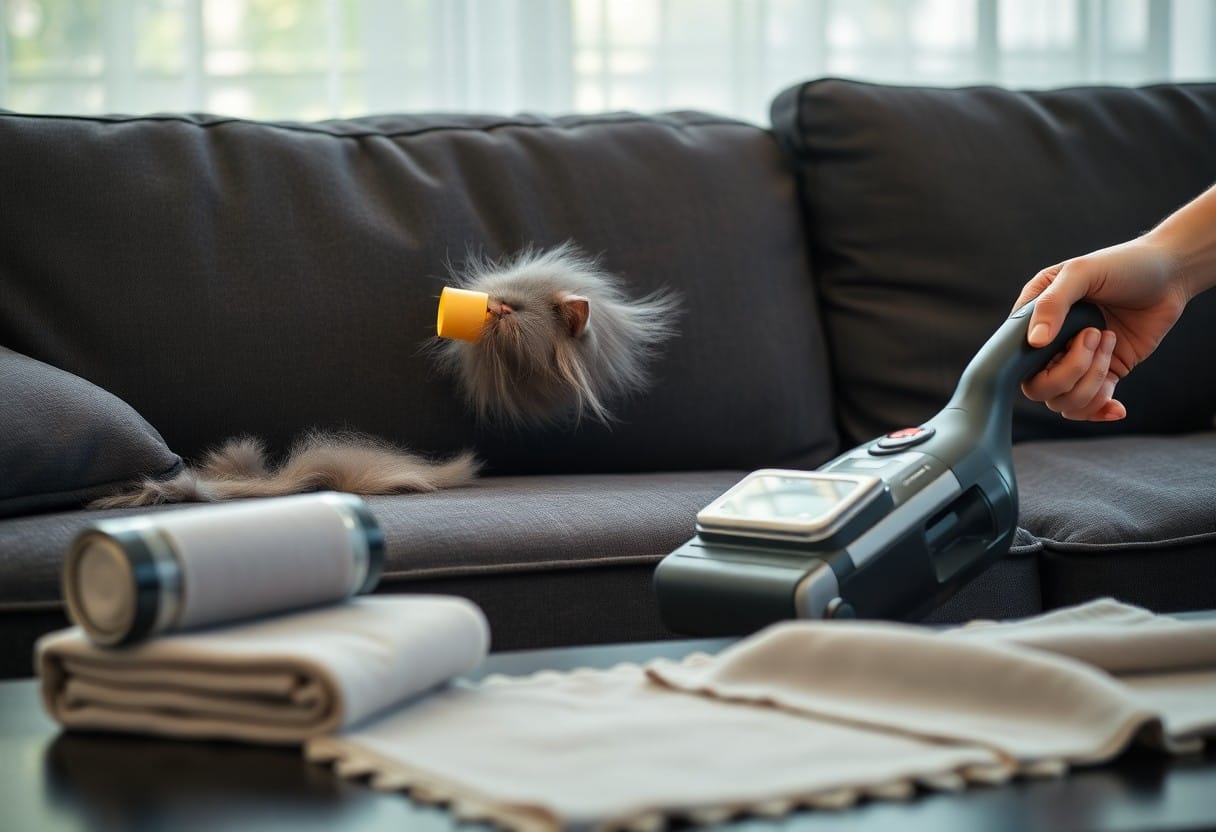
Routine cleaning schedule and targeted prevention help you keep fur off furniture; vacuum high-traffic spots twice weekly, use washable covers, and wash cat bedding regularly to reduce allergens.
Implementing HEPA Air Filtration
Use a HEPA air purifier in living areas to trap pet dander and airborne hair, lowering allergy triggers while you relax on upholstered furniture.
Effective Laundry Additives for Hair Release
Try adding half a cup of white vinegar or a dryer sheet to washes to help release hair from throws and covers so you can remove embedded fur before it returns to furniture.
Experiment with half a cup of white vinegar in the rinse cycle and a dryer sheet in the dryer so you can pull loosened hair away with a lint roller; these steps are pet-safe and cost-effective. Combine occasional baking soda pre-soaks for heavily soiled covers to break fibers’ grip on fur. Avoid scented additives if your cat has respiratory sensitivities, since perfumes can irritate.
To wrap up
You can keep cat hair off furniture by brushing regularly, using a vacuum with pet attachments, washable covers, and sticky rollers; consistent grooming and quick spot-cleaning prevent buildup and preserve upholstery.
FAQ
Q: How often should I groom my cat to reduce shedding, and what techniques work best?
A: Groom your cat according to coat type: short-haired cats benefit from brushing 1-2 times per week, medium-haired cats every other day, and long-haired cats daily. Use a slicker brush for surface tangles, a wide-toothed comb for mats, and a deshedding tool to remove loose undercoat during heavy-shedding seasons. Keep sessions calm and brief, starting at the head and working toward the tail while rewarding your cat to build positive associations. Bathe only when necessary with a cat-safe shampoo and dry completely to avoid skin irritation. Monitor skin and coat for sudden increases in shedding, bald patches, flaky or oily skin, or behavioral changes, and consult a veterinarian if you see those signs.
Q: What cleaning methods keep cat hair off furniture?
A: Create a regular cleaning routine that includes vacuuming upholstery with a pet-hair attachment at least twice weekly and using a HEPA-filter vacuum for better removal. Use lint rollers, sticky tape, a rubber glove rubbed over fabric, or a pet-hair brush to pick up loose fur quickly; damp microfiber cloths capture stubborn hairs. Wash slipcovers, throws, and pet beds frequently in hot water to clear embedded hair. Use a squeegee on fabric sofas to gather trapped fur and run a dryer sheet lightly over cushions to reduce static cling. Spot-clean high-use areas daily and consider a robot vacuum for floors and low furniture surfaces to prevent buildup.
Q: Which fabrics and furniture choices minimize visible cat hair and make cleanup easier?
A: Choose materials that resist hair and clean easily: leather and faux leather wipe clean, tightly woven microfiber brushes off easily, and performance fabrics like Crypton resist stains and odors. Avoid loose weaves, velvet, chenille, and heavily textured fabrics that trap fur and frustrate vacuuming. Opt for removable, machine-washable slipcovers or throws for high-traffic seating and match fabric color or pattern to your cat’s coat to reduce the appearance of hair between cleanings. Provide dedicated cat beds and elevated resting spots to keep pets off main furniture.